

Visiting Sitorai Mokhi-Khosa Summer Palace in Bukhara
While most visitors to Bukhara will easily spend their entire time inside the city’s historic center, some of the city’s most interesting sights are actually outside the old walls.
Though I definitely can’t speak ill of the city center of Bukhara, I have to say, the majority of my favorite sights laid outside the walls. The brickwork of Ismail Samani Mausoleum, the patchwork mosaic façade of Bolo Hauz Mosque, the four pillars of Chor Minor (an emblem of the city)… these are all sights that you have to leave the walls for, and are all worth it.
However, these are still within easy walking distance of Bukhara, albeit being outside of the walls. But my favorite sight in Bukhara is none of the above, but rather, requires a trip by taxi outside the center. That place would be Sitorai Mokhi-Khosa, the summer palace used by a former emir (ruler) of Bukhara.
| 🇺🇿 Planning your trip to Bukhara in a hurry? Here are some quick picks: 🪡 Best Activities in Bukhara 1. Suzani Embroidery Workshop (my #1 activity I did in Bukhara!) 2. Khiva Transfer via Khorezm Fortresses (best way to get to Khiva!) 3. Miniature Painting Workshop (my friend loved this activity, and I had such FOMO!) 🏨 Best Hotels in Bukhara 1. Duston Boutique XIX Century Hotel (one of my favorite stays in Uzbekistan) 2. Turkman Madrasah Hotel (stay in a converted madrasah/Islamic school!) 3. Komil Bukhara Boutique Hotel (beautiful miniatures painted on the walls) 🚄 Getting Around Uzbekistan: The best way is either by guided transfers that include sightseeing along the way (like this one, if you’re going onward to Khiva) or by train. If booking a train, you can first try the official website. If they’re sold out, check 12go.asia as they often have extra tickets at a small surcharge. |
Even though many of these sights are well-known in Bukhara, tourists who don’t plan their trips carefully can easily overlook many of these iconic sights if they stick within the walls of the city or walk only a small band of the perimeter outside the walls.
But Sitorai Mokhi-Khosa is exquisite. If you’re not sure about visiting, perhaps a bit discouraged a bit by the distance from the city, I hope this post serves to convince you to put it on your Bukhara itinerary!
Quick History of Sitorai Mokhi-Khosa
Sitorai Mokhi-Khosa used to be the summer residence for Bukharan royalty (known as the emirs) in the late 19th and early 20th centuries.
While much of Bukhara is centuries upon centuries old — its walls alone are more than two millennia old — the palace is a more modern structure. As a result, it blends an interesting mix of local Bukharan architectural design as well as influences from fin-de-siècle Europe.
Making the Sitorai Mokhi-Khosa was a joint project: Russian architects worked alongside local artisans to create a unique space you won’t find elsewhere in Bukhara.
After discontinuing use as a royal residence, it became a museum in 1933, when it served as a branch of the Bukhara museum. At the time, the museum featured folk art and applied arts, as well as local crafts such as miniature art, calligraphy, and others.
In 1954, it became a much smaller folk art museum, as much of the Communist Party of Uzbekistan took it over, reducing the overall footprint and increasing oversight of the museum’s curation. Now, it is home to the Museum of Decorative and Applied Arts, and the collection there is bar none.
How to Get to the Summer Palace from Bukhara
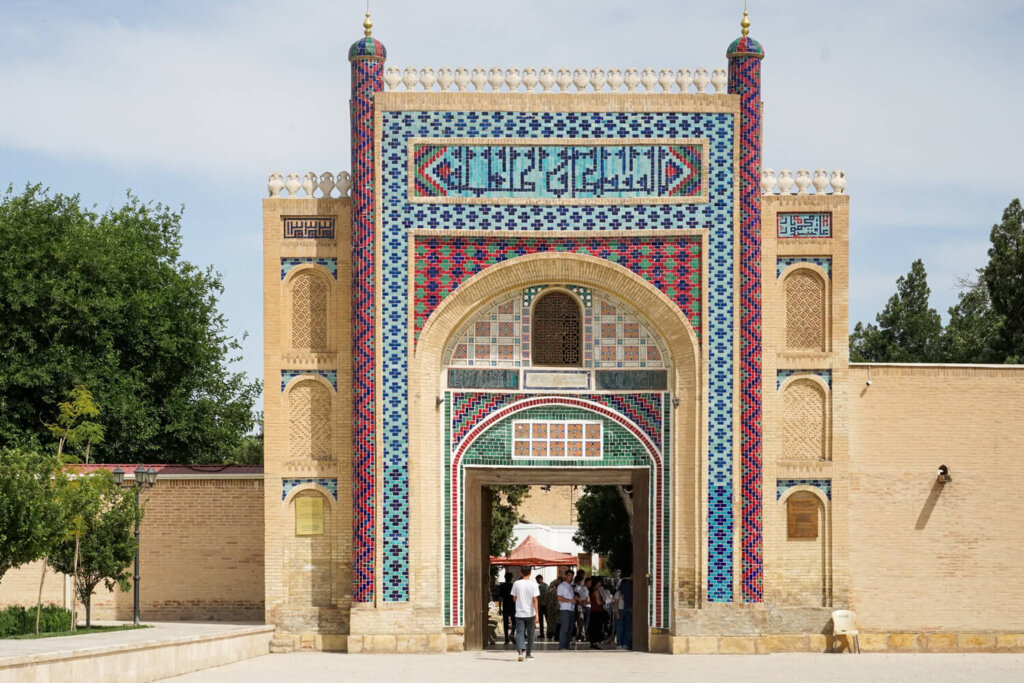
The palace is located about 6 kilometers north of Bukhara’s historic center, though due to heavy traffic around Bukhara it can take a while to get there. It took us about 20 or 25 minutes despite being relatively close.
As with anywhere in Uzbekistan, the easiest way to get there is with Yandex Go, with the location Sitorai Mokhi-Khosa punched in as your destination.
Once you arrive there, buy a ticket right at the gate. As of my visit in May 2026, entrance is 60,000 Uzbek som, which is approximately $5 USD. It’s open from 9 AM to 6 PM daily in the high season; if traveling out of high season, you might want to check the hours in Google Maps to confirm opening hours.
Plan Your Visit: Layout of the Sitorai Mokhi-Khosa
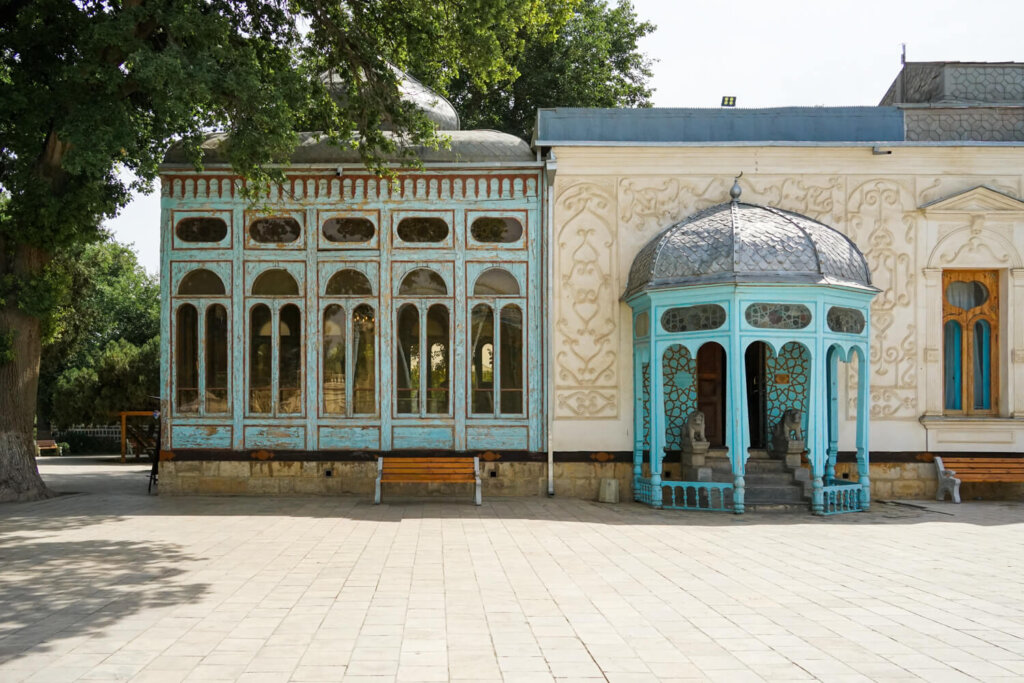
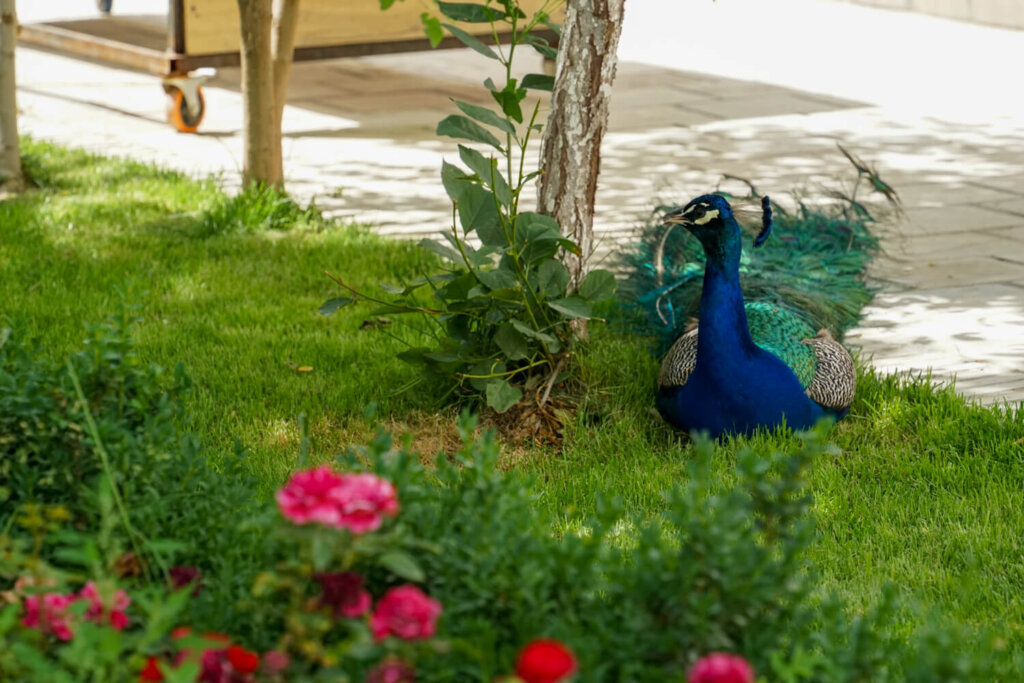
The complex consists of three separate main buildings that serve as museum spaces. Between them all, you’ll find some landscaped garden areas as well as a ton of peacocks, some wandering free, some caged.
Altogether, what is displayed in the three rooms makes up a single museum: Bukhara’s Museum of Applied Arts.
Summer Palace Main Building
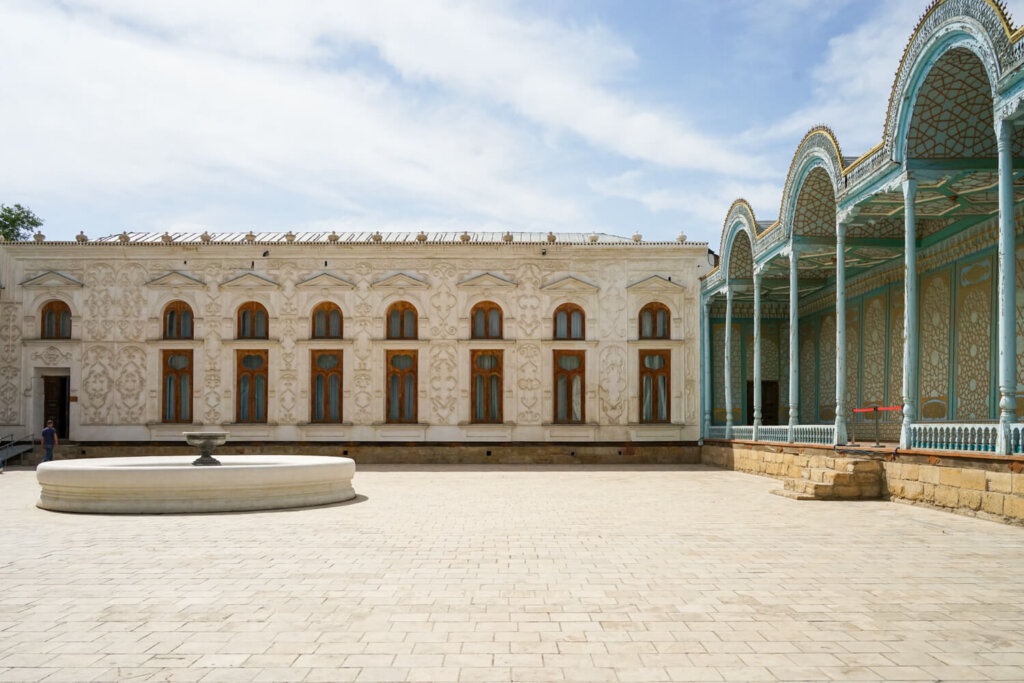
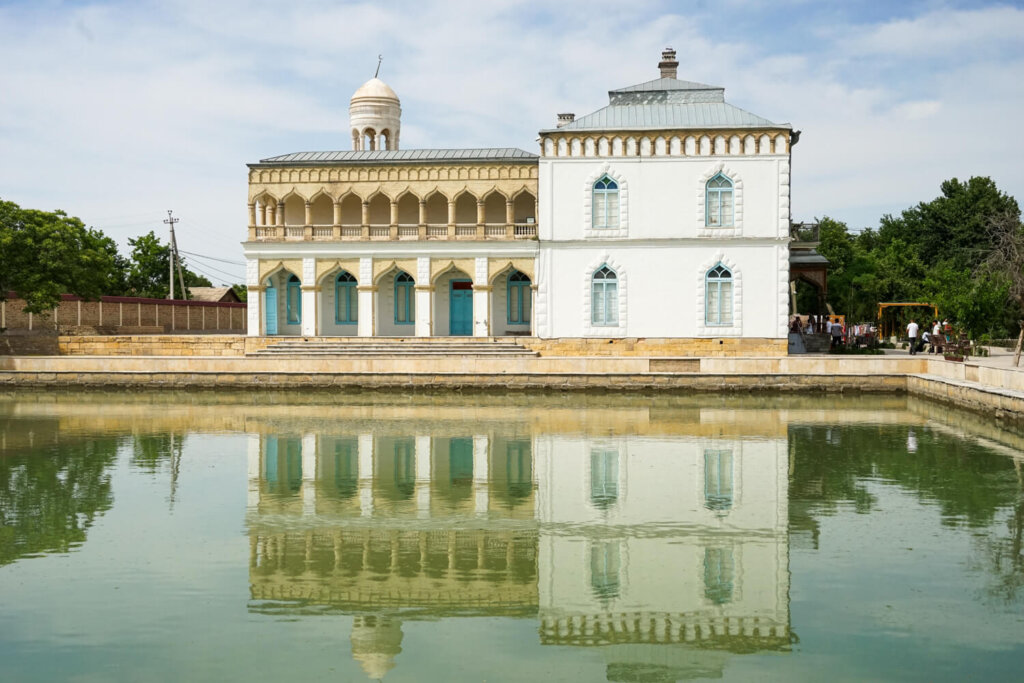
This is what you think of when you think palace: a large courtyard with a fountain (albeit a dry one) and ornate interiors. But the exterior itself is exquisitely detailed as well, an elegant off-white with arched wooden windows and decorative reliefs on the façade.
One part of the building forms an L-shape, while an additional section on the right of the building immediately catches your eye with its turquoise arches, gold detailing that glints in the sun, and its intricate Islamic geometric patterns.
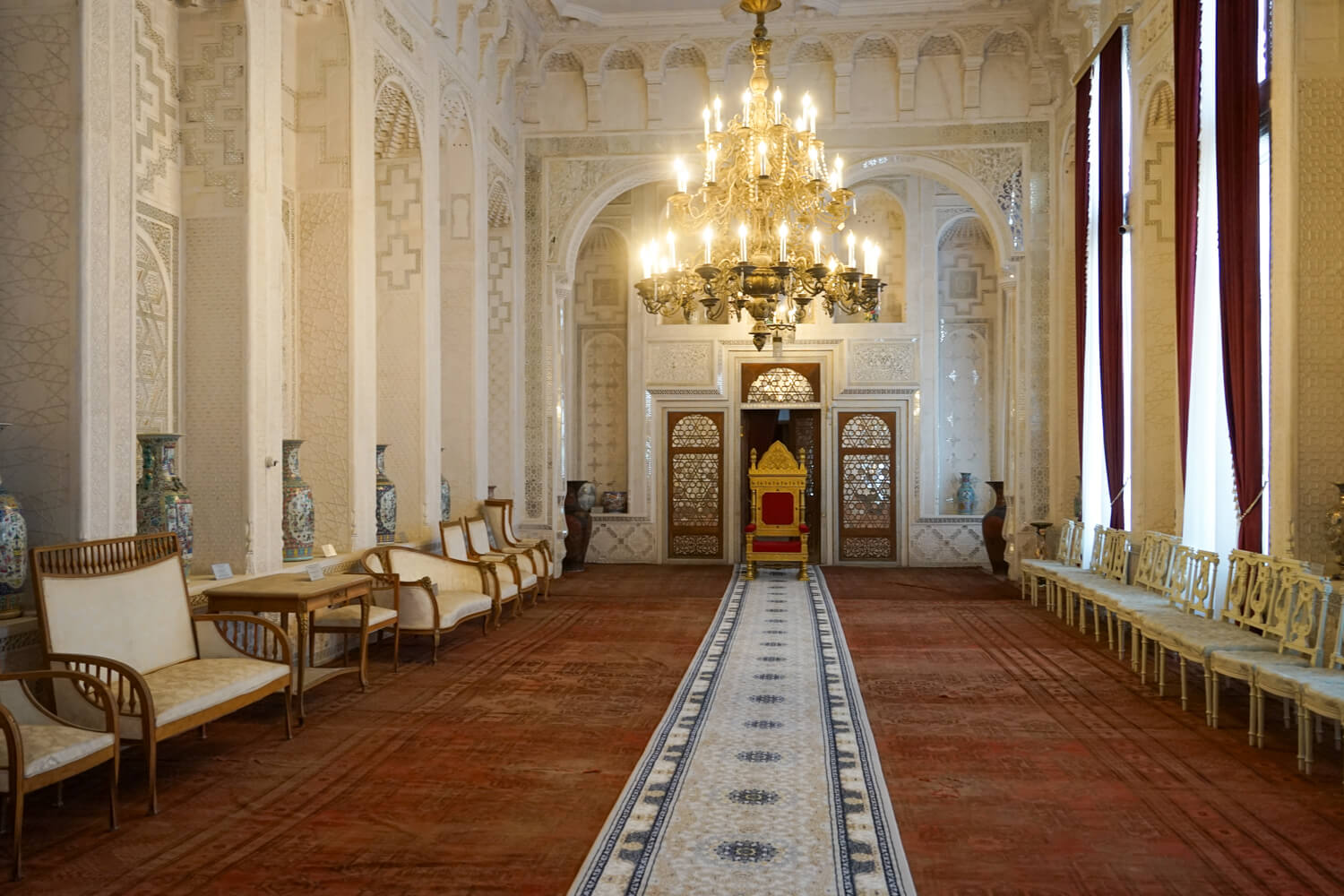
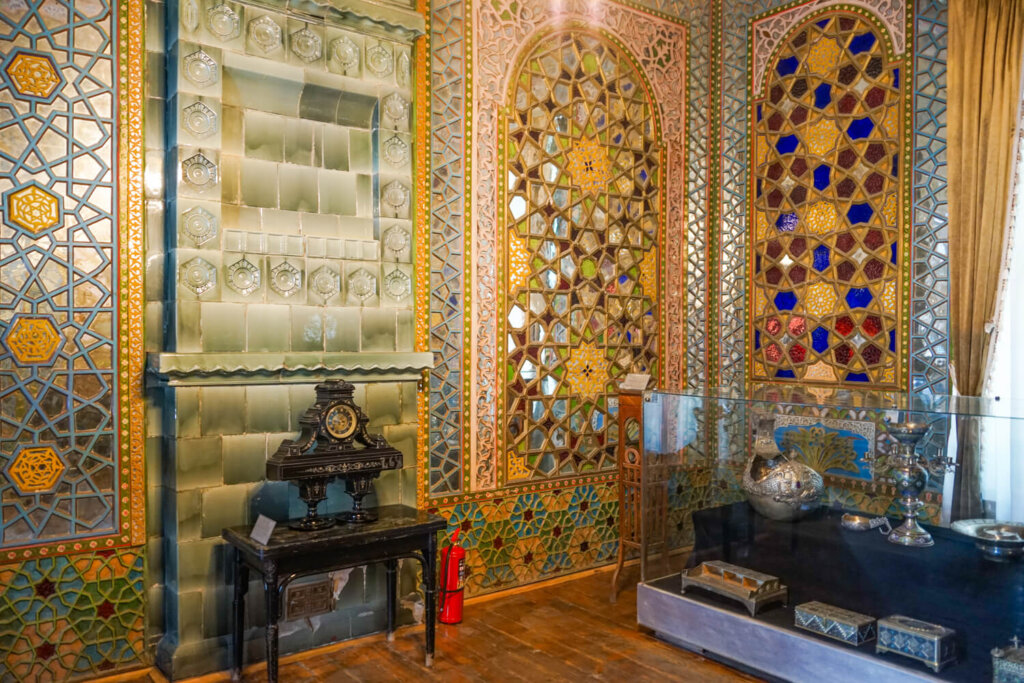
This building has the most beautiful interiors in all of Bukhara, with incredibly detailed walls with rich color and adornments.
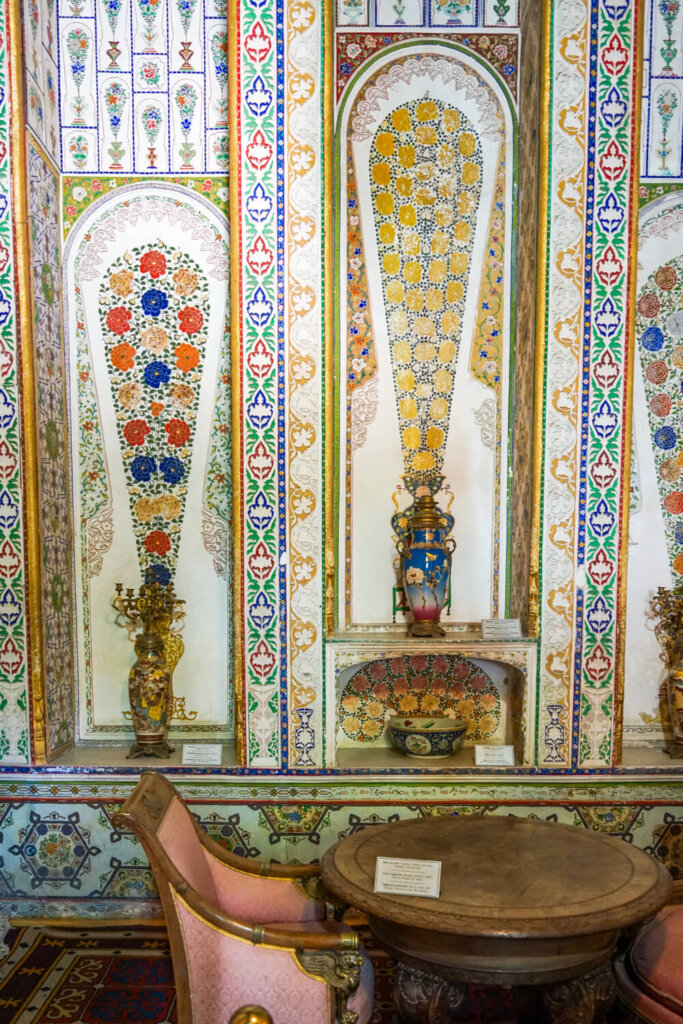
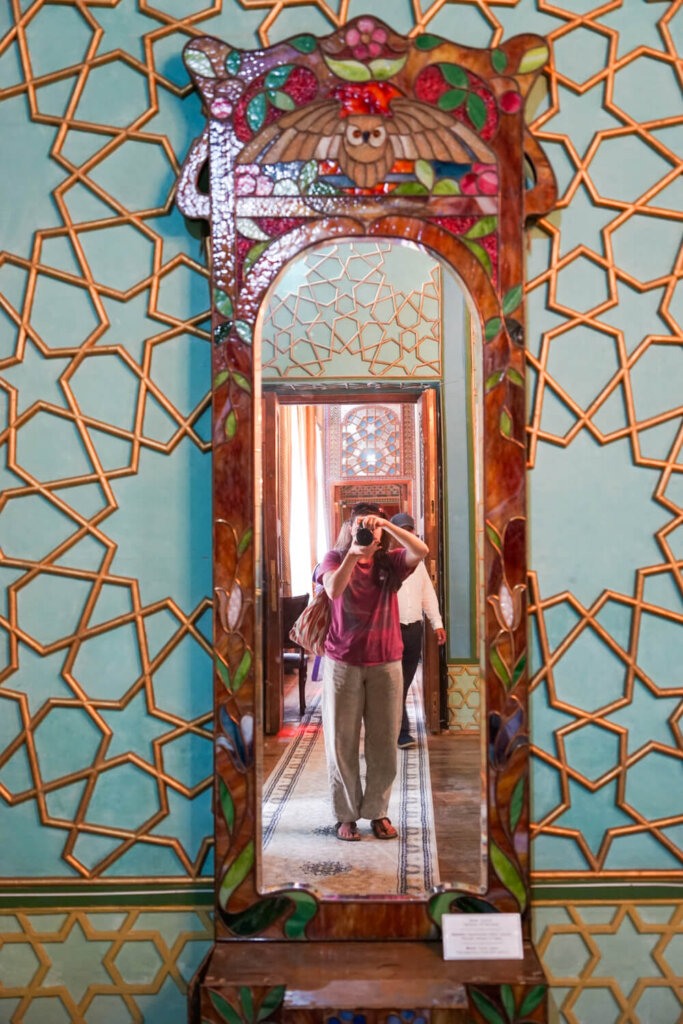
The palace was a collaboration between Russian architects and Bukharan interior designers, so as a result, you get a unique blend of styles.
I love how the Bukharan craftsmanship complements the palace’s objets d’art, like how the Chinese and Japanese porcelain vases are placed right in front of Bukharan miniature painting style, creating a painted eternal “bouquet”.
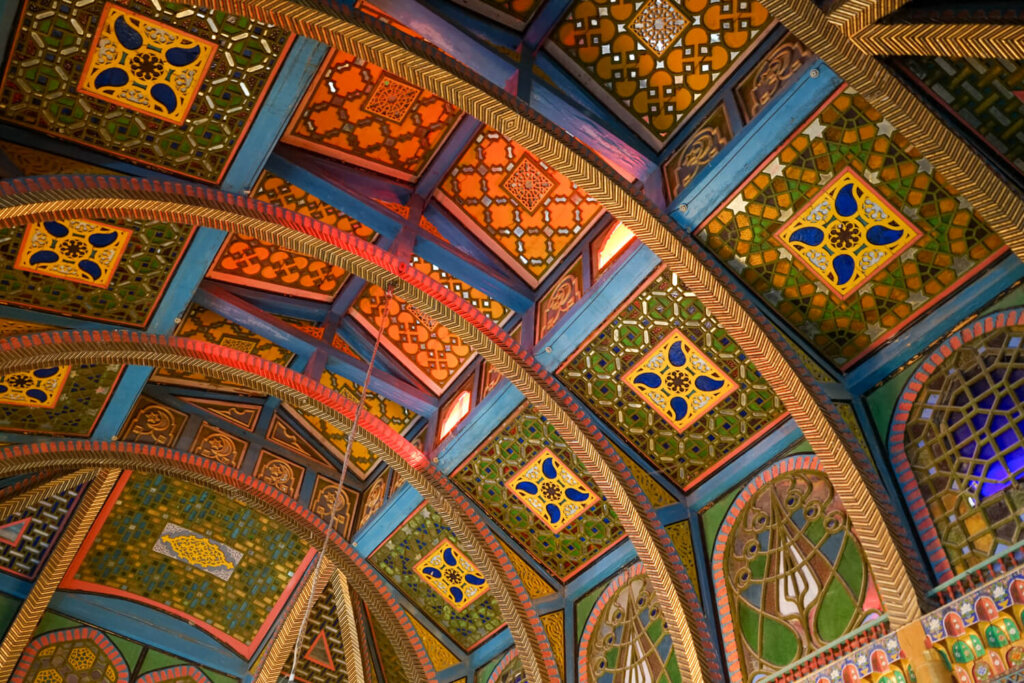
Inside, you’ll find some of the most beautiful rooms in the complex. There’s one room, my favorite one, where brightly painted wood gets lit up by orange-tinted rays coming through subtle stained glass windows that are so high up, they almost are like skylights.
The ceilings are so elaborate and aglow that it feels a crime not to strain your neck to look upward. Meanwhile, decorative arts adorn each room in a way that is beautiful, but never cluttered.
Guest House (National Costume Museum)
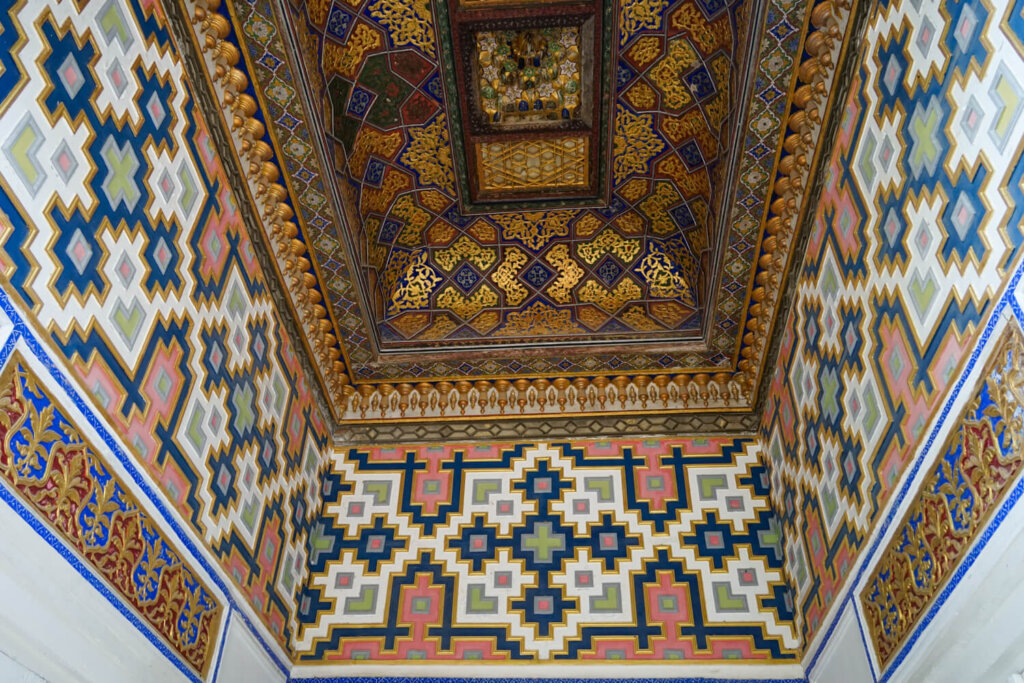
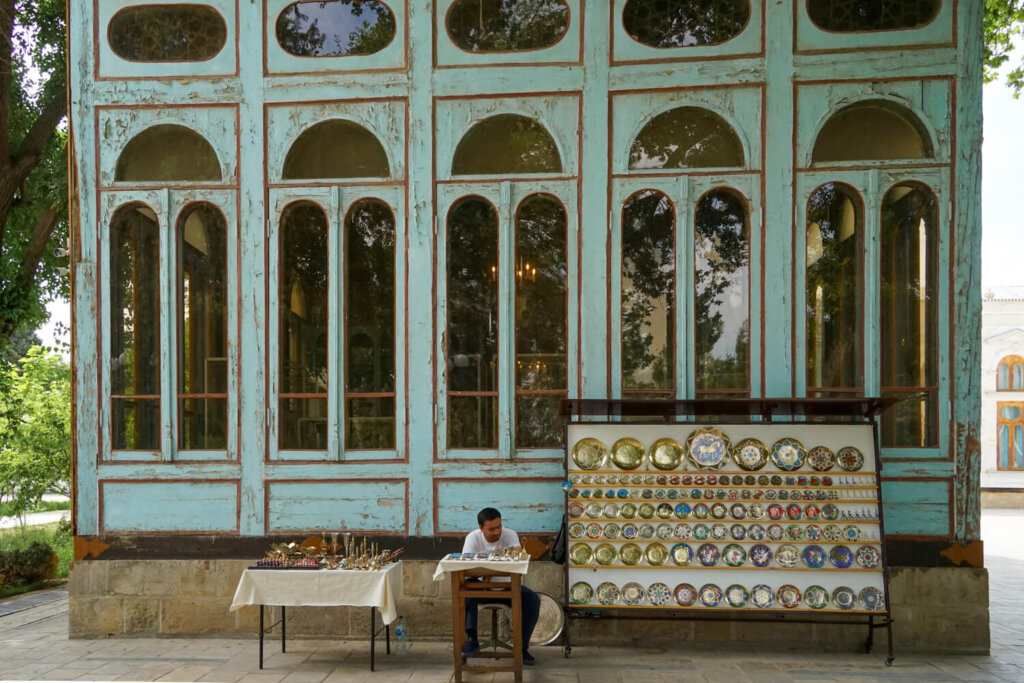
Forward and slightly to the left if you’re walking away from the palace towards the back of the grounds, you’ll find a smaller building dedicated largely to clothing and textiles.
This is a much smaller and humbler building than the main palace, which makes sense, as it was intended as a guesthouse for visitors and was not meant to upstage the palace in any way. That said, they didn’t slouch on the interior!
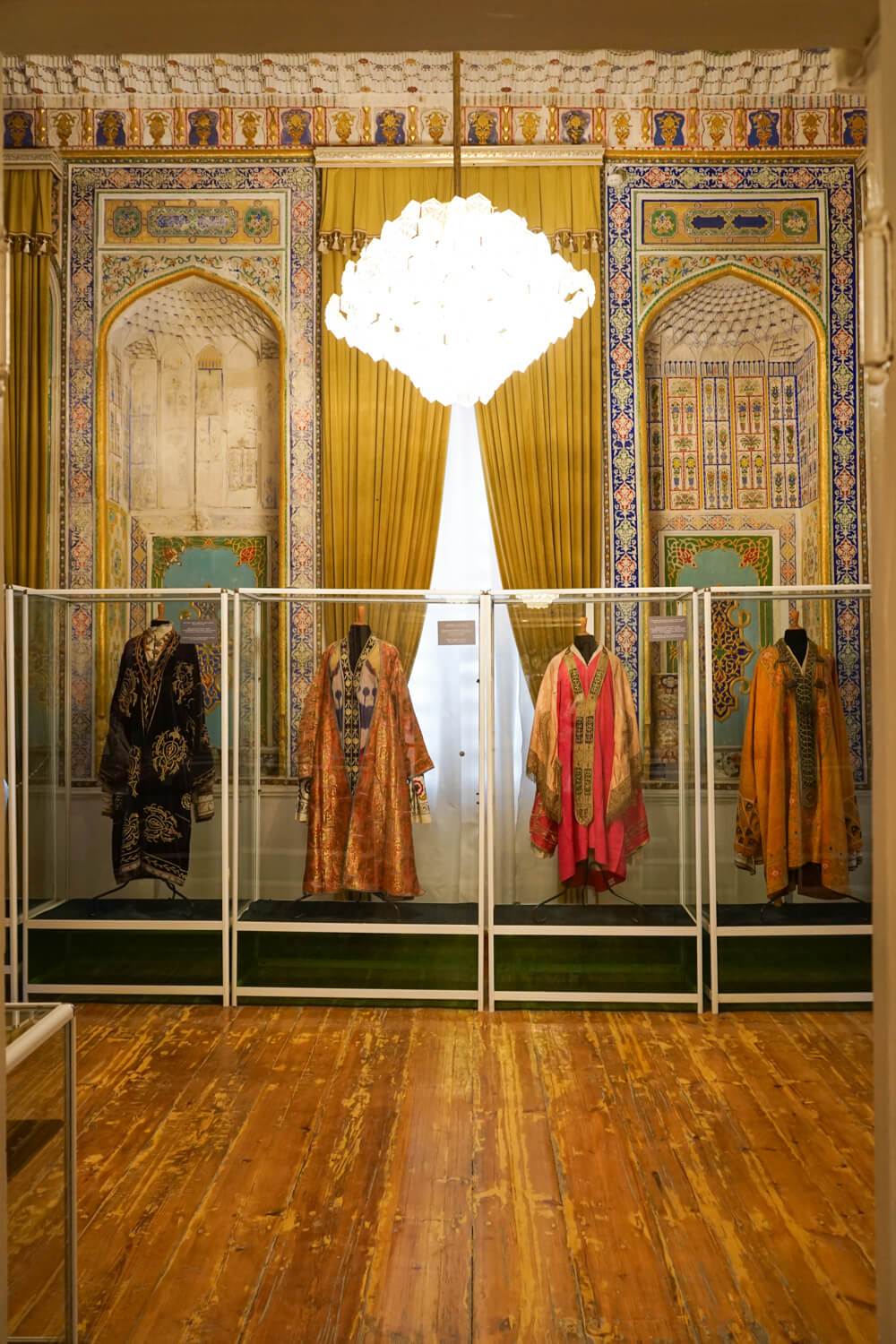
It only contains a few rooms, but they’re rich with interesting clothing and garments from this period of Uzbek life, alongside other examples of traditional fabrics and embroidery.
The interior architecture here is also rather beautiful and you’ll want to look up at the chandeliers and painted muqarnas (geometric wood carved corners typical of Islamic architecture).
The Harem (Suzani and Textile Museum)
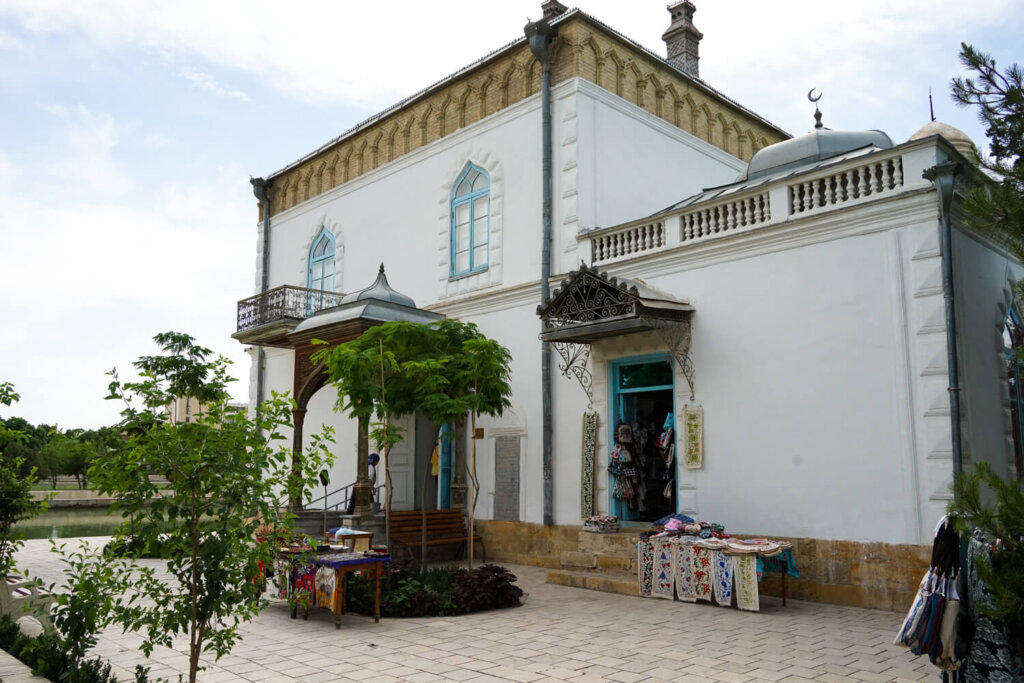
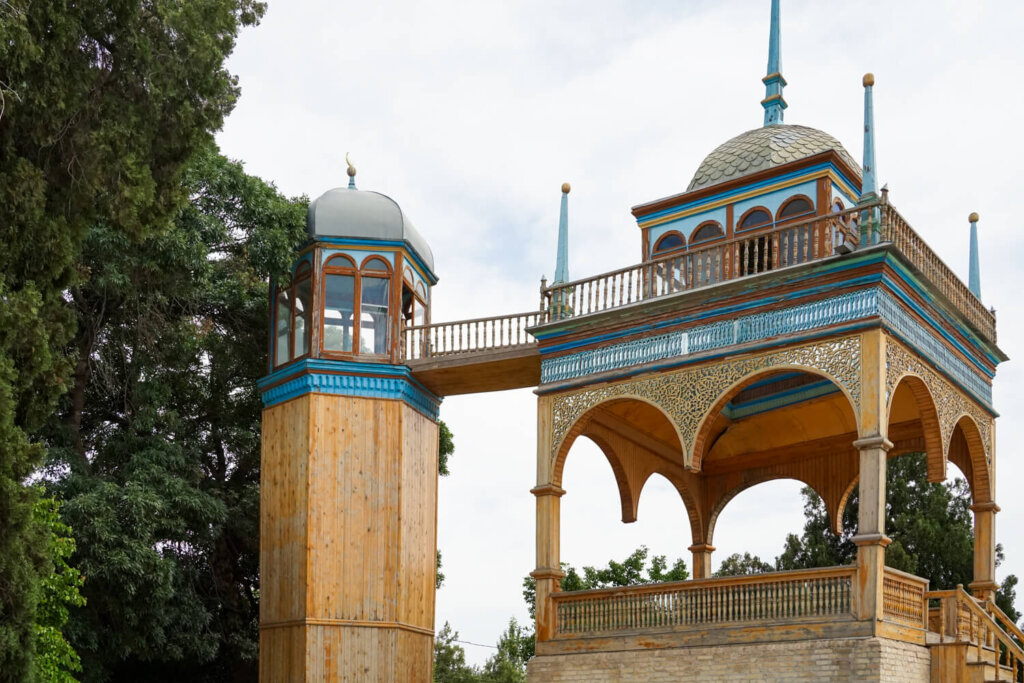
Continue farther toward the back of the grounds and you’ll find another museum building housed in a modest, more modern-looking structure opposite an unusual pavilion-like building connected by stairs and elevated walkways.
This is where the harem used to be, away from the main palace. Supposedly, the harem was as many as 400 women (though surely not simultaneously occupying this structure — it doesn’t seem large enough). Its out-of-sight, out-of-mind placement is likely done so as not to offend any official wives.
The exterior of the harem is rather plain, almost stark, not drawing too much attention to itself.
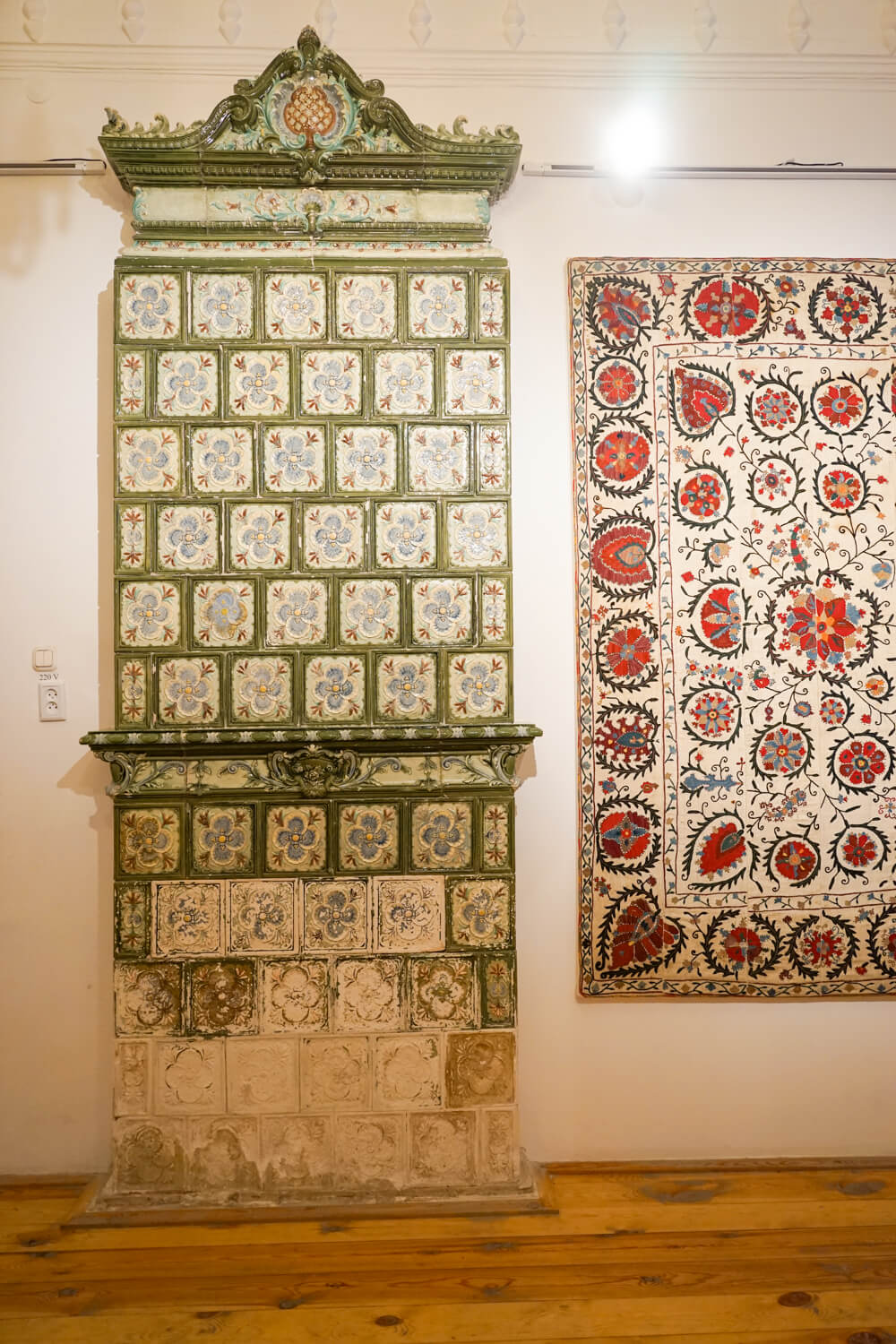
But the interior is awash in color, though this time, not from the architecture itself (though a bit of the original ornamentation, like this decorative mosaic shows).
The walls inside are white, but what gives it color is its large collection of textile crafts, particularly suzani.
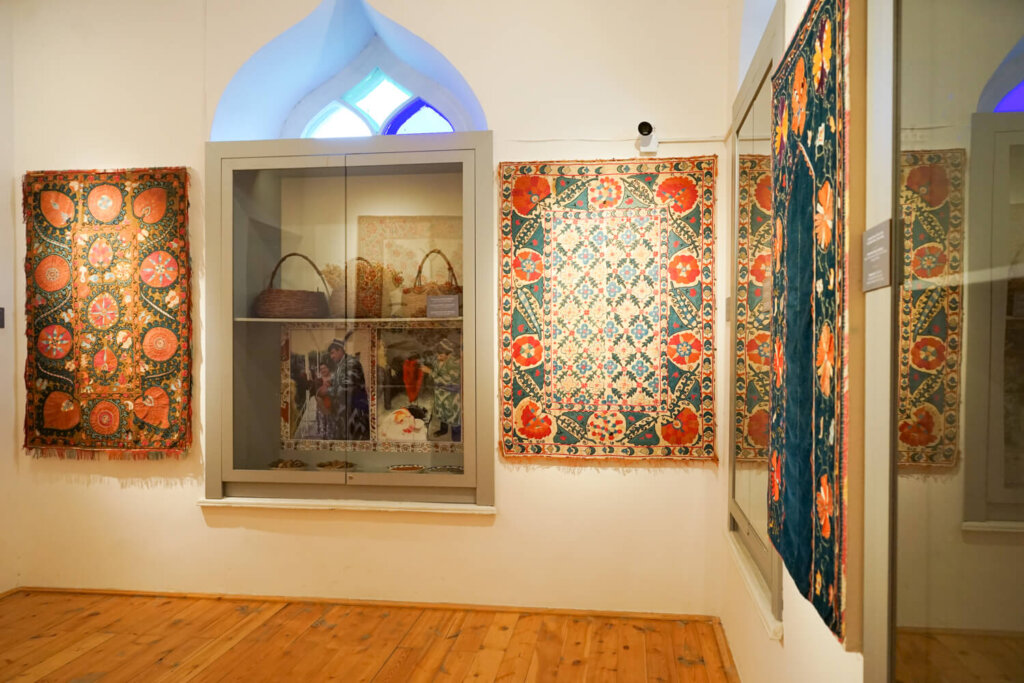
Suzani is Uzbekistan’s beautiful style of embroidery, historically rich and important. It’s rare to see older suzanis since they have a short lifespan due to their delicate materials, but here you can.
On the suzanis you’ll find all manner of typical Bukharan motifs — pomegranates and birds and florals — as well as other regional textiles.
The Palace Grounds
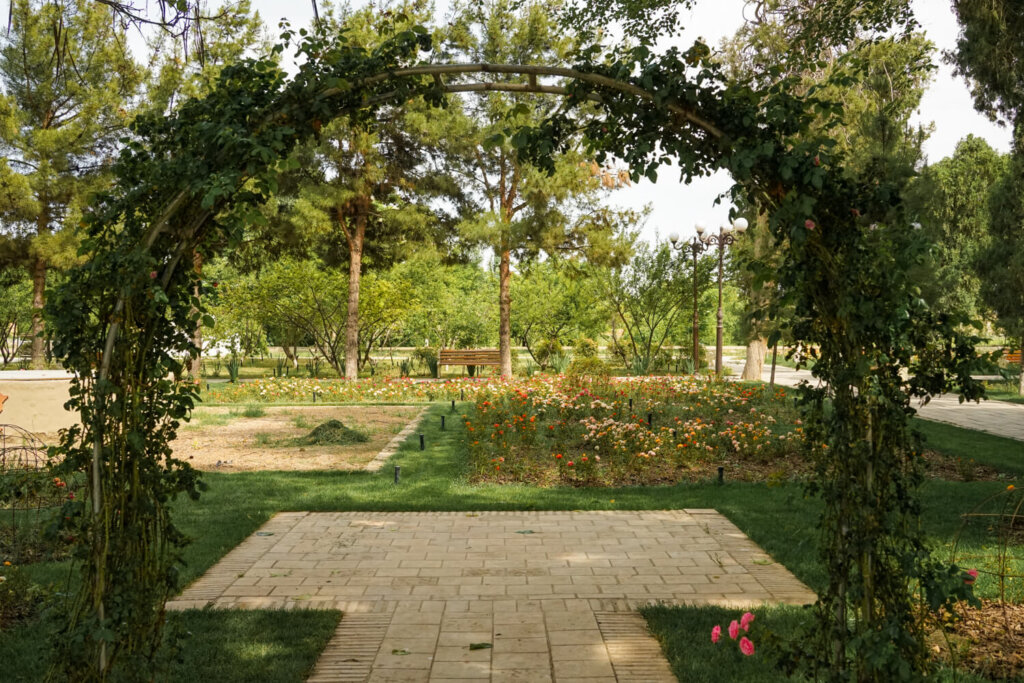
While there are three very interesting buildings to wander around, don’t forget the beautiful grounds themselves!
They’re especially lovely when they’re all abloom with roses and seasonal flowers (though less pleasant for those with allergies, as my poor friend was suffering from during our visit here!) and the squawks of wandering peacocks.
Behind the former-harem-turned-suzani-museum, there sits a large reflecting pool that creates one of the best photography spots in the complex. On a calm day, the former harem reflects beautifully in the water (seen in one of the photos above).
After the busy, dusty streets of Bukhara’s center, the gardens are a peaceful bit of relief, and the greenery takes away a bit of the bite of the summer sun.
Is Sitorai Mokhi-Khosa Worth Visiting?
I absolutely think so, so long as you have the time — if you have at least two full days in Bukhara, then I think you have time. One day would probably not be enough to do it without rushing.
I suppose that if you’re only interested in checking off Bukhara’s landmarks within the walls and you don’t want to venture outside the center, you could skip it. But during my stay in Bukhara, it was genuinely my favorite place.
The architecture is unlike anything you’ll see inside the old city, it has the best applied art collection in perhaps all of Uzbekistan (including the beautiful Applied Arts Museum in Tashkent, which I adored), and in general it is just a genuinely interesting place.
For me, it was one of the highlights of Bukhara — easily worth the short Yandex ride from the city center.
Have you been to Sitorai Mokhi-Khosa recently? Let me know of any changes, new exhibits, or things that you’ve noticed. I’ll also be happy to answer any questions you may have!

Allison Green is a former teacher who has been travel blogging since 2016, visiting 75+ countries in total. She has a Masters in Teaching and a B.A. in English and Creative Writing. As a former educator, she merges her writing and educational experience to encourage ethical, sustainable travel. She has been a speaker at the World Travel Writers Conference and TBEX. Her writing, photography, and podcasting work has appeared in National Geographic, CNN Arabic, CBC Canada, and Forbes, amongst others. When she’s not on the road, she lives in Bangkok, Thailand.