

How to Visit Kaindy Lake from Almaty in 2026
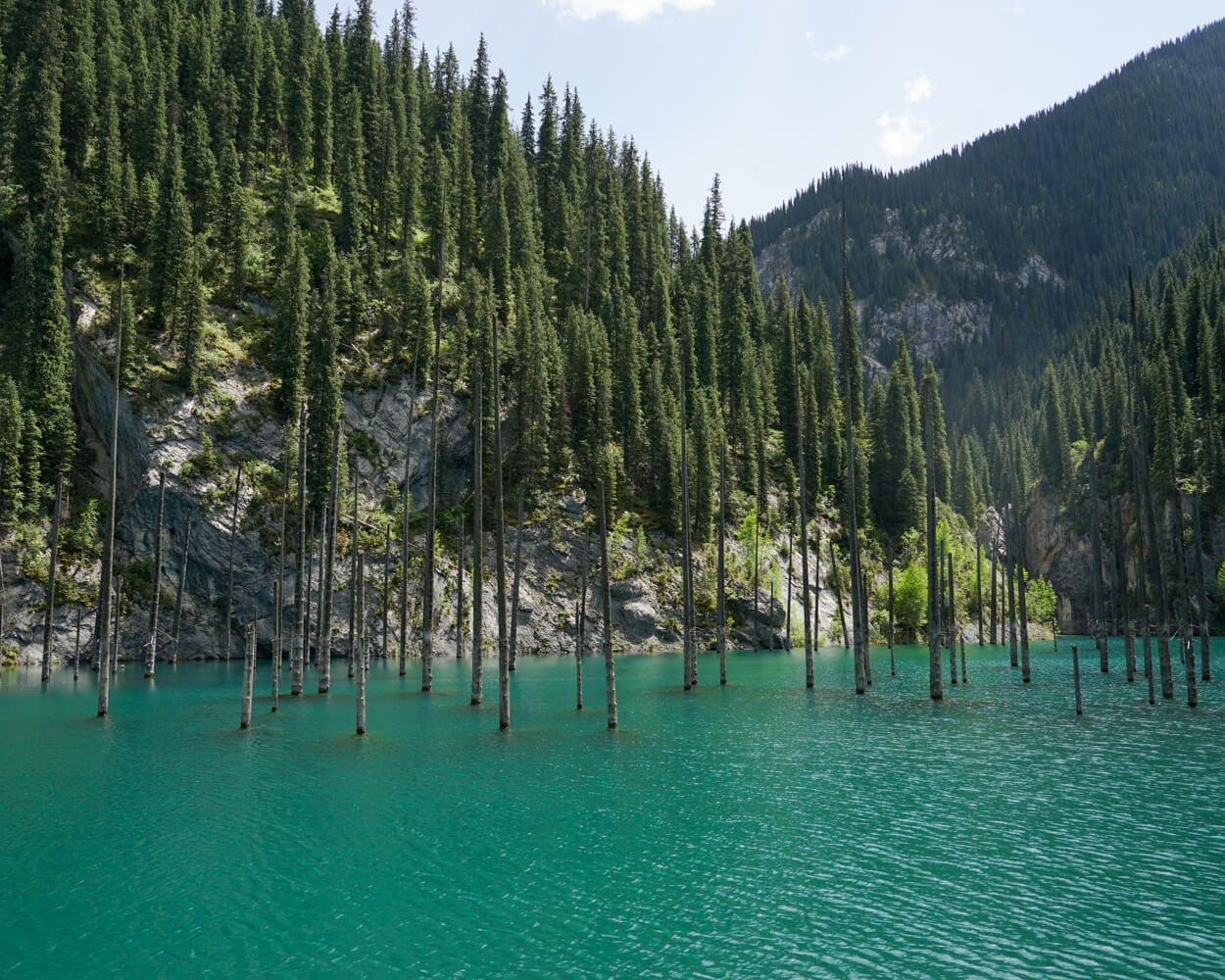
An eerily beautiful forest of submerged spruce rises out of electric turquoise and teal waters, making it hard to believe your eyes. This is Kaindy Lake, one of the most otherworldly sights in Kazakhstan: a country filled with natural wonders that look straight from another planet.
Part of the Kolsay Lakes National Park, this beautiful lake in the Tian Shan Mountains near the border with Kyrgyzstan is absolutely a must-visit when you’re traveling southern Kazakhstan.
| 🇰🇿 Planning a trip to Almaty? Here are my top tips and quick picks! ⛰️ Best Nature Excursions from Almaty 1. 2-Day Kolsay, Kaindy & Charyn Canyon tour (#1 tour to do, hands down) 2. Big Almaty Lake & Alma-Arasan tour (easy half-day tour!) 3. Altyn-Emel & Aktau Mountains tour (long day, but most epic landscapes!) 🏨 Best Places to Stay in Almaty 1. Urban Yurt (stayed here a night, amazing location & home amenities) 2. AQ miniSUITES (stayed here multiple nights, small but budget-friendly!) 3. Renion Hotel (one of the nicest 4* hotels in Almaty at a good value) 🚗 Want to get around Kazakhstan with more freedom? If renting a car, search with Discover Cars. Otherwise, I recommend taking guided tours to get whether you want to go! |
Though it’s rather far from Almaty — typically at least five hours by car — it is often visited as a day trip or overnight trip from Almaty. I did the latter, staying at a guesthouse at Saty (population: 2,500) in between visiting Kaindy and Kolsay Lakes before doubling back and visiting Charyn Canyon on the way back.
Of all the sights on that two day trip, Kaindy Lake was one of my favorites. Whether it was stirring up dust as our Soviet-era van chugged along dirt roads it was ill-equipped for, the lake colors that shifted with the movement of the clouds across the sky, or the contrast between the trees rising from strikingly blue waters, Kaindy Lake remains one of my favorite memories from Kazakhstan.
About Kaindy Lake
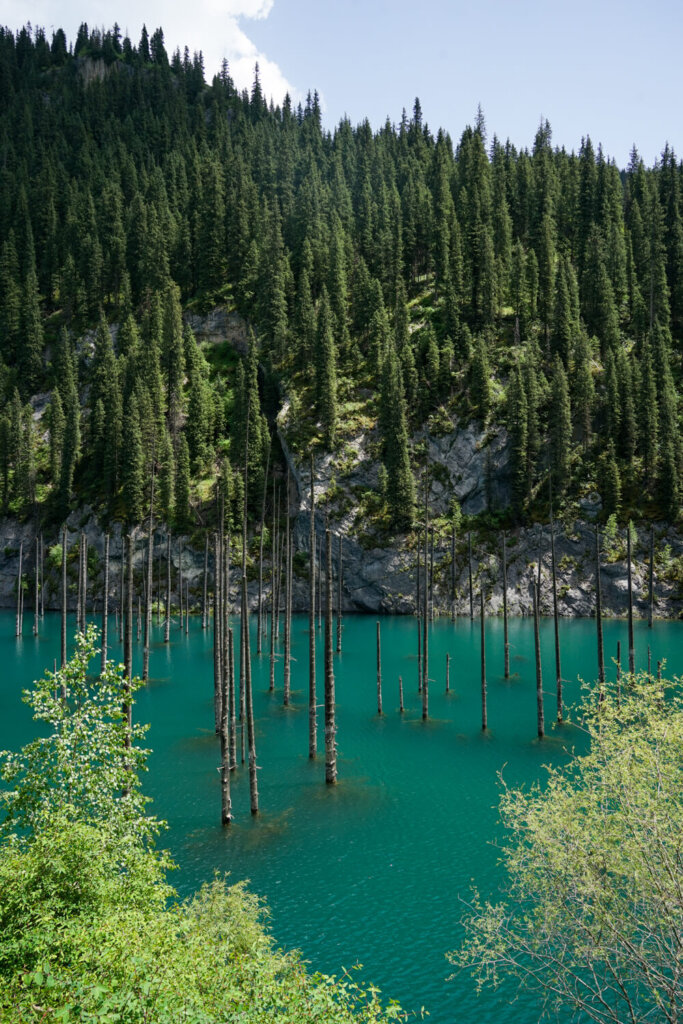
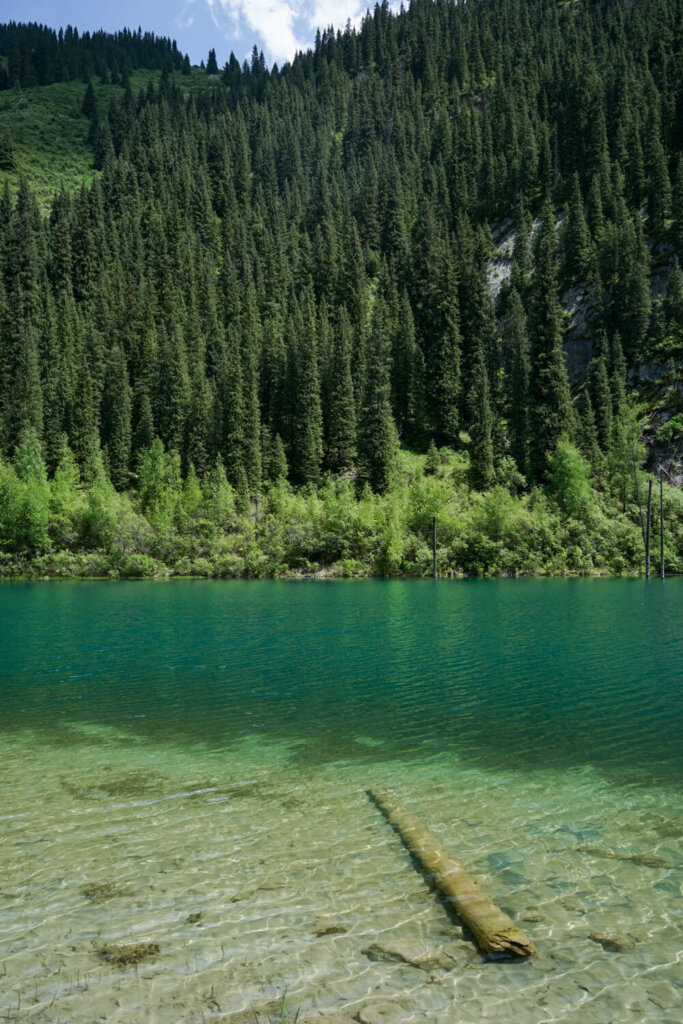
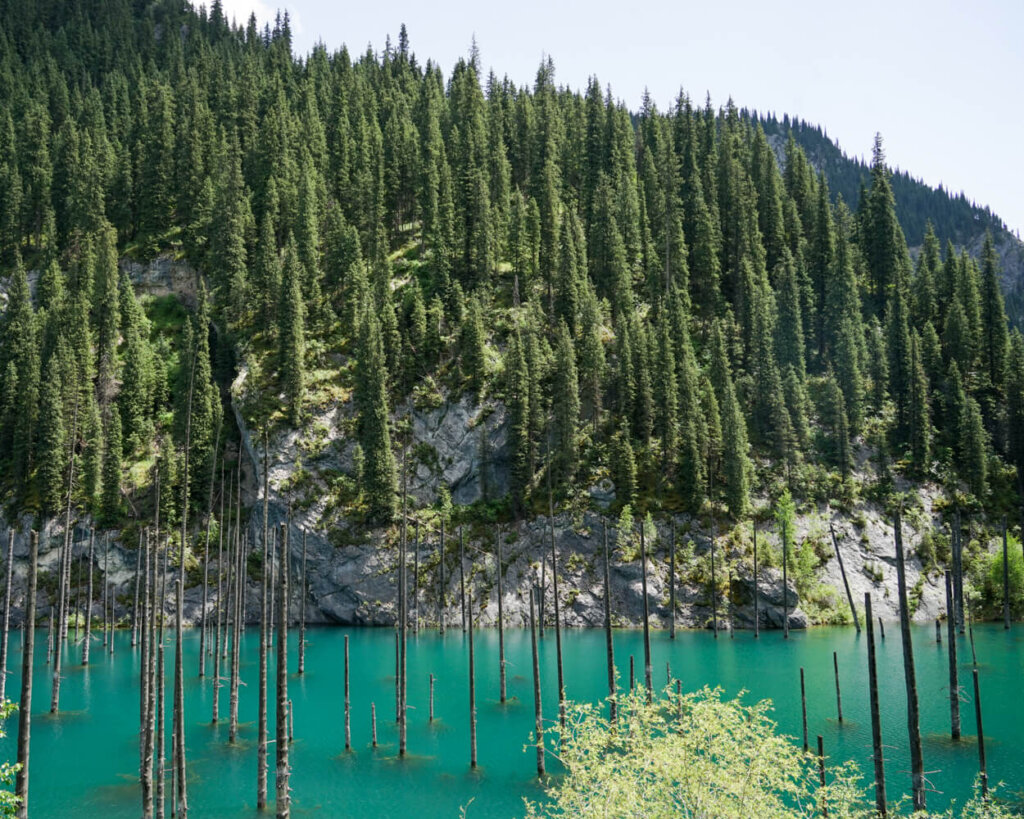
For as otherworldly as it looks, Kaindy Lake is a relatively young lake. It was formed after the 1911 8.0 magnitude Chon-Kemin earthquake in 1911, which triggered massive landslides and mudflow that blocked off a gorge. Water eventually flooded the valley and submerged the pre-existing Asian spruce forest, creating the surreal landscape visitors see today.
The lake stretches roughly 400 meters in length today, although it was once significantly larger. Due to the altitude, the water remains remarkably cold year-round, hovering around 6°C (43°F) regardless of how hot summer temperatures become. Most people don’t swim in it due to the cold temperatures; however, it occasionally hosts curious divers (presumably kitted up in dry suits!)
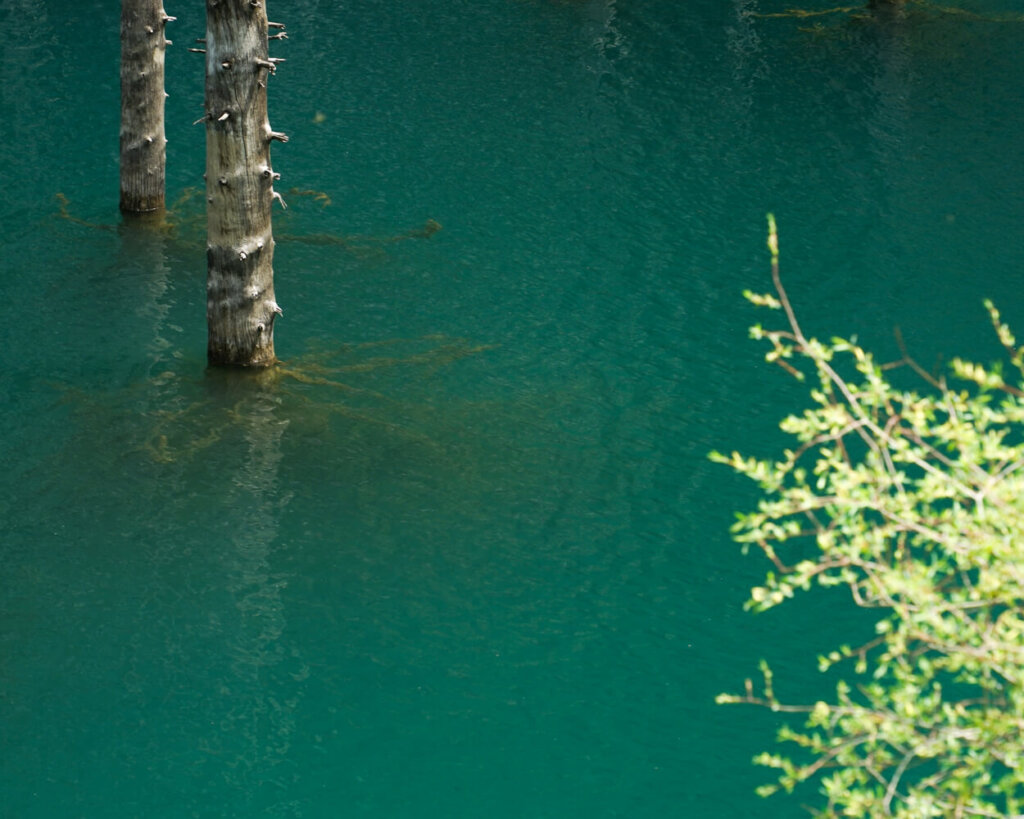
While the forest of spruce trunks protruding from the water looks dead, as only the trunks rise above the surface, the trees are actually still alive, hosting algae and other water flora, preserved by the icy cold waters.
Fun fact: the name “Kaindy” is translated as “birch grove,” even though the sunken trees are spruce, not birch. The name was likely given to an area nearby where travelers had to pass through en route to the lakes.
Getting to Kaindy Lake
Most visitors begin their journey in Almaty, located about 280 kilometers away. The drive typically takes 5 hours and brings you right to Saty.
I went on a guided tour which is the way most people travel, as there are no public buses or marshrutkas that bring you to this part of Kazakhstan.
There are a ton of guided tours that bring you to Kaindy Lake. I suggest doing a 2-day tour if your schedule possibly allows.
I did this tour because it aligned better with my travel dates, but I had a few issues with the overall communication and planning. This tour is the one I wanted to take, as it is better rated, but they didn’t have availability on my dates, as it only runs every other day.
This tour is also interesting as it has you staying in an A-Frame
You wouldn’t know it by looking at the village, but it is 90% dedicated to tourism: mostly full of humble houses-turned-guesthouses, with a handful of more boutique accommodation options popping up, like A-frame cabins.
From Saty, our tour bus could not continue onwards to Kaindy Lake and we had to transfer to some small Soviet-era mini buses.
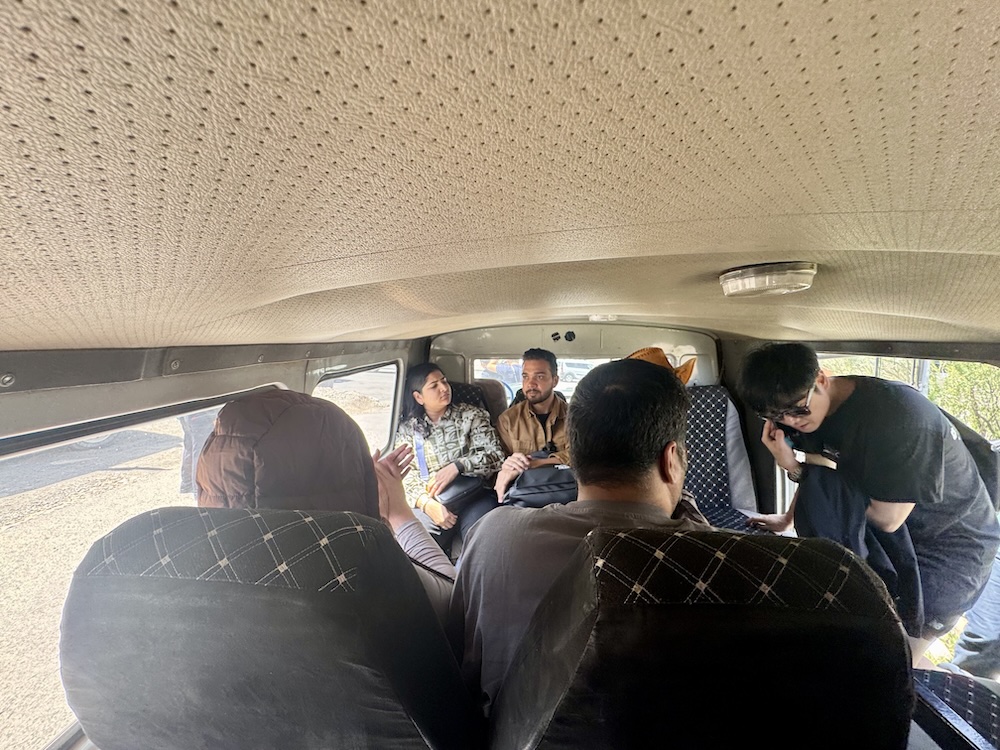
These minibuses are called UAZs, from the Ulyanovsk Automobile Plant, a popular Soviet-era car maker. This specific kind of off-road bus is called the Bukhanka, which means bread loaf, due to their shape. The bus was definitely a bit hot and stuffy, but the vibe was definitely adventurous and got us in an anticipatory mood for what was to come!
These buses chugged along the road and dropped us off at the Kaindy Lake parking lot. From the parking lot, though, you’re still a bit away from the lake shore. There are three options for reaching the lake, listed below. Personally, I took the van (option 2) to the lake and then walked (option 1) back.
Option 1: Walk to the Lake
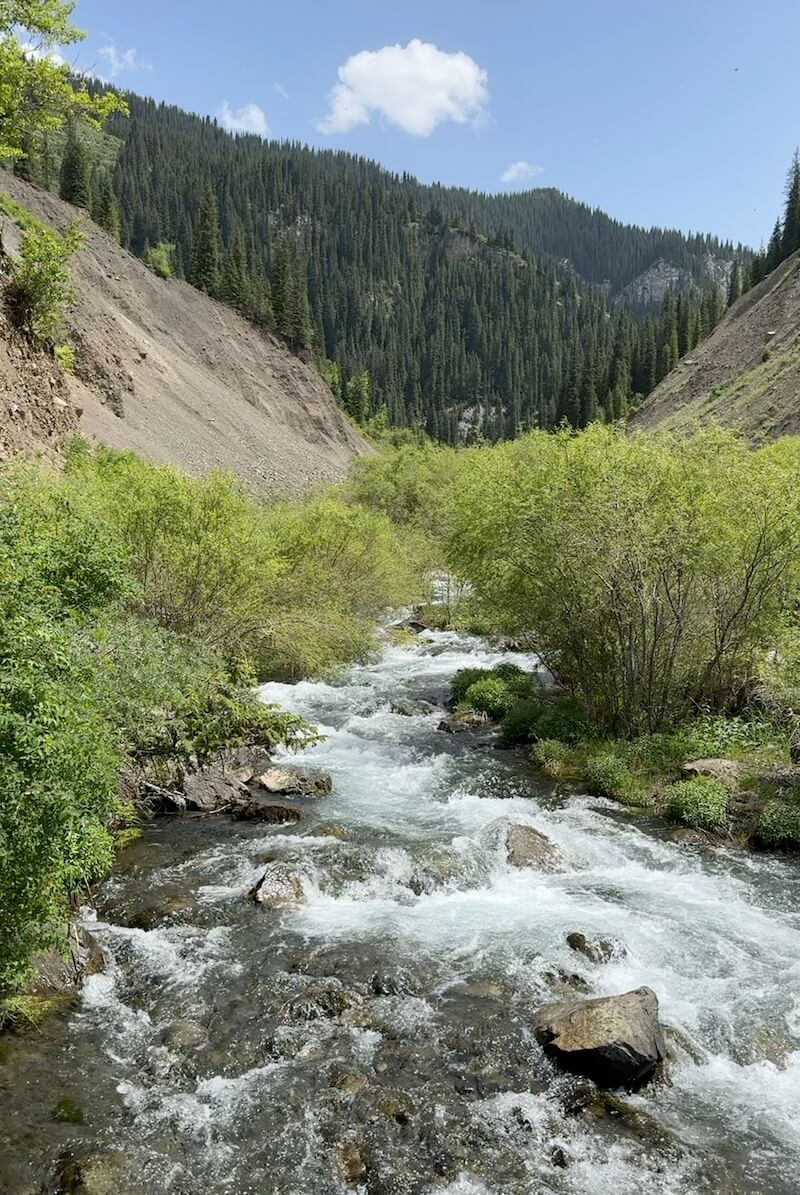
The hike takes approximately 20-30 minutes at a relaxed pace. It’s relatively flat; I expected much more of a hike rather than a walk, but it was surprisingly easy, even with the altitude.
Walking from the hiking area, you’ll reach one split in the road. At the junction, keep right for the hiking trail to the lake. The left-hand path is leads you to the upper mountain pathway used by horses.
The walk is straightforward and scenic along the way. I did this on the way back and didn’t regret it one bit!
Option 2: Soviet-Era Vehicles
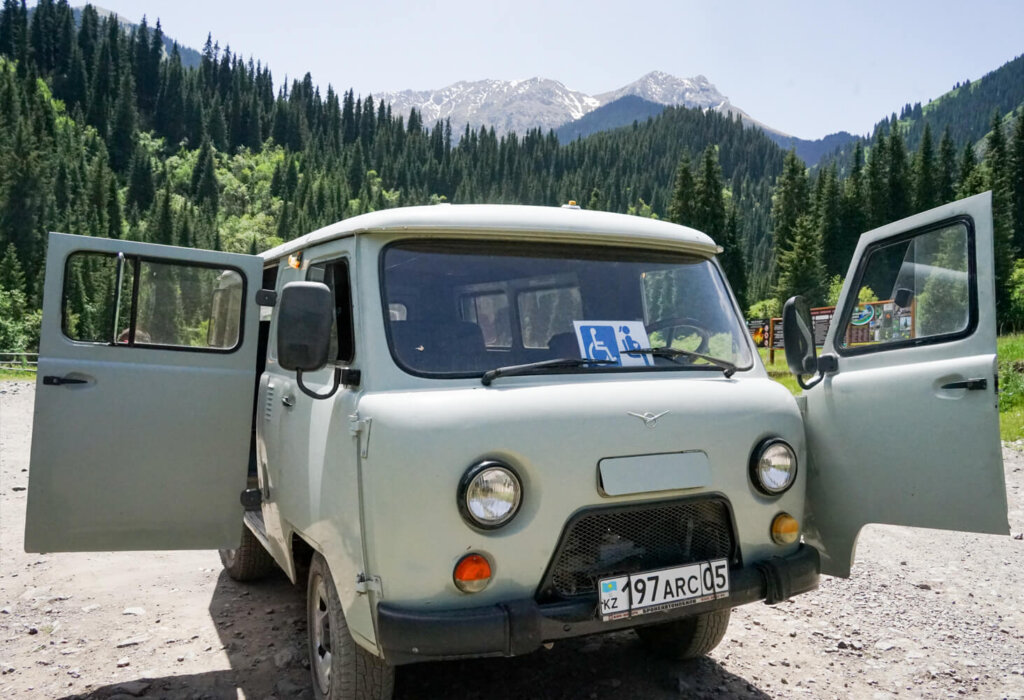
You can also take a taxi to a point that is closer to Kaindy Lake. And by taxi, I mean another rugged Soviet-era van. This takes about 10 minutes and costs 500 tenge each way.
However, it drops you at the side of a steep hill, which you then have to walk down. Going down wasn’t so bad, but it was still a 10-minute hike down a steep path: it was hardly any easier than the hike itself.
And I definitely wouldn’t take this route for the way back, considering how steep the hill is!
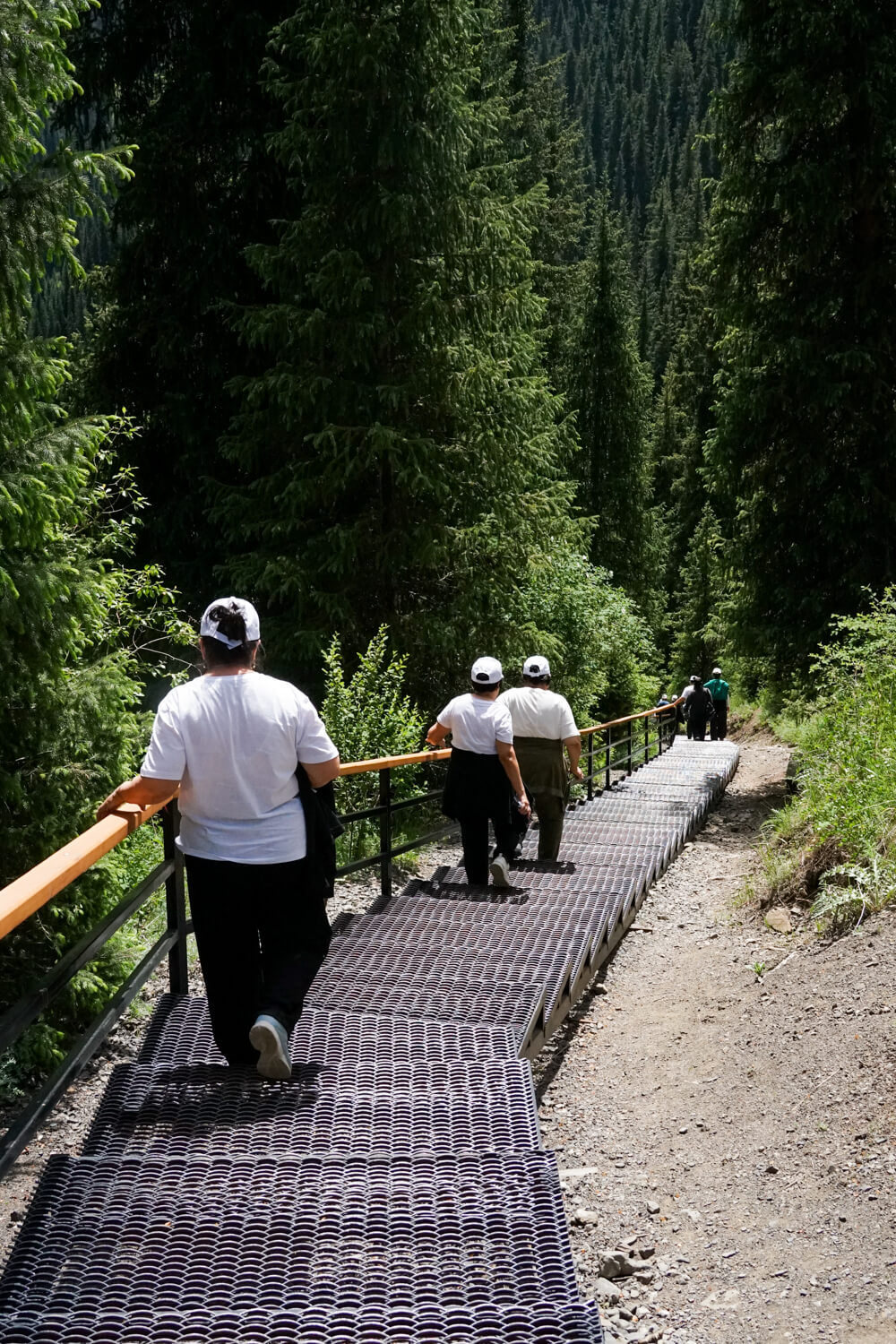
The main benefit about taking this route is that it’ll take you to a more hidden vista point that most travelers who just do the walk by foot might never know about it! However, here I am telling you about it.
If you come from the hiking path, just keep walking alongside the shore until you can’t walk along the lakeside anymore.
At that point, find a path that veers up to the left, pass through a small restaurant area, and then look to your left again back over the lakeside.
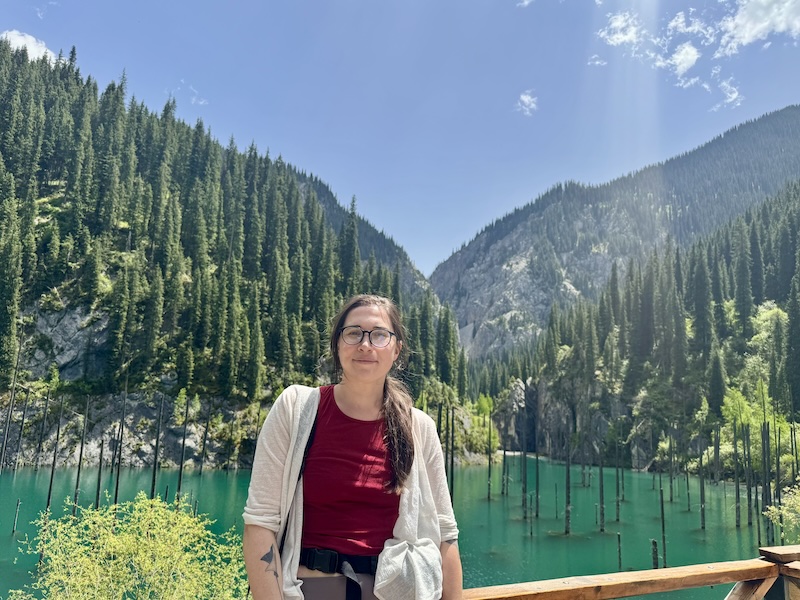
You should see a panoramic vista area with a guard rail: this is where you’ll get one of the best views of Kaindy Lake!
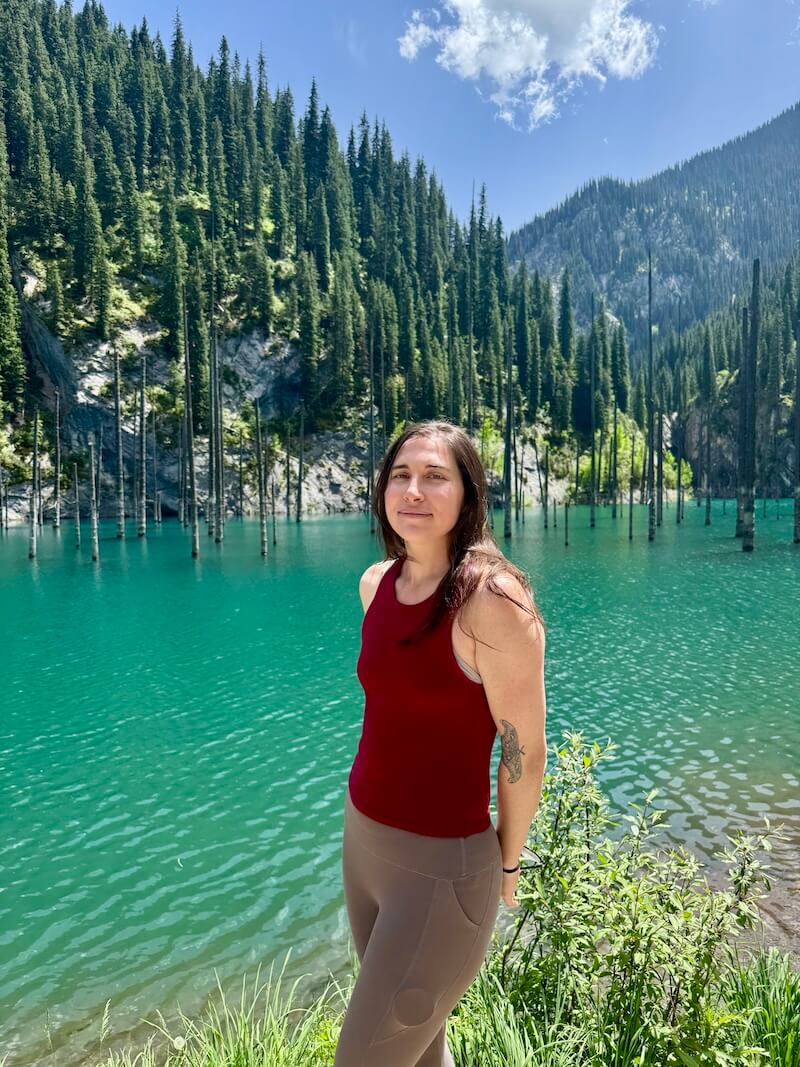
As I was traveling solo I just asked another group of travelers to take a photo for me and they kindly obliged.
Option 3: Horseback Riding
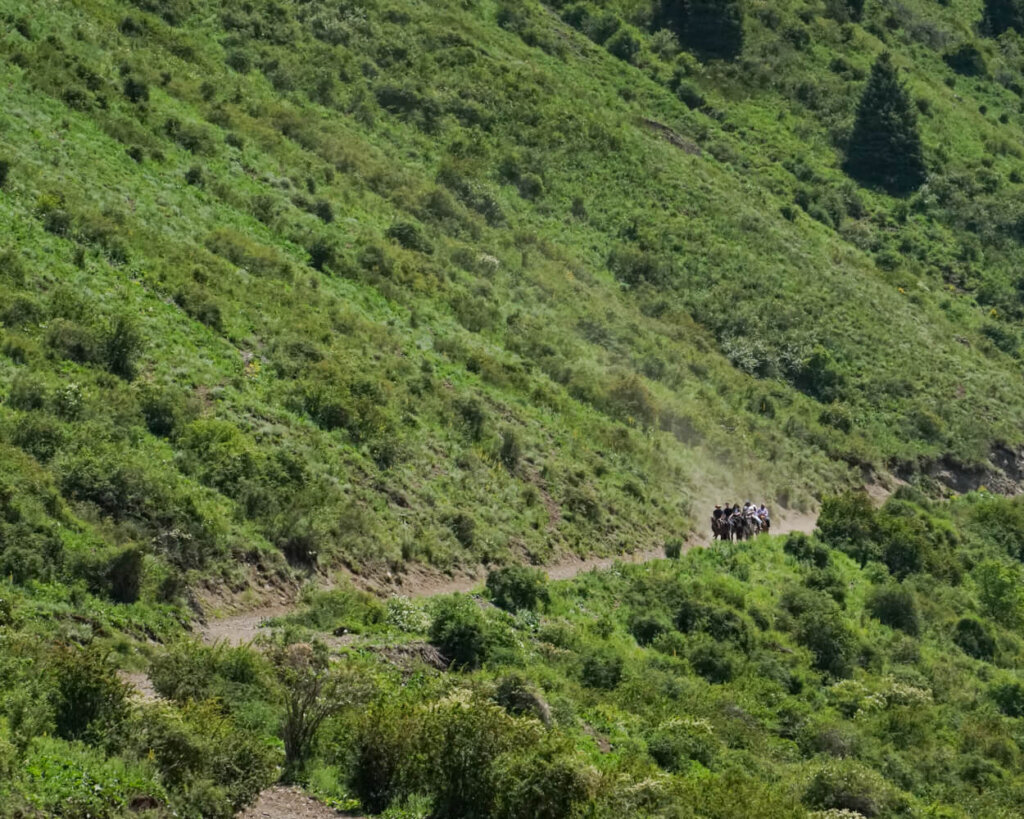
Horseback riding is a popular alternative and gives the trip a distinctly Central Asian feel. Riding a horse in Kazakhstan is on many travelers bucket lists, so why not tick it off here?
Current prices at the time of my visit were:
- 10,000 tenge for a round-trip ride
- 7,000 tenge one-way ride (you hike back the other way)
This isn’t the option that I chose as I’m not a big fan of riding horses after seeing one too many people get bucked off a spooked horse!
However, I spoke to two people on my tour who chose the horseback option and they absolutely loved it. So if it appeals to you, I would definitely recommend doing it at least one way!
Practical Tips for Visiting Kaindy Lake
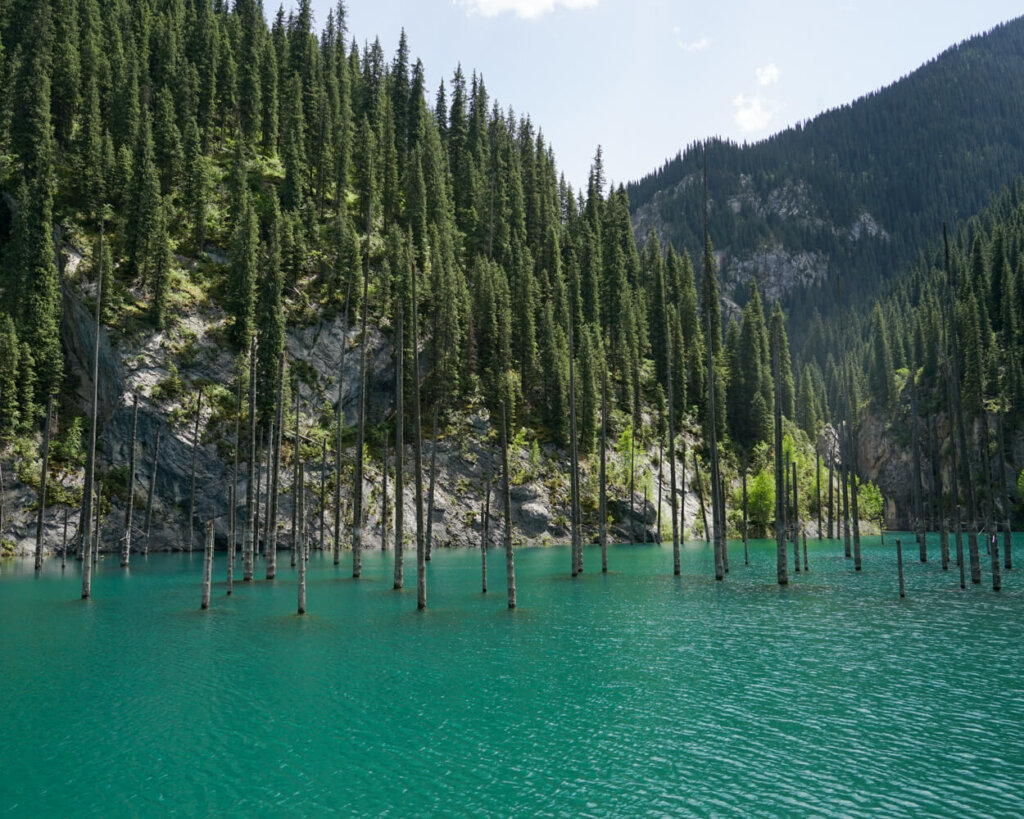
- Try to visit around midday and in the sunlight. The lake’s color changes dramatically throughout the day. Sunlight brings out vivid turquoise tones, while cloud cover creates deeper blue tones. If you’re on a guided tour, I know you probably have little control over this! But be prepared for the light to drastically change your experience of the lake.
- Be aware that other tour groups have this same exact knowledge… meaning that Kaindy Lake is likely to feel very crowded when you visit because it’s a relatively small amount of shoreline and a relatively popular day trip with a very specific window of optimal sunlight.
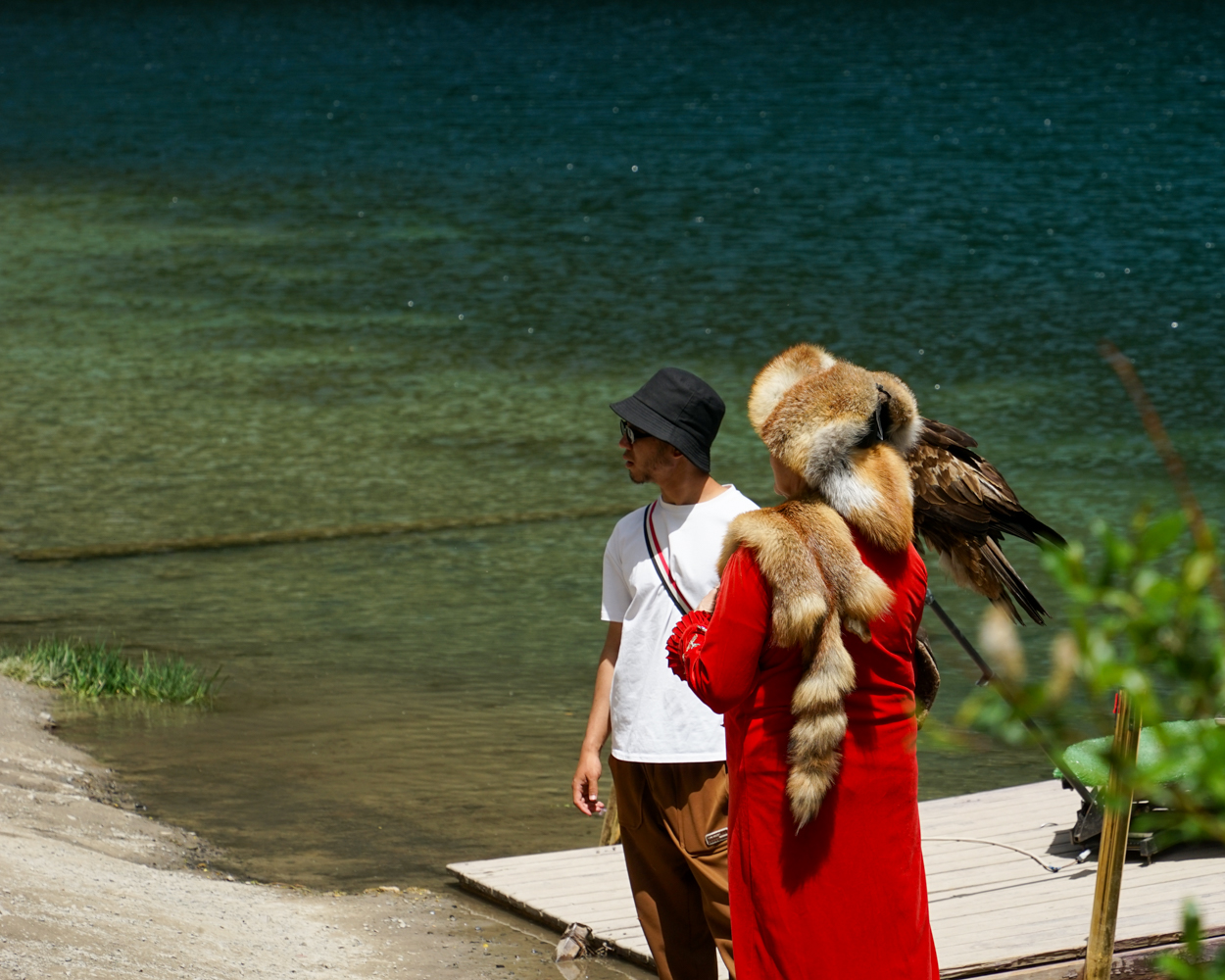
- Continuing that, the lakeside — while beautiful — can be a bit chaotic. There is not a lot of space, which means that you do have to step around people quite a lot. There’s also a lot happening — people attempting to get you to take a photo with a falcon, spinning selfie sticks (seemingly a Central Asian standby) — so that can add to the more busy feel of what is otherwise a beautifully tranquil environment. Another man was going around taking candid DSLR photos of travelers and trying to sell them, which I didn’t love. I respect the hustle, but I wish he would have asked before taking photos of you.
- Bring cash! A lot of small, random unexpected costs can arise on a trip: whether it’s horseback riding, supplemental transportation, overpriced bottles of water, or a meal that is surprisingly not included in what you booked despite it not saying anything to the contrary. I *almost* didn’t bring enough cash as this was my very last stop in Kazakhstan (I would literally head to the airport as soon as I arrived back in Almaty). I suggest bringing a minimum of 10,000 tenge and more if you want to do horseback riding.
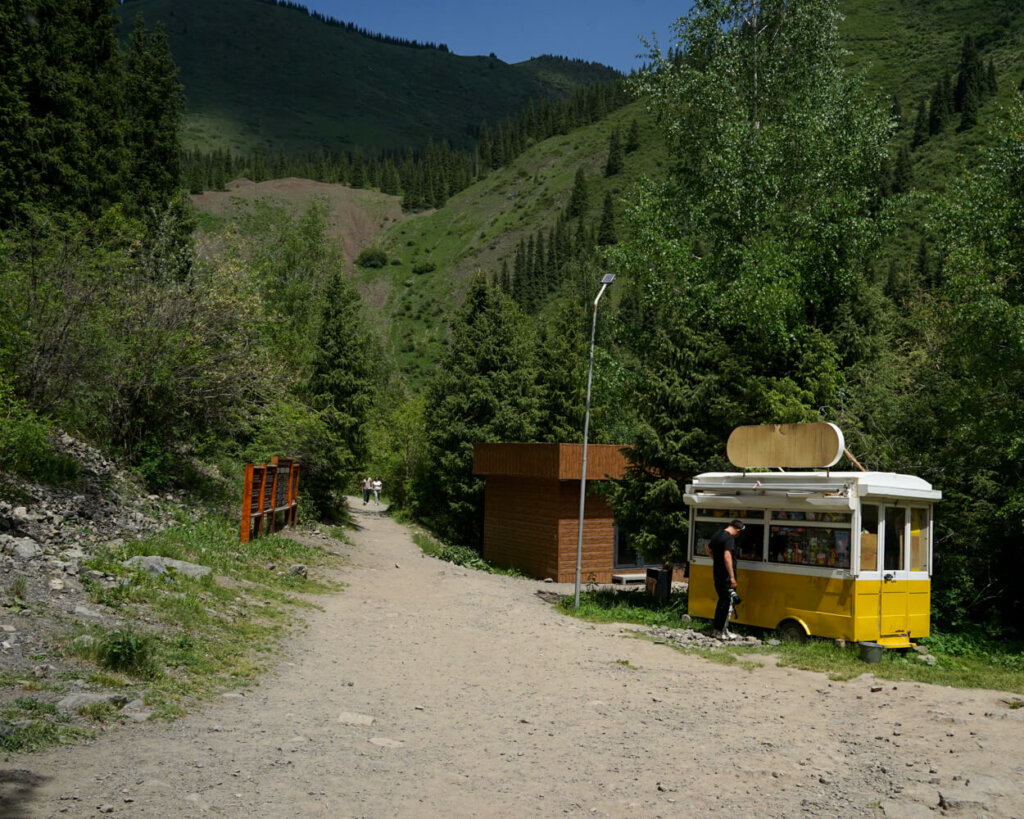
- Bring snacks! We visited Kaindy Lake as soon as we got to Saty and didn’t eat lunch until very late, around 2:30 PM. If you get hunger headaches easily, this may be annoying, so be prepared.
- Give yourself time to explore the viewpoints above the lake rather than only visiting the shoreline.
Is Kaindy Lake Worth Visiting?
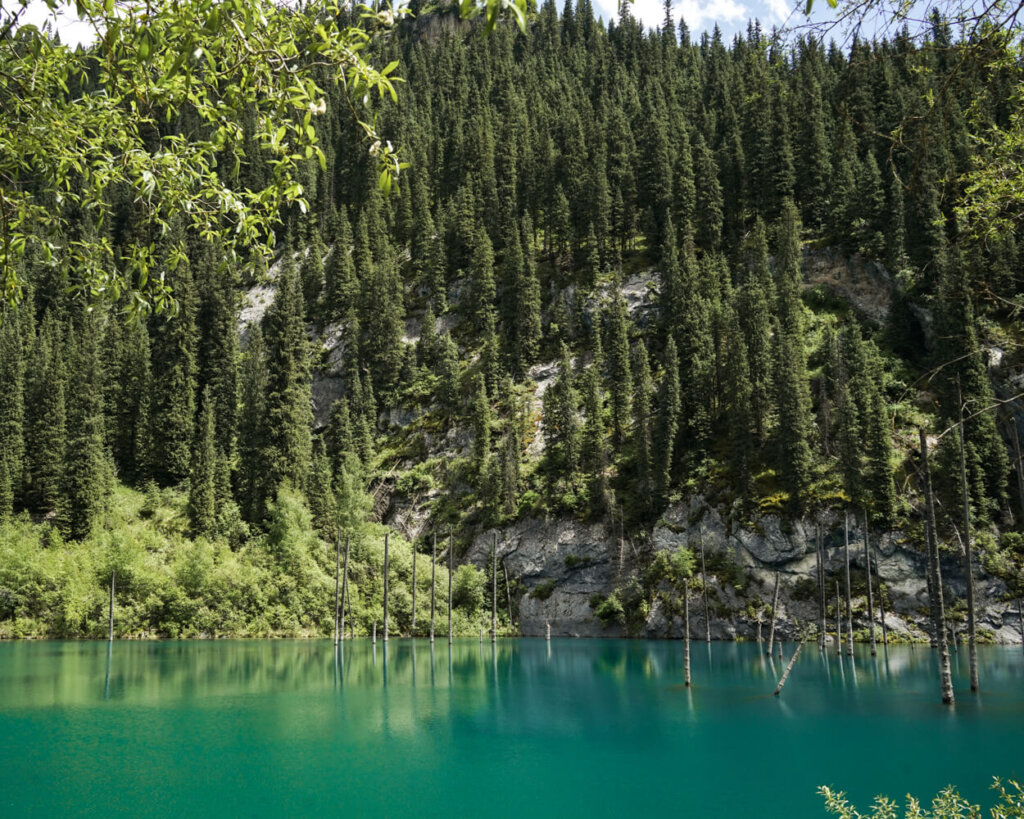
Absolutely. I can’t think of another lake in the world that offers the same combination of geological history, unusual scenery, and relative accessibility (although it’s not necessarily wheelchair accessible in my opinion, it is a rather easy hike).
The indelible image of the submerged spruce forest sunken in constantly shifting colors of the water makes Kaindy Lake one of Kazakhstan’s most memorable natural wonders.
Convinced? Book this 2-day Kaindy, Kolsay & Charyn Canyon tour, or this day trip if you have less time!

Allison Green is a former teacher who has been travel blogging since 2016, visiting 75+ countries in total. She has a Masters in Teaching and a B.A. in English and Creative Writing. As a former educator, she merges her writing and educational experience to encourage ethical, sustainable travel. She has been a speaker at the World Travel Writers Conference and TBEX. Her writing, photography, and podcasting work has appeared in National Geographic, CNN Arabic, CBC Canada, and Forbes, amongst others. When she’s not on the road, she lives in Bangkok, Thailand.