

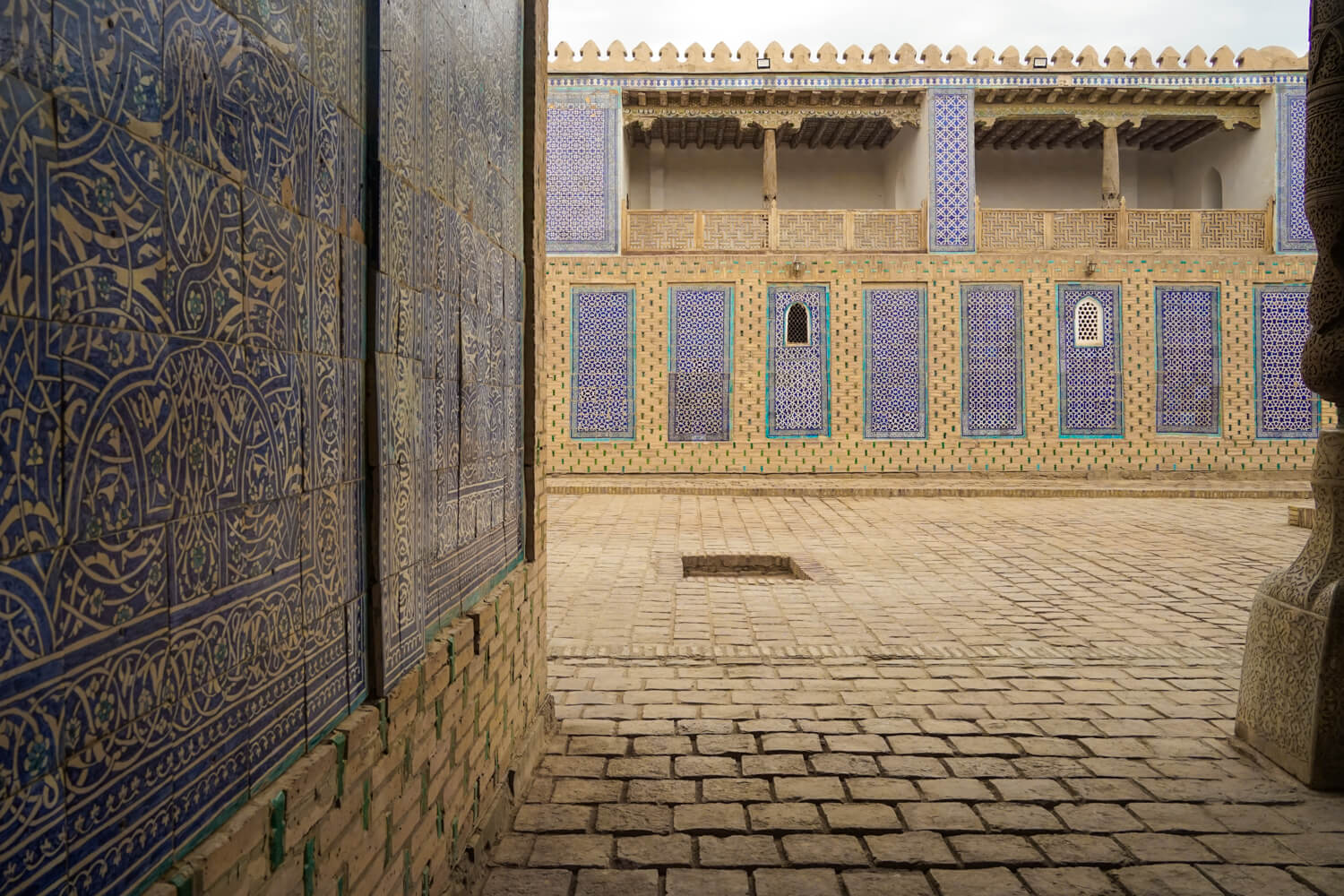
A Quick Guide to Toshhovli Palace, Khiva
Within the UNESCO-listed fortified city of Itchan Kala, there are many places that easily take your breath away: this part of the city packs more sights per square inch than anywhere else I can think of in the world.
And yet tucked away behind rather nondescript stone walls — hence its rather literal name, meaning Stone Palace in Uzbek — is my favorite sight of all. It is rather well-known, but just in case you might possibly miss it, I’m here to tell you: visiting the blue-tiled Toshhovli Palace is something that you should absolutely prioritize on your trip to Khiva.
| 🇺🇿 Planning Khiva at the last minute? Here are some tips! 🕌 Top Khiva Tours & Attractions 1. Historical Walking Tour of Khiva (#1 pick — my guide was great) 2. 4 Ancient Fortresses Day Tour (see the historical region outside of Khiva — can also do en route to Nukus, if visiting. This is what I did.) 3. 1-Hour Bread Master Class (make bread the traditional Uzbek way, in a tandir!) 🏨 Top Khiva Hotels 1. Khiva Siyovush Hotel (stayed one night, gorgeous mid-range boutique hotel inside the city walls) 2. Madrasah Polvon-Qori (friend stayed here & loved, boutique hotel in a 19th century madrasah, just outside of the East Gate to Itchan Kala) 3. Oqilanur Guest House (stayed one night, located inside the city walls, charming budget guesthouse) 🚆 TIP: Book your train tickets ahead of time, especially if taking the sleeper train from Tashkent! Train tickets often sell out on the official Uzbekistan train website (and the website is glitchy). You can buy them at a small up-charge on the 12go.asia site — it will be much cheaper than going through a travel agent. |
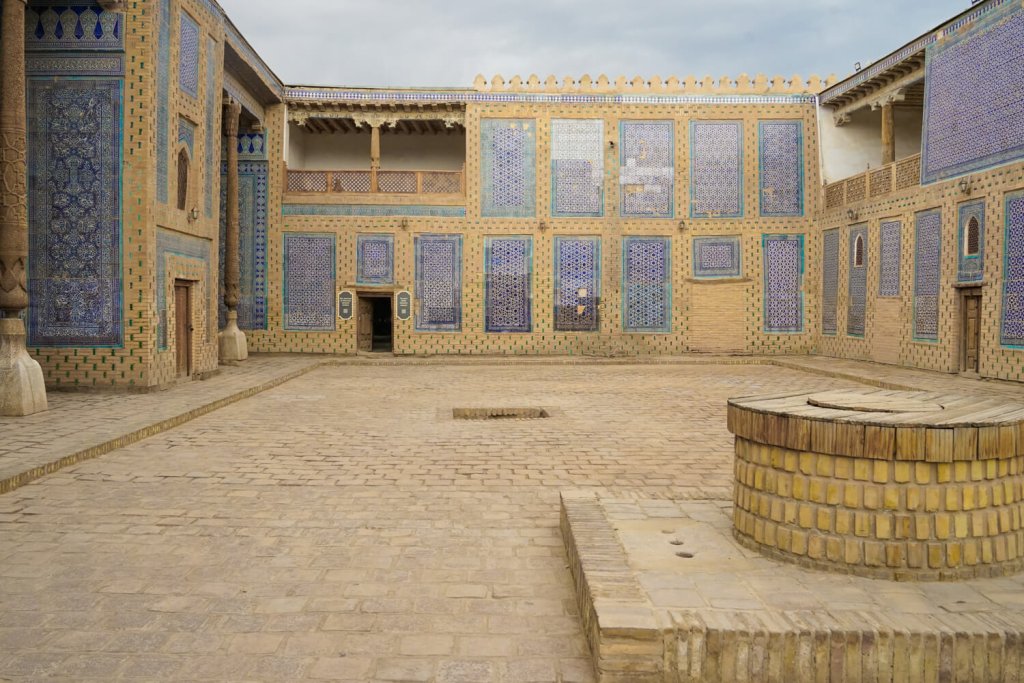
Entry to Toshhovli Palace included in your entry ticket to the Itchan Kala, and there is no additional fee to see the palace (unlike a few other sights in Khiva).
Here are a few of the things that make Toshhovli Palace so special, and what you should be looking out for while you’re there!
The Courtyard
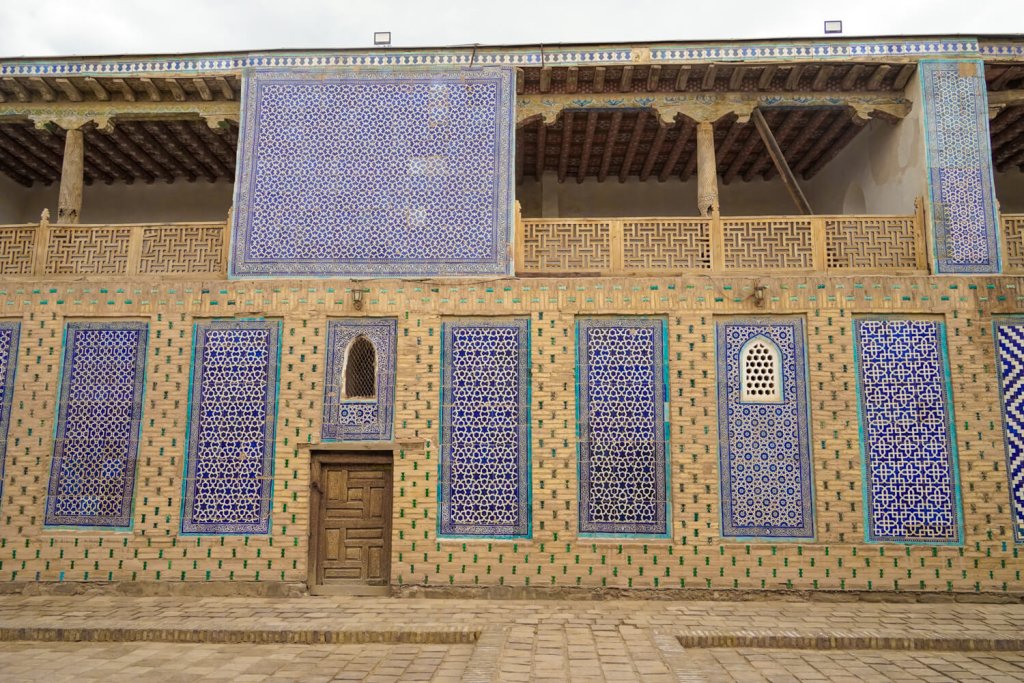
Mostly, you’ve probably come to Toshhovli Palace for its iconic courtyard and general tilework. You won’t be disappointed, as this UNESCO-protected palace has been faithfully and beautifully maintained.
The courtyard can get rather busy at times, but if you wait for moments when the groups disappear into a side-room or a museum, you can have it briefly to yourself!
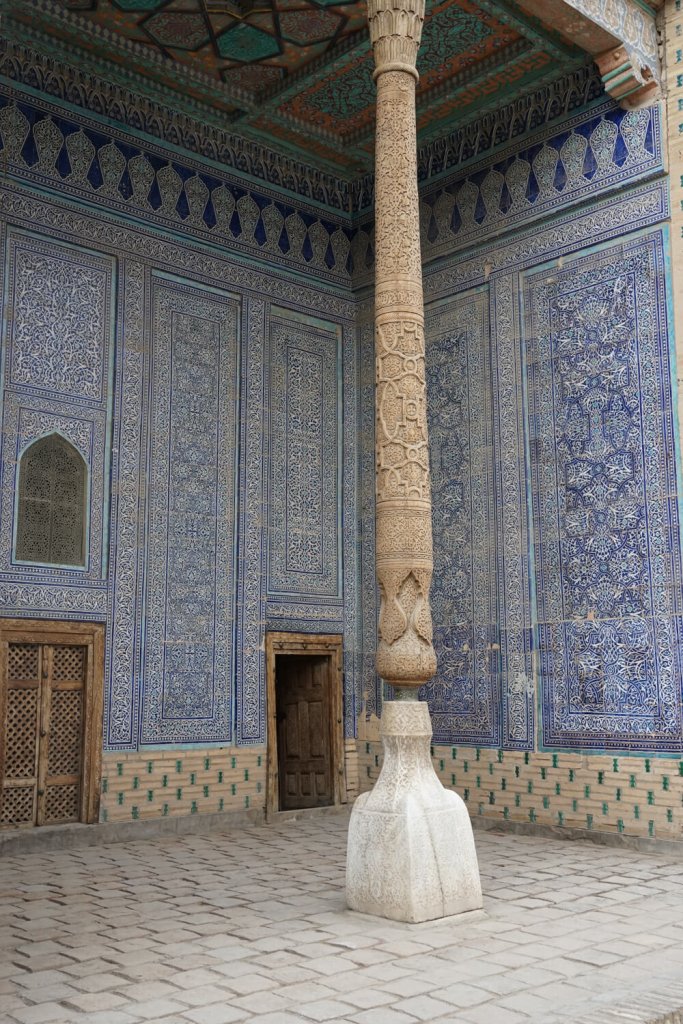
That being said, there are some particularly popular photo spots, like outside of the first room (the next item on this list).
I noticed a lot of people posing in this area, probably because it combines several Khiva architectural elements all into one small area.
First Room: Furnished Traditional Room
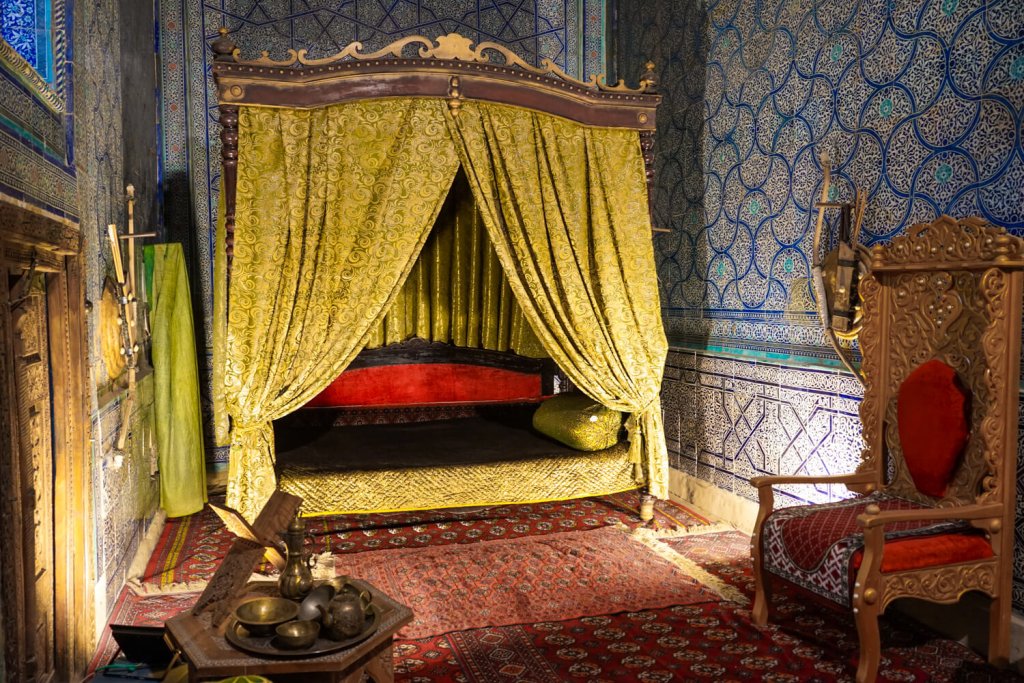
Starting off facing the palace after you’ve entered, be sure to step inside to the first door on your left. This is the only furnished room of the palace, so it will give you a little glimpse into what the actual decor of palaces of this era were like.
It features a small bed with a four-poster style drapery, ornate wood furniture (Khiva is known for its woodworking), and traditional Uzbek rugs covering the floor.
Second Room: Adorned Hallway
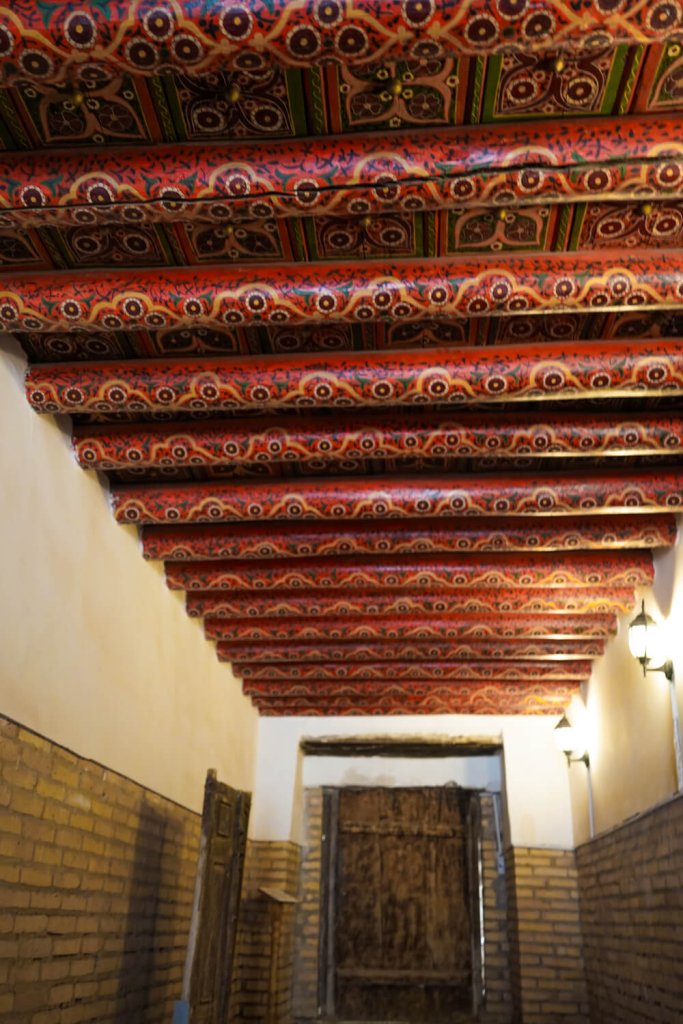
After you enter the main room that has a bedroom on the left side of the palace, there’s another small room. Don’t miss this one!
In here, you’ll find a small hallway with some of the most beautiful painted ceilings, where the wooden ceiling itself as well as the beams are embellished in a colorful floral pattern.
Third Room: Archaeological Ruins
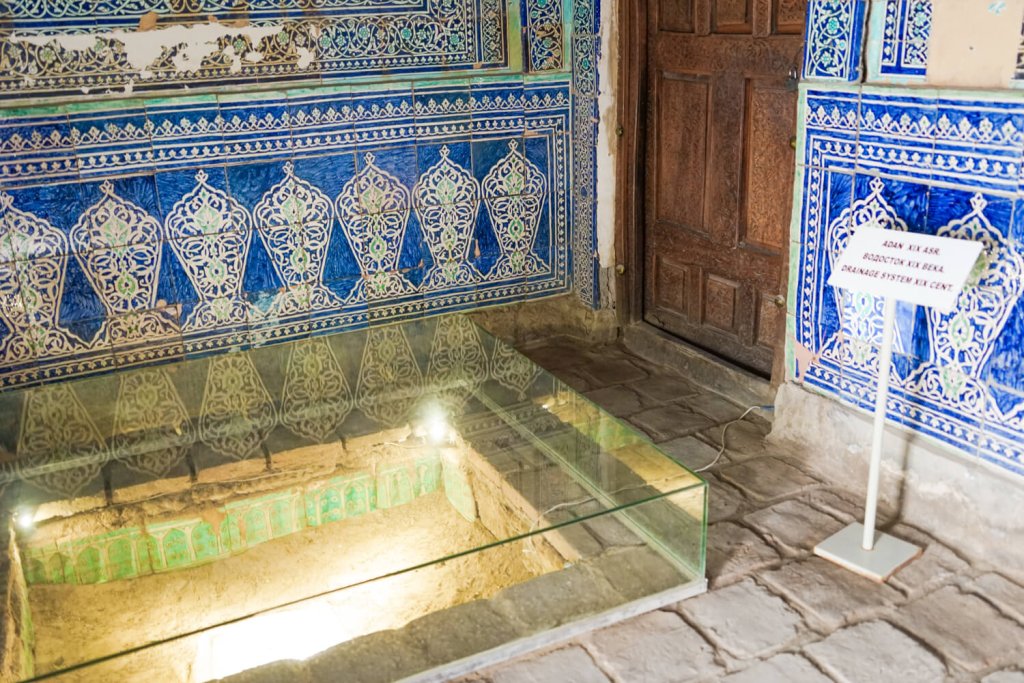
Finally, the third room on the left side as you enter the palace, you’ll find a small little alcove that features a lot of blue Timurid-style tilework on the interior as well. This area’s tiles are a little more weathered but still beautiful.
They’ve excavated a portion of the stone floor so you can see the drainage systems that were once used by the residents of Toshhovli Palace.
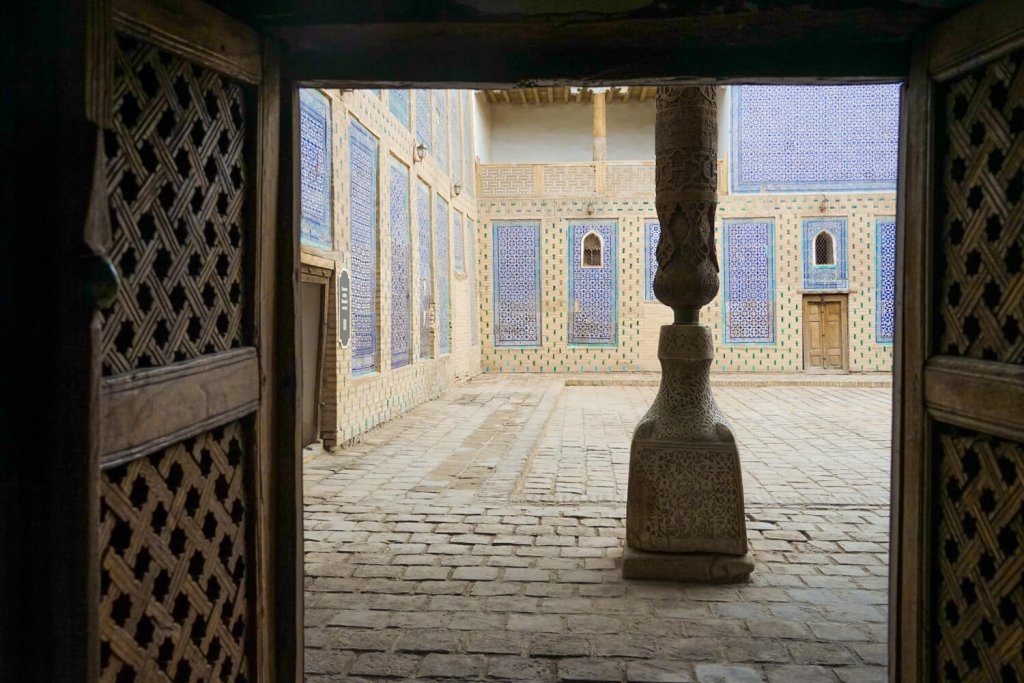
The view looking out of this room is also rather beautiful as you can capture the striking difference between some of the tile-adorned palace walls and the woodworking on the doors and pillars.
This was one of my favorite corners to photograph in the area, and it’s a lot quieter than some of the other parts of the palace.
Fourth Room: Khorezm National Clothes Museum
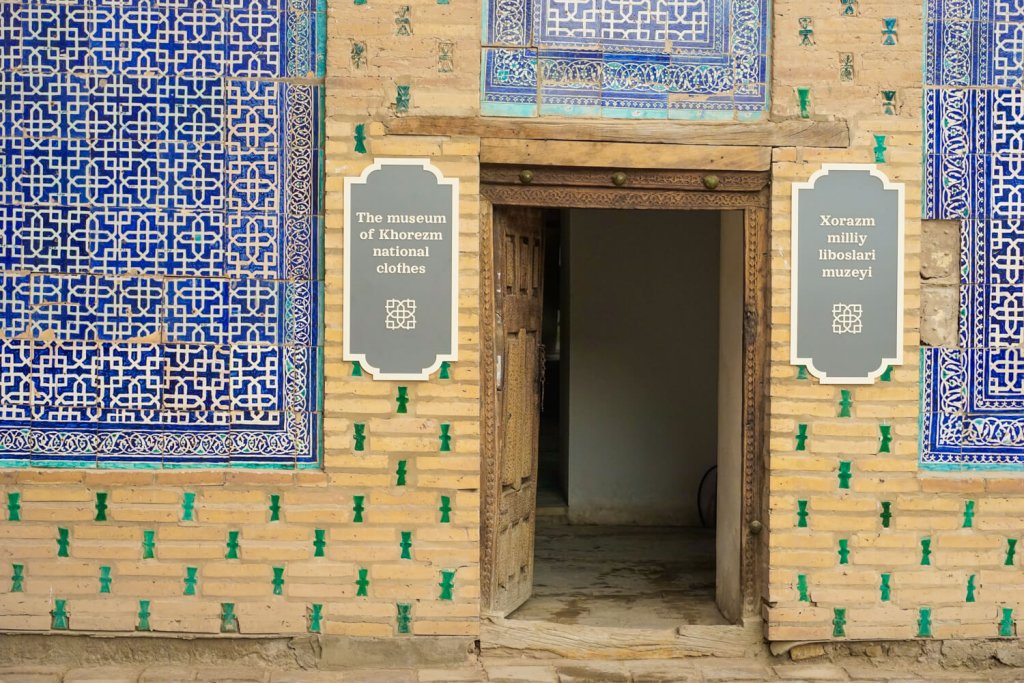
Located directly across from the entrance to the palace, you’ll find the Khorezm National Clothing Museum. Khiva is part of the Khorezm region of Uzbekistan, one of its oldest and most diverse regions dating back at least 2,700 years of human settlement.
As a result, Khiva blends its Zoroastrian roots (which you can see by the green ‘bowtie’ shaped tile, which is omnipresent in Khiva but you won’t find in other parts of the country), with its more traditional Uzbek Timurid and Islamic roots.
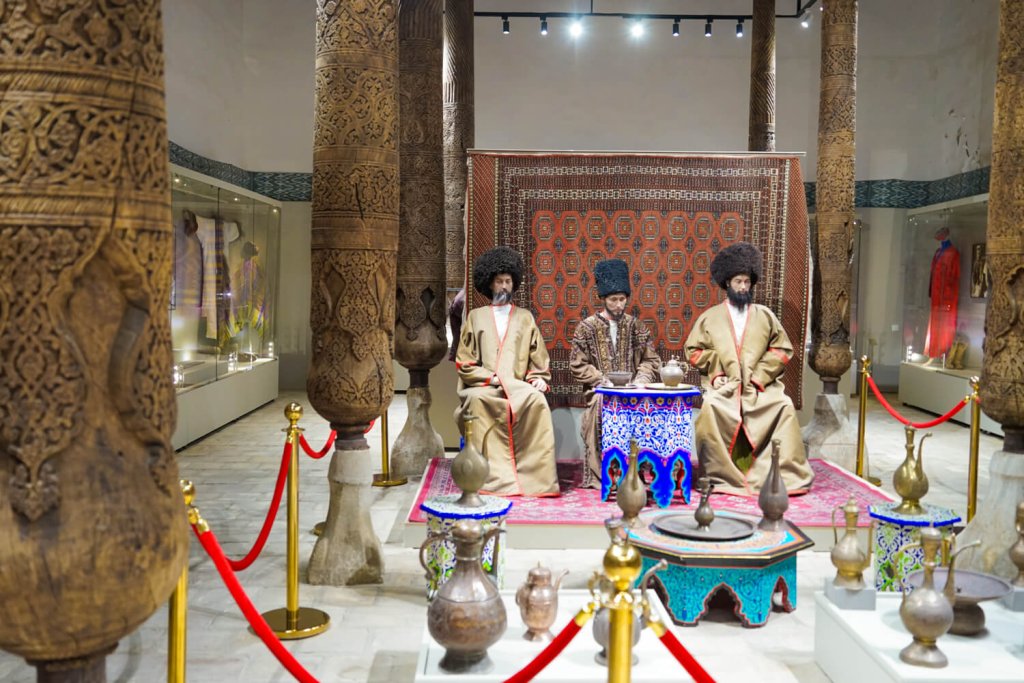
Stepping inside the Khorezm Museum, you can see some of the traditional clothing worn by the people of this region. There are a few key differences: most iconically, the black fur hats (chugurma) worn by men in the region. They are now a common souvenir from Khiva.
While these tall fur hats may seem paradoxical for a desert country, apparently they breathe very well and keep you from overheating on a hot summer’s day, but also work just as well in winter to keep you warm. With temperatures around 37 °C during my trip to Khiva, let’s just say I didn’t try one out!
Fifth Room: Small Chamber
On the right side of the palace, there aren’t many rooms you can enter, although there is one small one that I quite liked and is worth visiting so you don’t miss out.
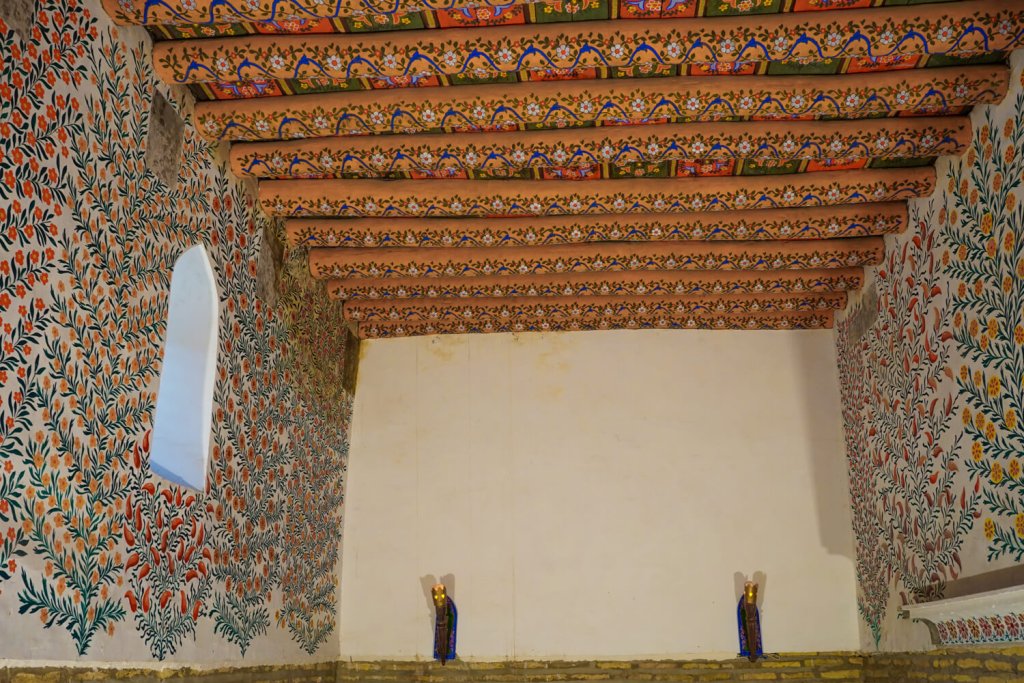
The ceiling is similar, but not identical to, the ceiling you’ve seen in the other hallway (second room on this guide). But in addition to the ceiling being painted, this small area of the palace has the beautiful floral painting on the walls as well, reaching their roots up to the ceiling where they seem to merge, like a trellis, with the beams and ceiling.
There are two rooms in this style which you can walk around. They are both worth a look!

Allison Green is a former teacher who has been travel blogging since 2016, visiting 75+ countries in total. She has a Masters in Teaching and a B.A. in English and Creative Writing. As a former educator, she merges her writing and educational experience to encourage ethical, sustainable travel. She has been a speaker at the World Travel Writers Conference and TBEX. Her writing, photography, and podcasting work has appeared in National Geographic, CNN Arabic, CBC Canada, and Forbes, amongst others. When she’s not on the road, she lives in Bangkok, Thailand.