

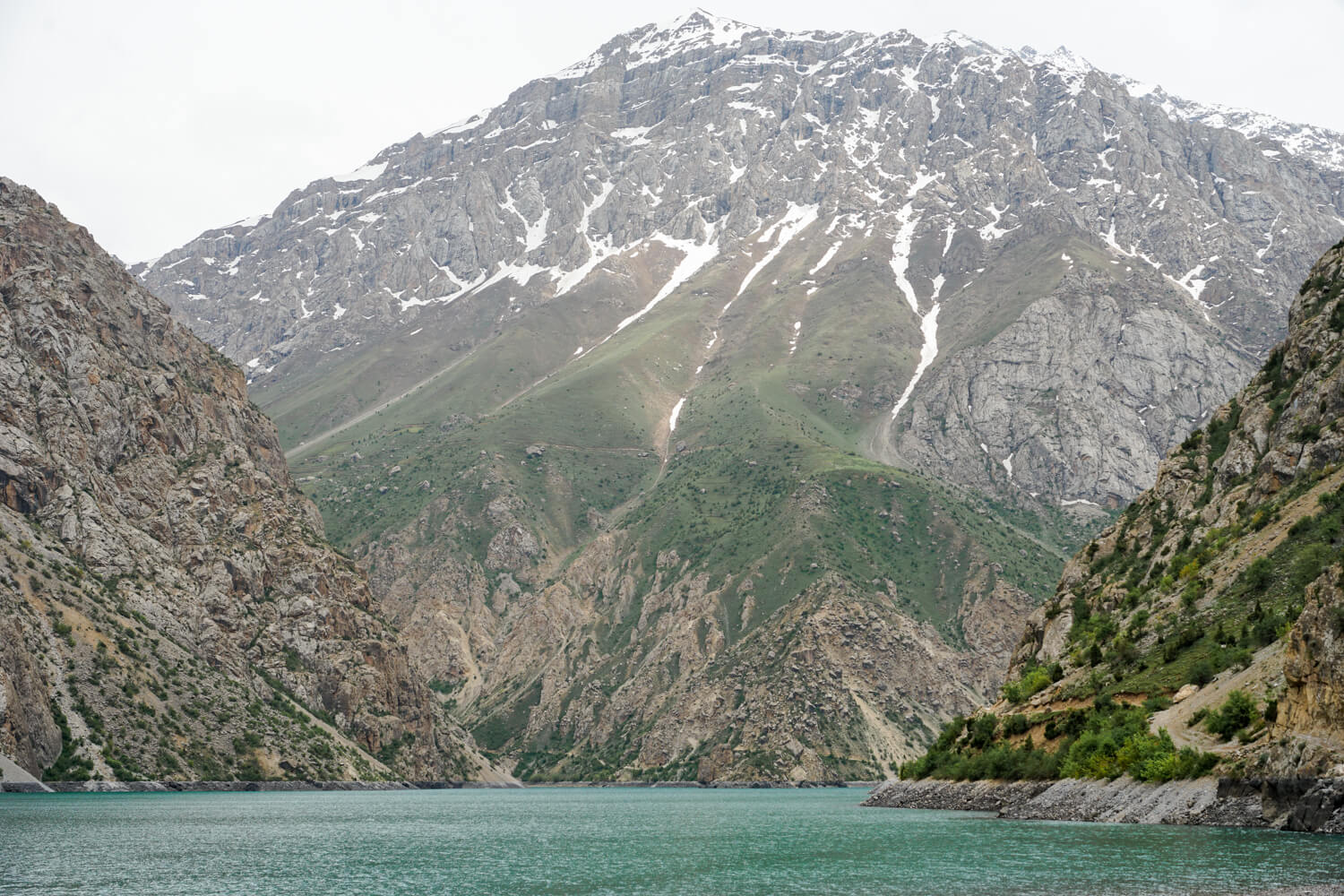
Seven Lakes, Tajikistan: Is It Worth a Day Trip from Samarkand?
Normally, I like to see a country as in-depth as my time allows; I don’t visit countries just to say that I’ve “been there, done that.”
However, my Central Asia trip was already quite long by my standards, which unfortunately meant that Tajikistan was going to be out of the cards… until I realized there was a day trip from Samarkand to the Seven Lakes of Tajikistan.
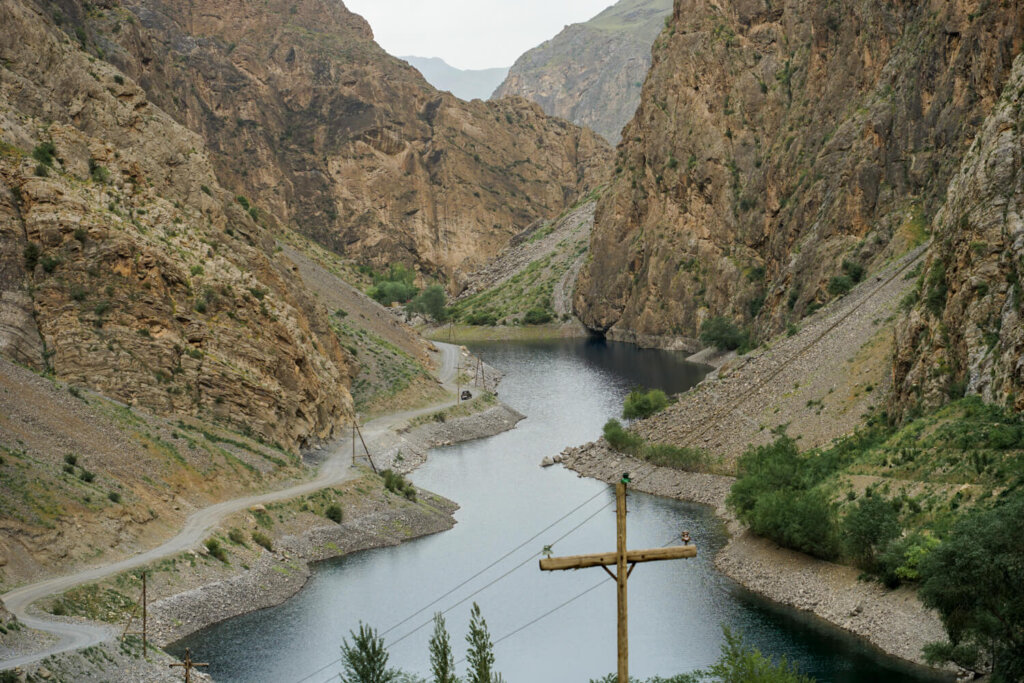
Not sure which of the 7 Lakes from Samarkand day trip to go with? There are a ton of options now and it can be overwhelming. This is the one we booked and I highly recommend it, and it’s highly reviewed by 600+ fellow travelers!
I wasn’t sure if the logistics of it would be worthwhile, but I researched it a bit further. Samarkand is less than an hour to the Tajik border.
From the Tajik side of the border, you are almost immediately in Panjakent, which is only about 45 minutes away from the first of the famed 7 Lakes (also called the Haft Kul in Tajik, or also the Marguzor Lakes after the 6th lake, which is typically the largest).
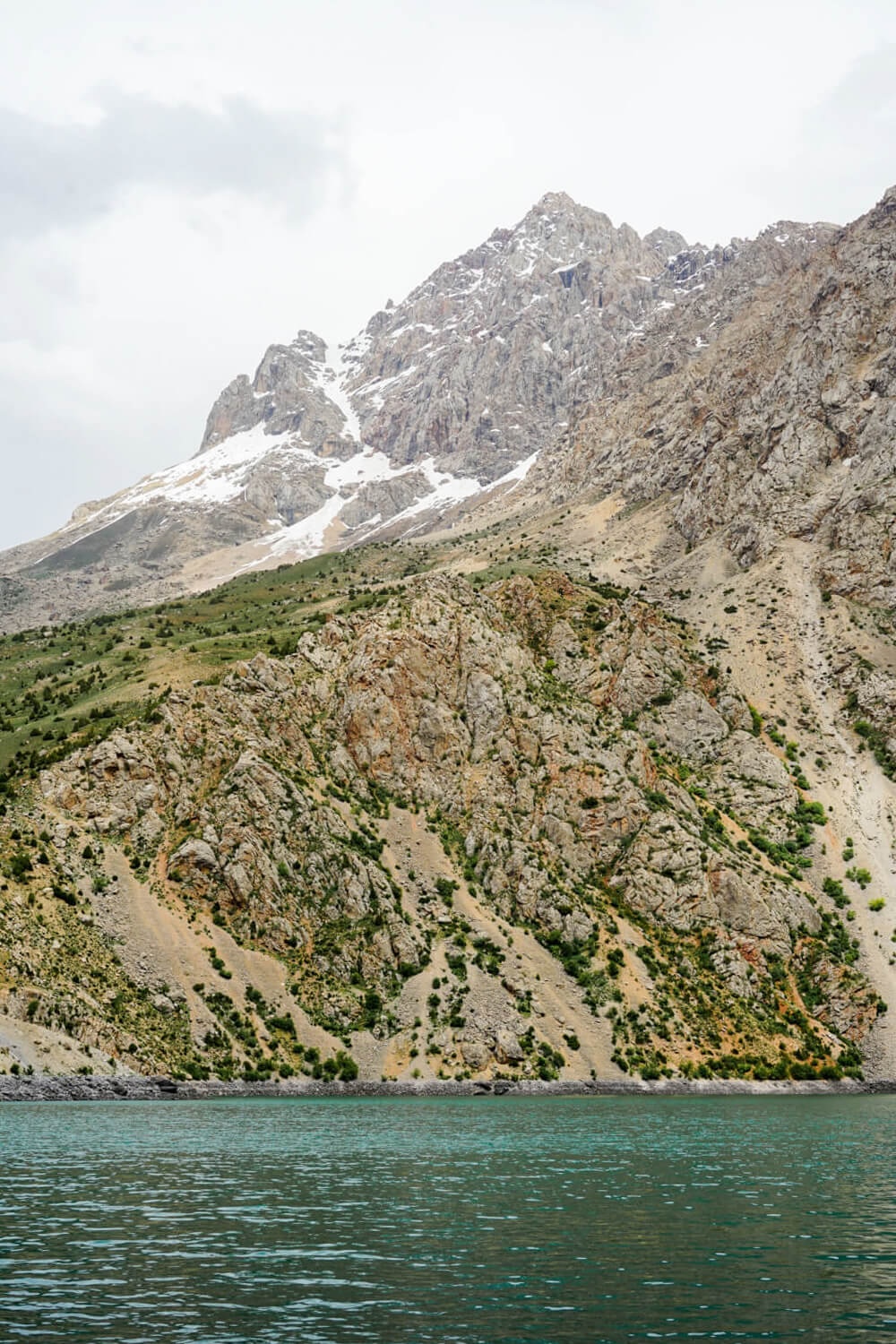
This guide to doing a day trip to the 7 Lakes of Tajikistan from Samarkand will walk through a typical day’s itinerary.
It’ll also tell you what the border crossings are like, what to expect, and my general impressions of the tour I took and if it’s worth your time.
Note: We took this tour and selected the private option, which was priced at $299 USD for up to three travelers; we split it two ways. It was more expensive this way, but we had full control over our schedule and were able to request more photo stops. Some of the other tour groups we saw were rather large, so keep this in mind when booking!
Visiting the 7 Lakes from Samarkand: Typical Day Trip Itinerary
Pick Up & Drive to the Border
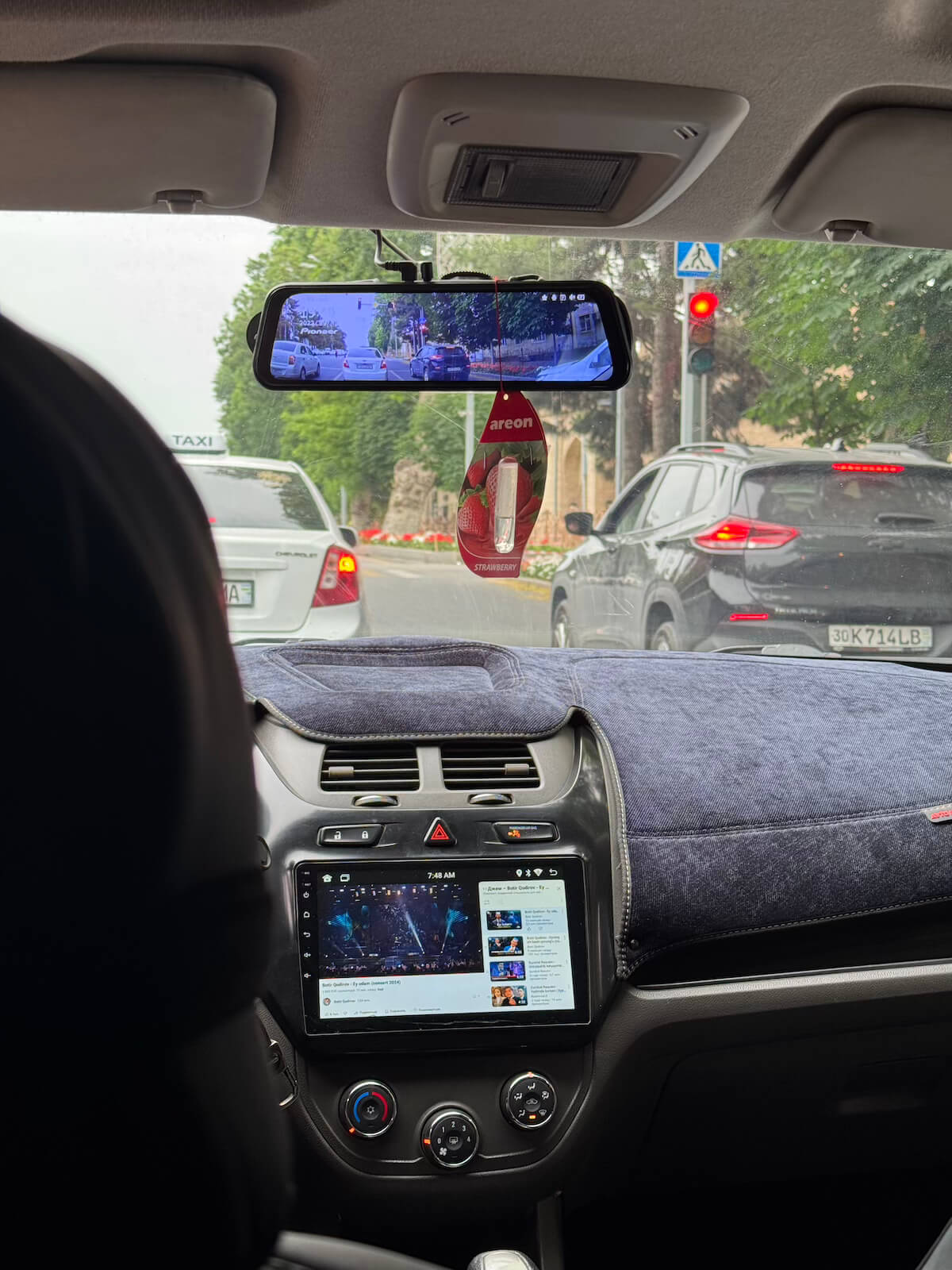
This part was one of the low points of the tour. To be honest, you have about 50/50 odds that your driver in Uzbek will be supremely distracted.
This time, the coin flip did not go in our favor; we had a driver who alternated between watching videos on the center console, texting, taking phone calls, and taking only a few scant glances at the road.
Luckily, this drive was only a little over an hour, and it was on a very straightforward stretch of road. As an aside, many Uzbeks seem to take offense to the idea of seatbelts and remove them from the car or chastise you for using one; our car did not have one. This is fairly normal in Central Asia, but some people might find it surprising.
Samarkand-Panjakent Border Crossing
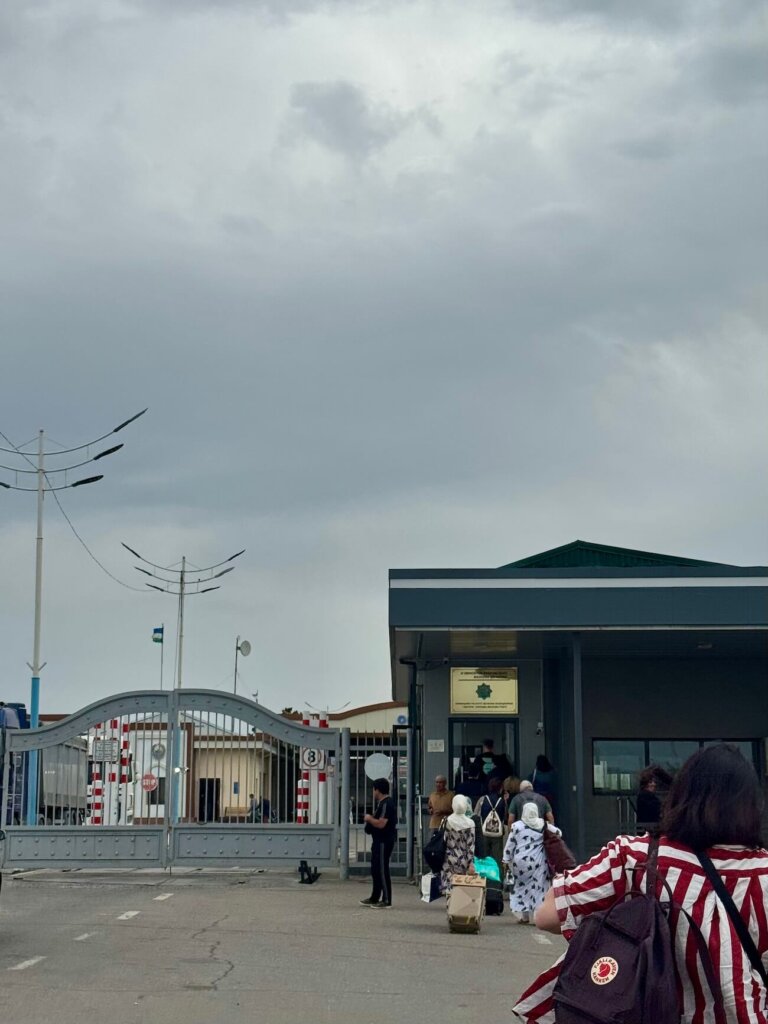
This was easily the most chaotic part of the day! It had both me and my travel buddy Megan wondering if we had made some colossal mistake.
It took us about an hour and a half to get through the border crossing… which lowkey felt like it might erupt into a bar brawl at any point. I have done many land border crossings in my decades of travel. Mostly, they are pretty orderly, just slow. Not this one.
Several women were shoving and trying to get ahead in the line. At one point I had my hands up, protecting an old man with a tremor from getting pushed around. I’ve never seen anything like that before.
Getting stamped out of Uzbekistan was the most time consuming part. Getting stamped into Tajikistan was less chaotic, but it still took ages. We finished the border crossing at 10:15 AM. We had started at 8:45 AM!
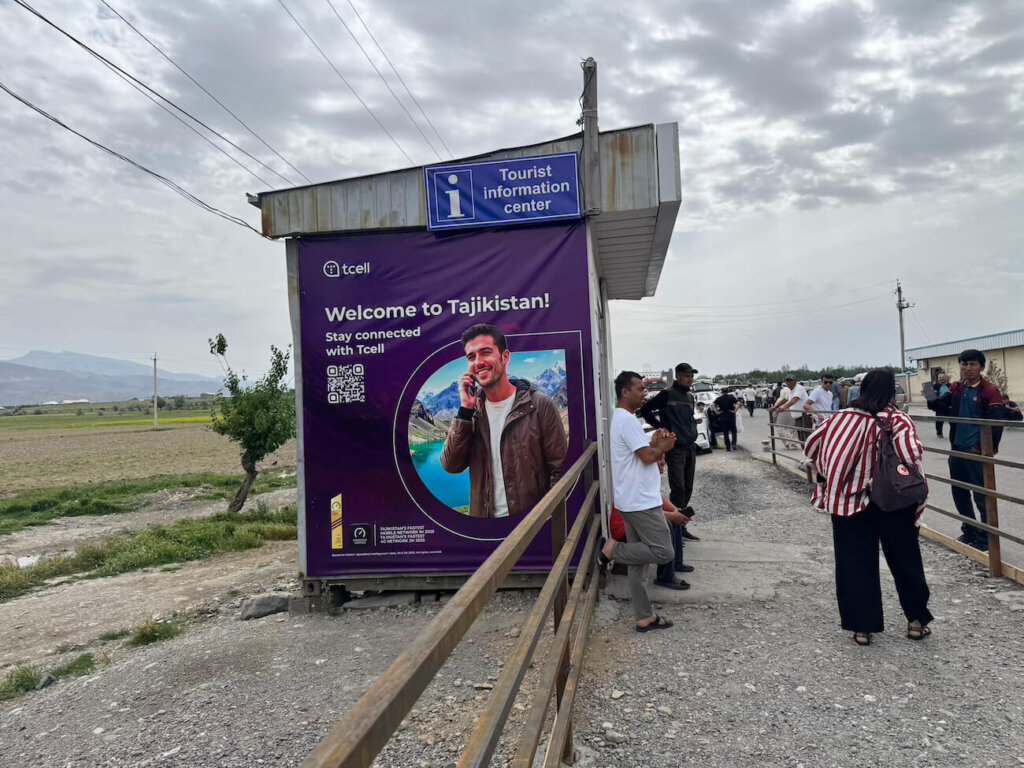
However, any headaches dissipated quickly once we met our Tajik driver and guide for the day. Luckily, he was orders of magnitude better in terms of his driving skills than our driver on the Uzbek side.
He drove safely, happily fulfilled any of our requests, and spoke excellent English. He really made the trip excellent!
Note: I traveled with an American passport and I did not require a visa for Tajikistan or Uzbekistan. Please check your country’s rules regarding whether you need visas for Tajikistan and/or Uzbekistan before planning this day trip.
Panjakent for the Bazaar & Supplies
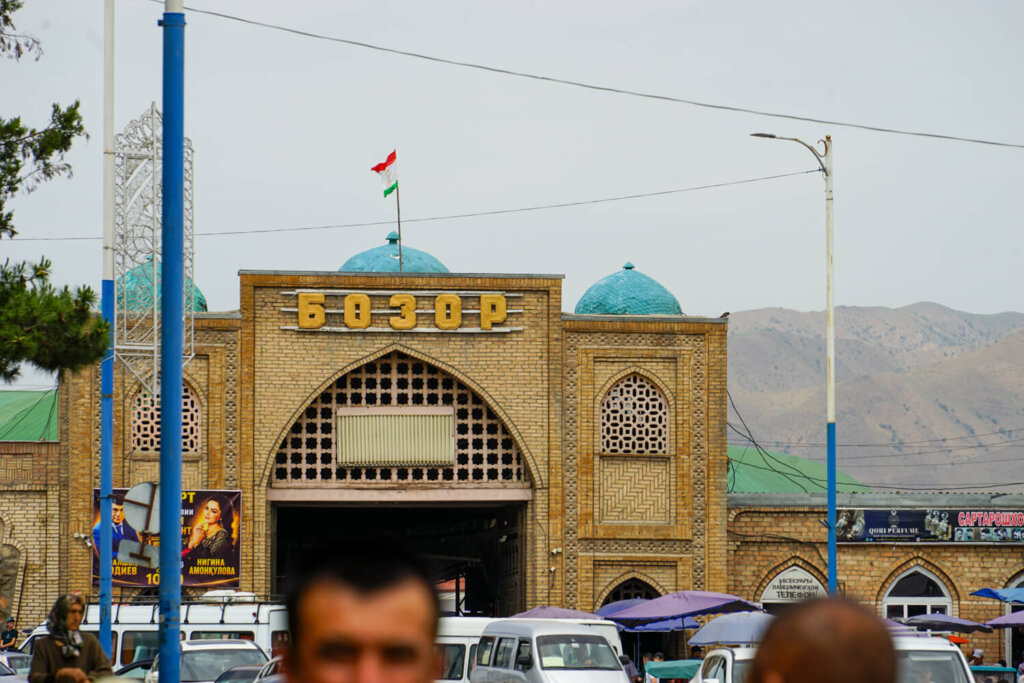
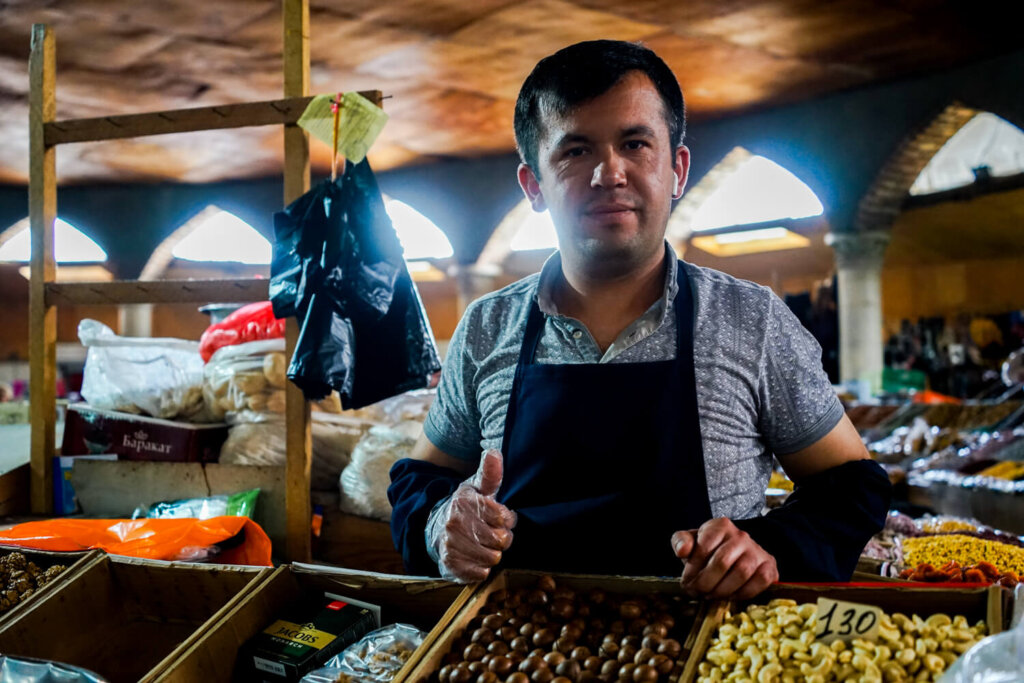
The border is really close to Panjakent, so you’ll make a stop here to grab some supplies for the day and also explore the bazaar (bozor in Tajik).
Before we went to the bazaar, our driver let us grab some coffees from a local cafeteria while he picked out our hot lunches to eat later as a picnic up in the mountains.
It was also a good opportunity to use a toilet before getting up to the lakes, where we wouldn’t have a toilet until the 4th lake.
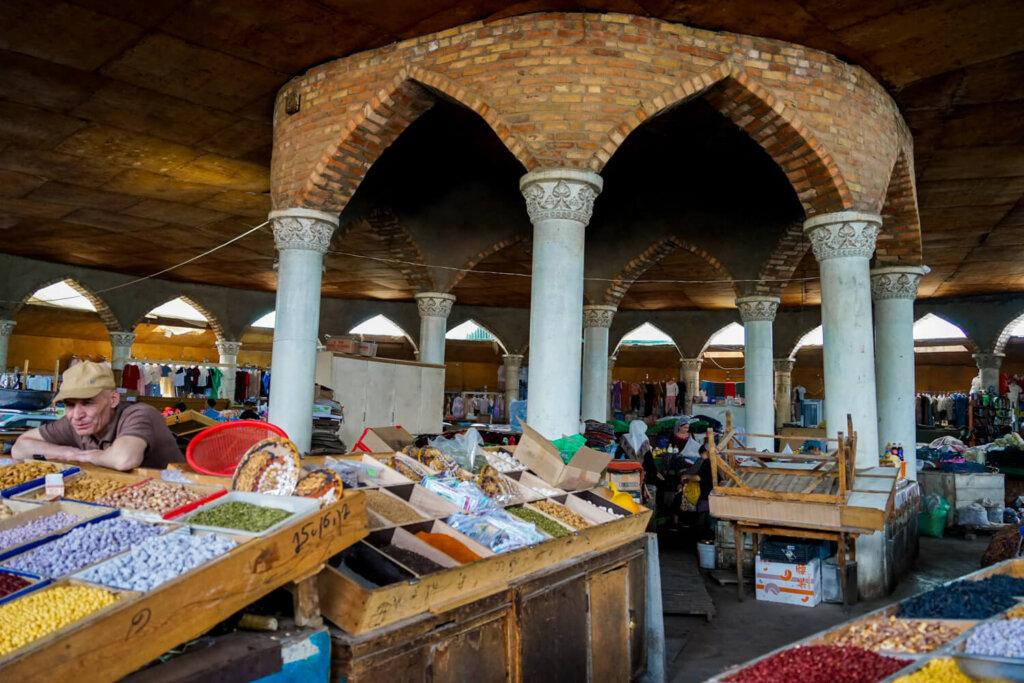
After we had our coffee and bathroom break, we made our way to the bazaar and got a mini tour of it, and this was also our chance to shop for some extra odds and ends to snack on during the day.
We ended up with a bunch of almonds (toasted but still in the shells, which was new for me), dried apricots, pistachios, and a bag of cherries so ripe they were almost bursting!
I also grabbed a samsa for the road, because when in Central Asia…
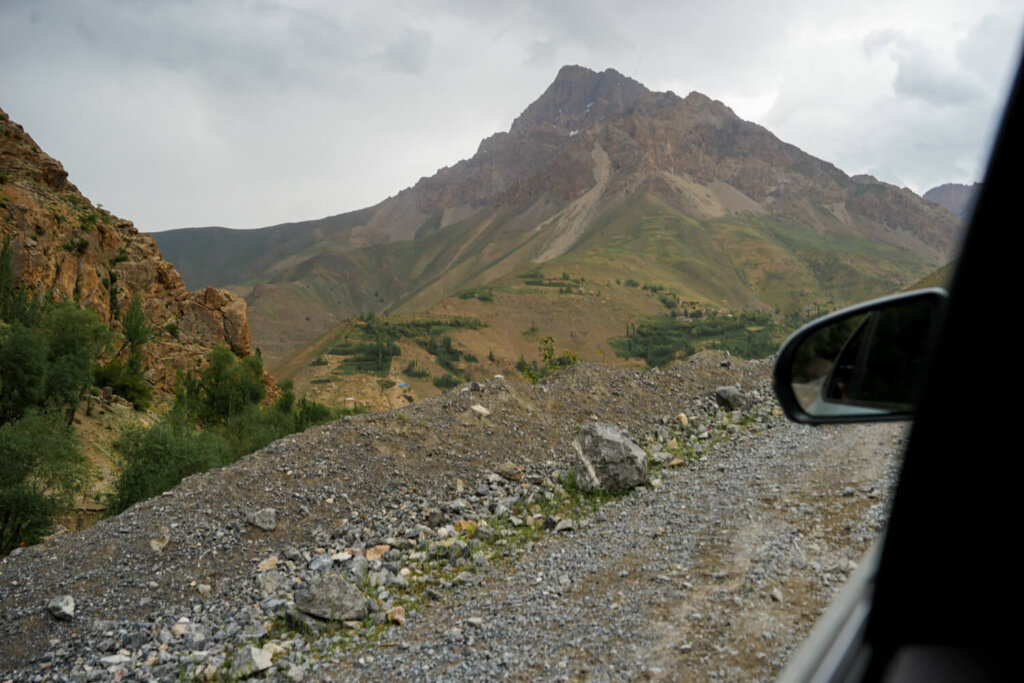
As we departed Panjakent to head to the mountain area, everything was rather easy. The roads were very good pretty much all the way.
There is a checkpoint where you have to show your passports before you get to the mountain and lake area; this is apparently associated with the local gold mine. According to our driver, the mine is a large part of the reason why the roads in this area are rather good for being a remote mountainous area.
At the time of visiting (May 2026) there was no fee to enter this area. From the checkpoint where we showed our passports, it was about 45 minutes to reach the first lake. However, after that, the lakes were pretty closely clustered together.
Lake 1: Mizhgon (Мижгон)
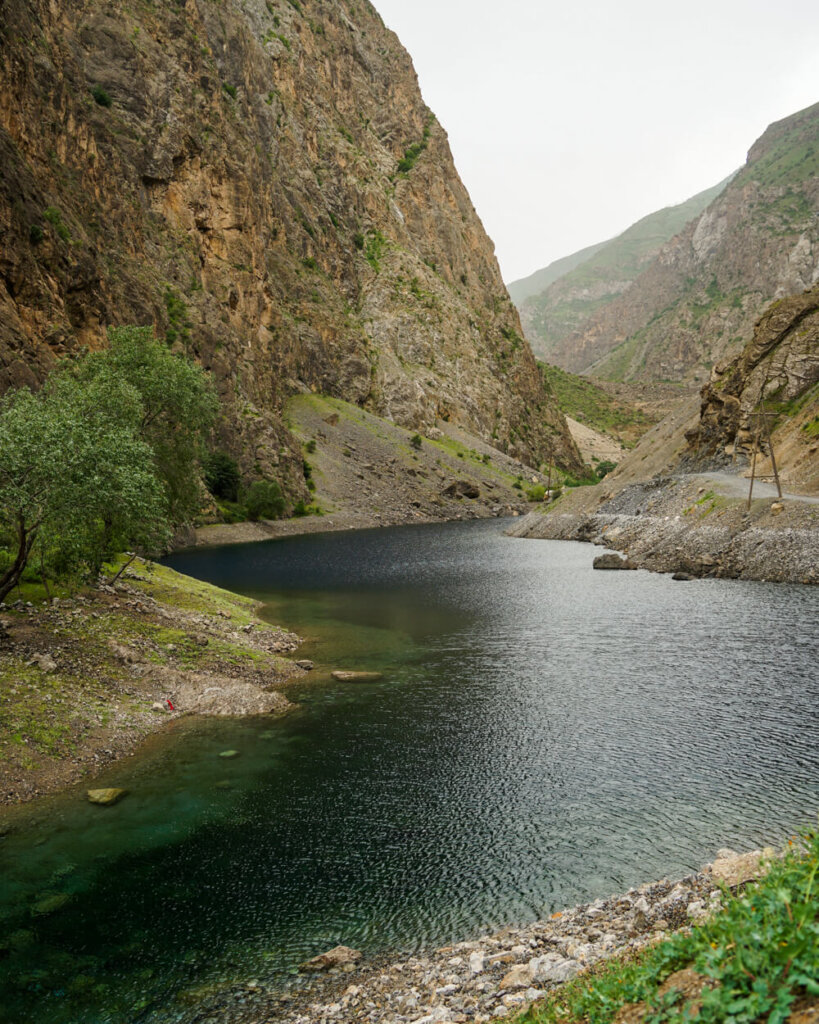
Named after the Tajik word for eyelash (likely due to its curled shape), this is the first lake you’ll reach in the 7 Lakes family. We reached this lake at 12:45 PM, but unfortunately, it was rather cloudy during this part of the day, and its true turquoise colors couldn’t shine through.
This first lake is at an altitude of 1,600 meters. Like all of the lakes we would see on this trip, it was only partially filled; this is typical for May, as the lakes don’t typically fill all the way to their full capacity until later in the season, when there is more snowmelt.
Lake 2: Soya (Соя)
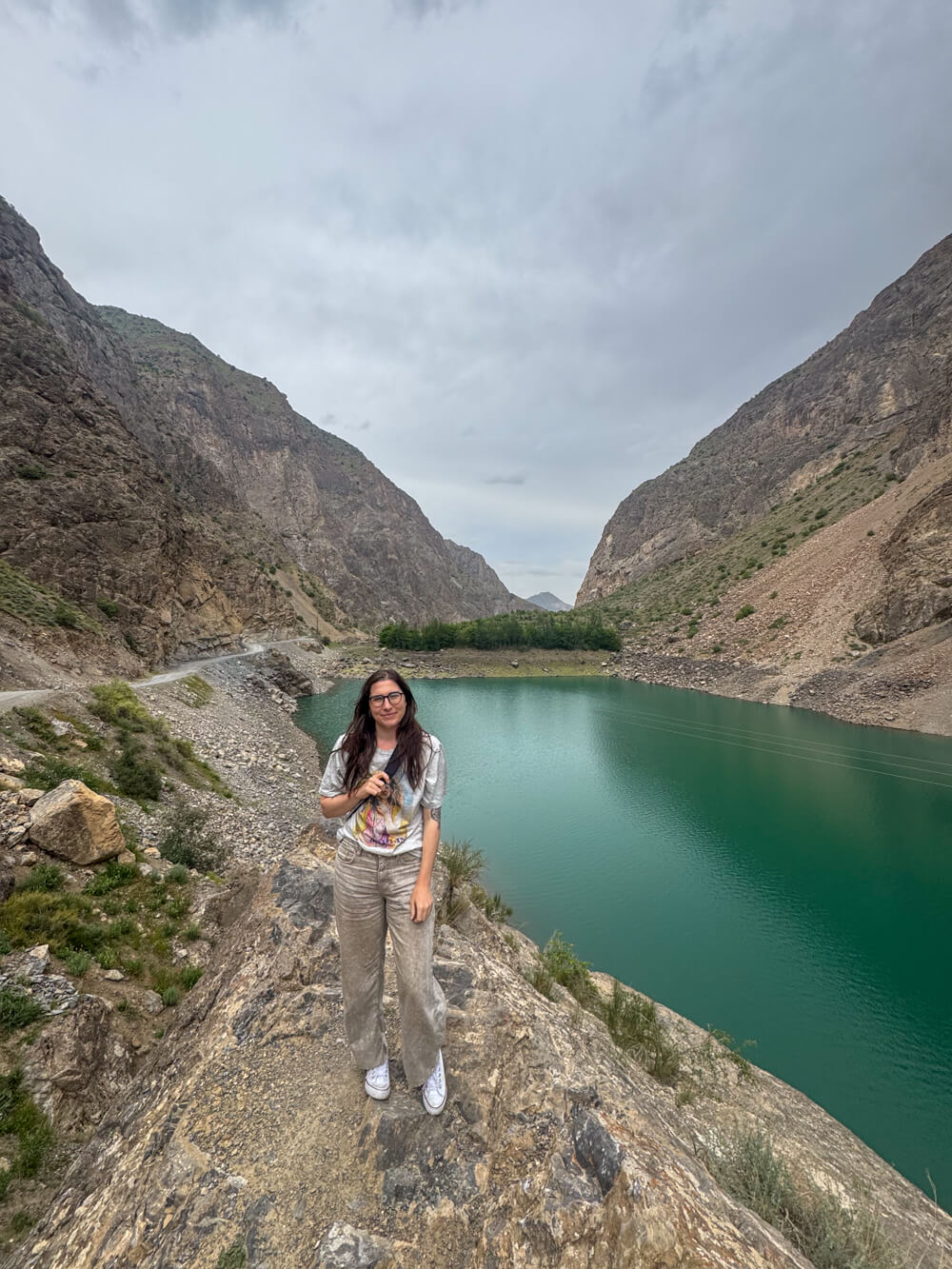
This is a very short drive from the first lake; it was only about five minutes of driving between the two. Soya Lake’s elevation is 1,700 meters; you only gain 100 meters of altitude between the two lakes since they are so close.
Given the name Soya (based on the Tajik word for shadow), it is named so its narrow nature surrounded by mountains. This means it is typically cast in shadow, unless you reach it at the right time of day and without any clouds overhead.
While all the lakes are beautiful in their own right, to me Soya Lake was not impressive as the others without the sunlight illuminating all of its colors.
Lake 3: Gusbor (Ҳушёр)
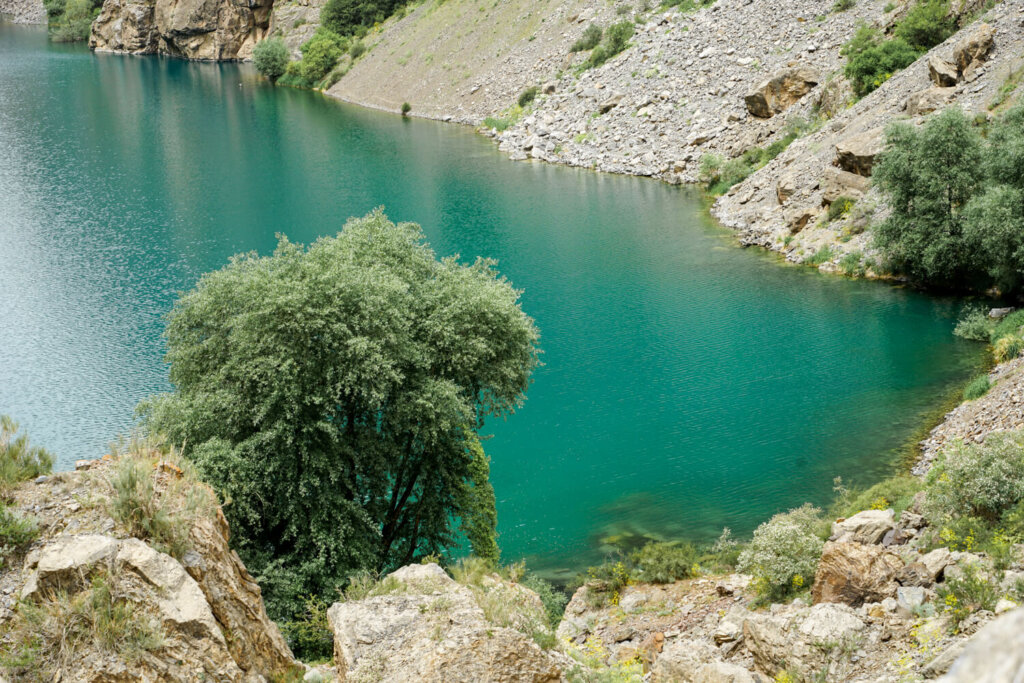
About another five-ish minutes up the road, you’ll find the third lake at 1,770 meters. Gusbor in Tajik means something like ‘sober’ or ‘not drunk’. Why it’s given this particular name, I’m not sure, nor was our guide.
This lake was also a bit cloudy when we reached it, but there is a really pretty shallow part at the upper side of the lake (if you keep driving past when you first reach it, and stop above it). This was where I got a sense of the true color of the lake when the sunlight is hitting it.
Lake 4: Nofin (Нофин)
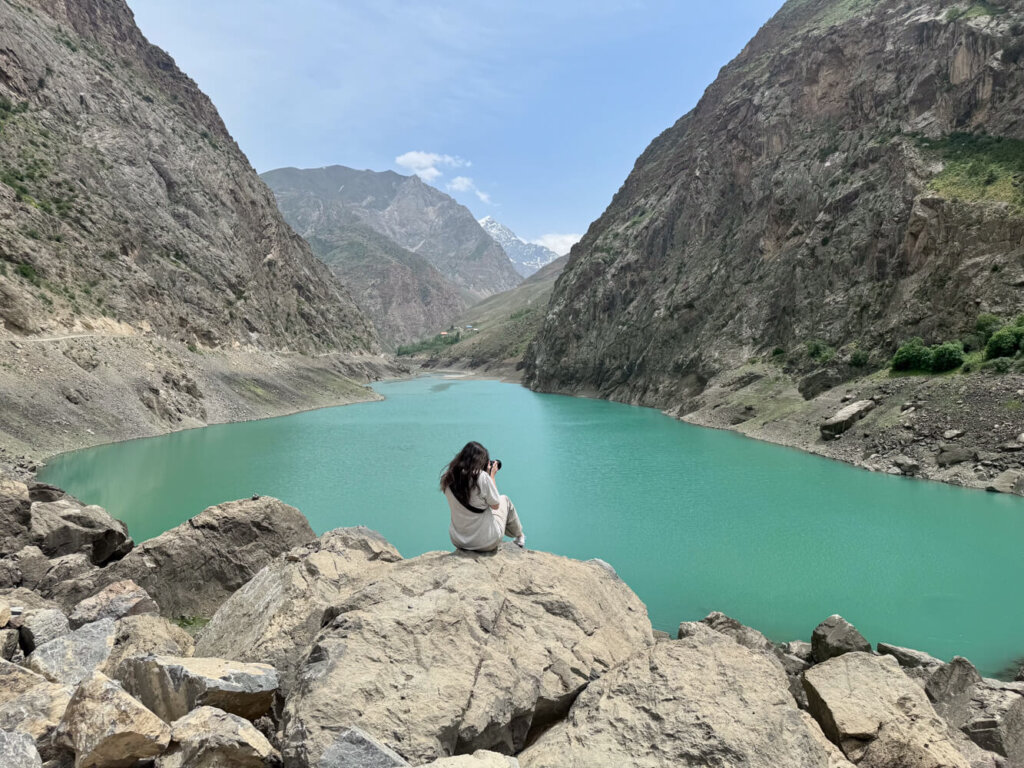
Finally, the clouds cleared and we were able to see the lakes in all their glory! As with any mountain area, cloud movements change quickly and the light shifts alongside it. So perhaps my love of this lake was due to the fact that it was the first lake I got to see in its full sun!
This fourth lake is called Nofin, which means belly button. Again, unclear on the actual origin of this name, but that’s the translation!
This was my second favorite lake of them all. I loved the vivid turquoise of this lake. The water was so still that it almost looked matte, and that emphasized its beautiful color. This lake is located at 1,820 meters, and it’s about a 5-10 minute drive from the previous lake.
Oh, by the way, this is also a great place to stop to use the toilet if you need to. There are two squat toilets here, which were remarkably clean by mountain squat toilet standards… they even had toilet paper stocked, a rarity in Central Asian bathrooms!
Lake 5: Khurdak (Хурдак)
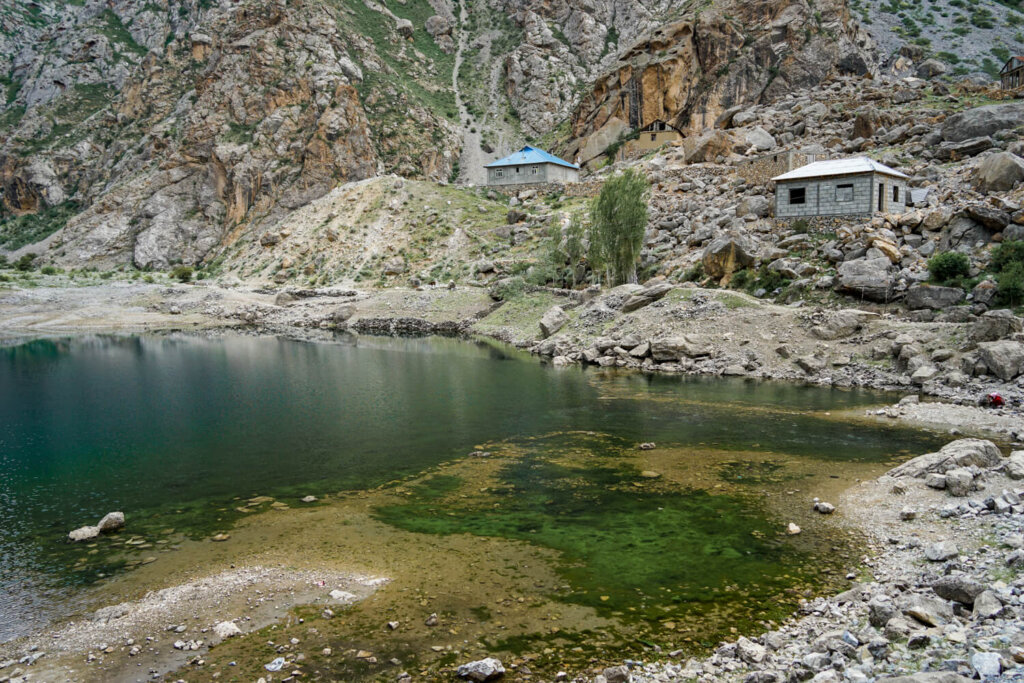
Khurdak or “Baby Lake” is the name of the fifth lake, which is also the smallest (hence the name). It’s at 1,870 meters, about 10 minutes away from the previous lake.
To be honest, this was my least favorite lake of the trip, which isn’t entirely the lake’s fault. Though it is rather small and definitely has a tough act to follow after how beautiful the fourth lake is!
Khurdak Lake is located right at the foot village, Padrut. When we went, a bunch of local children swarmed our car and were a bit grabby and demanding. This made it a bit hard to enjoy the lake, so we just took a few photos and left quickly.
Lunch Stop
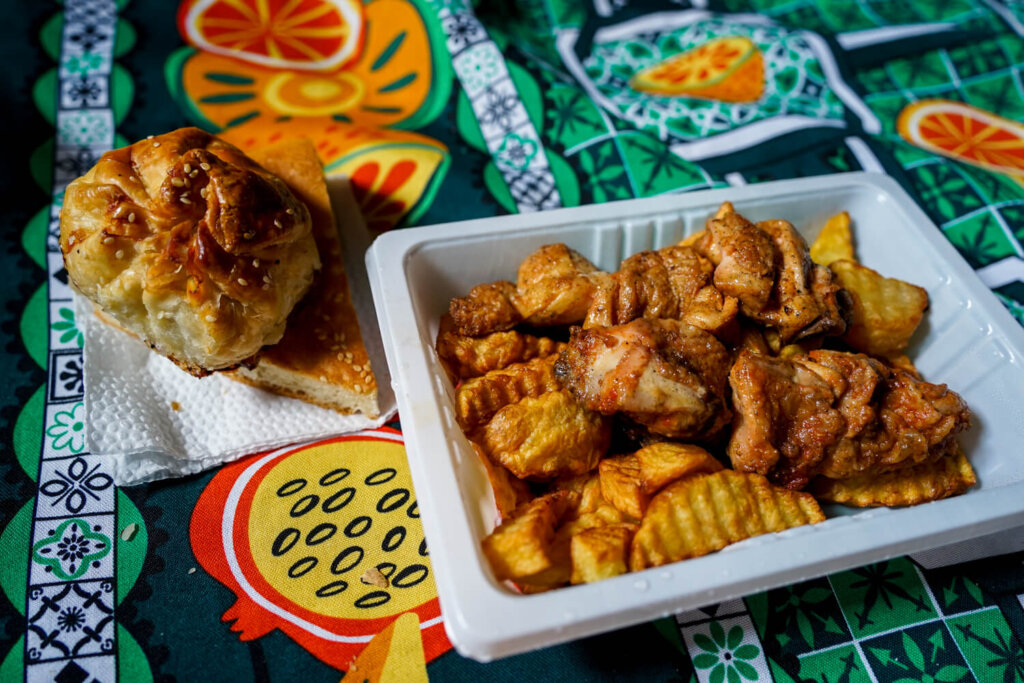
Between the fifth and sixth lakes, which are further apart than many of the other lakes, we stopped for lunch. We parked and ate in a small shared “guesthouse” where people can stop and eat a meal or even spend the night if they are trekking through.
Though the food was by now a little cold, it was still pretty delicious. We had chicken skewers, potatoes, samsas, and freshly-baked Tajik bread. I practically inhaled my meal: I always get abnormally hungry any time I’m at altitude, even I’m not hiking.
We stayed about 20 minutes for lunch before continuing on with our day. We arrived and began eating at 1:45 PM, and left by 2:05 PM. So I would definitely recommend getting plenty of snacks at the bazaar, since this trip requires an early wake-up and has a rather late lunch.
Also, you should bring or buy plenty of water while you’re in Panjakent. Water was not provided to us on our tour, and we didn’t bring quite enough water for a full-day trip, so we got quite thirsty until we finally were able to make a stop at a market later on in the day.
Lake 6: Marguzor (Марғузор)
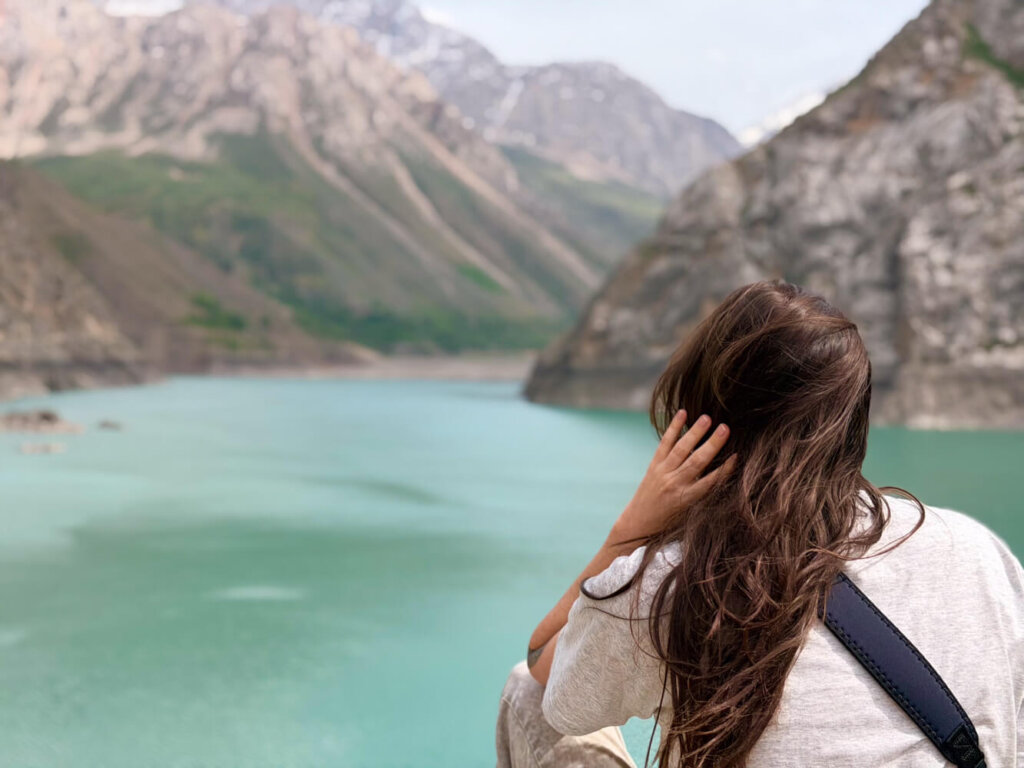
The sixth lake is located at 2,140 meters, so it’s quite a bit further up the road. It took 20 minutes to arrive here after leaving the guesthouse where we had lunch.
Depending on the time of the year, this is the largest lake. Sometimes, the seventh lake is larger; it depends on what time of year you visit and whether more water is in the seventh lake and hasn’t flowed into the sixth lake yet.
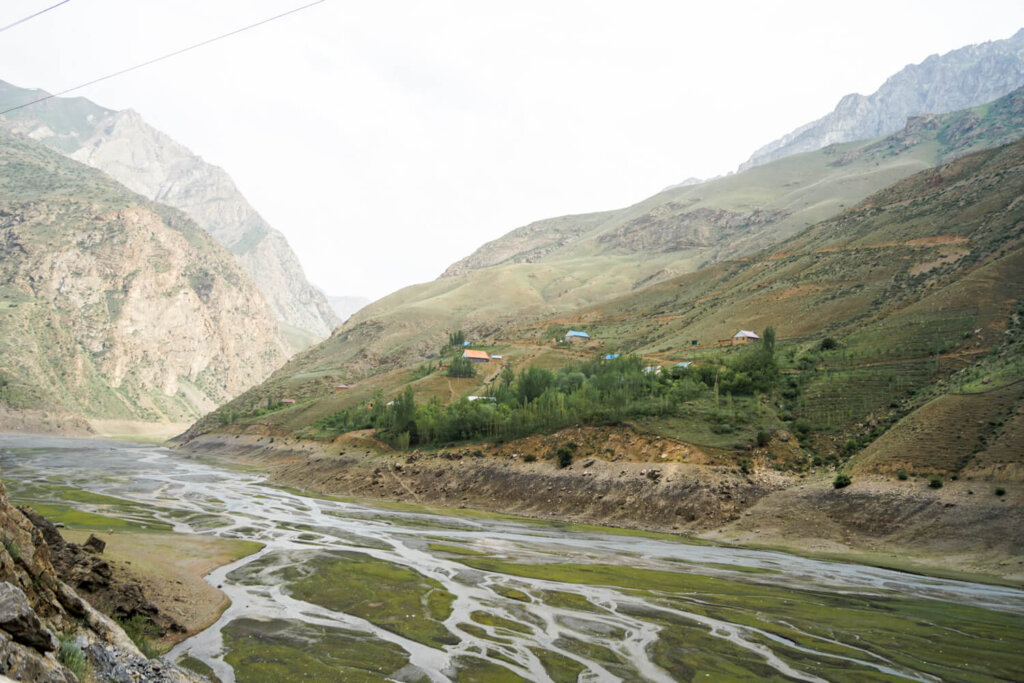
As the season progresses, more water melts and flows from the seventh lake into the basin for Marguzor. We could see the rivulets spanning out and flowing into the Marguzor basin, which made it easy to see how big the lake might be later in the season when it was filled to its maximum capacity. This was quite cool!
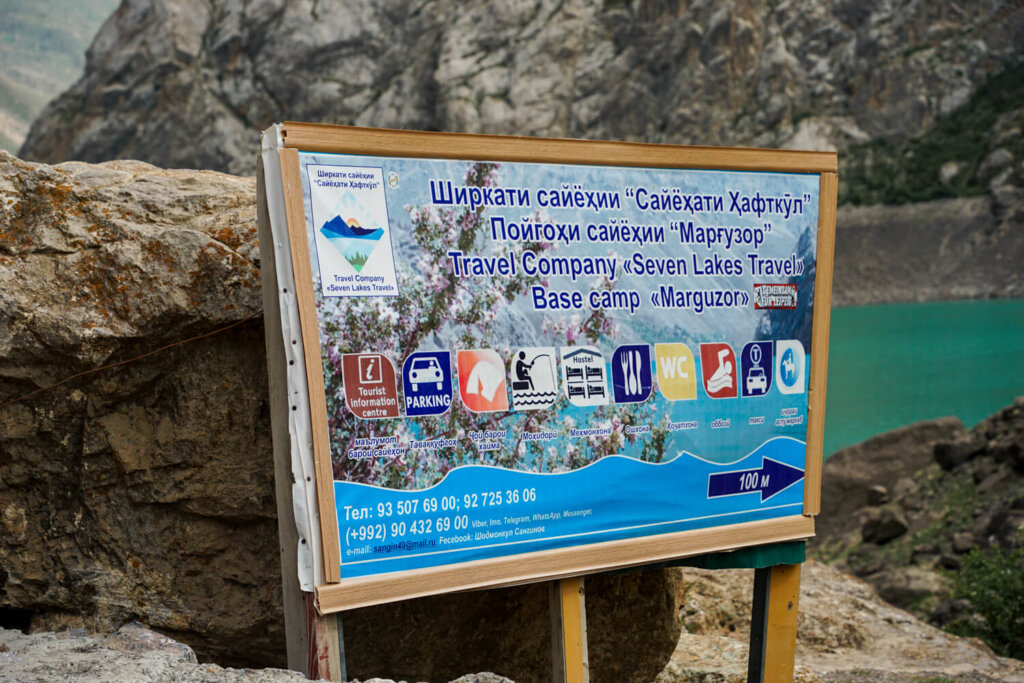
There’s actually a guesthouse here overlooking the lake, so if you wanted to stay overnight if you were visiting independently, you could do that! Apparently you can also organize things like horseback riding from here as well.
I have to say, Marguzor (Meadow Lake) was my favorite lake by a long shot. I could stare at those pristine teal waters for hours, watching the sun ripple across it and make the colors dance.
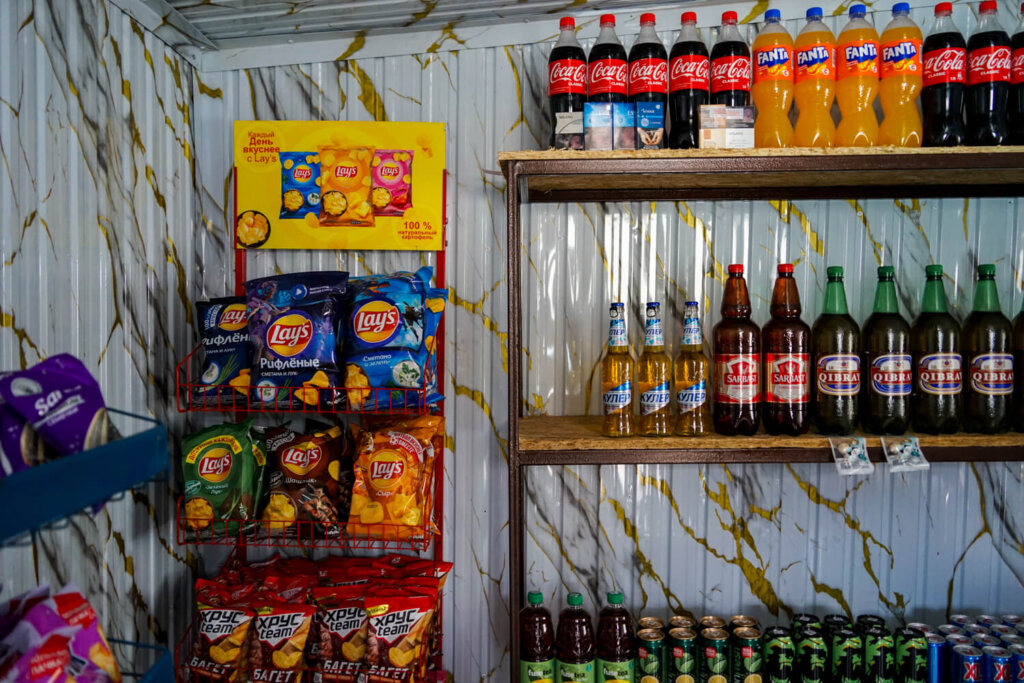
There are a few ‘amenities’ at this lake: a small mini market (which sold many kinds of beer, and exactly zero kinds of water) and some pay-to-use toilets, also very clean.
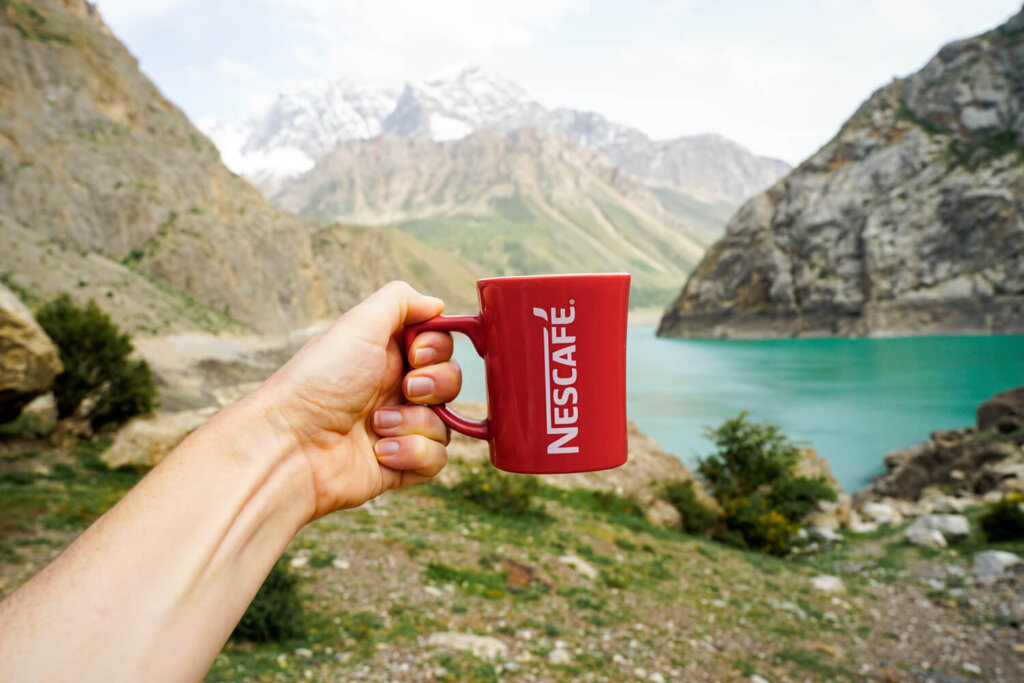
We would later come here to grab a coffee (just a simple Nescafe, but it was still tasty nevertheless) for 5 somoni apiece (about 50 cents USD). The bathroom ccst 2 somoni to use (20 cents USD).
Lake 7: Hazorchasma (Ҳазорчашма)
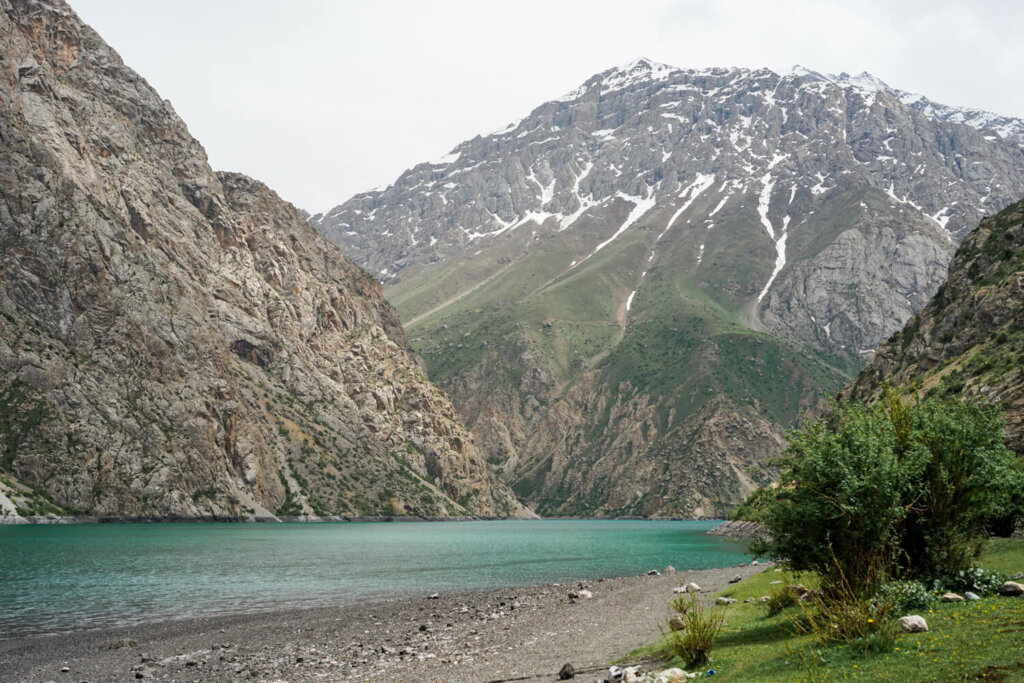
First things first, it is not always a guarantee that you will get to visit this lake. It is very weather dependent, and the weather is more volatile the higher you get up in the mountains. This is the highest lake of all, at 2,400 meters.
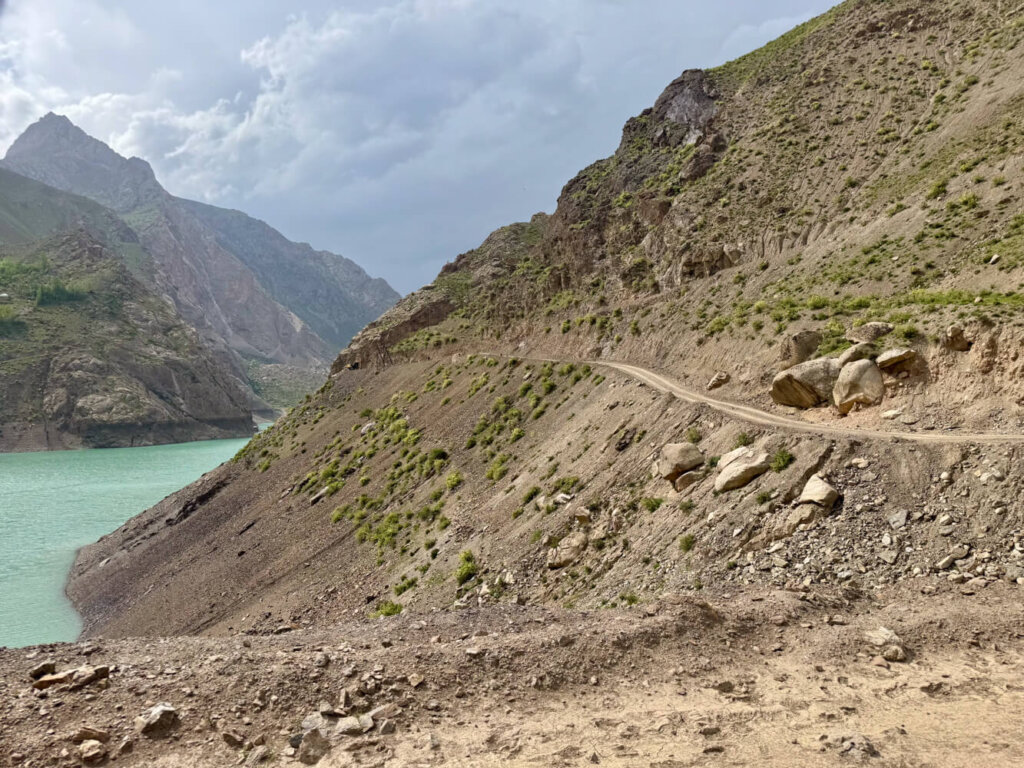
The good road ends at the sixth lake and there’s only a teeny-tiny one-lane mountain road that connects Marguzor to Hazorchasma. You’ll be on that tiny road for about 20 minutes.
It’s a quite precarious little road and if there’s rain or bad conditions, drivers will not continue on, due to various hazards (getting stuck in the mud, the road crumbling away, etc.)
Still, even if you don’t make it to the seventh lake, I think the trip is worth it. In my opinion, this was my third favorite lake; I preferred the pristine turquoise of the fourth and sixth lake.
Note that this is the only lake that you can’t reach only by driving. It’s required to do about a 15-minute hike from the parking lot.
Personally, I’m of the belief that it only makes it more spectacular when you finally do stumble upon it.
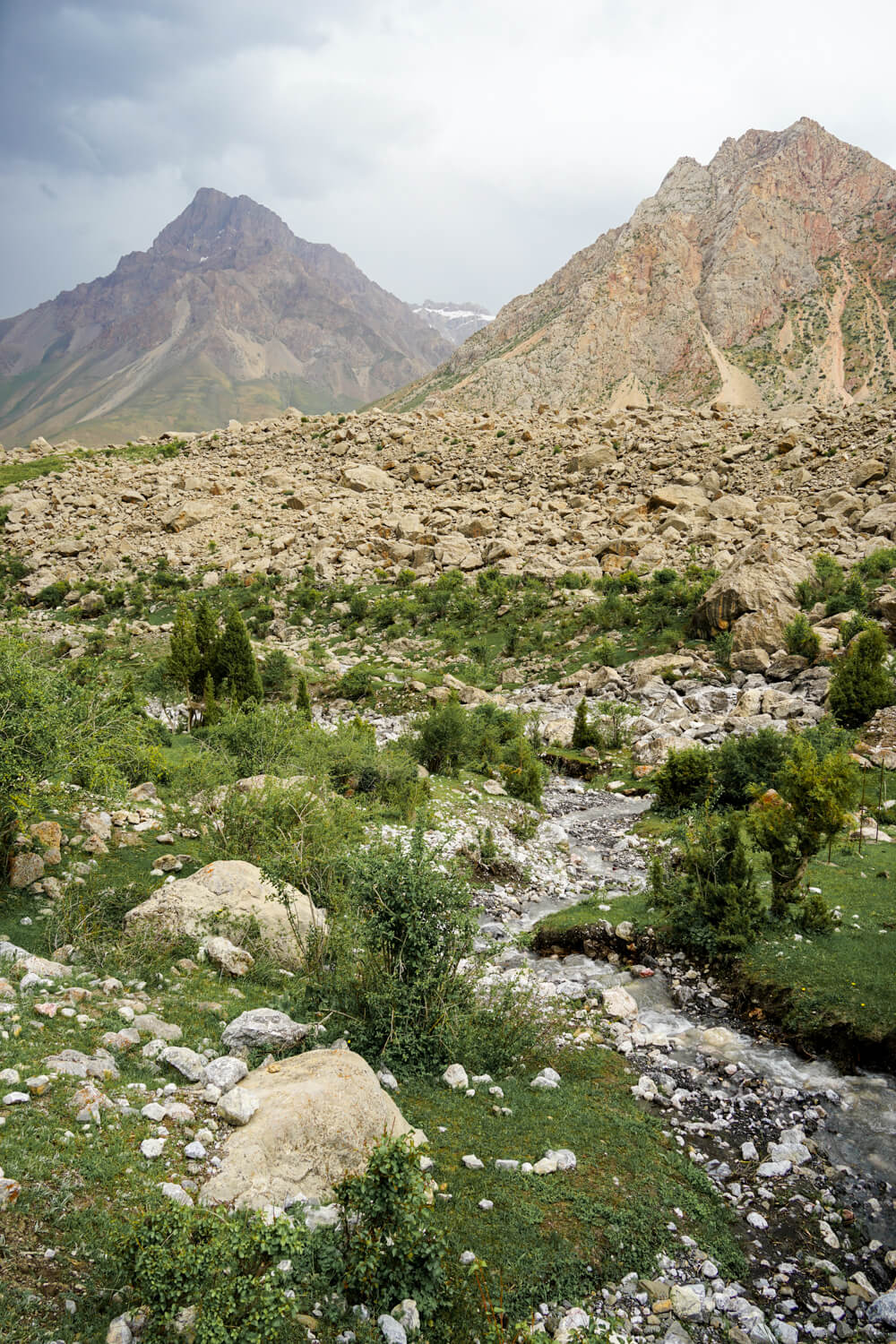
It was also quite cloudy when we got up here, threatening to rain; luckily, the rain quickly moved in another direction. That dimmed the color of the lake a bit, but you could still see its jewel tone shine through a bit.
The thing that makes this lake particularly impressive is the way the mountainous landscape really cradles it. You fully get the sense that this is the end of the road.
Its name in Tajik means Thousand Springs, named for the many rivulets, rivers, streams, and springs that fill up this lake basin and then feed the other lakes down the mountain.
Returning and Crossing the Border Back to Uzbekistan
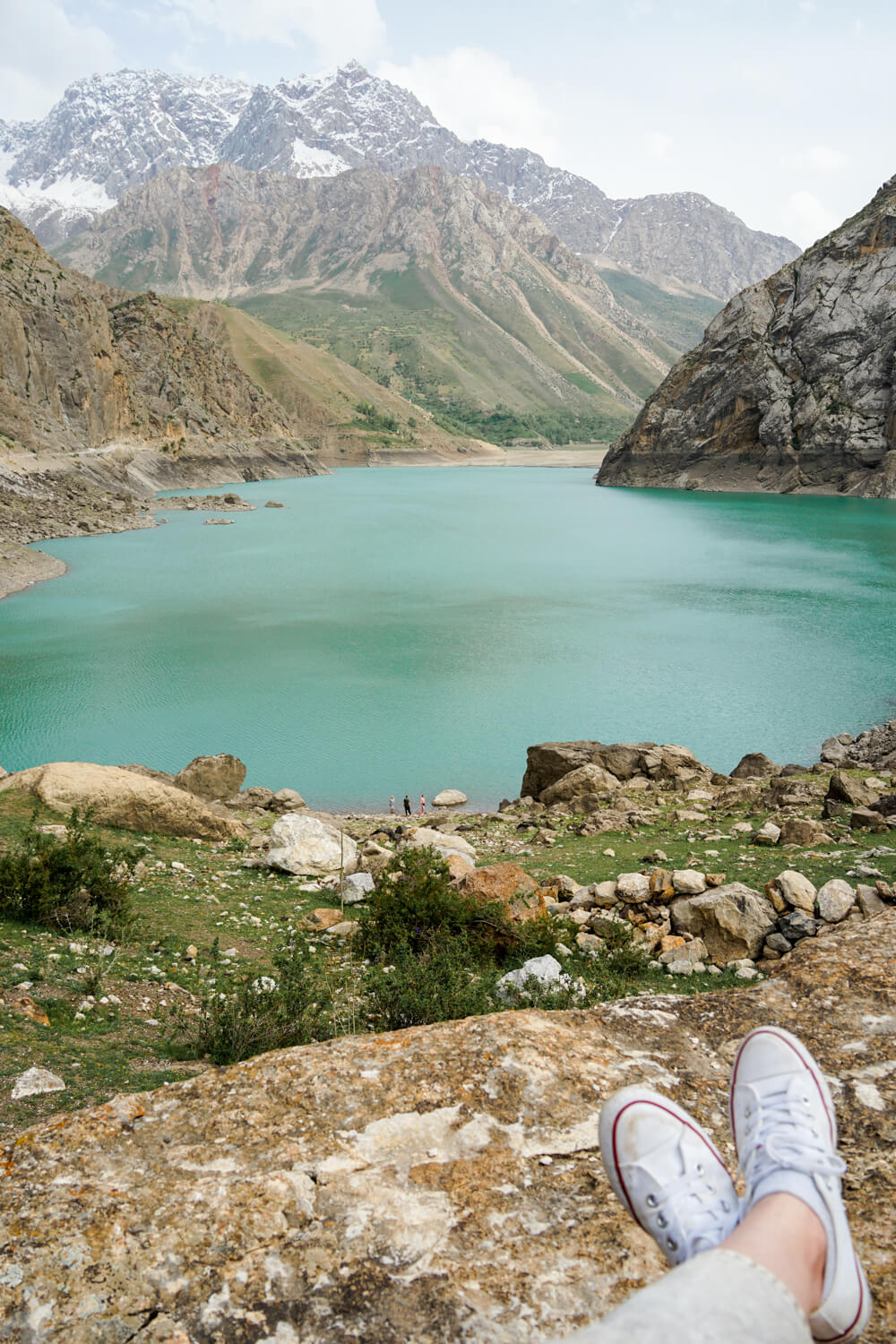
After the seventh lake, we spent a bit of extra time taking photographs and walking around at the sixth lake before we started the journey back.
This is when we had a coffee and just sat and enjoyed the views for a while longer.
We left around 4 PM from the sixth lake and it took us about 30 minutes to get down to the first… which was likely helped by the fact that we made far fewer photo stops on this time around!
But not none: there were some really cool views I felt compelled to capture, like the way you can see the lakes start to fill up via spiderwebs of small rivulets.
From there, we continued onwards until we, for some reason, stopped at a car wash where our driver decided to give the car a full detailed washdown…. while a thunderstorm raged outside. It was a bit humorous, and it was at the point in the day trip where everything felt a bit deliriously funny.
We drove through the thunderstorm in our already squeaky-clean car. Luckily, the car wash stop actually perfectly timed with the rain; it stopped failing exactly when we began our border crossing back into Uzbekistan, which we started around 6:45 PM.
Luckily, whatever hell we faced in the morning was completely absent coming back. There was no one in line on the Tajik side and we were immediately stamped out. We walked to the Uzbek side to be stamped in, where we waited in a short line, and were officially back in Uzbekistan just a few minutes after 7 PM, all in all less than 20 minutes.
I suspect some of the craziness of the morning border crossing may have been because it was a Monday morning. I would be curious to hear from travelers who visit on other days of the week if it is a similarly chaotic crossing, or if their border crossings went more smoothly!
Once back into Uzbekistan, we had to find our driver from the morning. We had another hourlong (distracted) drive back to Samarkand, where we arrived and happily stuffed our faces with shashlik.
Is It Worth Doing as a Day Trip?
This fully depends on your Central Asia or Uzbekistan itinerary and how you travel in general.
If you are someone who primarily planned an Uzbekistan trip and are wondering how to spend an extra day in Samarkand, I can’t recommend this trip more highly. It’s weird to say that one of my favorite days of my Uzbekistan trip was my day trip to Tajikistan, but it’s true.
So if you have the time and the curiosity, definitely do it — it’s absolutely worth the time and it was one of my favorite days of my month-long Central Asia trip.
This is the exact tour we booked! We selected the private tour, but if you’re traveling solo or on a budget, you can also join a group tour.
However, if you have the time and flexibility to visit Tajikistan more in-depth, I would certainly choose that as an option. From Samarkand, you can quite easily get to Panjakent independently, and then you can use Panjakent as a base to explore this part of Tajikistan more thoroughly. From there, you could go to Iskanderkul and then onwards to Dushanbe, the capital.
However, if you don’t have that kind of time, a day trip to Tajikistan’s 7 Lakes will surely be enough to whet your appetite and get you planning a return trip to explore Tajikistan’s mountainous landscape more thoroughly. It certainly had that impact on me!
Have you done the Tajikistan 7 Lakes as either a day trip from Samarkand or from Panjakent? I’d love to hear how your experience compares or differs! Alternately, if you have any questions, leave them in the comments and I’ll get to them as soon as possible. Note that I cannot answer any visa questions as though are highly specific to your own circumstances!

Allison Green is a former teacher who has been travel blogging since 2016, visiting 75+ countries in total. She has a Masters in Teaching and a B.A. in English and Creative Writing. As a former educator, she merges her writing and educational experience to encourage ethical, sustainable travel. She has been a speaker at the World Travel Writers Conference and TBEX. Her writing, photography, and podcasting work has appeared in National Geographic, CNN Arabic, CBC Canada, and Forbes, amongst others. When she’s not on the road, she lives in Bangkok, Thailand.