

Is a Hanoi Coffee Workshop Worth It? My 2026 Experience
People go to Vietnam for many reasons: the food, the landscapes, the intriguing history, and the enduring culture. But for me, I have to confess, one of the main reasons I keep returning to Vietnam is for its coffee.
I have spent nearly every trip to Vietnam absolutely blitzed out of my mind on caffeine and sugar (since so many coffees in Vietnam contain practically hazardous levels of condensed milk, and it is delicious). But despite consuming medically-inadvisable amounts of caffeine, I never knew very much about the coffee culture in Vietnam, just that it was delicious.
So on my most recent trip to Vietnam, I decided to take a coffee making class in Hanoi to learn more about the elixir I love so dearly. To be quite honest, it was my favorite thing I did in all of the 5 days I spent in Hanoi.
| 🇻🇳 Planning a trip to Hanoi in a hurry? Here are my quick picks: 🏨 Best Hotels in Hanoi 1. La Mejor Indochine Hotel (incredible luxury with 5-star amenities, but pricy) 2. The Urban Quarter Hanoi (beautiful mid-range boutique hotel in the center) 3. Amira Hotel Hanoi (affordable boutique hotel, great decor & location) 🍲 Best Activities & Day Trips in Hanoi 1. Ninh Binh & Trang An Day Trip (#1 day trip from Hanoi) 2. Vietnamese Coffee Workshop (my favorite Hanoi activity!) 3. Michelin Guide Street Food Tour (easy way to taste Hanoi’s best foods!) |
In this post, I’ll give you a walkthrough of the coffee workshop and what I learned along the way.
I’ll also tell you how to book it yourself or give you an alternative option where you can create your own coffee tour at various cafés around the city, all my personal favorite spots where I tried the following coffees!
My Experience at the Coffee Workshop
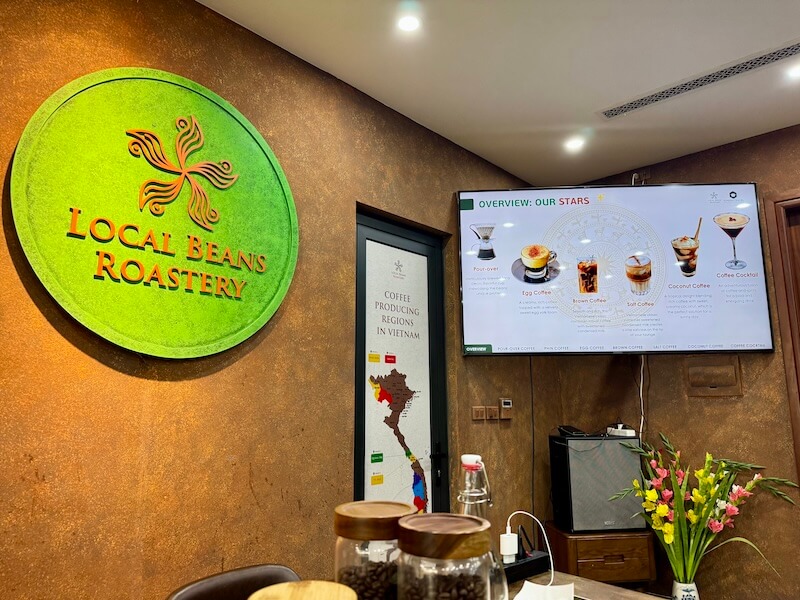
First impressions matter, and I was impressed by the coordination and communication of the Valerie, who manages the bookings and arrivals via WhatsApp. She was easy to reach and reliable and was waiting for me at the meeting point for the coffee workshop, since the location where you have the workshop is a bit hard to find.
Our class was led by Phil, who was so knowledgeable about coffee. I enjoyed him sharing his journey into Vietnam’s coffee culture: working both on coffee farms in Vietnam as well as working as a barista before taking this job as a workshop leader.
He absolutely knew his stuff when it came to coffee, and he made all the educational parts engaging and interactive, such as learning how to differentiate between arabica and robusta beans. He hopes to open his own coffee shop one day, and I hope that when I return to Vietnam next, he will have done so!
No matter who your guide is though, you’ll go over a similar ‘curriculum’ with plenty of tastings to keep you awake throughout it all. We started with a tasting of cascara tea, which is a fruit tisane type of tea, made from the dried husks of the coffee cherries, which would normally be discarded. It’s very delicious and low in caffeine while still retaining some characteristic coffee notes.
We then learned about the history of coffee cultivation in Vietnam (considering the word for coffee in Vietnamese is cà phê, it’s perhaps unsurprising that it was imported into the country via French colonization, via the French word café). First, they tried to grow arabica beans in Vietnam, but ended up learning robusta beans did better in Vietnam with the high humidity. The high caffeine content of robusta beans is part of why Vietnamese coffee is basically jet fuel!
Next, we learned about several different ways of preparing coffee in Vietnam. We started with pourover coffee, which is not traditional to Vietnam per se, but it’s a good way to understand the pure flavor of the coffee itself, unadulterated.
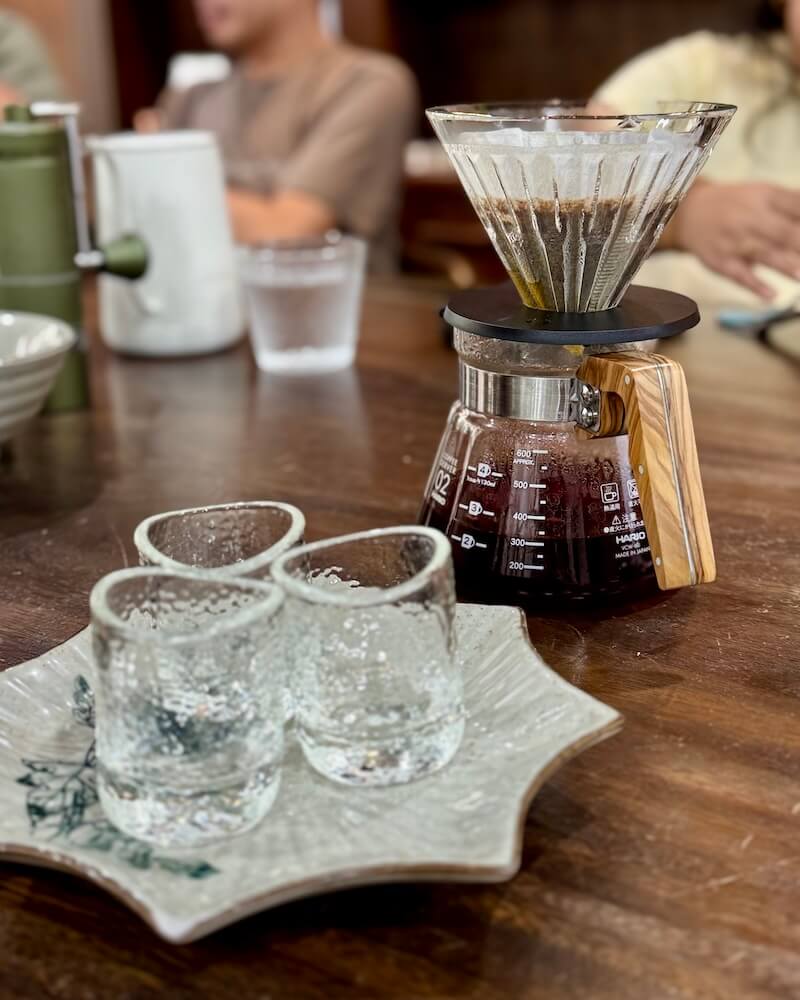
We tried a coffee from arabica beans (they do still produce some arabica in Vietnam, at higher altitudes) and it was delicious, extremely light-bodied with hibiscus, citrus, and cherry notes.
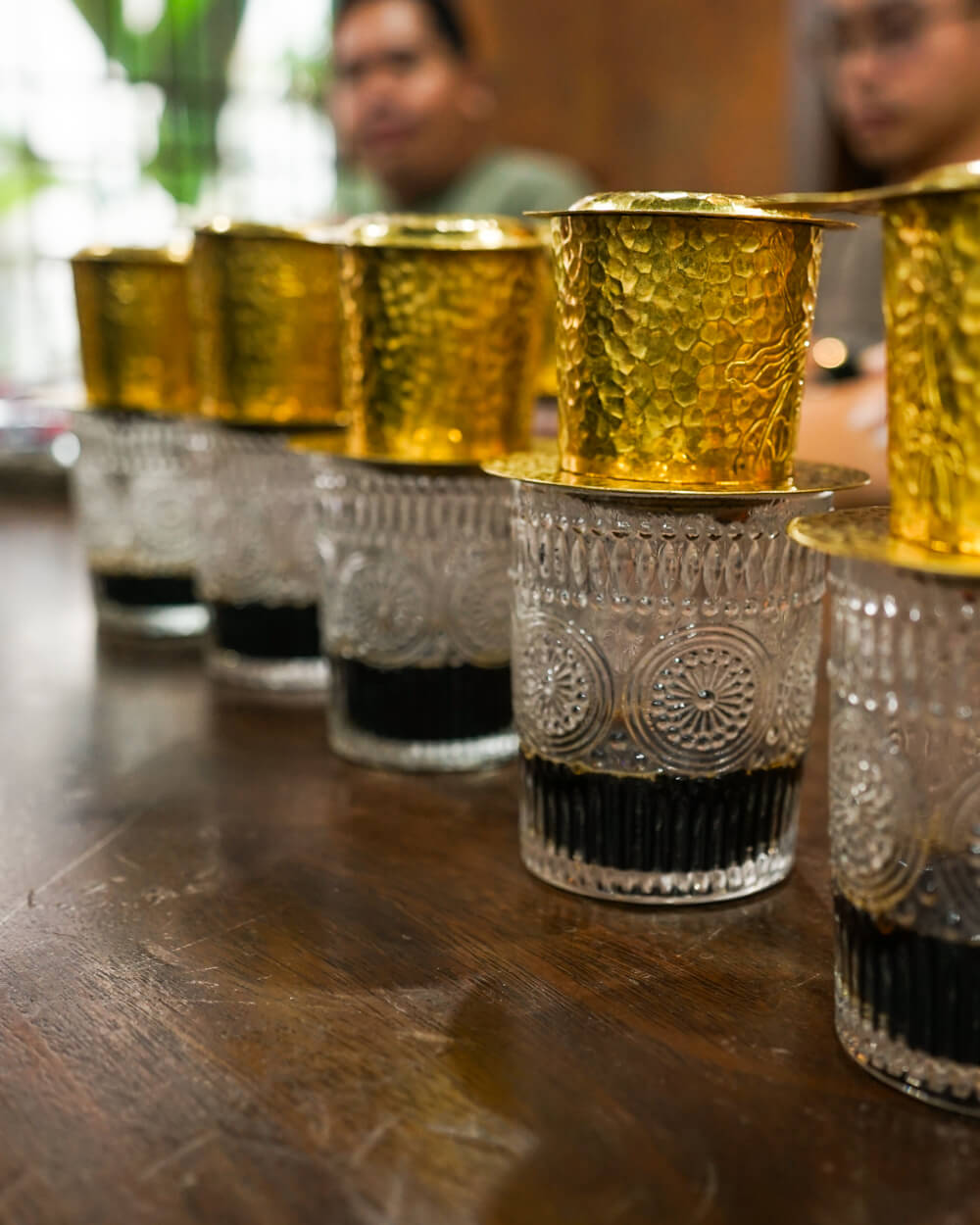
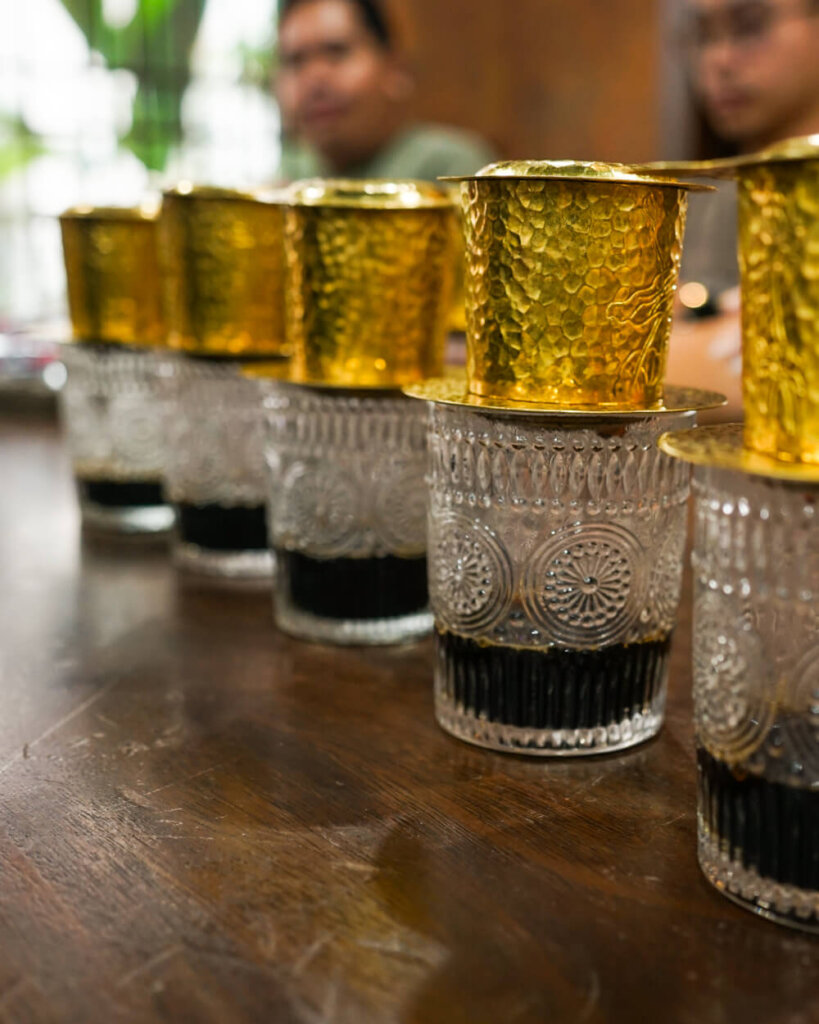
Then, it came time to learn the more traditional Vietnamese coffee styles, based off drip coffee which are made with phin, the traditional metal coffee pot.
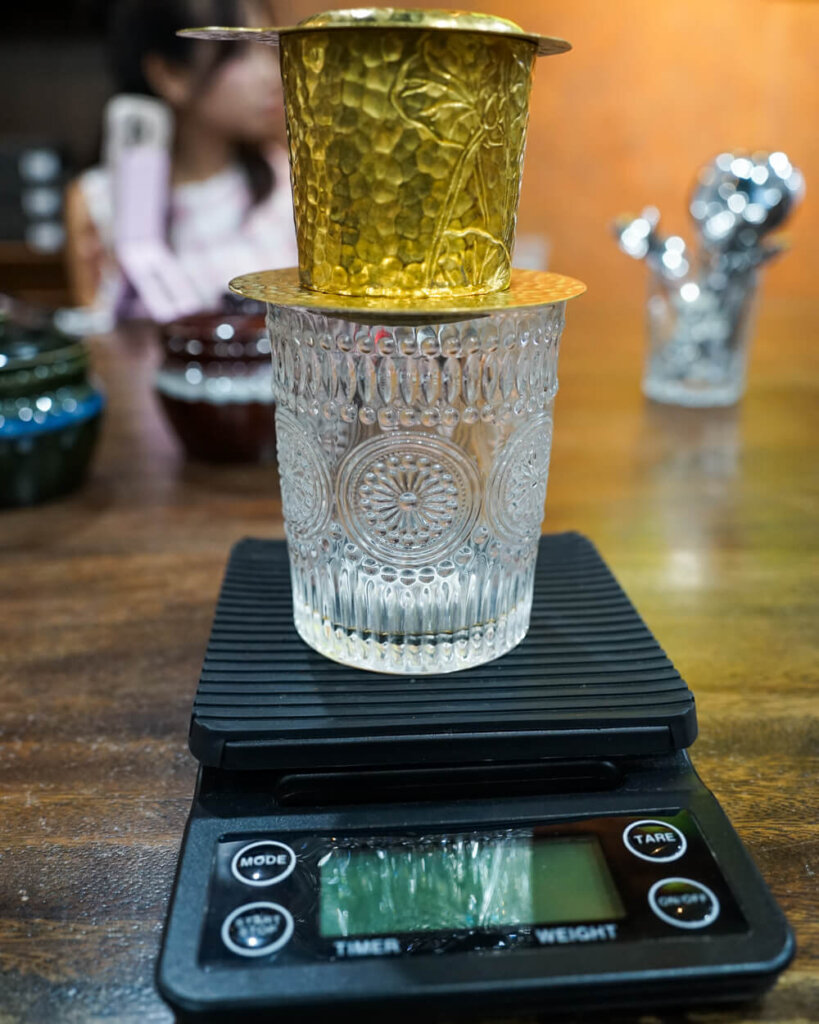
It’s sort of like a micro-French press, and that was the inspiration behind its design: a simple pot that could be made with just metal. We used a multiple copper phin to make all of our drip-coffee based beverages, which would form the base of several coffees to come!
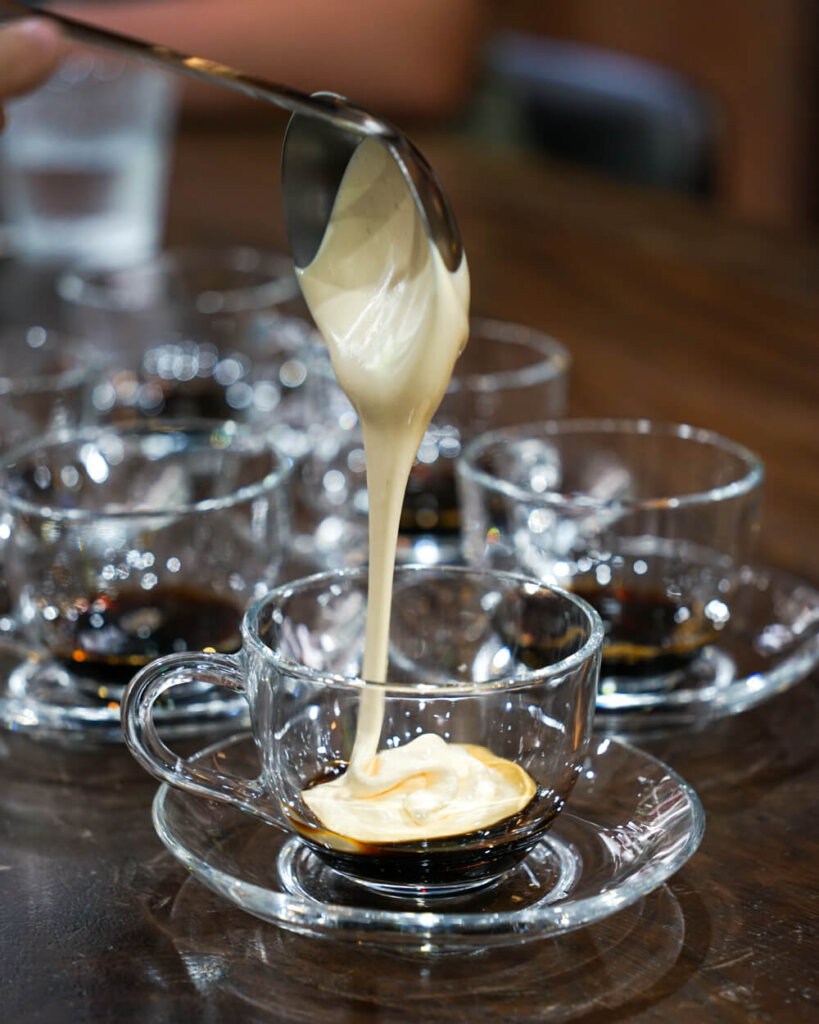
Next up, we learned about egg coffee, cà phê trứng, a specialty of Hanoi. This coffee was created by Nguyễn Văn Giảng in the 1940s, when World War II had disrupted a lot of supply chains, including fresh milk. He worked at the Sofitel Metropole, and his clients still expected their daily coffee even though there was a war going on… so he got creative.
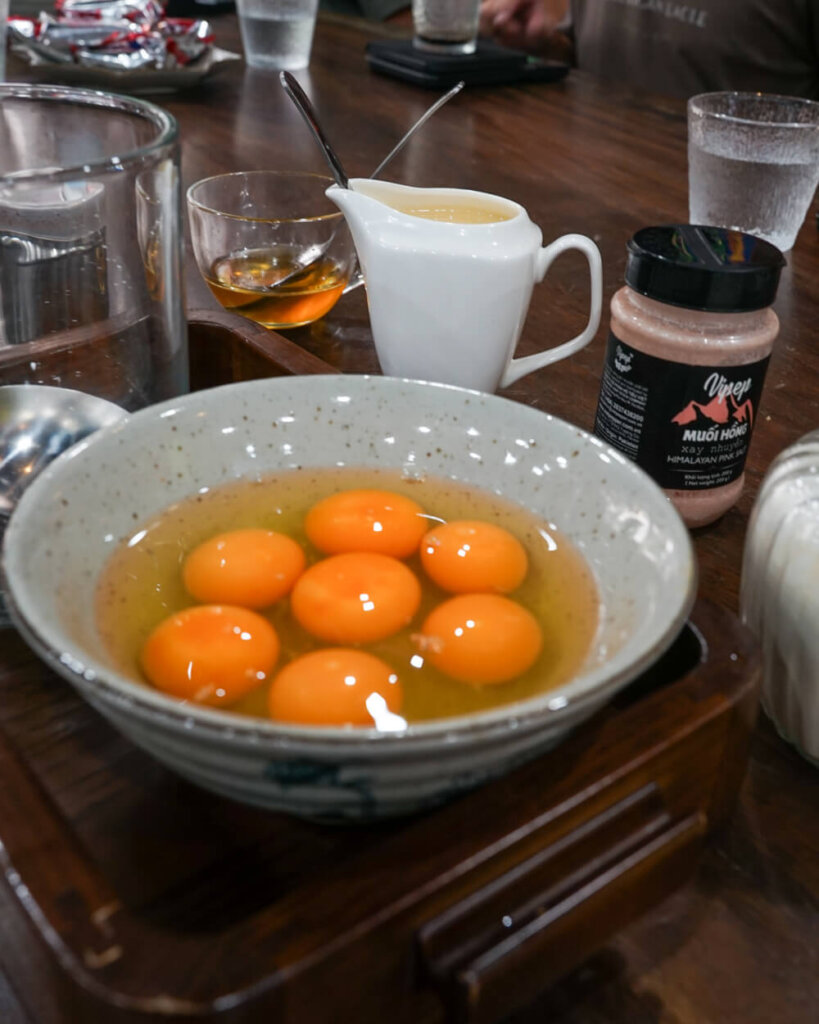
He began whipping together egg yolk and sweetened condensed milk to create a light and creamy foam to put on top of coffee, sort of like a cappuccino in looks but tasting like a tiramisu.
Even now that it’s much easier to get fresh milk these days in Hanoi, the innovation stuck: egg coffee is beloved all around Vietnam and particularly in Hanoi, and the original recipe is still served at Café Giảng, passed down by the original creator to his son.
After egg coffee, we learned about the most commonly drunk iced coffee in Vietnam, brown coffee or cà phê sữa đá. This is made with the filtered coffee from the phin as well as condensed milk. From that, you can make a few other coffee drinks.
Next, we made salt coffee, cà phê muối, using the previous coffee as our base. It originated from Huế, using sea salt from the nearby fishing villages. The sea salt is combined with creamer, beaten into a cloud.
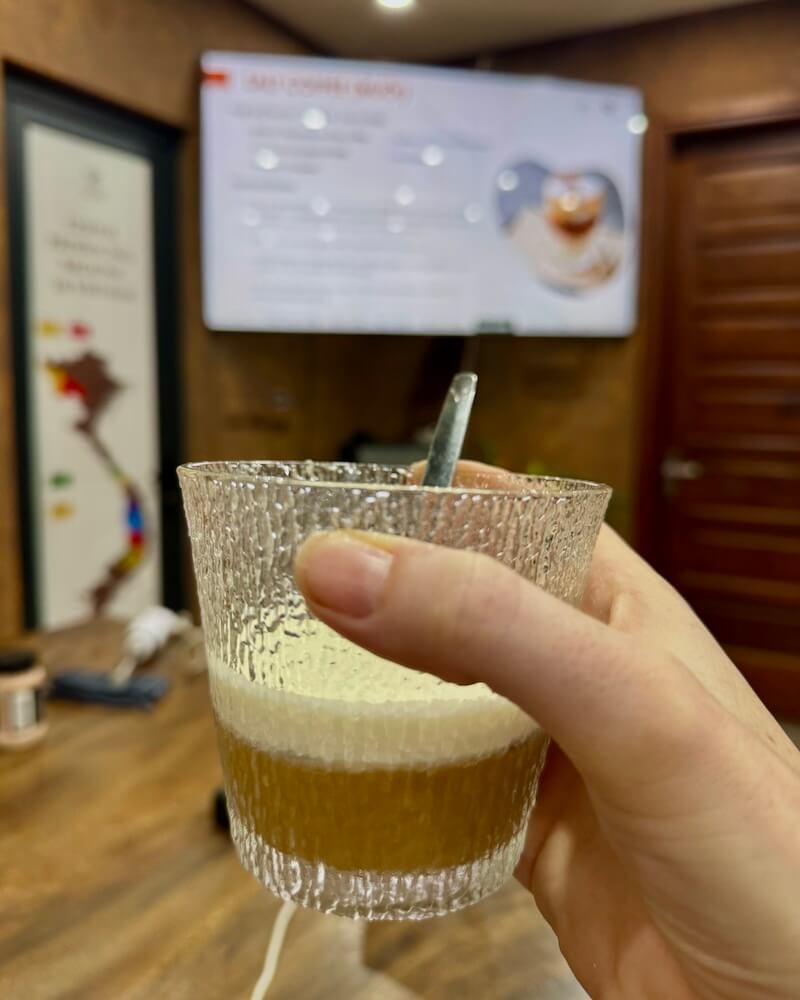
The salt works twofold: the salt blocks out some of the bitter components, bringing out nutty and chocolatey notes. But the sea salt itself brings another edge, making it taste a bit like salted caramel.
We also tried coconut coffee, cà phê cốt dừa, popular in Southern Vietnam. It can be made a few different ways but we made it as an ice-based blended drink. It can also be served hot, which I have tried as well in other coffee shops and that is also delicious!
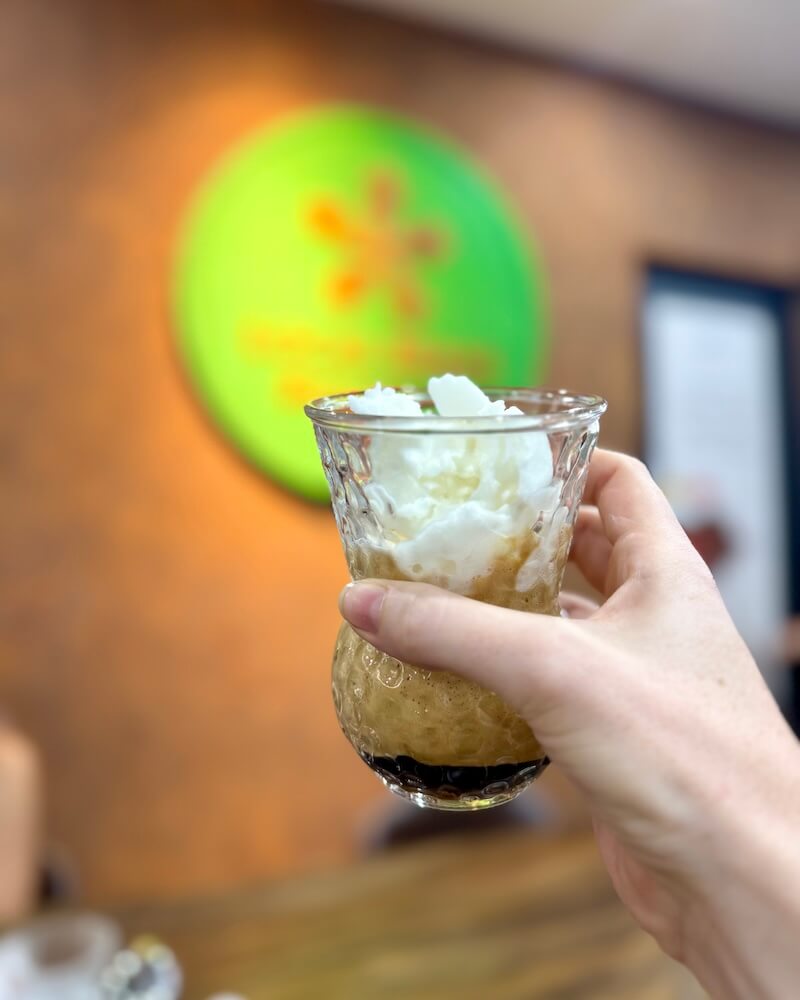
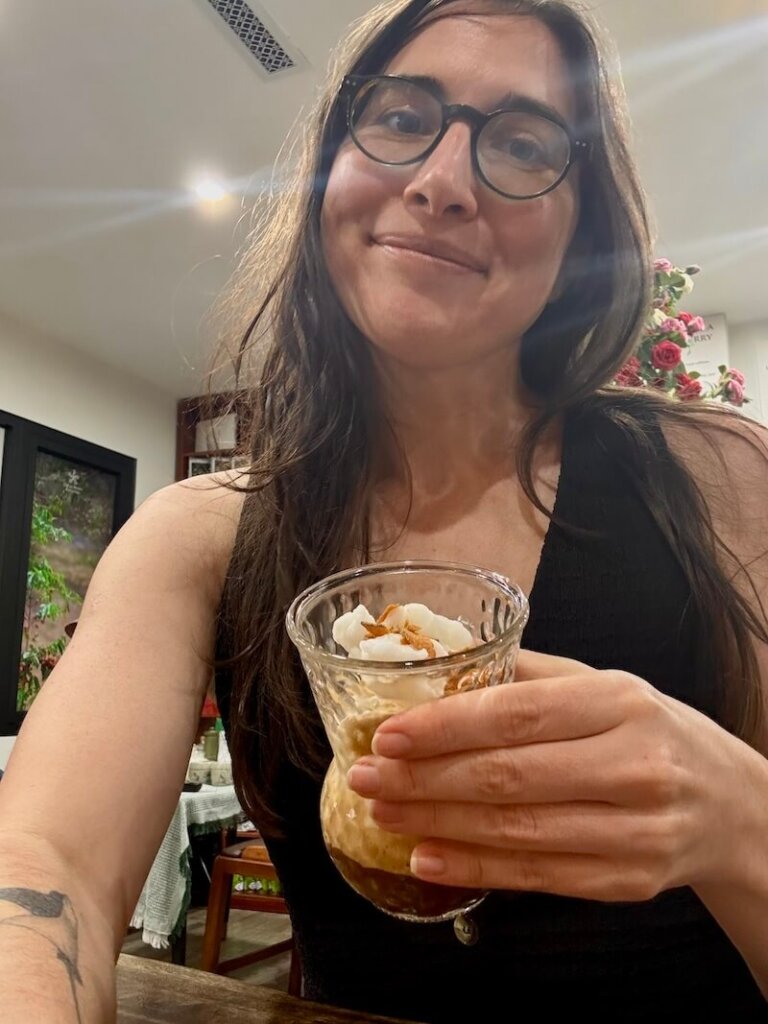
We combined coconut cream with ice and sweetened condensed milk and combined that with plain filtered coffee, topped with toasted flaked coconut. It was a dream and I can see why it’s so popular in the ever-hot south!
Finally, we made a coffee-based cocktail/mocktail, with lemon syrup and honey syrup. For the alcohol version, they also included apricot wine. My mocktail was delicious!
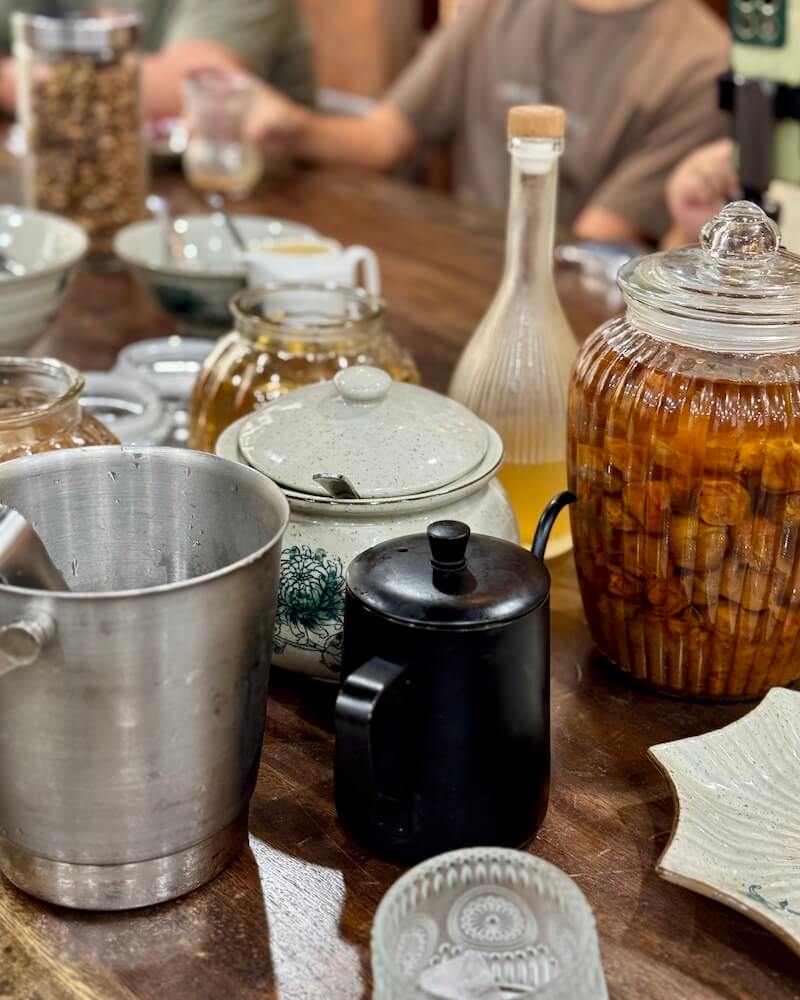
After the workshop, they gave us a link to the educational Powerpoint with all the recipes and were helpful at giving advice about where to go next: I was recommended a delicious place for bún riêu ca, a crab and catfish soup. It was so tasty and a very local spot I wouldn’t have heard about otherwise.
All in all, I absolutely loved every part of the tour. My only regret is not purchasing one of their beautiful copper phins to make my own coffee in the future!
Self-Guided Coffee Tour
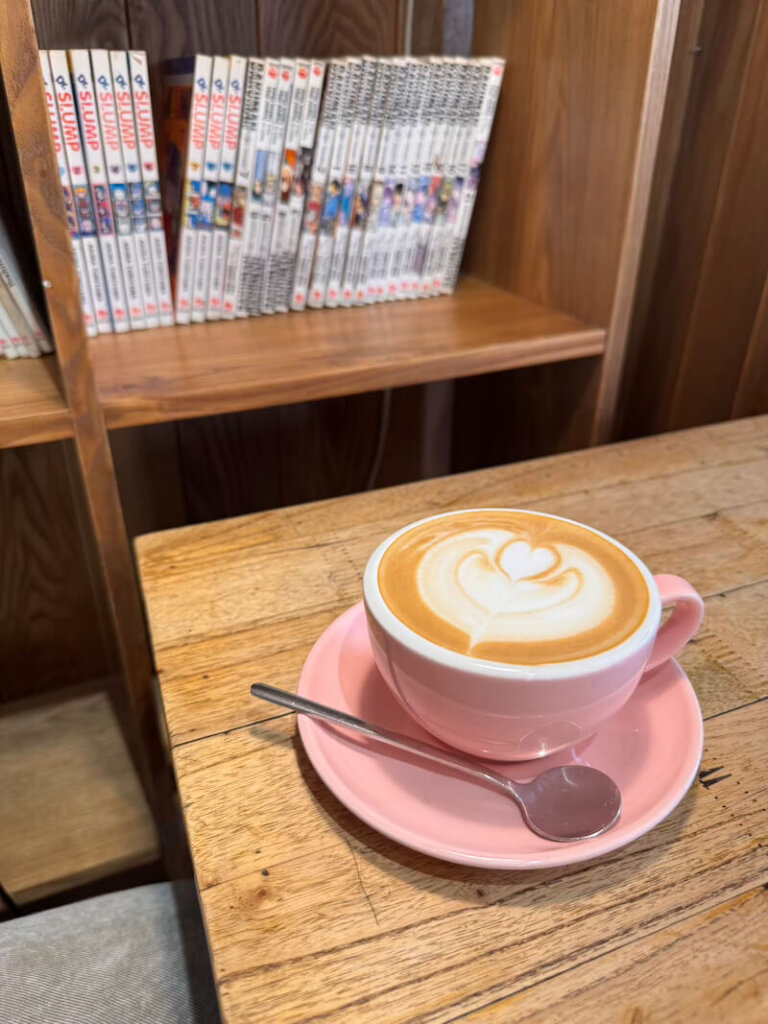
If you don’t want to take a coffee tour, here’s where I recommend trying each of these kinds of coffee in Hanoi. Or, you can read my café guide to Hanoi city center, where you’ll find a lot of my favorite places in more detail!
- Pourover Coffee: C.O.C. Legacy Specialty
- Egg Coffee: Café Giảng
- Brown Coffee: Honestly anywhere, but it was especially nice at Oleoleo Coffee
- Salt Coffee: Blackbird Coffee
- Coconut Coffee: Tranquil Books & Coffee

Allison Green is a former teacher who has been travel blogging since 2016, visiting 75+ countries in total. She has a Masters in Teaching and a B.A. in English and Creative Writing. As a former educator, she merges her writing and educational experience to encourage ethical, sustainable travel. She has been a speaker at the World Travel Writers Conference and TBEX. Her writing, photography, and podcasting work has appeared in National Geographic, CNN Arabic, CBC Canada, and Forbes, amongst others. When she’s not on the road, she lives in Bangkok, Thailand.