

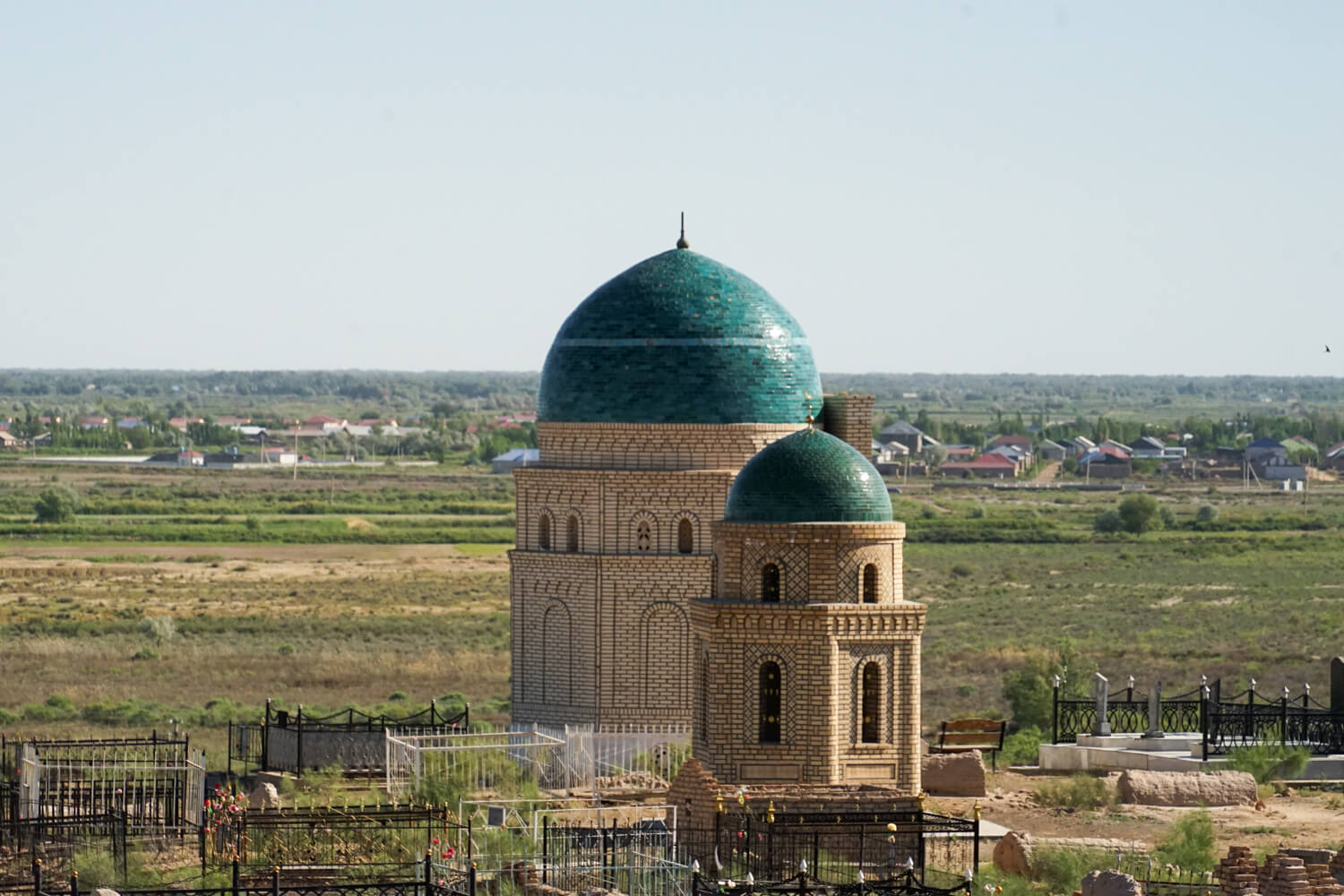
Visiting the Mizdarkhan Necropolis from Nukus, Uzbekistan
If you take a trip from Nukus to the Aral Sea, you’ll see a very interesting slice of Uzbekistan that few tourists get to see.
Most travelers stick to the famous blue-tiled Silk Road cities, sometimes stopping at Bukhara, occasionally making it out to Khiva. Few tourists continue the journey further west into Uzbekistan, into the autonomous region of Karakalpakstan, which has a different history, language, and culture to the rest of Uzbekistan.
| 🇺🇿 Planning to visit Nukus? Here’s a quick guide with recommendations! 🏜️What to Do in Nukus 1. Aral Sea excursion with yurt camp overnight (a must-do!) 2. Khiva transfer with Khorezm fortress stops (sightsee + transfer) 3. Muynaq and Ship Graveyard tour (if you can’t do an overnight tour) 🏨 Where to Stay in Nukus 1. Hotel Jipek Joli (artsy boutique hotel in a great location) 2. Pana Hotel (comfortable hotel with a great aesthetic, a little out of the center) |
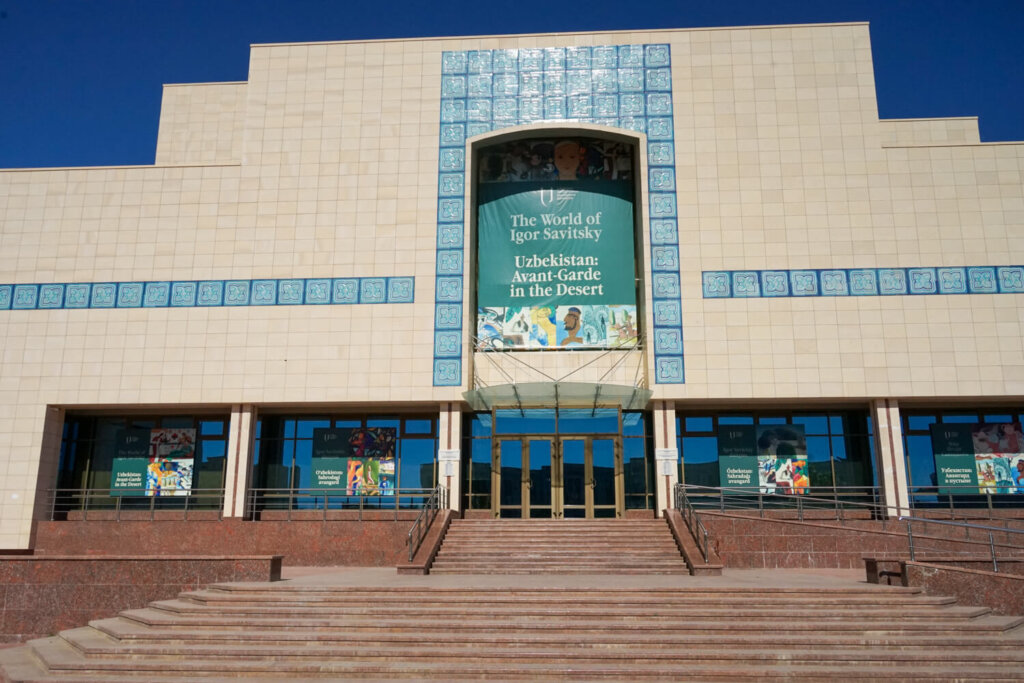
Nukus is the capital of Karakalpakstan, and it’s an incredibly interesting city to visit in its own right. It’s home to the best collection of Central Asian art on the planet at the Savitsky Museum (post upcoming!) as well as lively bazaars, intriguing Soviet Modernist architecture, and kind and welcoming people.
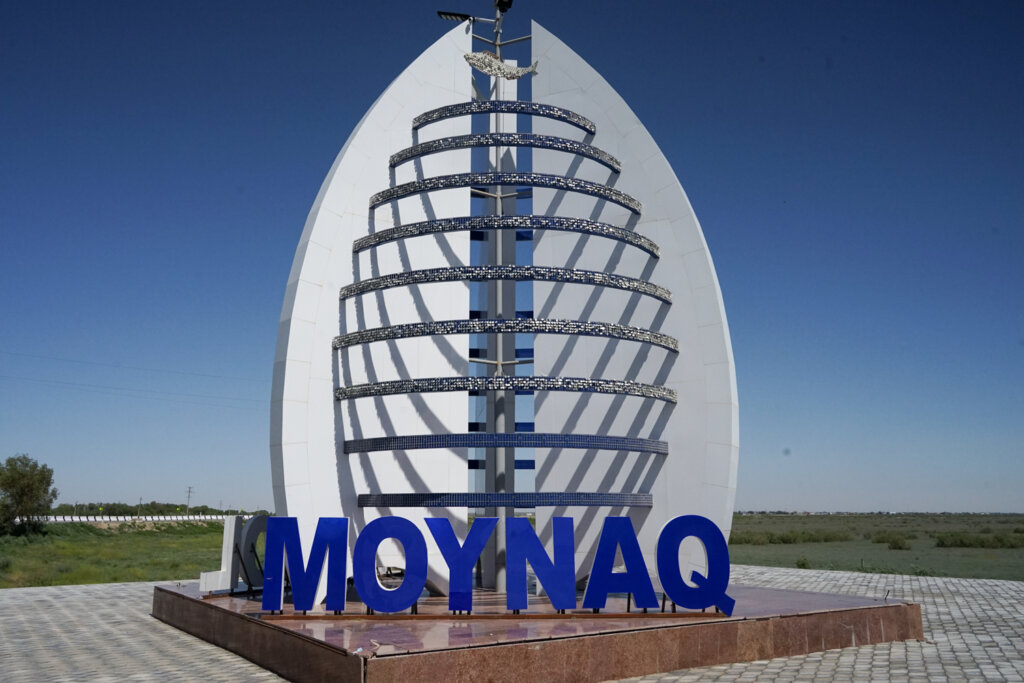
But Nukus is also the major gateway for those looking to travel onwards to Moynaq, home of the infamous “Ship Graveyard” that formed after the Aral Sea Disaster.
Or if you’re continuing on past Moynaq, making the trek across the youngest desert on Earth, the Aralkum Desert, which was once the bottom of the Aral Sea, in order to reach what remains of it (only 10% of its original size).
While reaching the Aral Sea and staying in a yurt camp overnight was the main reason for visiting Nukus, there were several stand-out stops on our 2-day, 1-night journey to the Aral Sea from Nukus.
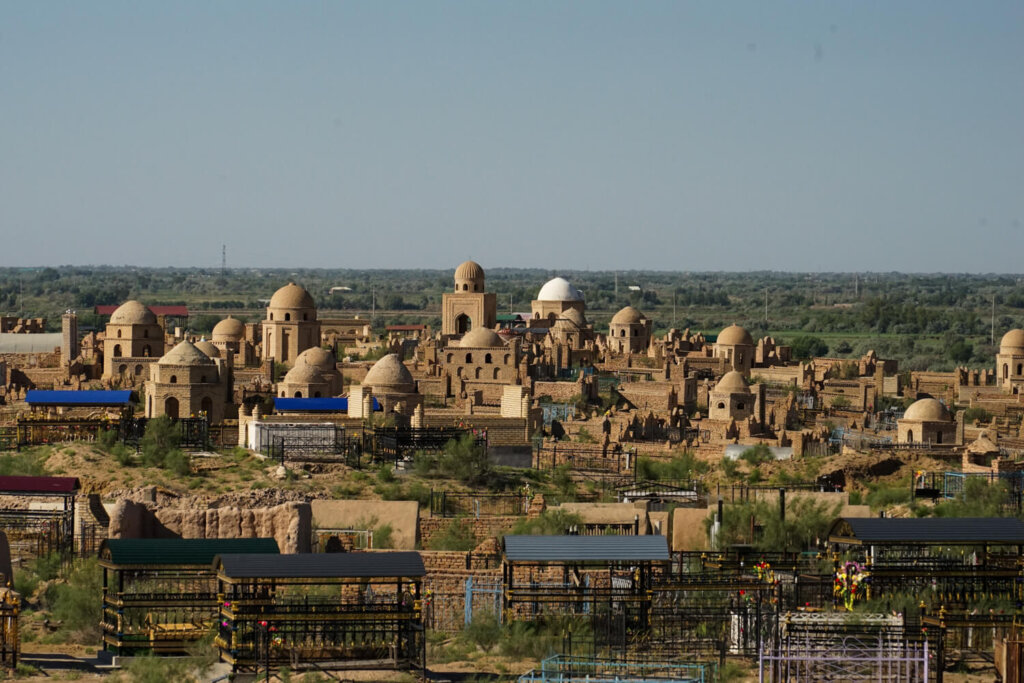
One of my favorite sights we stopped at along the way was the Mizdarkhan Necropolis, located just 30 minutes outside the city center.
It’s a place that’s not on every’s radar, but it was one of my favorite surprises on my trip to Uzbekistan. This post will explain a little bit about what the site is and its history, as well as how best to visit, and the most interesting sights there.
What is the Mizdarkhan Necropolis, Anyway?
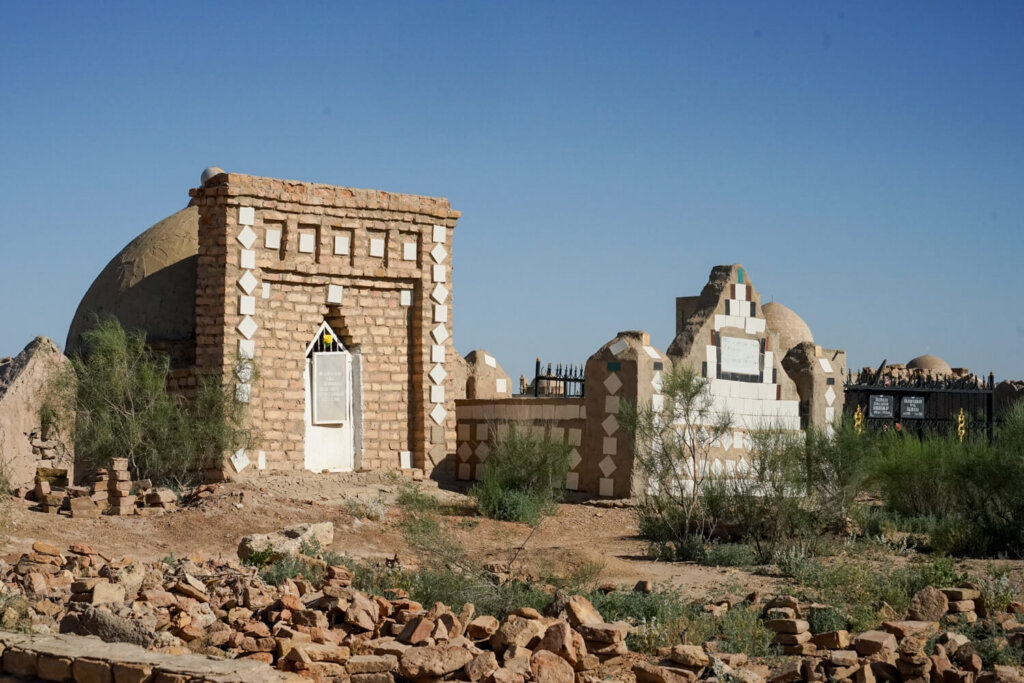
The area that now houses the Mizdarkhan Necropolis has been settled since the 4th century BCE, with most of what you see now dating back to the period between the 9th to 14th century.
The Mizdarkhan Necropolis spans an interesting transition in religion as well. Originally, the inhabitants of this area were likely believers in Zoroastrianism, who practiced open air burials before collecting the bones and putting them in clay ossuaries found on the sides of the mountains.
As the inhabitants of the region began to convert to Islam, it became home to an Islamic graveyard, with above-ground mausoleums, as well as a rare below-ground mausoleum, dedicated to Muzlumkhan-Sulu.
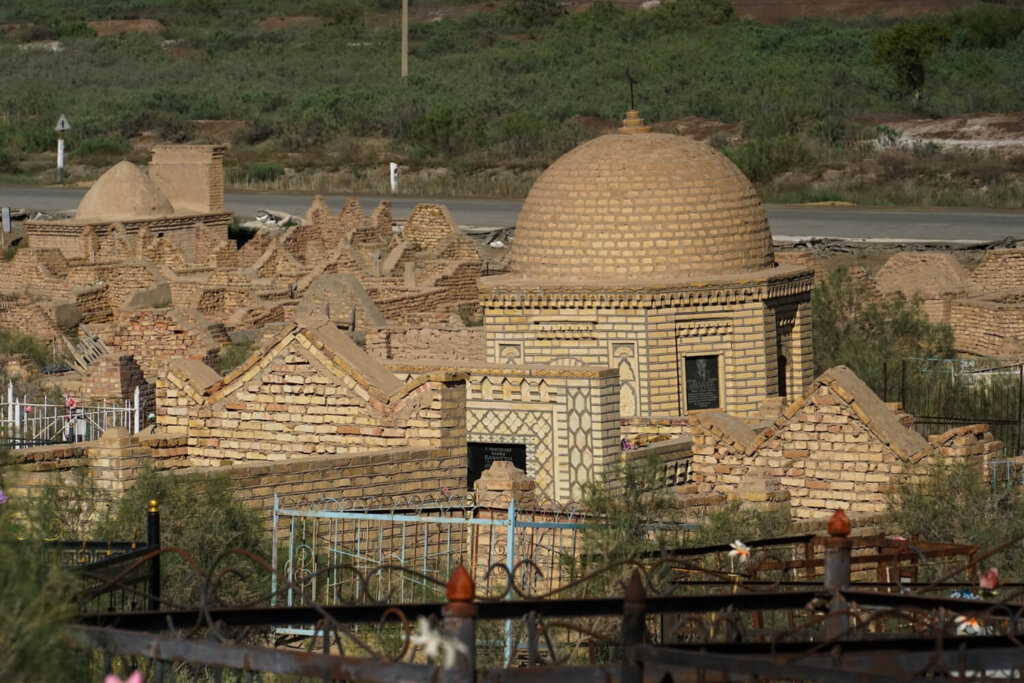
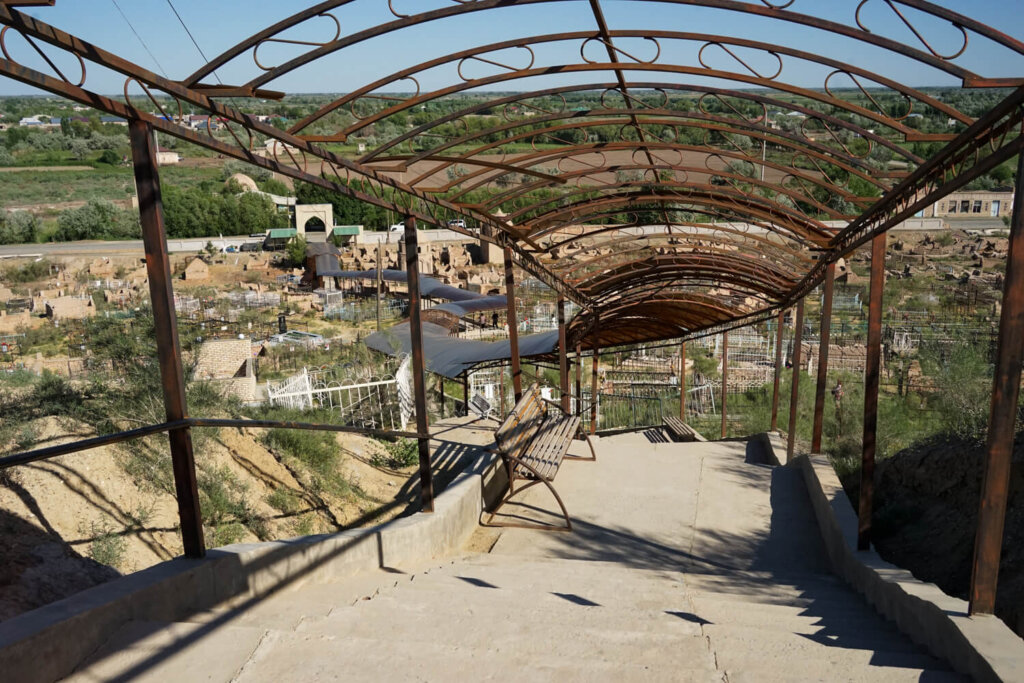
Today, you can walk up the hill via a set of stairs and wander around the grave complex, visiting a selection of highlighted sites as well as taking in the views of all the smaller gravestones and burial sites around you.
How to Visit the Mizdarkhan Necropolis
By Taxi from Nukus
If you are just staying in Nukus and you aren’t exploring further than the city on a trip to ancient fortresses or the Aral Sea, you can visit Mizdarkhan Necropolis independently by taking a taxi out there.
Looking on Yandex, the approximate cost for a one-way taxi from Nukus to Mizdarkhan is 60,000-70,000 sum ($5-6 USD).
However, I’m not sure how easy it would be to get a taxi from Mizdarkhan back to Nukus. Personally, if I was doing that, I would try to arrange something with my taxi driver to wait for me and then take me back to Nukus, making an agreement off the app for a fixed price return.
On a Guided Tour
Since many people visit Nukus intending to explore Karakalpakstan further, this is an included stop on many guided tours.
It’s a common itinerary stop on a 2-day 1-night trip to to the Aral Sea like I did, and that was the context in which I visited it! Since it’s close to Nukus, it’s usually the first or last stop of the tour.
What to See at Mizdahkan Necropolis
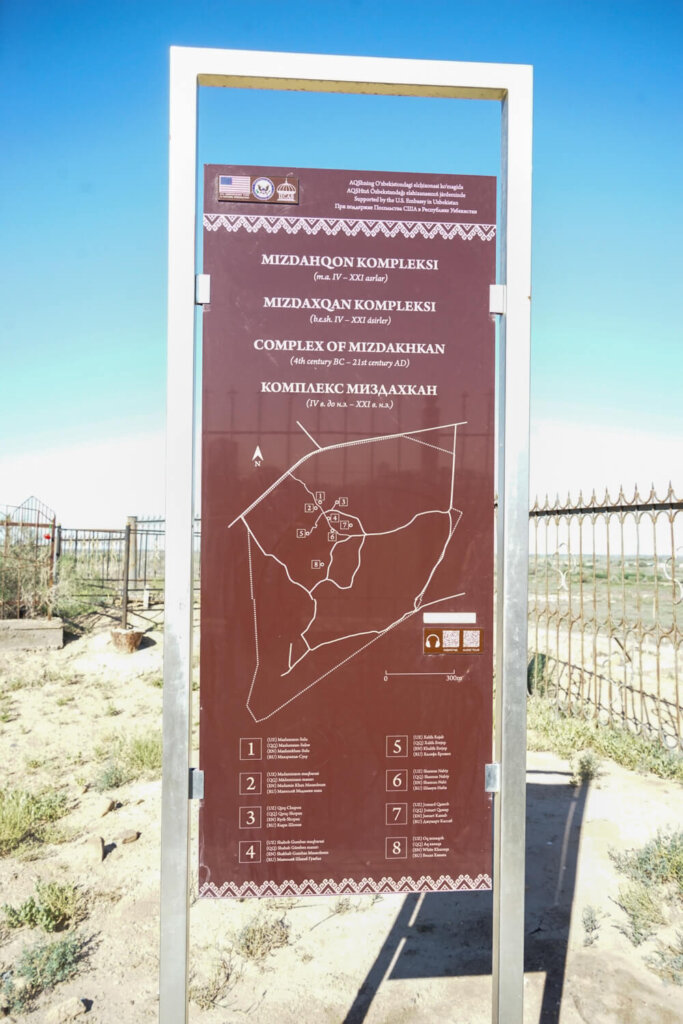
There is some minimal signage at the Mizdarkhan Necropolis telling you what a few key sights are, but it’s not exactly super clear how to visit them in a particular order so that you don’t miss anything. However, each key sight is numbered, so you can at least know when you’ve stopped at an important sight.
I didn’t get to visit all the sights, but here are a few that piqued my interest the most:
Mazlumkhan-sulu Mausoleum (Site 1)
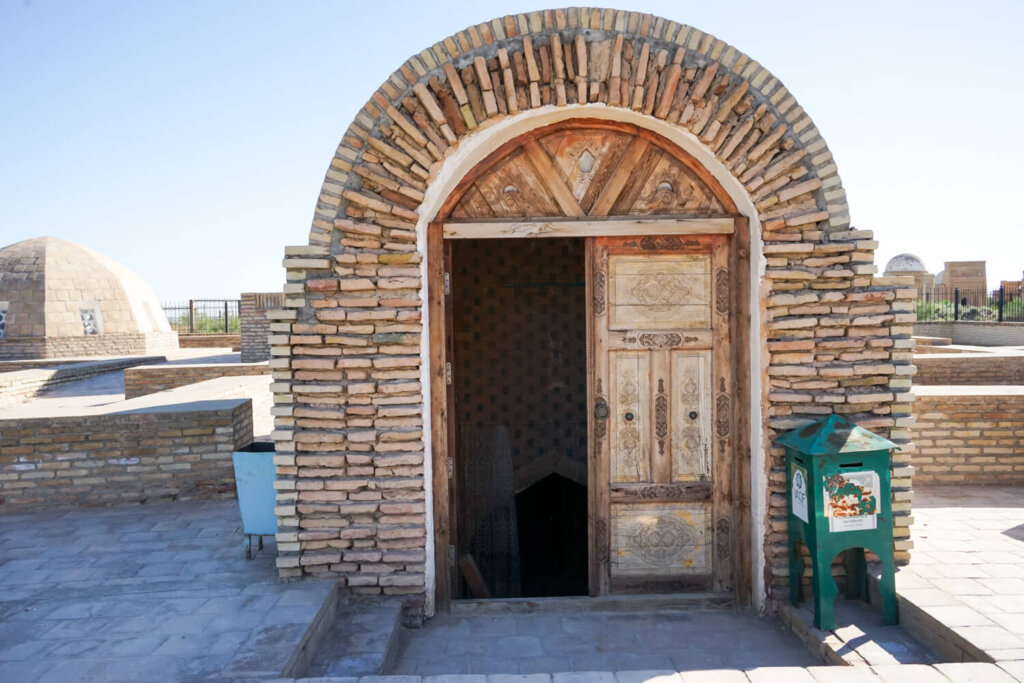
This mostly below-ground mausoleum is a unique oddity.
You enter on the surface, but rather than staying at the surface, you descend a few steps into an incredible blue-domed mausoleum beneath the ground with some traditional Islamic carvings and tilings.
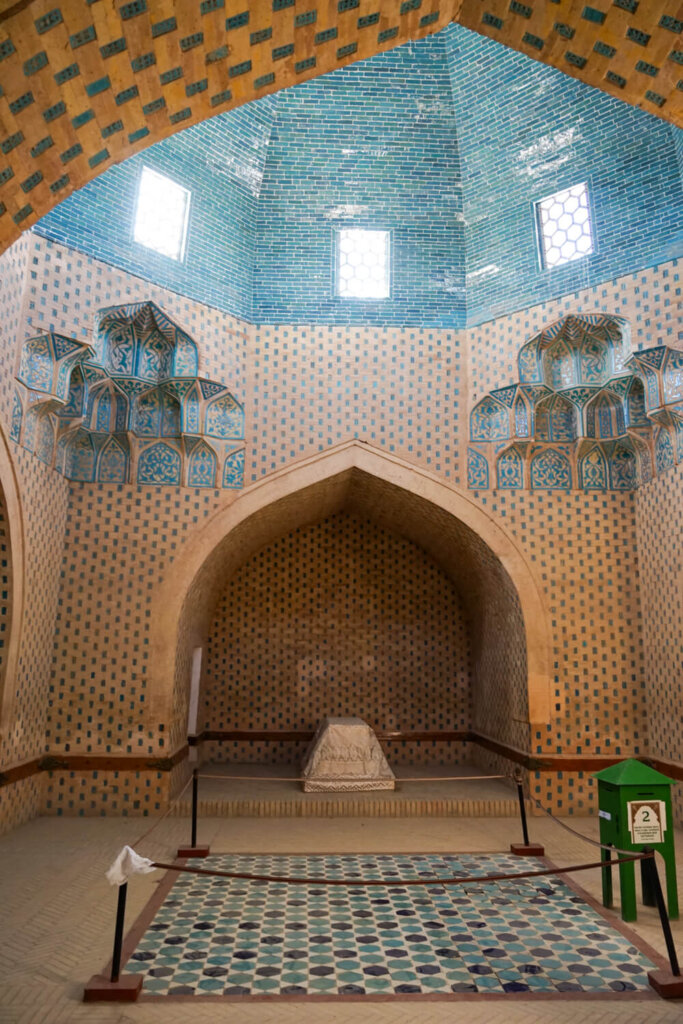
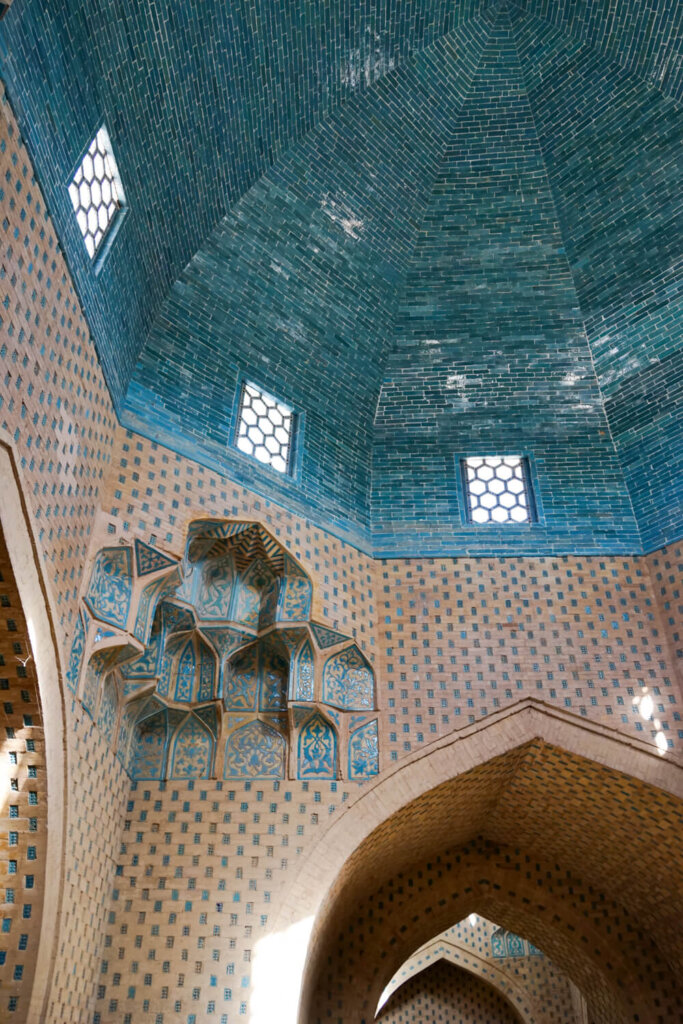
However, there is enough light at the top of the dome to let in the light, illuminating the mausoleum beautifully.
Khalifa Erezhep Mausoleum (Site 5)
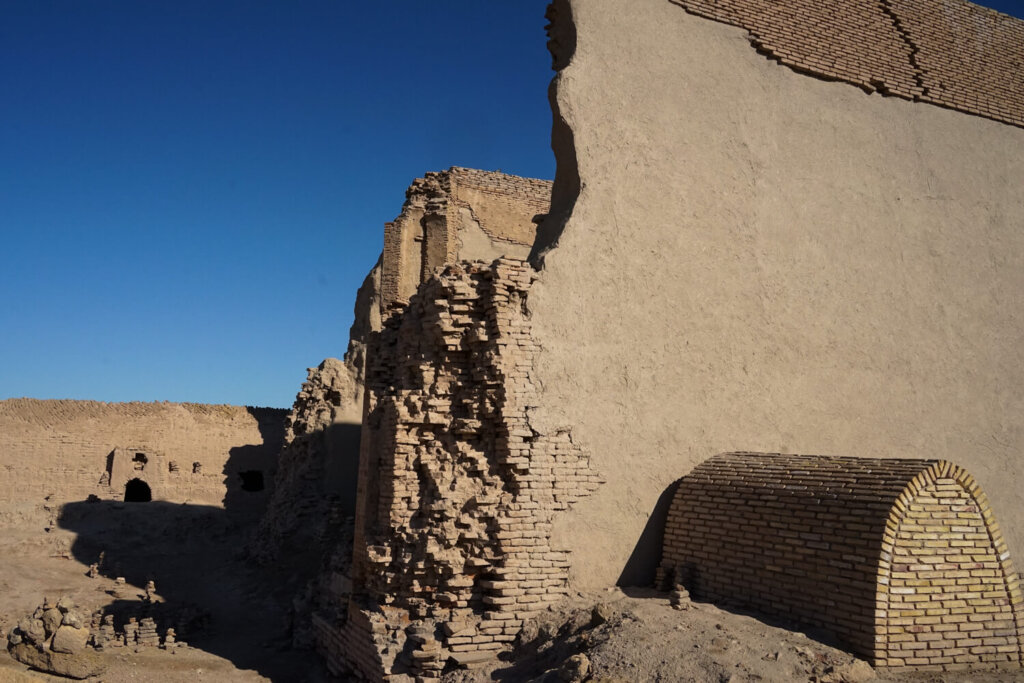
Every religion seems to want to have some claim to this mausoleum, which has stood the test of time despite earthquakes and the sands of time.
Some people say an Islamic saint early in the spread of Islam was buried here; others believe it is the tomb of Adam, the Biblical first man; others believe that Gayomard, the first human according to Zoroastrian belief is buried here.
Certainly not all of these can be true, but nevertheless, it has become an object of wonder and pilgrimage. It’s also given a nickname due to local belief, the “World Clock,” because it is believed that when the last brick falls from this mausoleum the world will end.
Shamun-Nabi mausoleum (Site 6)
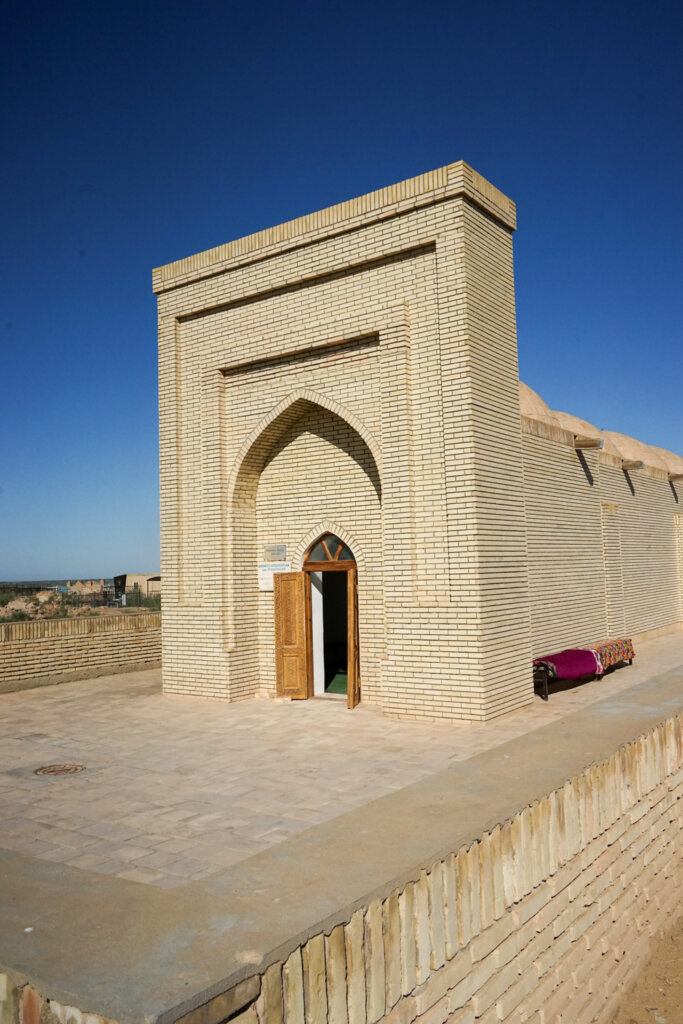
This particular structure is interesting in that there is a very long tomb inside this mausoleum: one that measures 25 meters long.
However, interestingly, no remains were even found inside this tomb. It is now covered with a decorative green and pink fabric cover to protect it from the elements.
Jumart-Kassab Mound (Site 7)
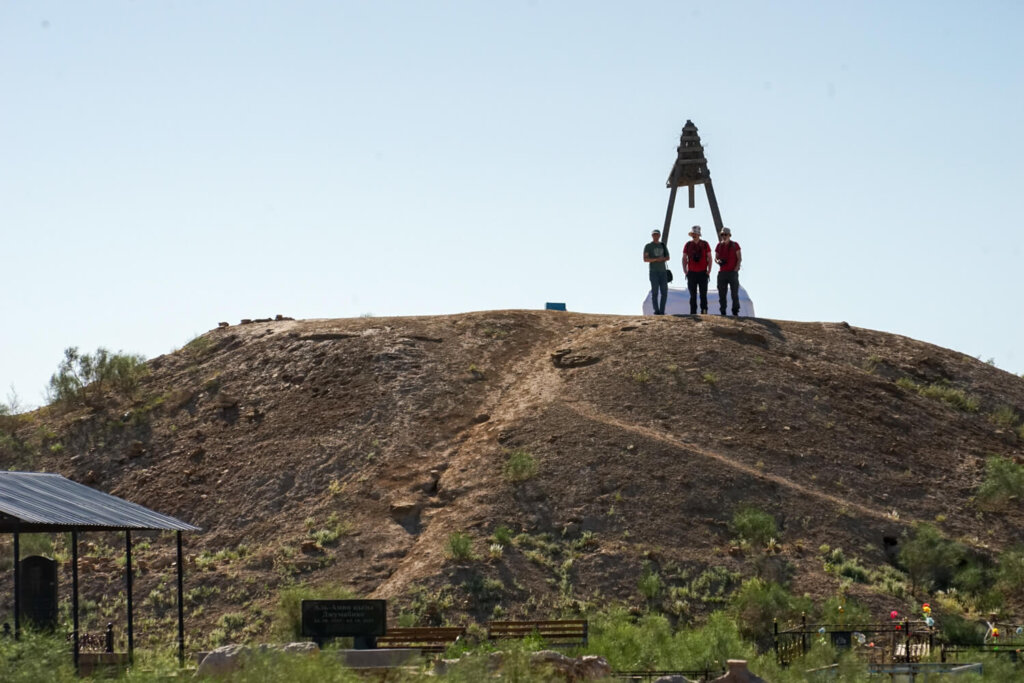
The tallest part of the Mizdarkhan Necropolis complex, Jumart Kassab Mound features a triangular structure on top of it. Frankly, I can’t find the story behind this mound or its significance.
Perhaps it’s just the height of it, where you can see the entire necropolis spread below you. It does offer fabulous views over the entire landscape and all the structures that have been built into the hillside.
Simply based on the height and shape of it, there’s a chance it may have been a Zoroastrian dakhma or “Tower of Silence,” which is an elevated circular area where dead bodies were brought to be turned to bone by scavengers and the elements, similar to Chilpyk elsewhere in Karakalpakstan.
Zoroastrian ossuaries have been found on the slopes of the hill, which may lend some support to this theory.

Allison Green is a former teacher who has been travel blogging since 2016, visiting 75+ countries in total. She has a Masters in Teaching and a B.A. in English and Creative Writing. As a former educator, she merges her writing and educational experience to encourage ethical, sustainable travel. She has been a speaker at the World Travel Writers Conference and TBEX. Her writing, photography, and podcasting work has appeared in National Geographic, CNN Arabic, CBC Canada, and Forbes, amongst others. When she’s not on the road, she lives in Bangkok, Thailand.
Hello, my name is Muzaffar. I work in the Council of Ministers of the Republic of Karakalpakstan. The purpose of my contact with you is your
https://eternalarrival.com/contact-me/
at You posted photos of cemeteries located in Nukus. This is a problem in attracting investors from abroad. Because when searching for “Nukus” on Google, investors who saw photos of those cemeteries are asking, “Who can guarantee that such a situation won’t happen to us?” Therefore, if I could provide you with other well-filmed footage from Nukus, please provide practical assistance in replacing it. Thank you in advance for your response.
Hello Muzaffar, thanks for your contact. I’m confused why you think this post is a bad thing. This is a positive, informative post specifically about a protected historical site that people should visit while in Karakalpakstan. Many cities have cemeteries that are a large part of their history and intrigue for visiting, such as Paris. I have written specificially about the Paris Catacombs, for example. The post is pretty clear that the Necropolis is a historic site that stopped being utilized centuries ago. Providing alternate images would not suffice because this is a post about Mizdarkhan specifically, it would not make sense to have photographs from Nukus city in a post about Mizdarkhan.
I have other content about Karakalpakstan and Nukus, including a post praising Jipek Joli as a great hotel in town, as well as a post on my trip through Karakalpakstan to the Aral Sea, and finally I have a post about Nukus coming up soon that gives a well-rounded view of the modern side of the city. Ultimately this blog reflects my travels and so long as information I provide is factual and not slanderous, I don’t see why it should cause any upset.
Thanks for your understanding.