

Suzani Embroidery Class in Bukhara: My Experience & Thoughts
I’ve always been fascinated by textiles from around the world — this universal desire we have as people to tell stories through cloth. You can see it in the huipil of Guatemala, the batik of Indonesia, the saris of India; cloth is a blank canvas that bears the markings of each culture’s tradition.
Uzbekistan is known for its variety of textile crafts, including zarduzlik, a unique form of embroidery that weaves in threads of actual gold. The most common and well-known textile you’ll see in Uzbekistan is the method of hand embroidery called suzani.
You can find it many places in Uzbekistan, but the best artisans are in Bukhara, the crafting capital.
| 🇺🇿 Planning your trip to Bukhara in a hurry? Here are some quick picks: 🪡 Best Activities in Bukhara 1. Suzani Embroidery Workshop (my #1 activity I did in Bukhara!) 2. Khiva Transfer via Khorezm Fortresses (best way to get to Khiva!) 3. Miniature Painting Workshop (my friend loved this activity, and I had such FOMO!) 🏨 Best Hotels in Bukhara 1. Duston Boutique XIX Century Hotel (one of my favorite stays in Uzbekistan) 2. Turkman Madrasah Hotel (stay in a converted madrasah/Islamic school!) 3. Komil Bukhara Boutique Hotel (beautiful miniatures painted on the walls) 🚄 Getting Around Uzbekistan: The best way is either by guided transfers that include sightseeing along the way (like this one, if you’re going onward to Khiva) or by train. If booking a train, you can first try the official website. If they’re sold out, check 12go.asia as they often have extra tickets at a small surcharge. |
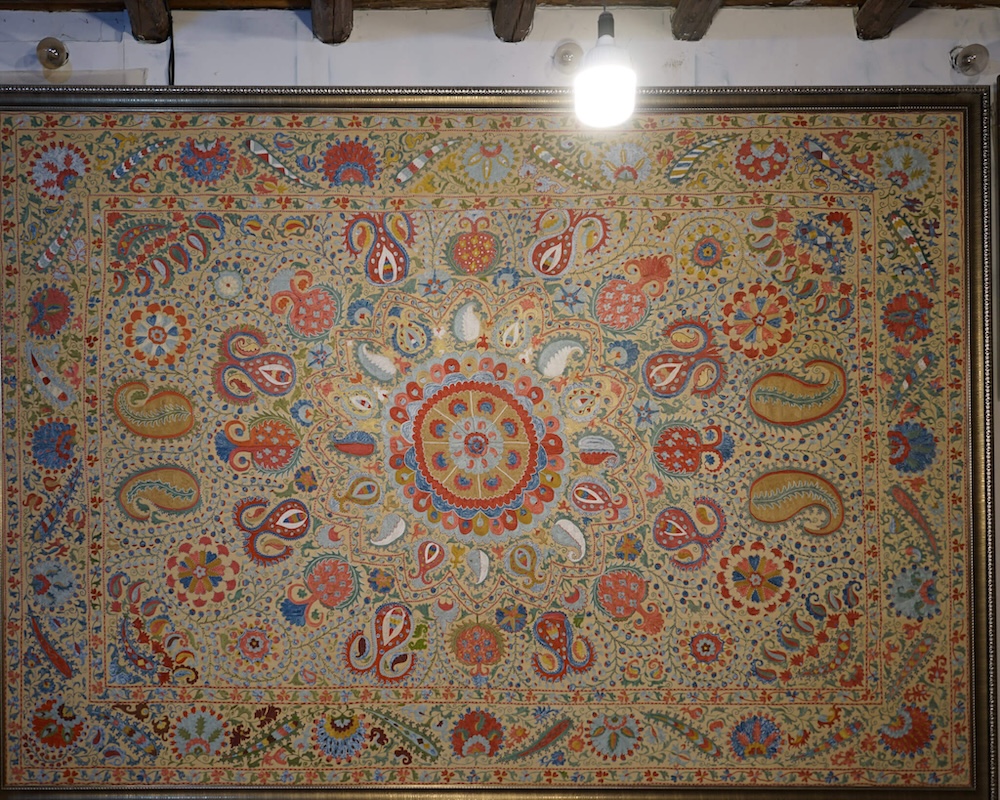
Most suzani you see for sale on the streets is inspired by traditional suzani, but is no longer done by hand but is machine-made instead. High-quality suzani is extremely time-consuming to produce and thus priced accordingly.
If you want to explore the craft scene of Uzbekistan in a hands-on fashion, taking a suzani class is an excellent way to understand more about the history and meaning of this art form in an intimate setting.
This post will tell you all I learned in this suzani embroidery class, as well as how the experience is structured and who I recommend it for.
History of Suzani in Uzbekistan
The word suzani originally comes from the Persian word for ‘needlework’ and has historically been a very valuable skill across many Central Asian countries, particularly Tajik and Uzbek cultures.
Suzani is typically created out of a blend of cotton and silk, making them incredibly delicate and thus, their history hard to trace as the oldest surviving suzanis are only as old as the late 18th century. Their history has been recorded since at least the 15th century, and likely far, far longer.
Suzani became even more important in Uzbekistan with the spread of Islam in the 7th and 8th centuries; at its first introduction, Islam was practiced in a more strict fashion.
Young brides-to-be would stay home making suzani, stitching with intention-setting, with traditional motifs symbolizing their desires: a pomegranate for fertility, a bird for freedom, a turtle for longevity. These suzani would also serve as their dowry, to be presented to the husband upon marriage.
Suzanis were a display of wealth for many centuries in Uzbekistan, and more than that, they functioned as a sort of “emergency fund” for families. Having several large valuable suzanis offered financial peace of mind, knowing that these pieces of art could be sold in the future if any money troubles arose.
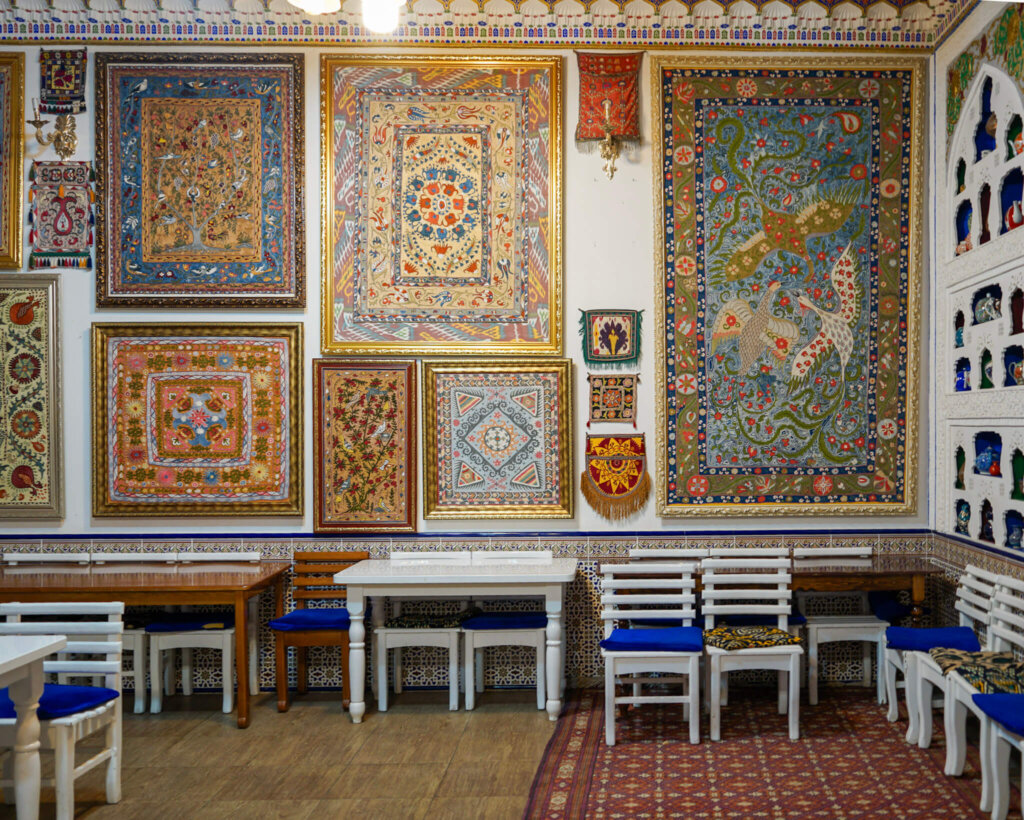
Besides their innate value, suzanis served an important function in Uzbek homes. Traditionally, many Uzbek homes did not use paint on the walls. Rather, they covered them in suzanis or carpet as decoration. Especially in desert cities like Bukhara and Khiva, this was useful for absorbing and gathering dust.
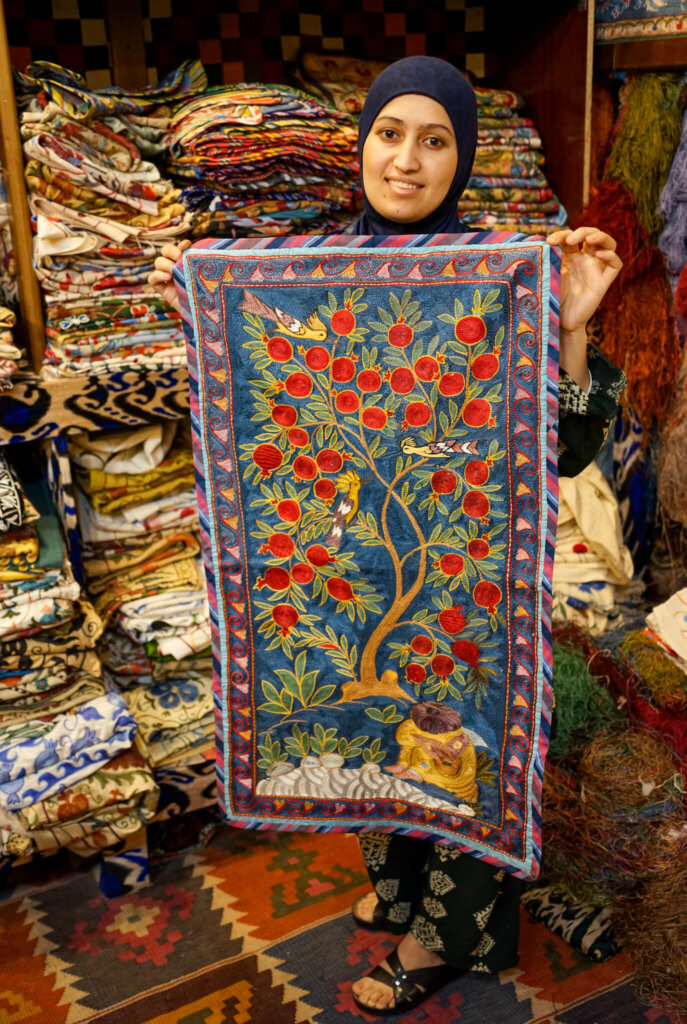
Under Soviet occupation, many traditional skills were laid by the wayside in favor of industrialization — the very same drive that would lead to the worst manmade ecological disaster to date, the near-complete destruction of the Aral Sea, when the USSR tried to make Uzbekistan a cotton-growing powerhouse.
After independence from the Soviet Union, many Uzbeks renewed a focus on crafts as an expression of their national identity and pride, a return to their roots.
Quite smartly, Uzbekistan has also realized that their craft culture is something incredibly unique that they can offer tourists: a pillar of tradition in a modernizing, homogenizing world. Now, Uzbek craftsmanship is a large part of the draw of a trip to Uzbekistan, besides the beauty of its Silk Road cities.
Why Take a Suzani Class in Bukhara?
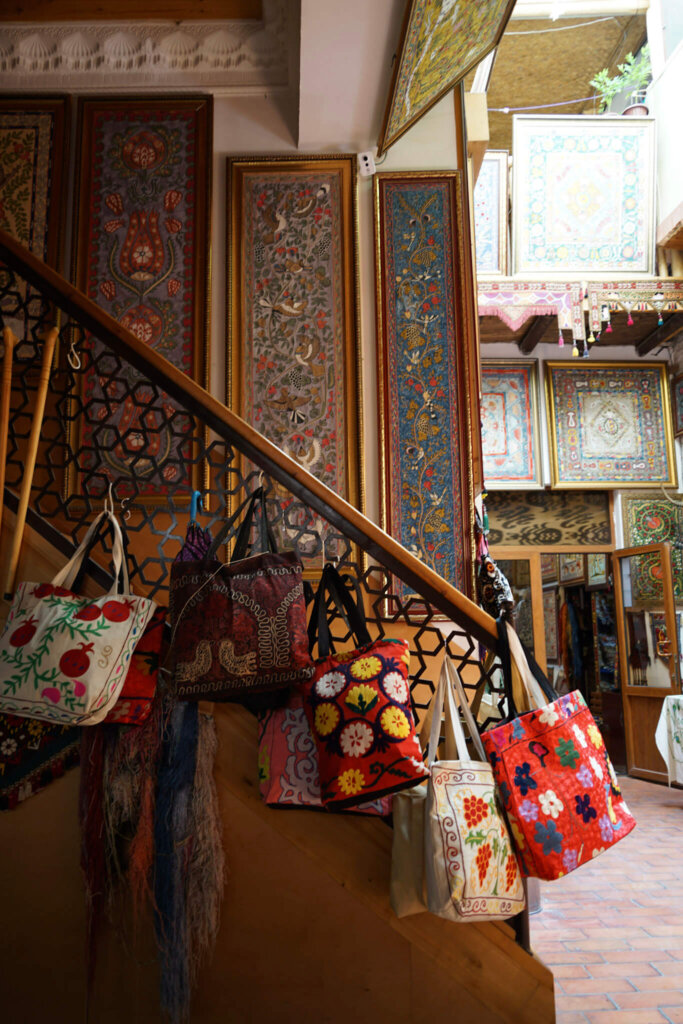
If you want to learn crafts in Uzbekistan, Bukhara is one of the best cities for it. You’ll see people selling their crafts all throughout the city, and it’s really fun to take a peek behind the curtain and learn all the hard work that goes into creating these masterpieces.
Bukhara is home to many multi-generation suzani masters you can learn from. They’ll teach you the history and meaning of suzani as well as the process of how its made.
You’ll also get to see a suzani gallery, meet artisans who have dedicated their lives to this craft, and understand how to tell the difference between hand-crafted artisan suzani and machine-made, mass-produced suzani.
My Experience Learning Suzani in Bukhara
I took a suzani embroidery class with Craft&Culture in Bukhara and I can highly recommend it to everyone.
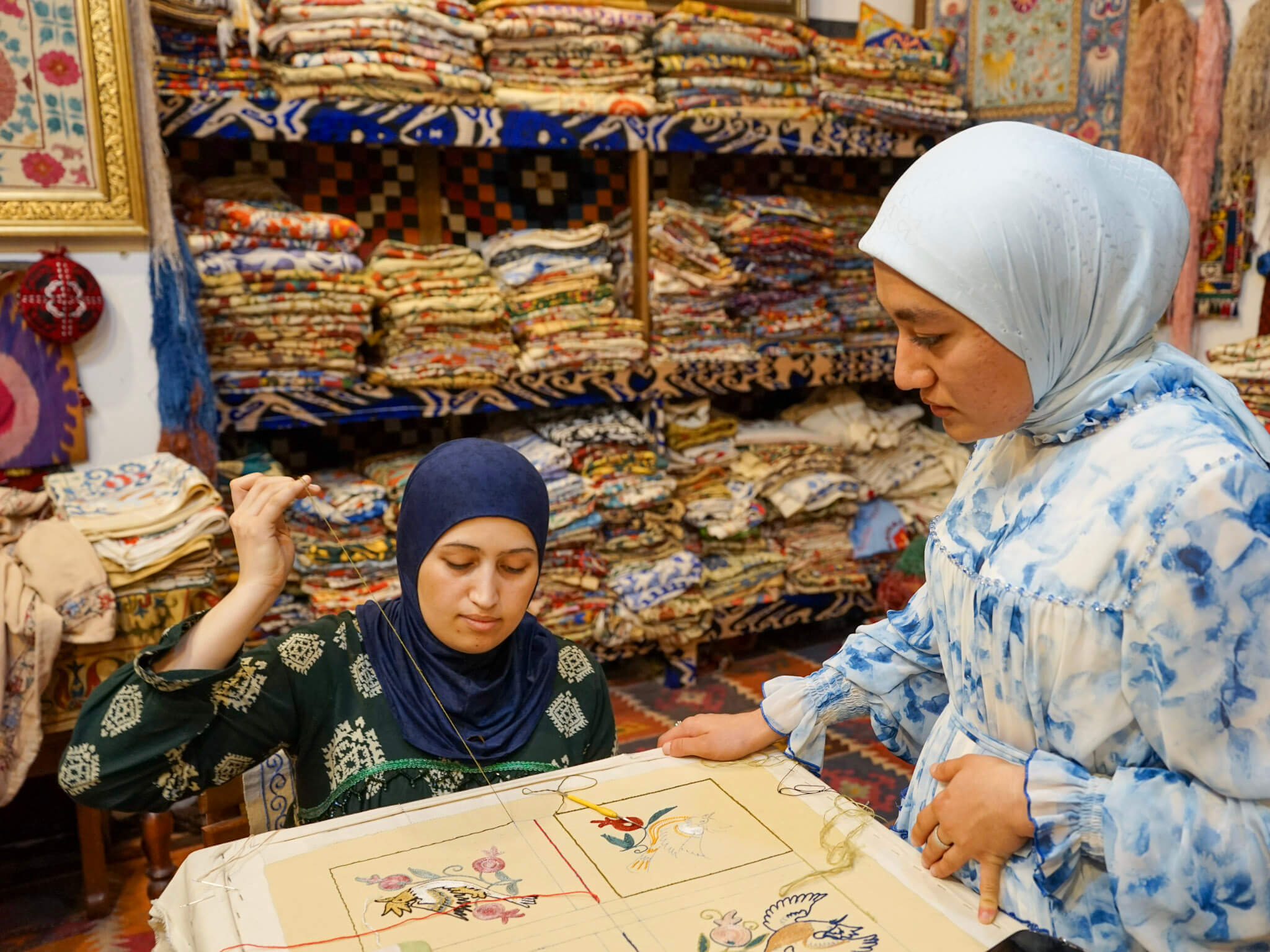
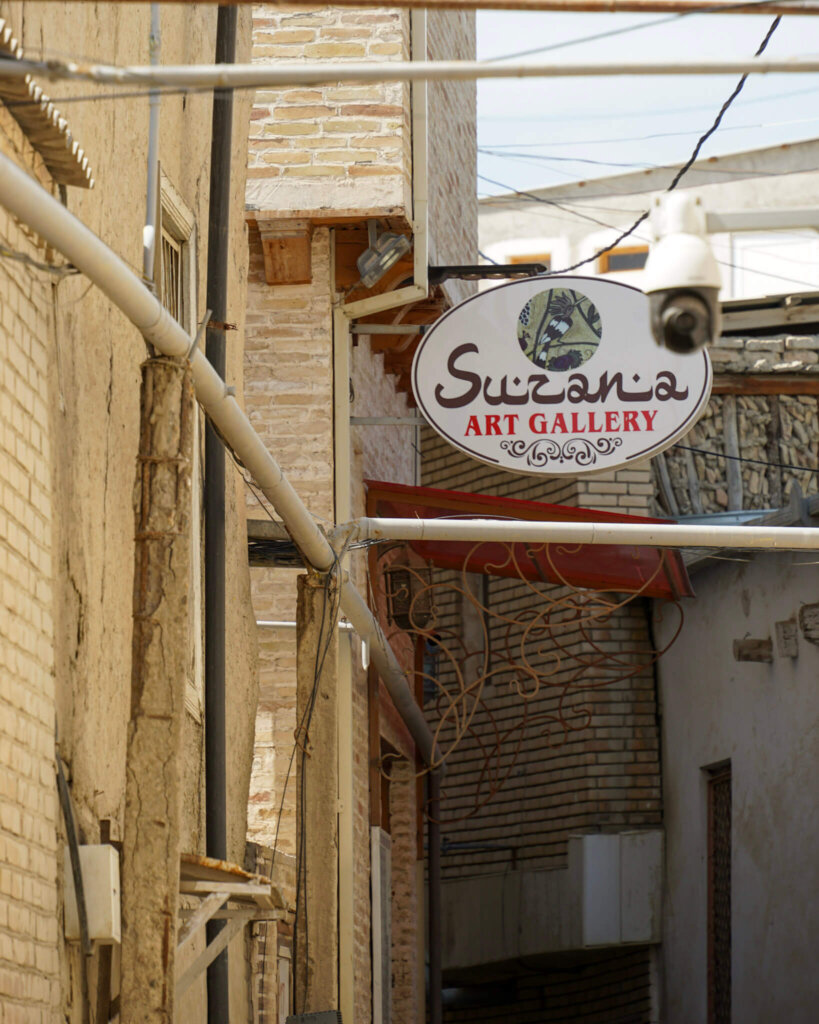
We got picked up by our local guide, Muxtarama, who would serve as a translator and help tell the story of the history of the craft. She brought us to the suzani workshop, hosted in a beautiful gallery rich with suzani artwork. This is where we met our suzani master, Shaxnoza, who would be teaching us.
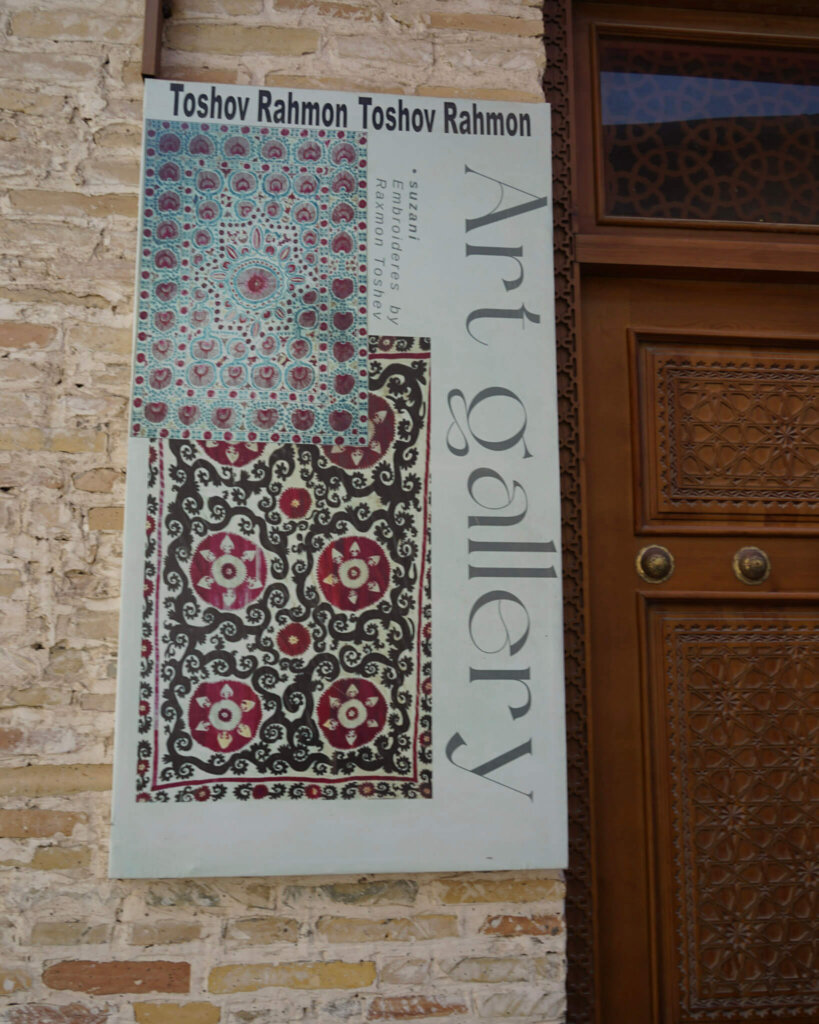
We started by picking from a variety of hand-drawn designs, drawn onto cloth panels by Shaxnoza’s husband, Raxmon Toshov, who owns the gallery and teaches more than 100 students his style of suzani.
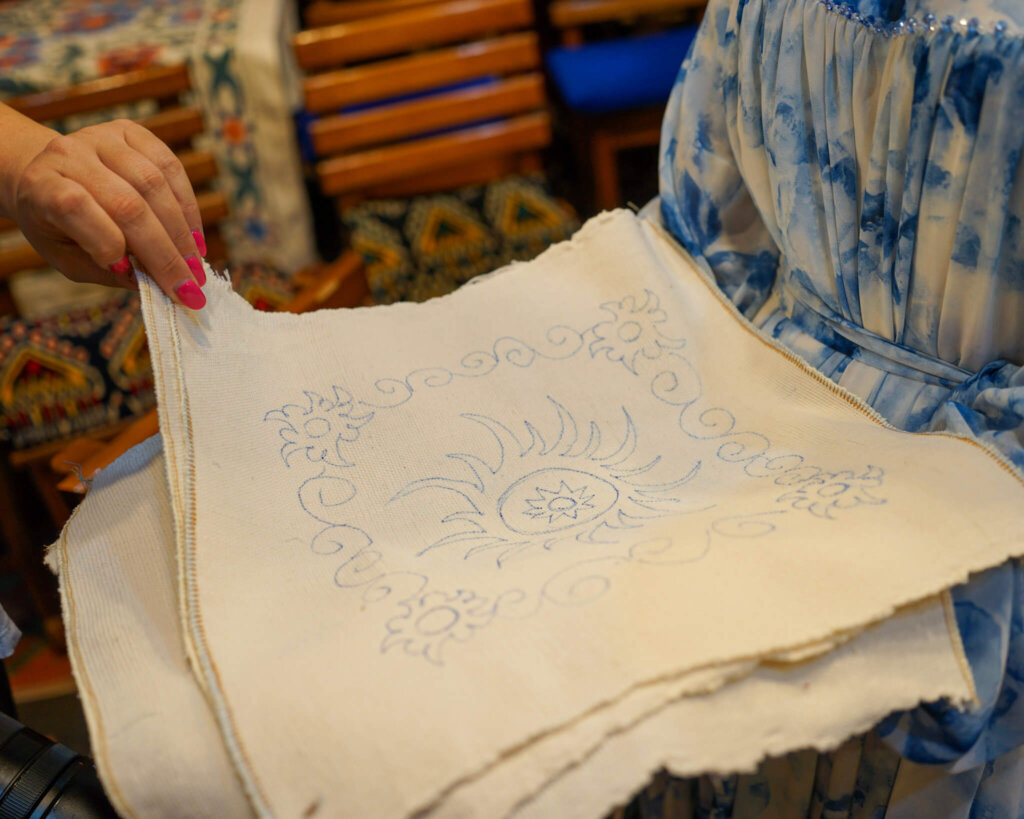
The cloth that beginners use for suzani is a rough, loose cotton weave, which makes it easier to embroider on (meanwhile, Shaxnoza was freehand-stitching silk like the pro that she is).
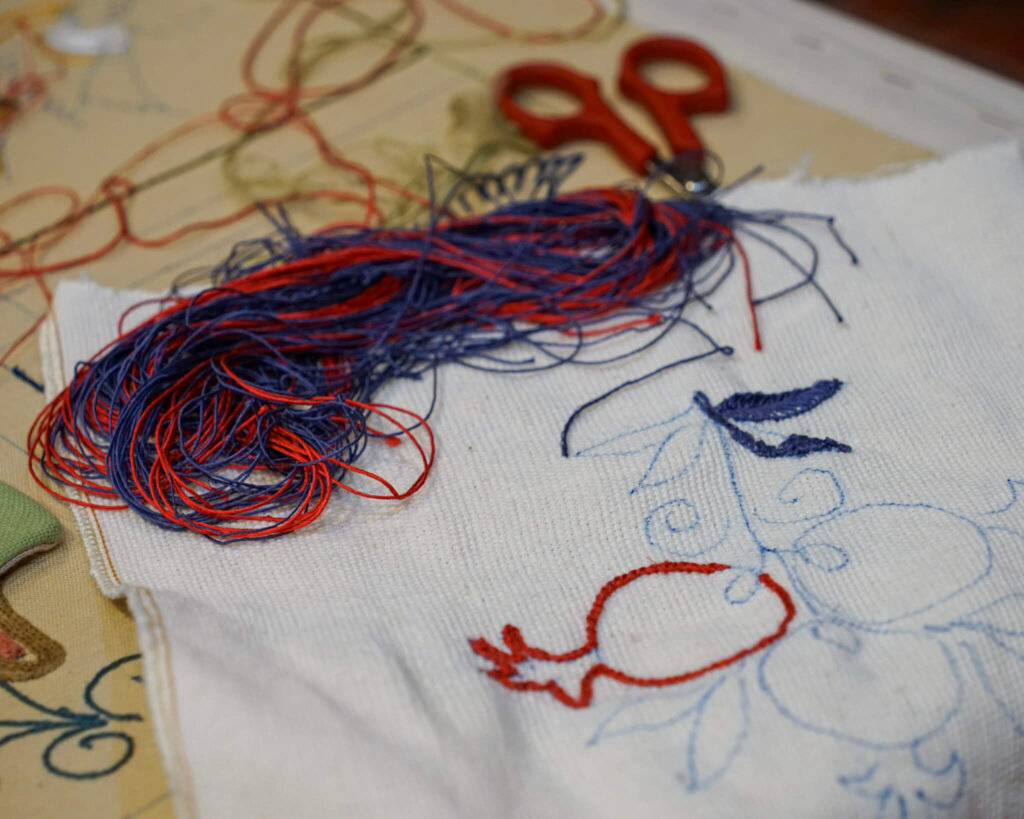
I chose a pomegranate motif, as I had seen this design many times around Bukhara and always found it quite beautiful. It also looked to be an easier design… little did I know how difficult even a rather simple looking design could be!
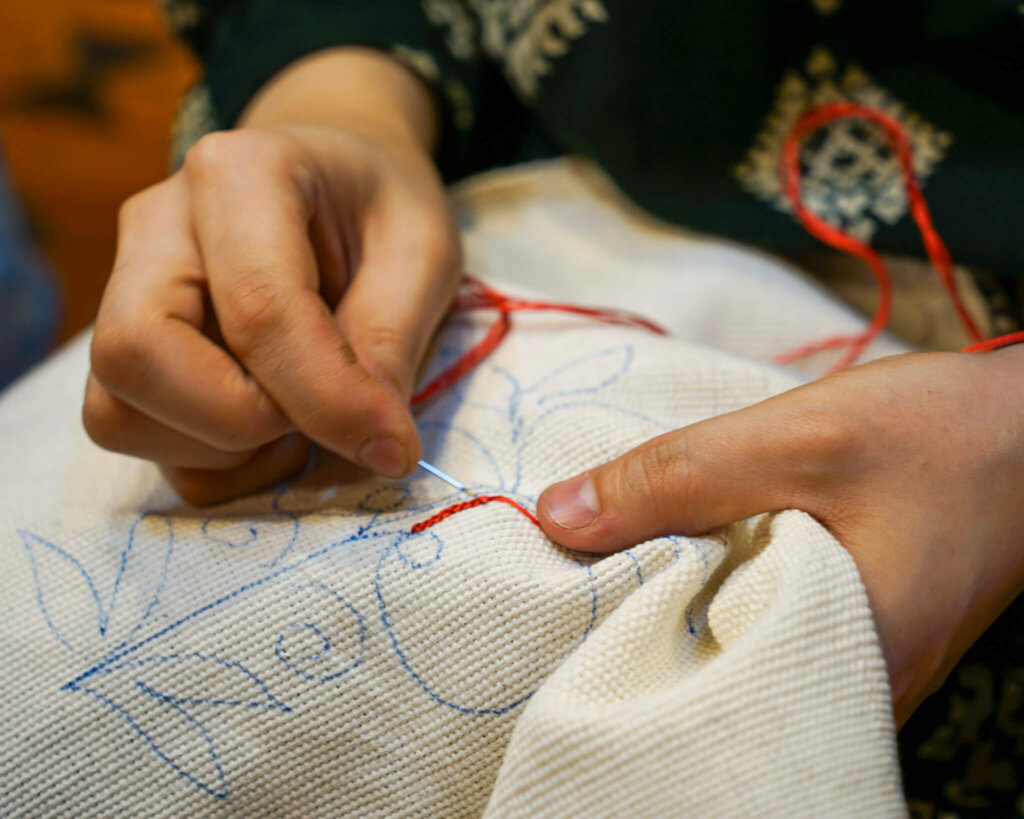
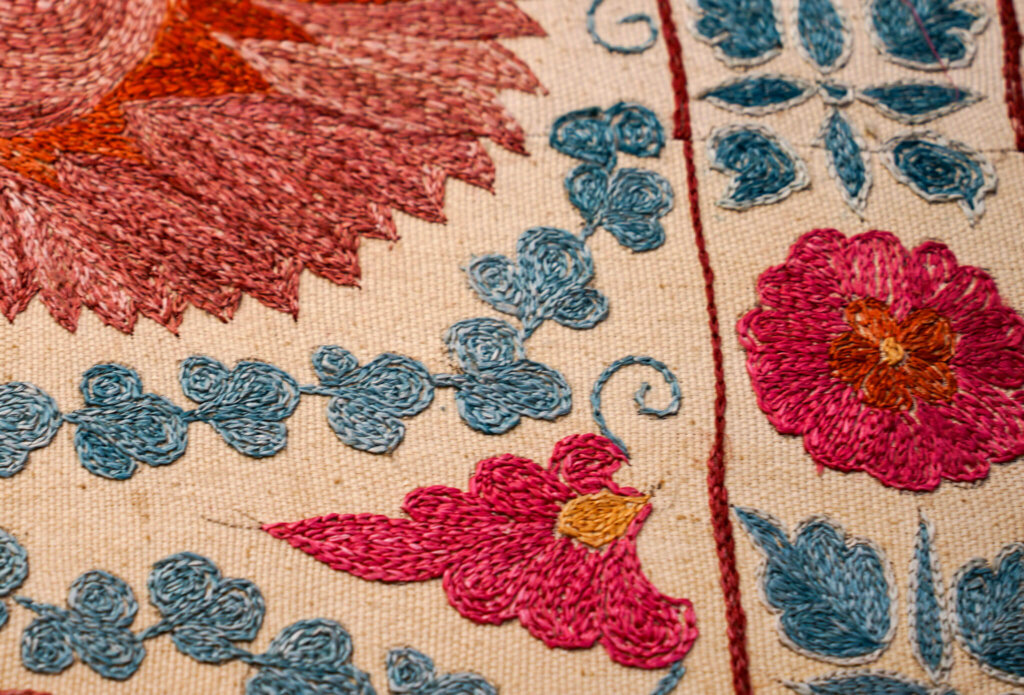
Shaxnoza showed us the most important stitch of suzani: the chain stitch. There are 21 different stitches used in the Bukhara style of suzani; in our class, we learned both the chain stitch and the long chain stitch, which were the two stitches necessary to complete our pieces.
I finally got the hang of the chain stitch… up until it got time to make a point and turn a corner, creating an angle. This part was a little tough, but Shaxnoza helped me with it, and I started to understand it better.
She also showed me the long chain stitch, which is a variation of the chain stitch that uses a wider gap between the two places punctured by the needle, making, well, a long stitch!
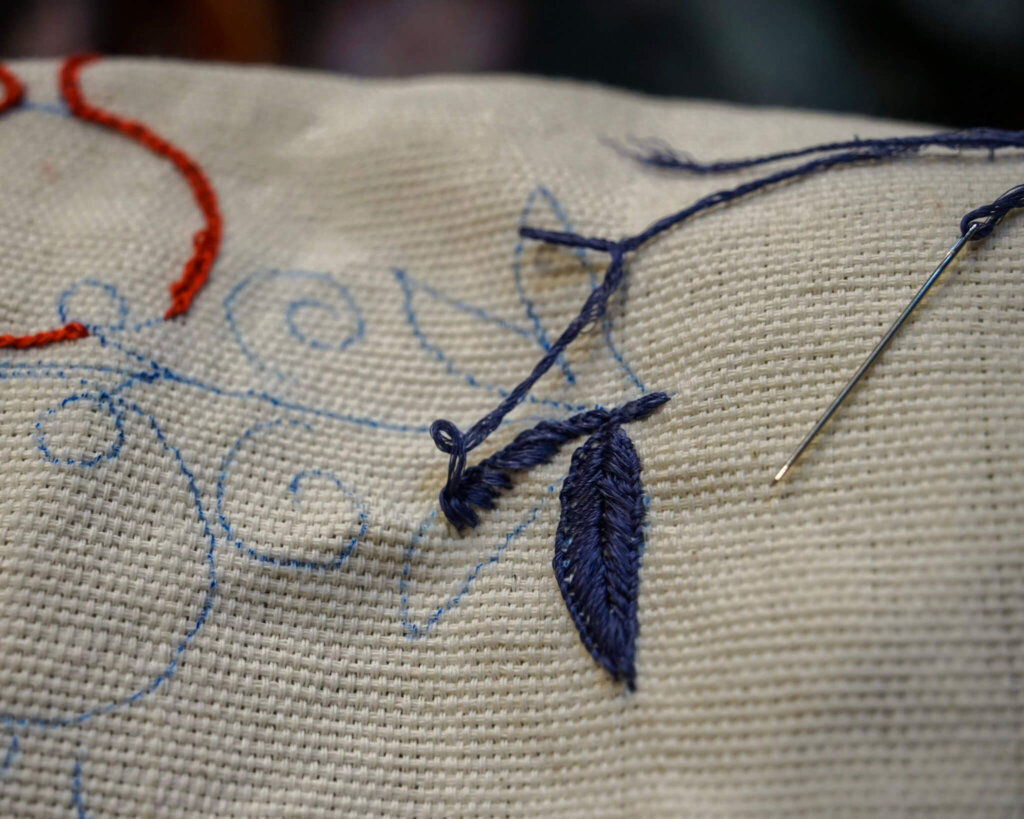
This is done to fill a space more quickly but less densely, and this was the kind of needlework she suggested I do to fill in the leaves of the pomegranate motif I was working on.
We worked on our embroidery for a while, and then we also watched Shaxnoza show off her suzani skills with some hook embroidery.
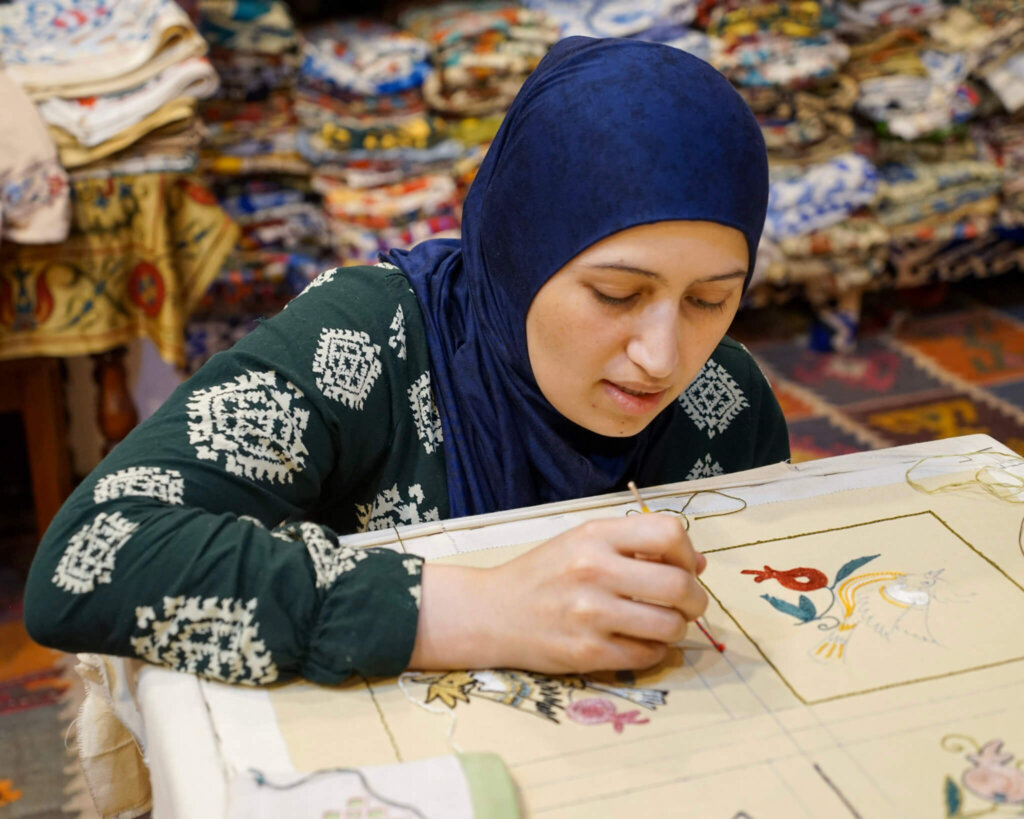
This method of stitching is called yurma in Uzbek, using a tambour hook rather than a needle. This is a more difficult style but it can create more dense, detailed, color-rich suzani as a result. Shaxnoza said it was her favorite style to work in.
More than humbled — and also aware of how much time my suzani piece would take to finish — we received enough thread to continue our suzani projects on our own time and said goodbye to Shaxnoza, her husband, and their beautiful gallery.
Do I Recommend This Suzani Class?
Absolutely yes! While I don’t think I have the attention span to complete my suzani project, I really enjoyed getting to see a master artisan at work and getting to learn from her via our translator and guide, Muxtarama.
I came away from the class with very little of my suzani panel completed, but full of knowledge and appreciation for the history of this craft and its history and significance to Uzbek (and other Central Asian) culture.
However, your primary goal is to complete an embroidery work of art in the span of a class, I would adjust your expectations. There are other classes where you can have a completed craft to take home, such as my wood carving class in Khiva, a miniature painting class in Bukhara, or this mosaic-making class in Samarkand which I also took (you can see me learning in the second slide, actually!).
If your goal is to support local artisans, learn the history of the craft, and leave with the knowledge of how to complete your suzani on your own time later on, then I think you will be extremely satisfied with this class!

Allison Green is a former teacher who has been travel blogging since 2016, visiting 75+ countries in total. She has a Masters in Teaching and a B.A. in English and Creative Writing. As a former educator, she merges her writing and educational experience to encourage ethical, sustainable travel. She has been a speaker at the World Travel Writers Conference and TBEX. Her writing, photography, and podcasting work has appeared in National Geographic, CNN Arabic, CBC Canada, and Forbes, amongst others. When she’s not on the road, she lives in Bangkok, Thailand.