

12 Exciting Things to Do in Nukus, Uzbekistan
Nukus is often thought of as the gateway to the Aral Sea, but I think it’s a very intriguing destination in Uzbekistan in its own right.
From its world-class Savitsky art museum to bustling bazaars, from its unique architectural style to its Karakalpak culture, Nukus offers a lot more than just being a waypoint between Khiva and the Aral Sea. It’s a destination fully worth visiting in its own right.
| 🇺🇿 Planning to visit Nukus? Here’s a quick guide with recommendations! 🏜️What to Do in Nukus 1. Aral Sea excursion with yurt camp overnight (a must-do!) 2. Khiva transfer with Khorezm fortress stops (sightsee + transfer) 3. Muynaq and Ship Graveyard tour (if you can’t do an overnight tour) 🏨 Where to Stay in Nukus 1. Hotel Jipek Joli (artsy boutique hotel in a great location) 2. Pana Hotel (comfortable hotel with a great aesthetic, a little out of the center) |
Many people arrive in Nukus from Khiva in the afternoon (typically on a transfer that includes Khorezm fortresses along the way), leave Nukus the next morning, and then stay only one night on their way back.
I wish I had dedicated more time to Nukus. Still, with the time that I had, I really enjoyed the city. Here are my recommendations for the best things to do in Nukus, no matter how much time you have there.
Things to Do in Nukus
Admire the Nukus Museum of Art (or the Savitsky)
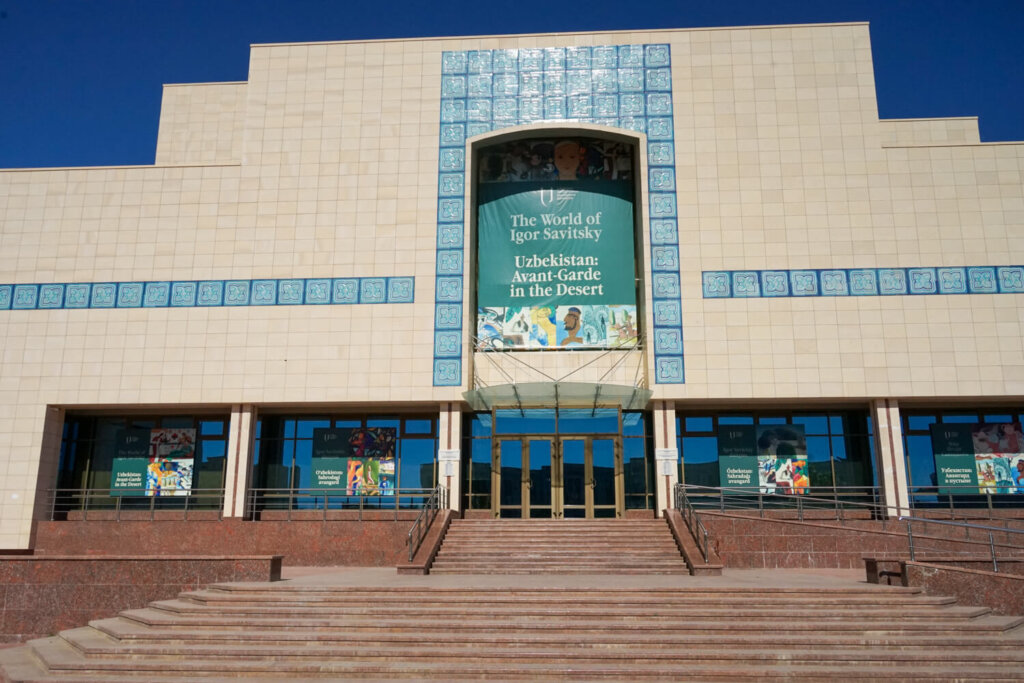
The story of the museum is inseparable from the story of the man who built it: Igor Savitsky, a Ukrainian-born painter who dedicated (and risked) his life to preserving art that the powers that be would have preferred to disappear.
Against the backdrop of severe artistic censorship, Igor Savitsky expanded from his original aims — a collection of Karakalpak artifacts and jewelry — to subjects more taboo. He began collecting Uzbek avant-garde art, as well as other art created in or inspired by Central Asia which defied the status quo of Socialist realism being the only state-ordained form of art.
Through frequent contact with censured artists and their heirs, he was able to collect art that might have otherwise been destroyed, including art from queer, anti-Soviet, and revolutionary artists, many of whom were persecuted under Stalinism.
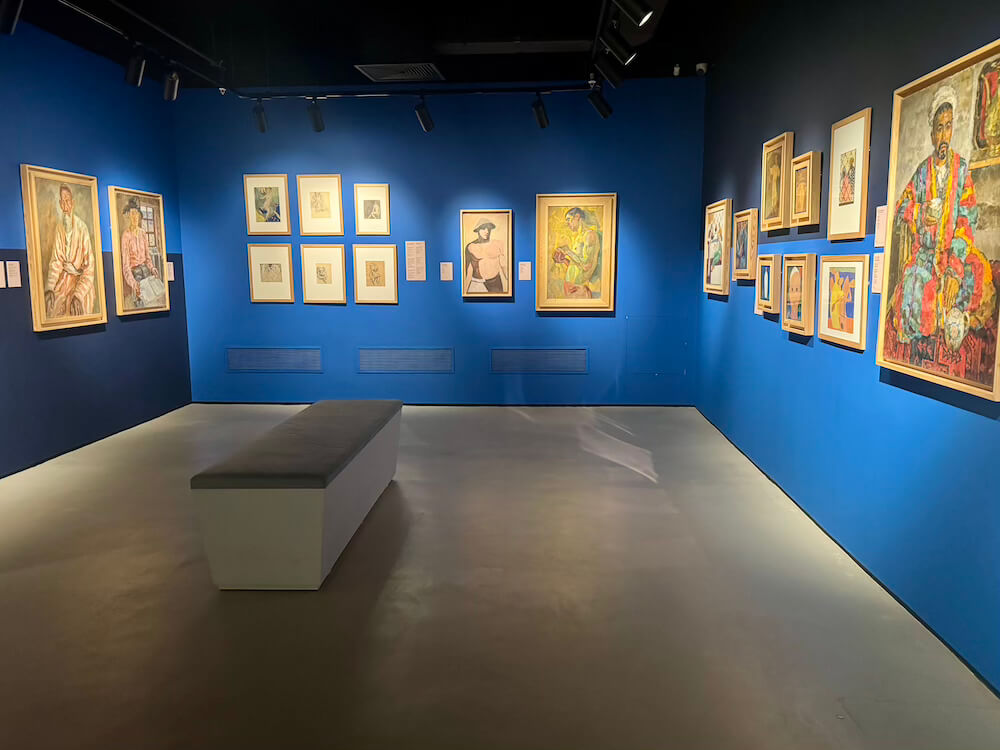
Sadly, he would never live to see his museum the way we can see it now. He died in 1984, a year before Perestroika and many of the social reforms that would allow more open expression. Today, you can honor his bravery in collecting these unique works that otherwise may have been forgotten or lost by visiting the State Museum of Nukus.
It’s closed on Mondays, but typically, if you contact someone they can let you in on a Monday but the charge is higher. All other days of the week, it is open from 9 AM to 6 PM.
Learn local history at the Karakalpakstan State Museum
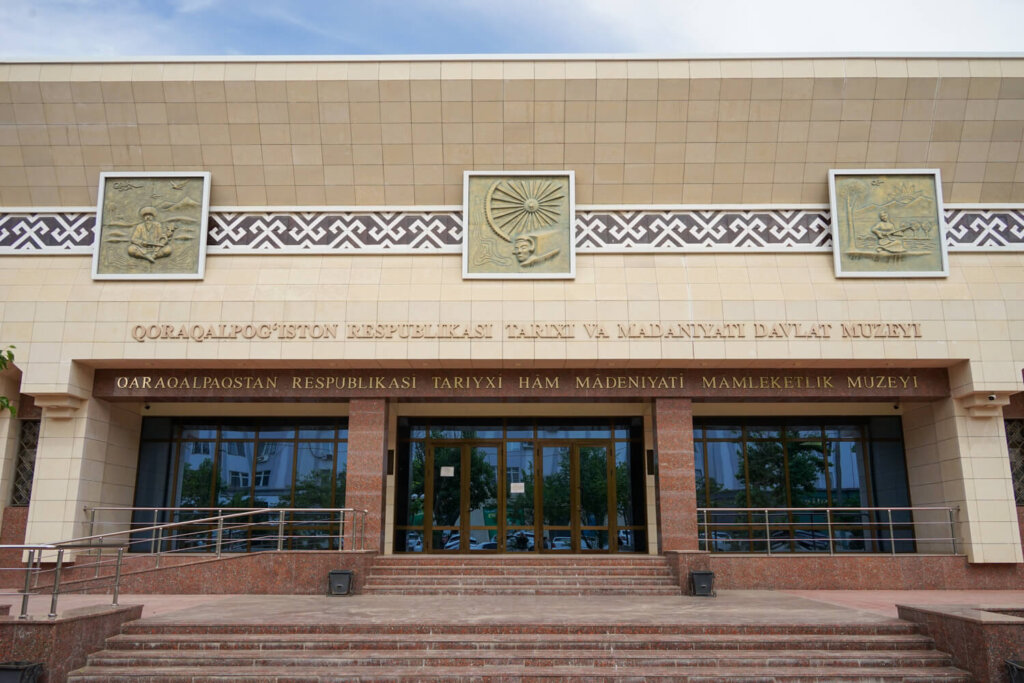
If you’re interested in learning the intriguing history of the Karakalpaks — an identity very unique from Uzbeks, despite technically sharing a passport — this is the place to do it.
Here, you’ll find all sorts of Karakalpak artifacts such as jewelry, textiles, and items of everyday use dating back centuries, as well as artifacts that show ancient Karakalpak history such as bone ossuaries that date back to the time where the people practiced Zoroastrianism.
Aside the old, you’ll also find the new: modern and contemporary paintings and artworks that keep Karakalpak identity alive and distinct.
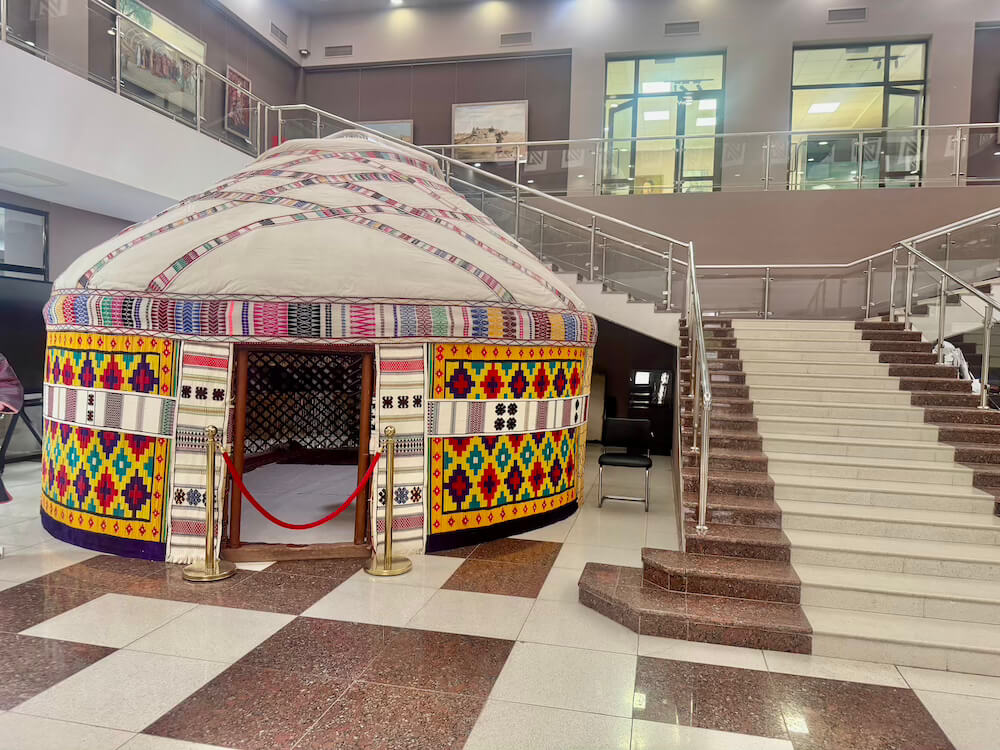
Also on display is a traditional Karakalpak yurt. It is important to remember that historically, Karakalpaks were nomadic people who shared more in common, including language, with Kazakhs than Uzbeks, which is why there is a lot of overlap between these two cultures.
It was only in 1936 that the Soviet Union assigned the former Karakalpak Autonomous Oblast, later the Karakalpak ASSR, to the Uzbek Soviet Socialist Republic, later an independent Uzbekistan.
Another museum I didn’t get a chance to visit was the Dom Muzey Ameta and Ayymkhan Shamuratovykh but I hope to visit it when I am able to return to Nukus!
Eat the best ice cream in the country
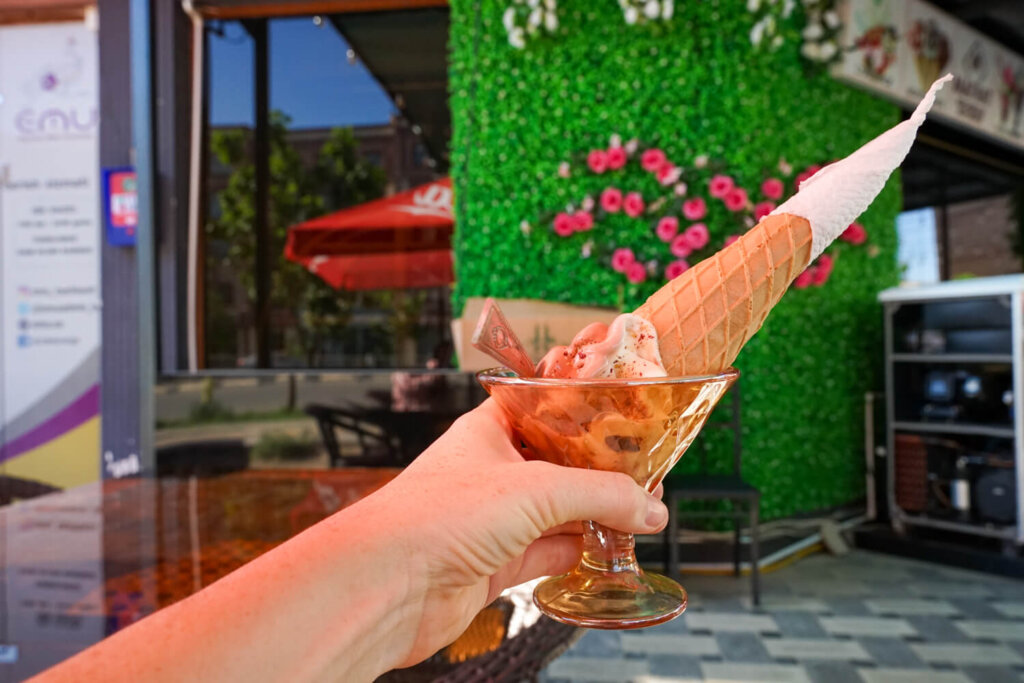
I’m ready to call it: Nukus is home to the best ice cream I ate in Uzbekistan. And since it was 35 degrees or higher most of the time I was there, I ate a lot of ice cream to compensate for the heat.
This ice cream was 10,000 Uzbek som, which is 83 cents in USD. It was the most perfect soft serve ice cream served with crushed nuts and a cone. I could eat it every day for the rest of my life.
It’s called Magnat, but it’s not on Google Maps. You can find it at the intersection of Ulitsa T. Kaipbergenova & Ulitsa Tatybaeva (улица Т. Кайыпбергенова and улица Татыбаева). The nearest point to it on Google Maps is this.
Taste Karakalpak cuisine
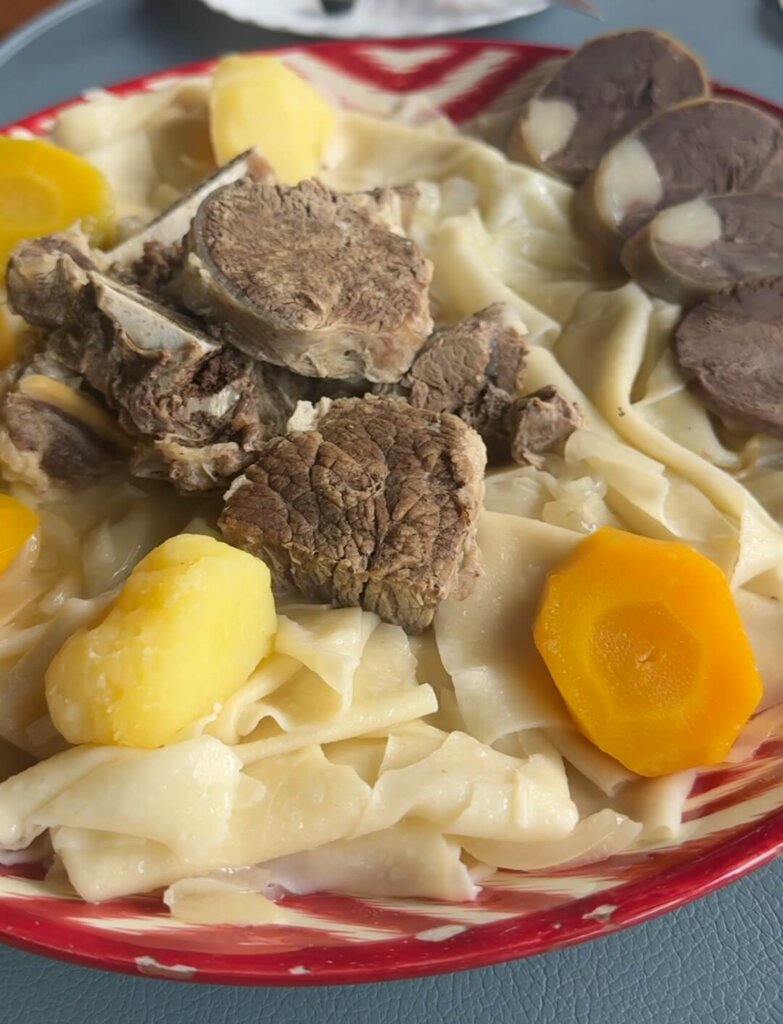
Karakalpak culture is much more closely related to Kazakh in terms of both language and cuisine. Like I mentioned above, Karakalpakstan only became absorbed into Uzbekistan during Soviet rule, and even then, it has maintained status as an autonomous republic.
That said, Karakalpaks were historically nomadic, similar to the Kazakhs, and their language is roughly mututally comprehensible to Kazakh.
One dish that best exemplifies the Karakalpak-Kazakh crossover is beshmarmeq. Though typically made with horse in Kazakhstan, in Karakalpakstan it can be made with a variety of ingredients, including beef or even turkey as I saw at Restaurant NEO.
Eat freshly baked goods from a tandir
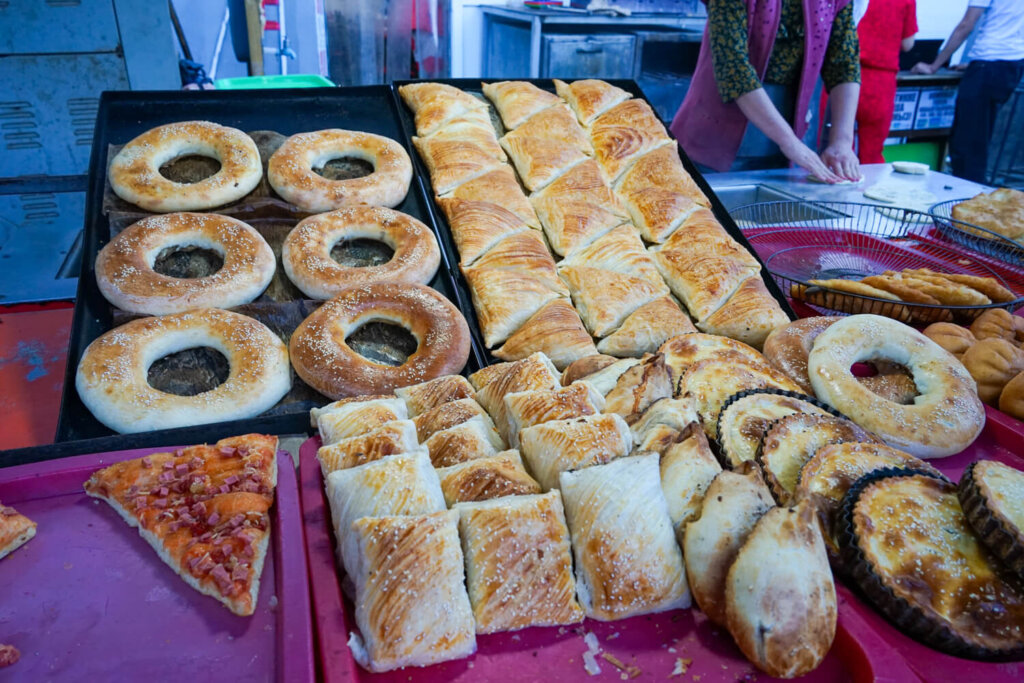
Unless you’re gluten-free, it is your civic duty to eat as many different styles of Central Asian bread as your body will physically allow yourself.
There are so many delicious kinds of breads you can try, from non artfully decorated with chekich (wire and wood bread stamps that create a design) to all sorts of somsa stuffed with various fillings, including lamb, beef, pumpkin, or greens with cheese.
Visit the Central Mosque
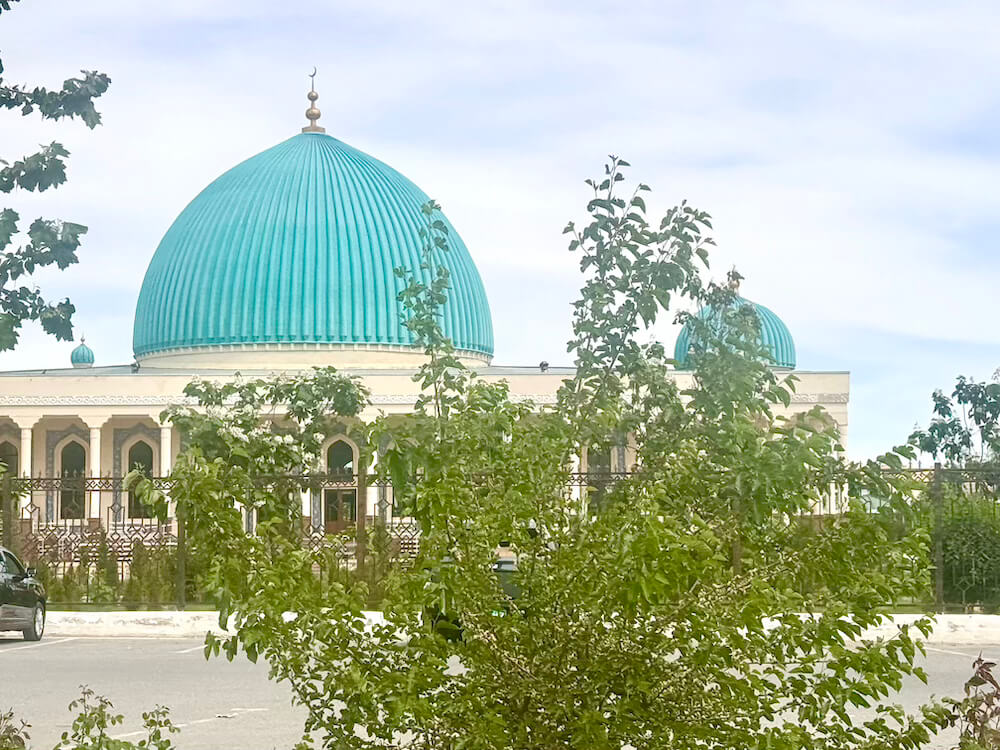
The Muhammad Imam Iyshan Meshiti (meshiti means mosque) is the largest mosque in Nukus. It is situated on the other side of the river from the museum and many central tourist sights.
Its beautiful teal domes beckon you to visit from far away. Unfortunately, I didn’t get a chance to go inside this trip as my schedule didn’t allow for it — but from the photos I’ve seen, the interior is absolutely exquisite. Visitors are welcome outside of prayer hours; to look up prayer times, you can use this website.
Admire the unique architecture of downtown Nukus
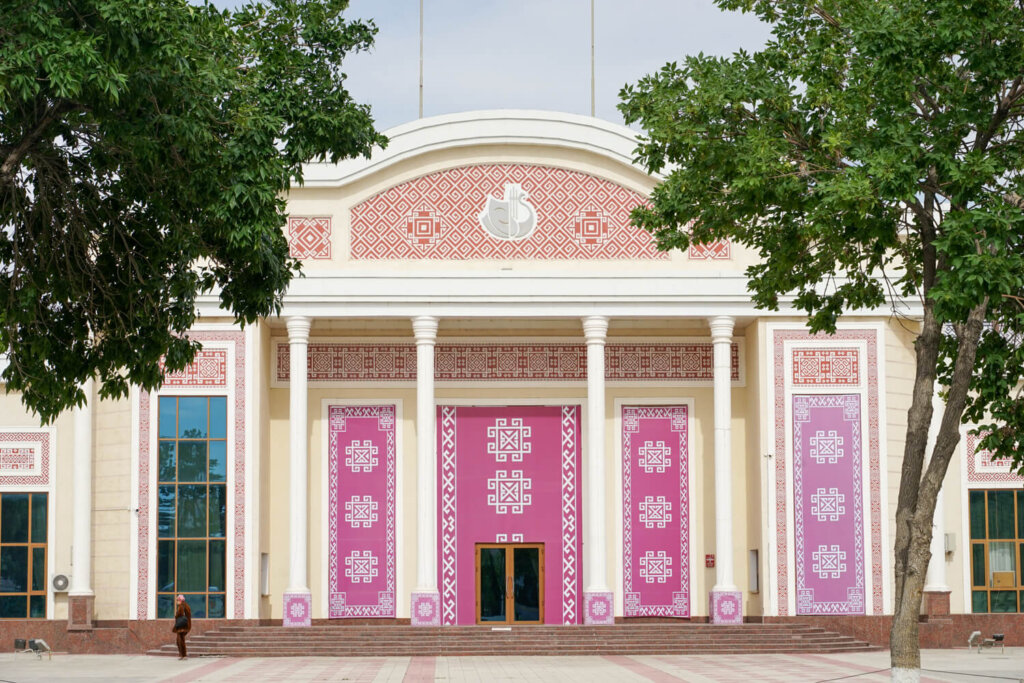
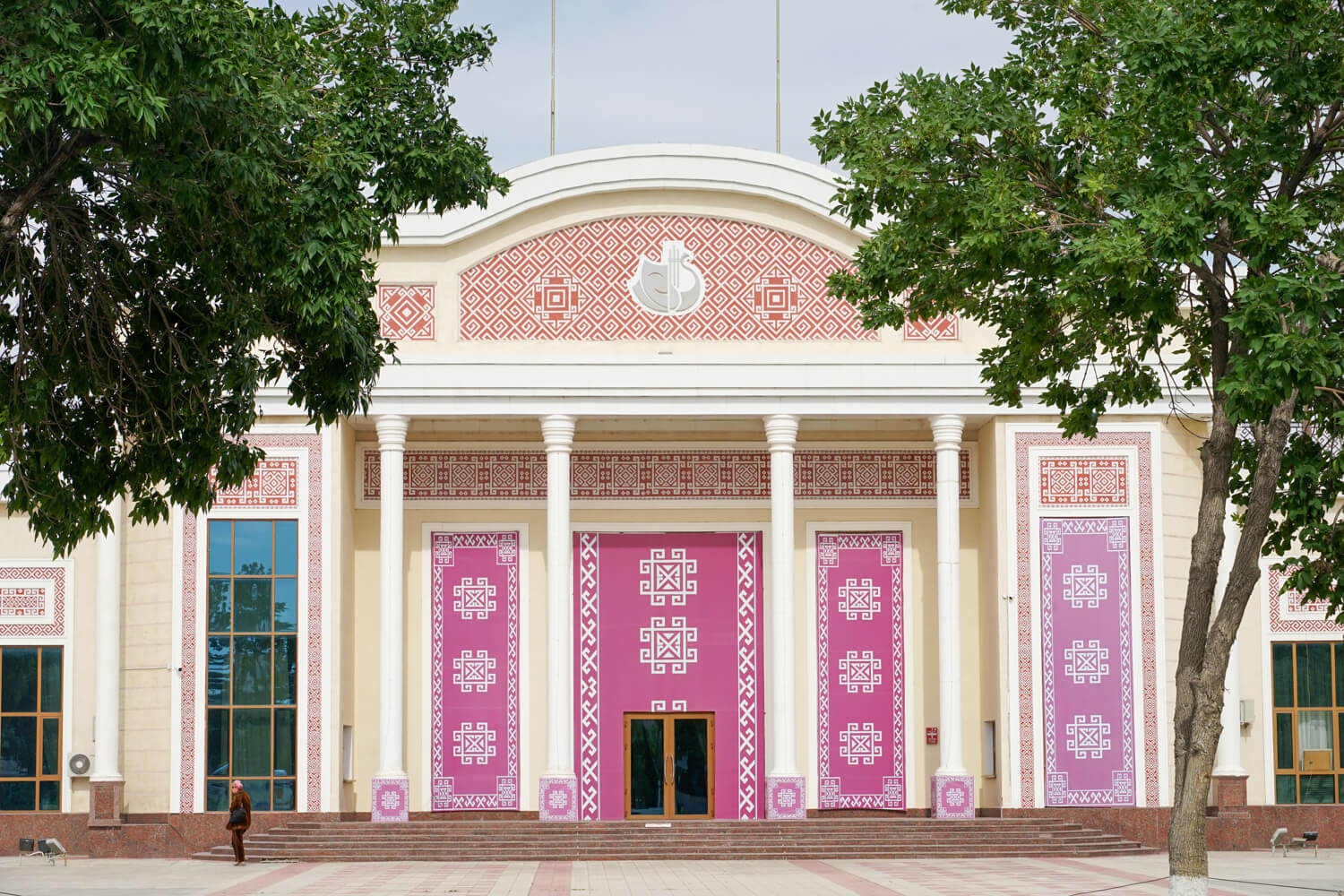
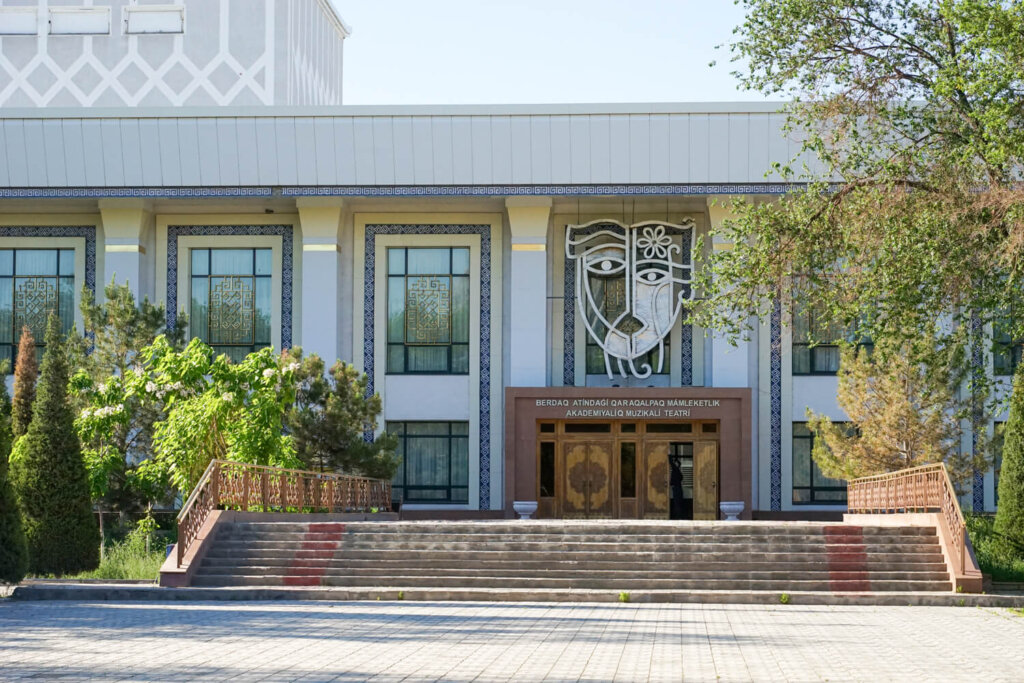
I really enjoyed the quirky architecture of downtown Nukus. There’s an interesting clash of sorts happening between classic Soviet-era architecture and the joyful adornment of these buildings with Karakalpak motifs and designs.
Nukus was never supposed to be a large city. In 1932, it was merely a small settlement; Karakalpaks were mostly nomadic and cities were incompatible with this way of life.
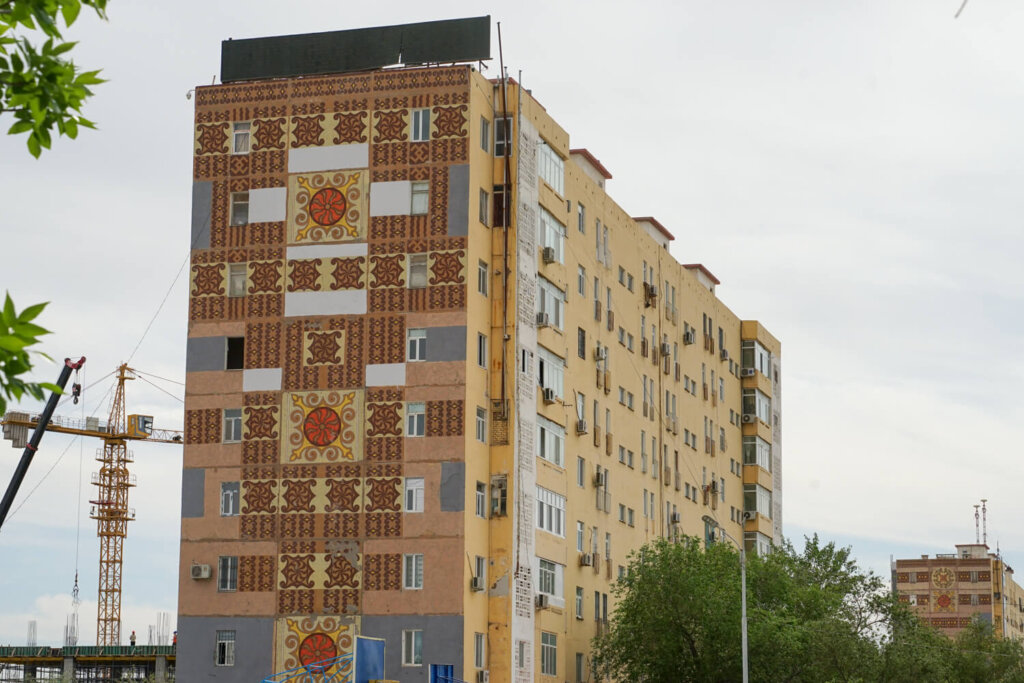
But by the 1950s, it was transformed into a typical Soviet city with the architecture you’d find all over the USSR. I found these adornments to be a unique way for the city to put their own stamp on an architecture that was imposed on them.
I quite liked this painted Karakalpak motif, using classic geometric designs found on their textiles, on the typical Soviet bloc apartment building. It transforms it a bit and puts some ownership back into the people of Nukus.
Wander through the bazaar
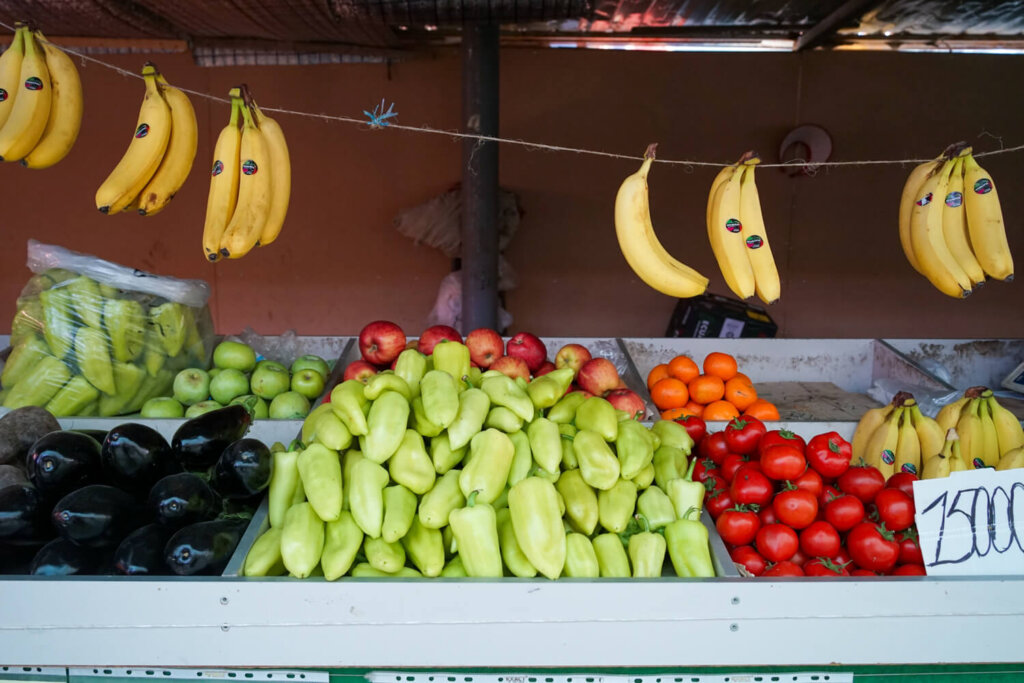
With the exception of Khiva, I visited a bazaar in every single city in Uzbekistan. Of these, Nukus was among my favorites: bustling but not overly chaotic, produce bursting with color, bakers selling their day’s work.
Bazaars can sometimes be a bit overwhelming if many people are seeking your attention at once. However, I found the Nukus Bazaar (written Markaziy bozor on Google Maps) to be rather chill, with only a few currency exchangers attempting to get my attention.
Seek out Soviet-era motifs and mosiacs
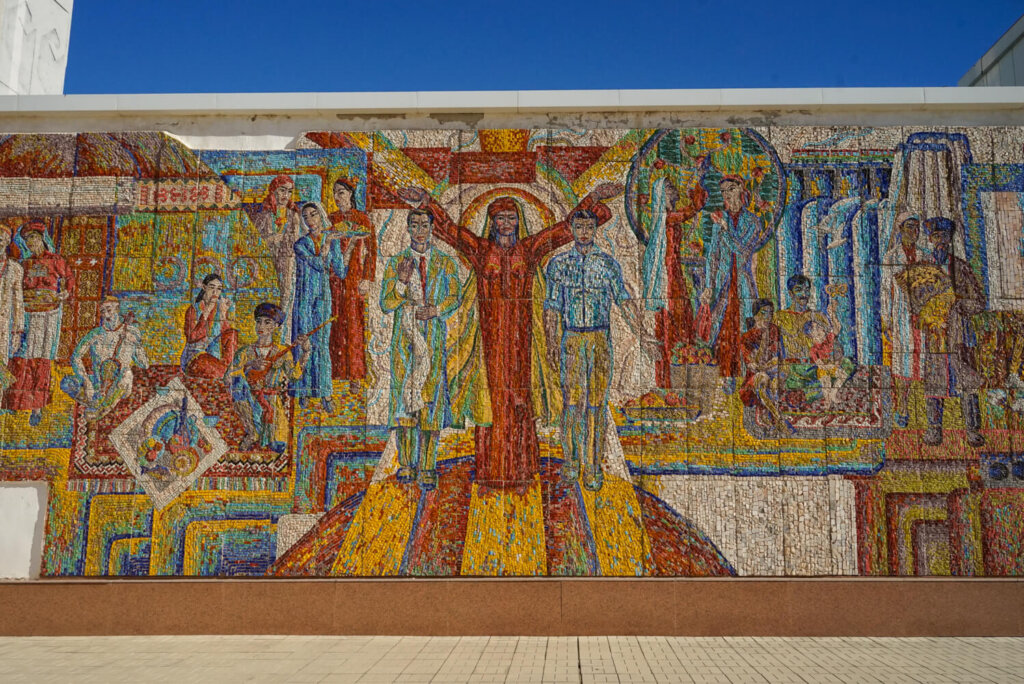
While I’m definitely not as much of a connoisseur of Soviet mosaics the way my friend Megan is (who scoured Soviet mosaics in Bukhara and many other places all over Central Asia), I do rather appreciate the art form and the detail and effort that goes into them.
In many post-Soviet countries, these mosaic arts are disappearing with modernization. Here in Nukus, there are a handful that seem well-integrated with the city’s design. For example, Hotel Tashkent, a high-rise hotel in Nukus, is located right next to the mosaics.
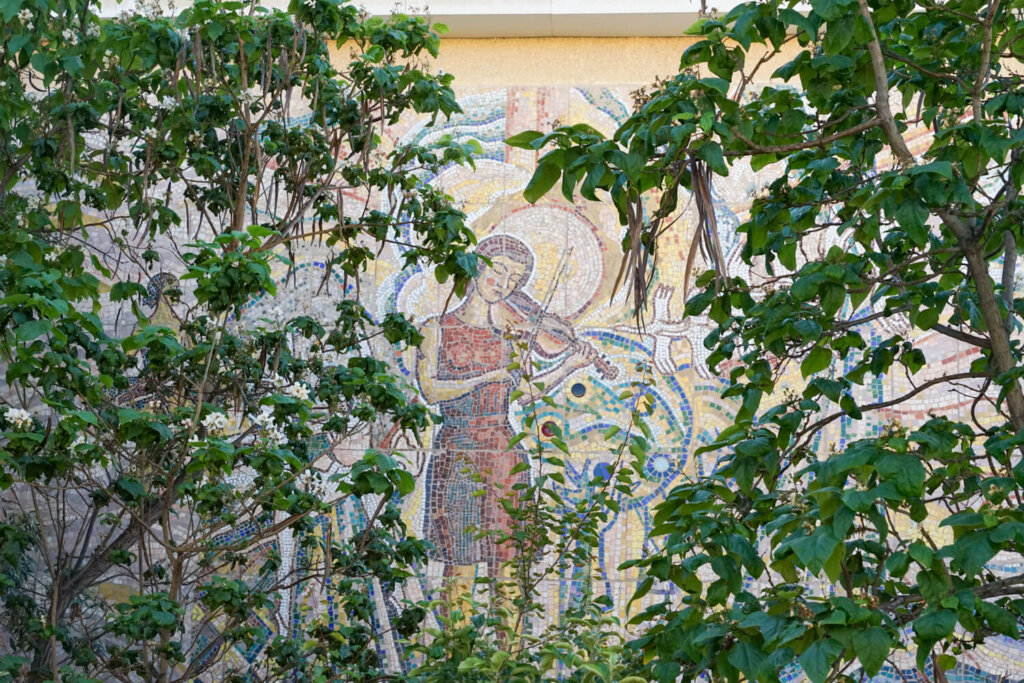
This mosaic is another beauty, located on a school building (Nukusskiy Kolledzh Kul’tury I Iskusstv on Google Maps) while you’re walking along the big boulevard along the river, улица Ерназар Алакоза (Ulitsa Ernazar Alakoza).
It is located between the bazaar and the bridge area. If you cross the bridge area (going under the bridge), you can easily reach Hotel Tashkent where the first mosaic shown above is set. There are two mosaics side by side here; shown is the larger and more impressive of the two.
Stay at a modern boutique hotel
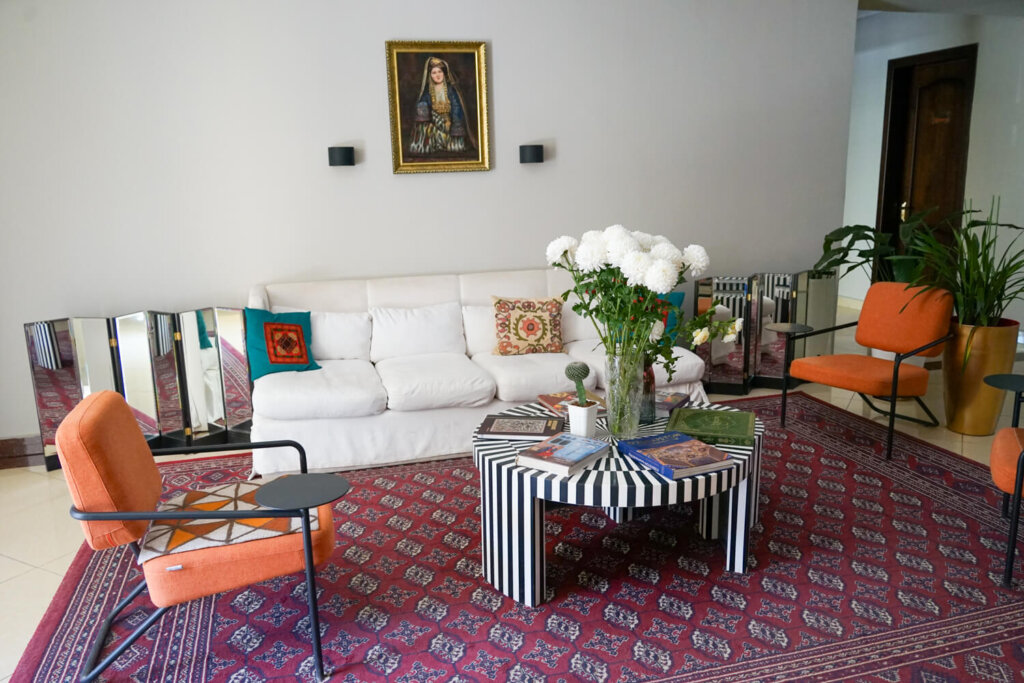
Out of all the hotels I stayed at in Uzbekistan, I think that Jipek Joli just might be my favorite… so much so that I even wrote a post about staying there!
I really enjoyed everything about it, from the size of the rooms to the helpfulness of the staff to the design and aesthetic. You could tell a lot of thought was put into every last detail.
Visit the ancient Necropolis at Mizdarkhan
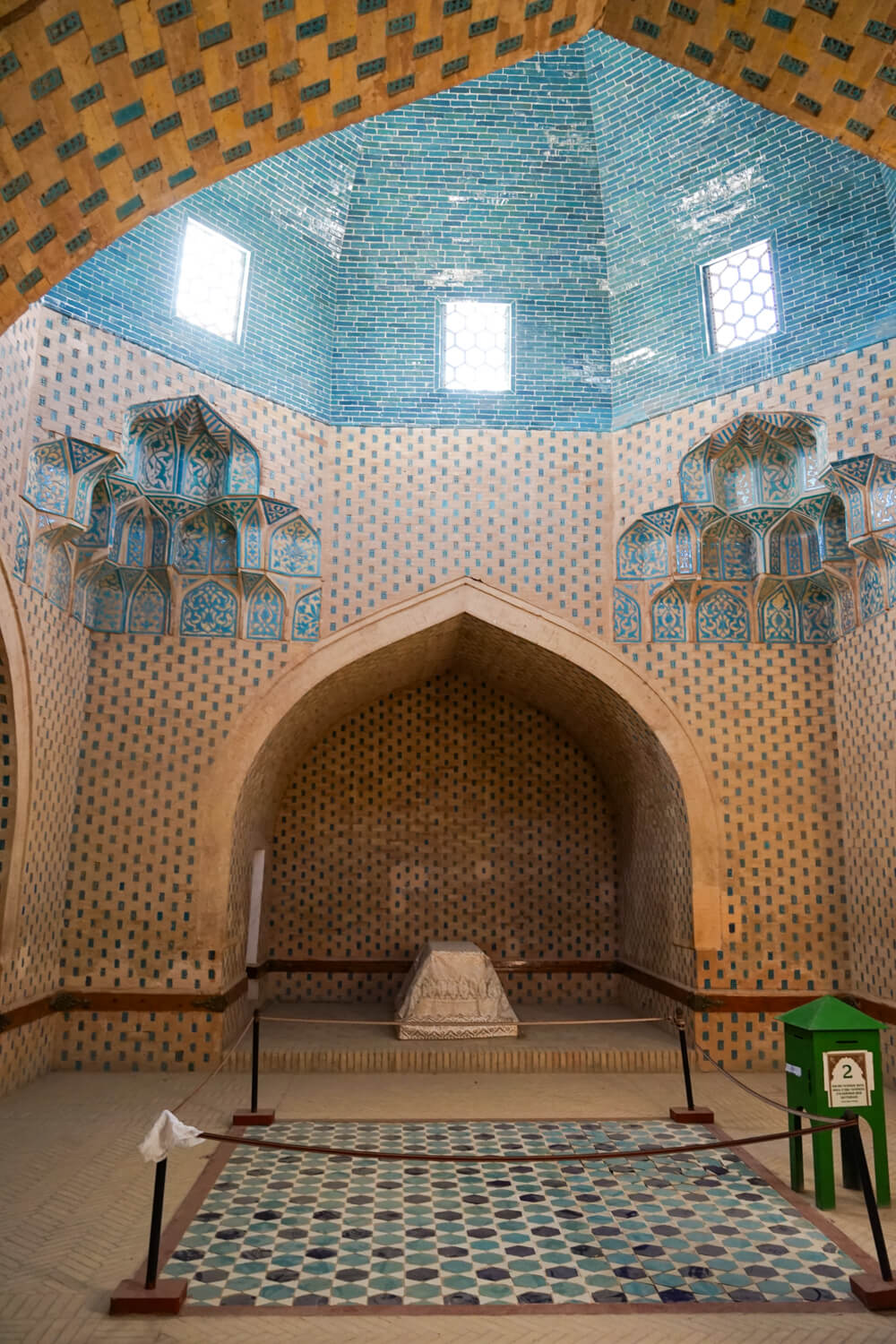
Mizdarkhan is a one-of-a-kind necropolis complex that can be found about 30 minutes outside of Nukus. It’s likely that you’ll see it if you are embarking on an Aral Sea tour.
However, in the off chance that you are visiting Nukus independently without plans to continue onto the Aral Sea, I would still try to visit this independently. I wrote a post about my experience visiting Mizdarkhan here.
Plan your Aral Sea outing
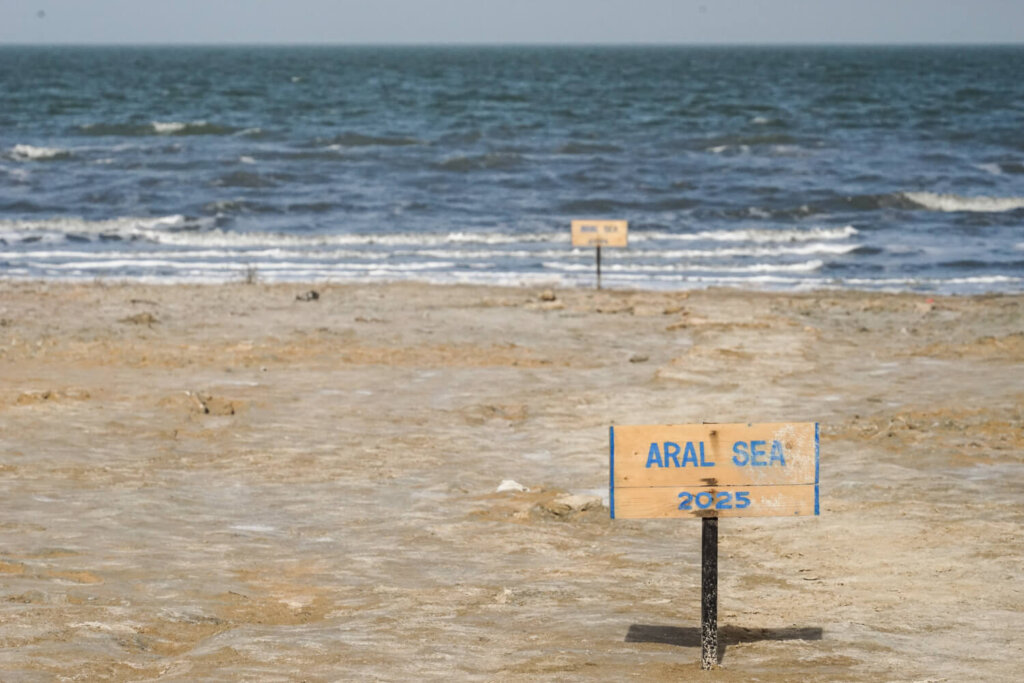
Yes, I know that I’ve said Nukus is way more than just a gateway to the Aral Sea… but that is a major reason why people come here. At least, it was the main reason why Nukus was on my radar.
My Aral Sea tour was incredible, filled with a wide range of emotion: awe, anger, joy, grief… but it was something I am so glad I did. I don’t want to go into that excursion too much here in a post that’s all about Nukus as a city, but you can read about the Aral Sea excursion I did here.
Where To Stay in Nukus
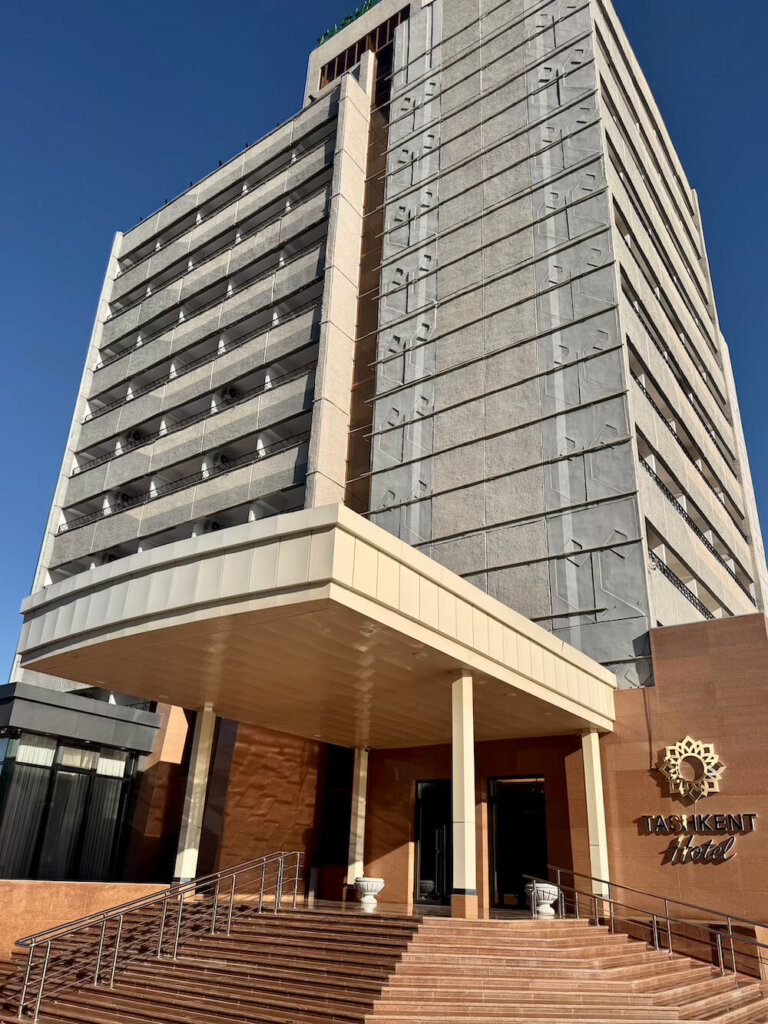
We stayed at two different hotels in Nukus: Jipek Joli Hotel and Pana Hotel. Both were excellent, but I far preferred Jipek Joli because it was more spacious and in a better location.
Tashkent Hotel might also be an interesting option if you want to stay in a Soviet-style high-rise hotel.. The reviews are rather positive, but I didn’t experience this one for myself!

Allison Green is a former teacher who has been travel blogging since 2016, visiting 75+ countries in total. She has a Masters in Teaching and a B.A. in English and Creative Writing. As a former educator, she merges her writing and educational experience to encourage ethical, sustainable travel. She has been a speaker at the World Travel Writers Conference and TBEX. Her writing, photography, and podcasting work has appeared in National Geographic, CNN Arabic, CBC Canada, and Forbes, amongst others. When she’s not on the road, she lives in Bangkok, Thailand.