

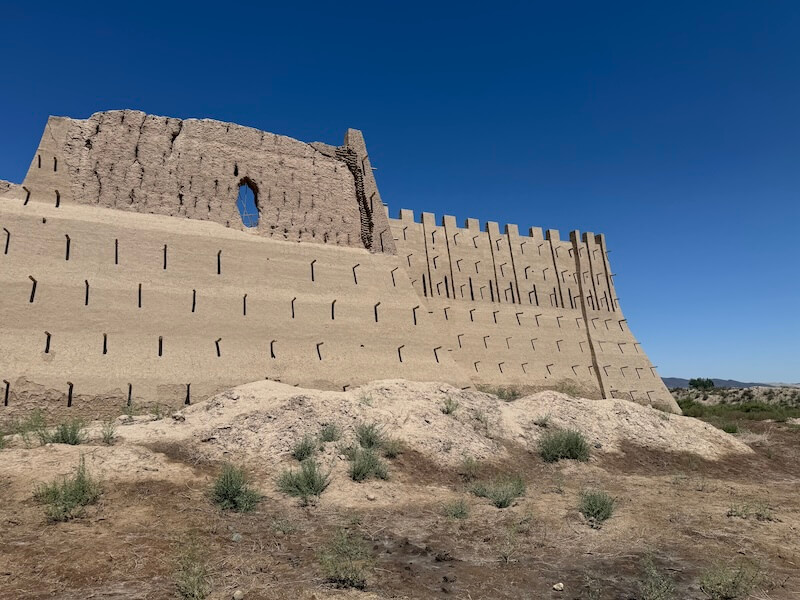
The Desert Fortresses of Khiva (via Day Trip or Nukus Transfer)
While still a part of Uzbekistan’s well-trodden Silk Road city route, Khiva’s desert surroundings make it feel like it’s in the middle of nowhere, in all the best of ways. That feeling only grows stronger once you venture out a little further, into the desert fortresses of the Khorezm region.
As a small and compact city with most of its sights concentrated inside the city walls of Itchan Kala, Khiva’s historic center and UNESCO-designated site, Khiva is easy to see within a day or two of dedicated sightseeing.
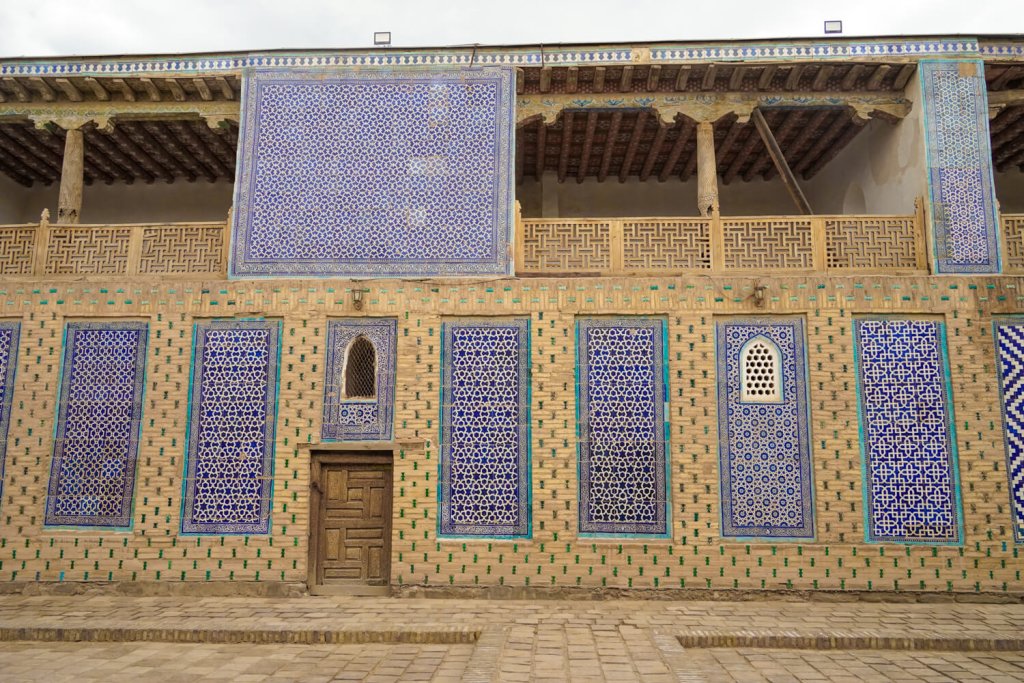
| 🇺🇿 Planning Khiva at the last minute? Here are some tips! 🕌 Top Khiva Tours & Attractions 1. Historical Walking Tour of Khiva (#1 pick — my guide was great) 2. 4 Ancient Fortresses Day Tour (see the historical region outside of Khiva — can also do en route to Nukus, if visiting. This is what I did.) 3. 1-Hour Bread Master Class (make bread the traditional Uzbek way, in a tandir!) 🏨 Top Khiva Hotels 1. Khiva Siyovush Hotel (stayed one night, gorgeous mid-range boutique hotel inside the city walls) 2. Madrasah Polvon-Qori (friend stayed here & loved, boutique hotel in a 19th century madrasah, just outside of the East Gate to Itchan Kala) 3. Oqilanur Guest House (stayed one night, located inside the city walls, charming budget guesthouse) 🚆 TIP: Book your train tickets ahead of time, especially if taking the sleeper train from Tashkent! Train tickets often sell out on the official Uzbekistan train website (and the website is glitchy). You can buy them at a small up-charge on the 12go.asia site — it will be much cheaper than going through a travel agent. |
But since it takes so long to get out to Khiva from other parts of Uzbekistan — although this time has gotten shorter with the new high-speed links between Khiva, Bukhara, and other cities in Uzbekistan — it is generally worthwhile to spend a little extra time in Khiva, or to use Khiva as a linking city and to go onto Nukus and Karakalpakstan.
Part of the reason why I visited Khiva was because I also wanted to go out to the Aral Sea and see what remains of it. That was definitely one of the most interesting parts of my Uzbekistan trip, and I found myself really enjoying Nukus as well.
However, the journey to Nukus was also incredible. My friend and I chose and organized transfer that brought us from Khiva to Nukus by car, stopping at three Khorezm fortresses as well as the Zoroastrian burial site of Chilpak just outside of Nukus.
If you want to do a transfer, this is the tour we took. They’re only newly launched on GetYourGuide but have years of experience and reputation in the tourism industry!
This transfer took us to several important sights: Ayaz Kala, Topraq Kala, and Kyzyl Kala, as well as a quick pit stop at Akchakul Lake, plus Chilpak as mentioned above.
Our driver was professional and friendly, with a really comfortable and high-quality vehicle. Note that your driver is not a “guide” — they will not accompany you to the various sites, you will explore them on your own.
Additionally, your driver is not guaranteed to speak English at a high-enough level to be able to explain any regional context or the history of the sites you’re seeing. Generally, your driver will be able to communicate various transit-related things — bathroom breaks, admission fees to various sites, etc. — but for anything “off-script”, you will likely need to use Google translate to communicate.
If you don’t want to go onwards to Nukus, you can take a day trip that just includes the desert fortresses outside of Khiva and then returns to Khiva. If you want that, I suggest you take this tour, which has excellent reviews! It follows a similar itinerary, but does not make it all the way out to Chilpak, which is too close to Nukus for it to make sense as a Khiva day trip.
A Sample Khiva Fortress Itinerary
Stop One: Ayaz Kala
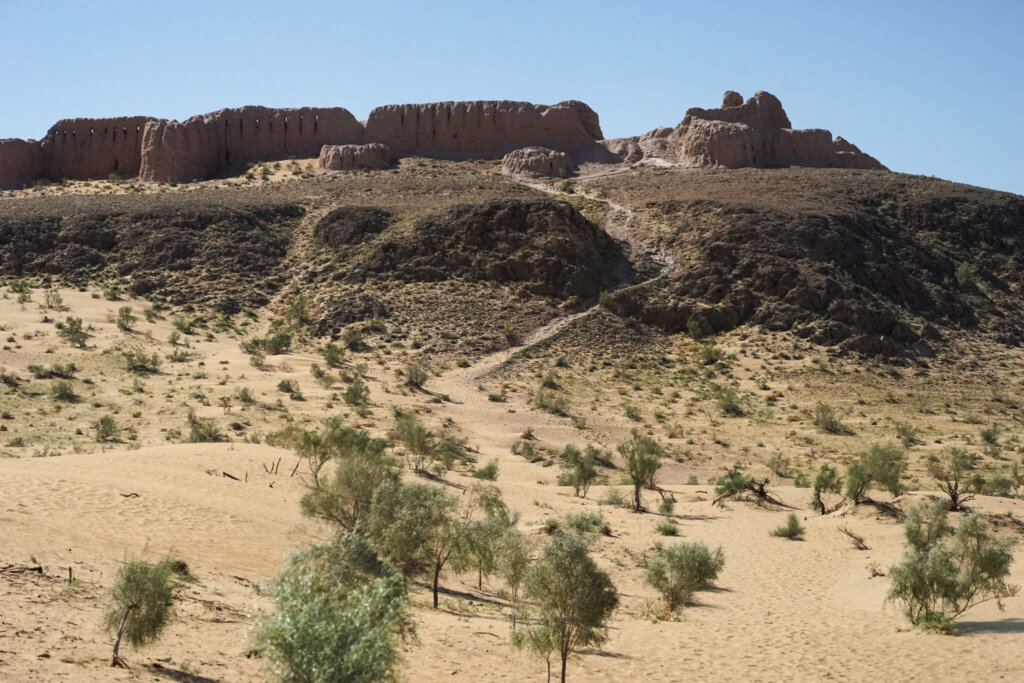
The first stop on just about any trip from Khiva to the Khorezm desert fortresses will be the one closest to Khiva: Ayaz Kala. It’s actually a collection of a few different complexes.
You’ll walk up the main largest fortress compound, where you can walk along its preserved walls and tunnels to reach a vantage point where you can see a very impressive fortress rising from the ground like a castle made of petrified sand.
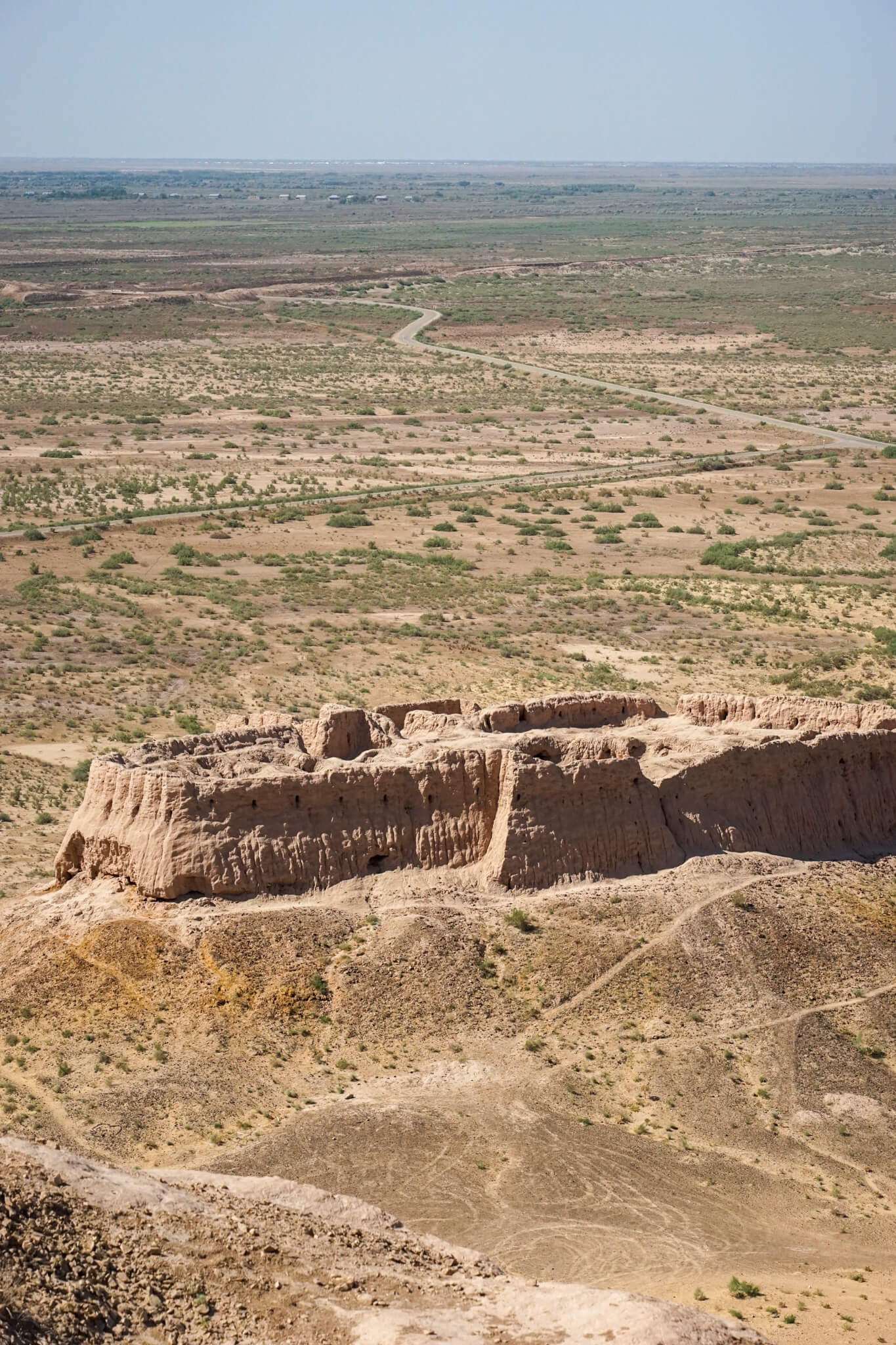
Besides this viewpoint and the remnants of walls and tunnels, there’s not a ton to see here. It’s still a worthwhile stop though, as it gives you a good sense of the beautiful desolation of the Khorezm desert area.
You will need to pay 20,000 Uzbek som at the parking area per person to see the fortress (this goes for every fortress on this list). This is a little less than $2 USD, so it’s not a bad price. Near the parking lot, there is a yurt camp, so it appears like you could also stay overnight here if you wished.
Stop Two: Akchakul Lake
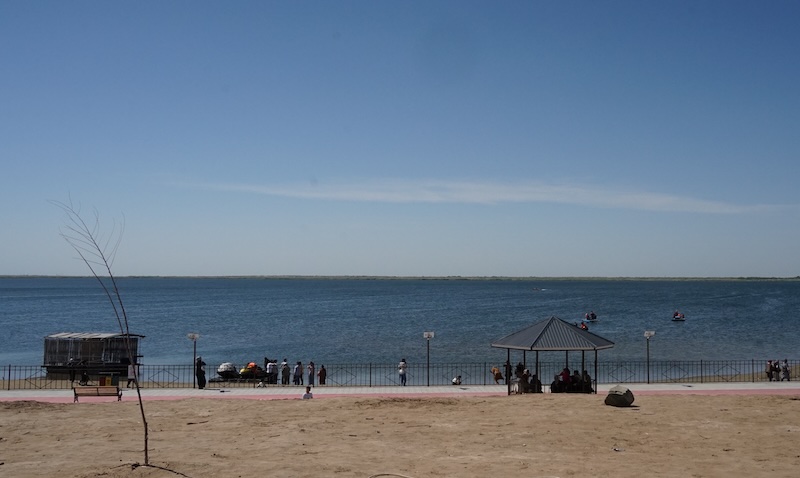
The next stop we made on our trip was to Akchakul Lake, which is a rare oasis in the desert. It has no inflow or outflow, no rivers attached to it; it is formed by seasonal rains, groundwater, and the rare snowmelt.
So to see it just emerge from the desert — and all the greenery around it — feels a little big magical in the midst of the arid surroundings.
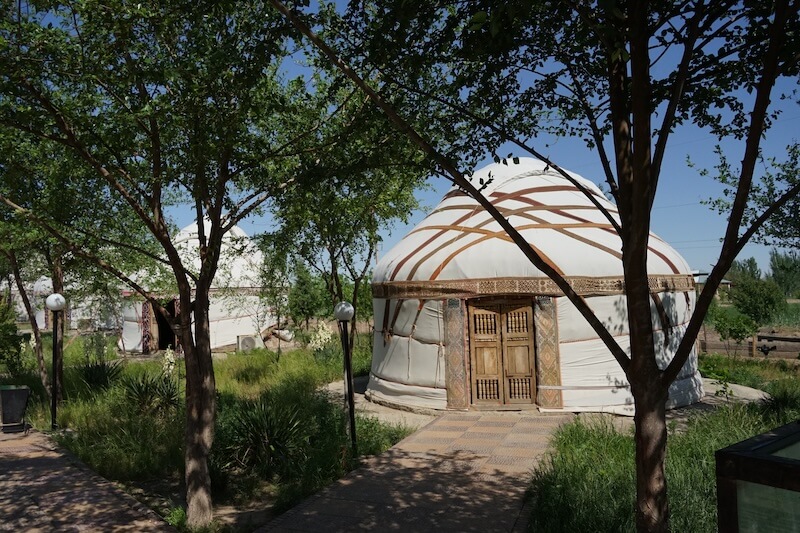
This magic is heightened by the yurts surrounding the oasis, which are available to rent for those who want to take a longer pause here.
We stopped here briefly to check out the lake, use the bathroom, and order something from the café. Options here are limited, though, so you’re best off with drinks.
There is no fee to stop at the lake, but allocate some money to buy a drink from the café if you need a caffeine fix or some bottled water.
Stop Three: Topraz Kala
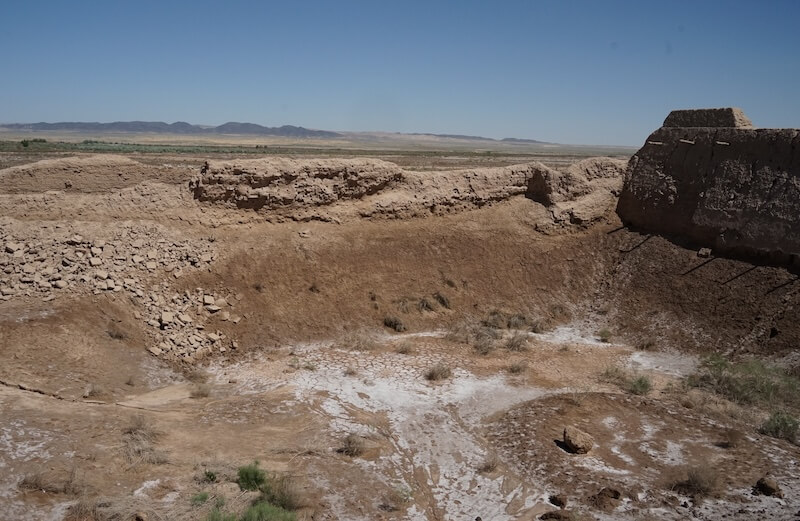
Arriving to Topraz Kala, the first thing I noticed was beautiful birdsong and the flashes of bright blue-green birds darting around.
These birds didn’t pause long enough for me to capture a proper picture of them, but there were about five or six darting around in the former moat area (pictured above), causing a beautiful commotion.
The fortress at first doesn’t look like much: until you reach the very tippy-top of the structure, where you can actually see its layout (below).
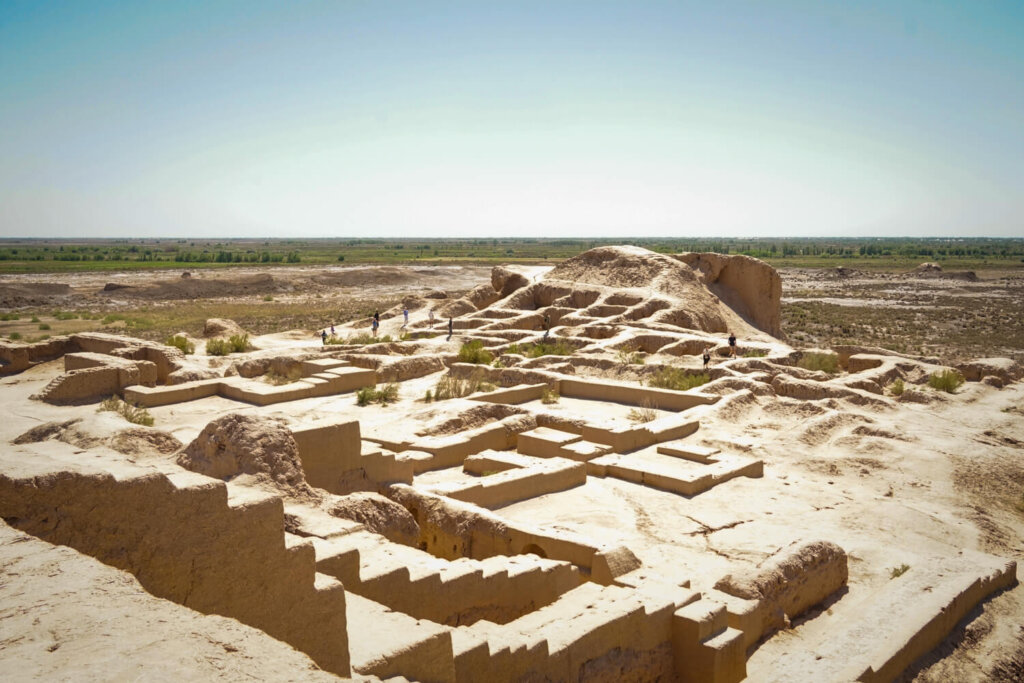
From the top of the stairs, you can see the actual vision of how the fortress would have been in its glory days.
Up here, you can really see it for what it once was: the ancient palace in the city which was once the capital of Khorezm (also written as Chorasmia) between the 1st to the 5th century CE.
Stop Four: Kyzyl Kala
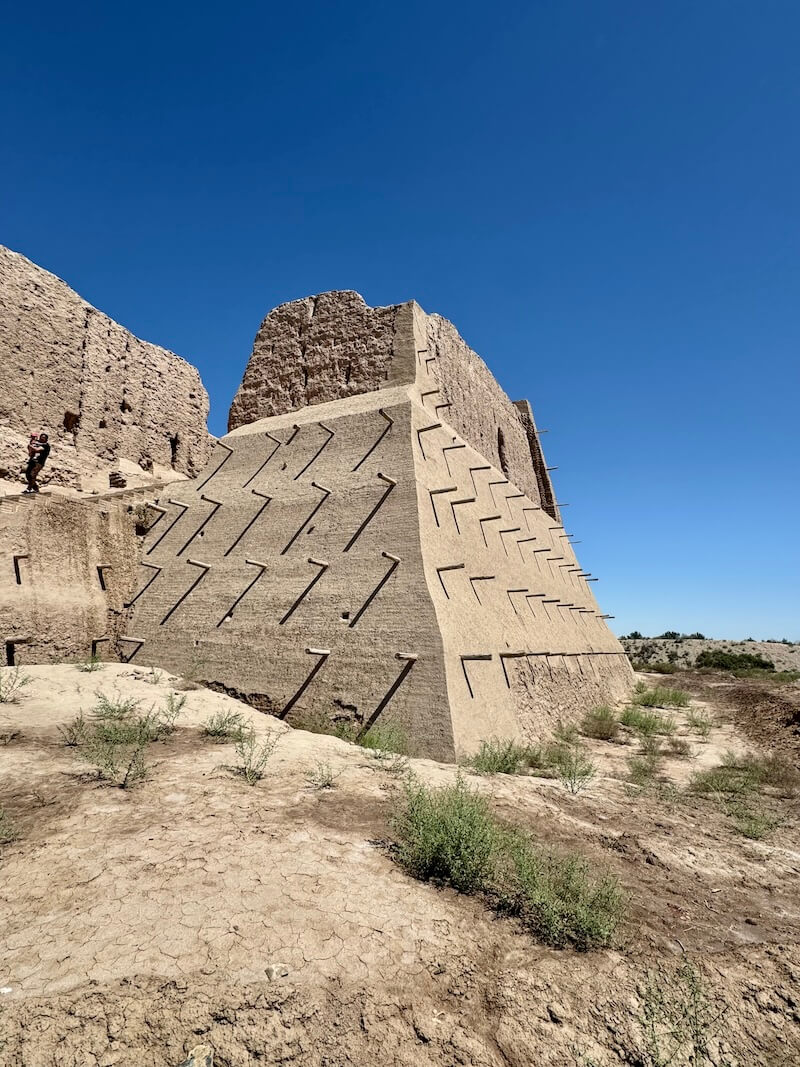
The next stop we made was Kyzyl Kala, which is probably the most famous of the Khorezm fortresses outside of Khiva. The exterior of it is incredibly well preserved, making for beautiful photos.
Even though the poles are modern additions installed to preserve the fortress, I still find they add a cool level of visual intrigue.
Climbing up the stairs, you’ll find the fortress a little worse for wear on the interior. There’s not much in the sense of rooms or a particular layout of the fortress. However, you can see how it was used as a defensive fortress: there are some still-visible arrow slits in the walls.
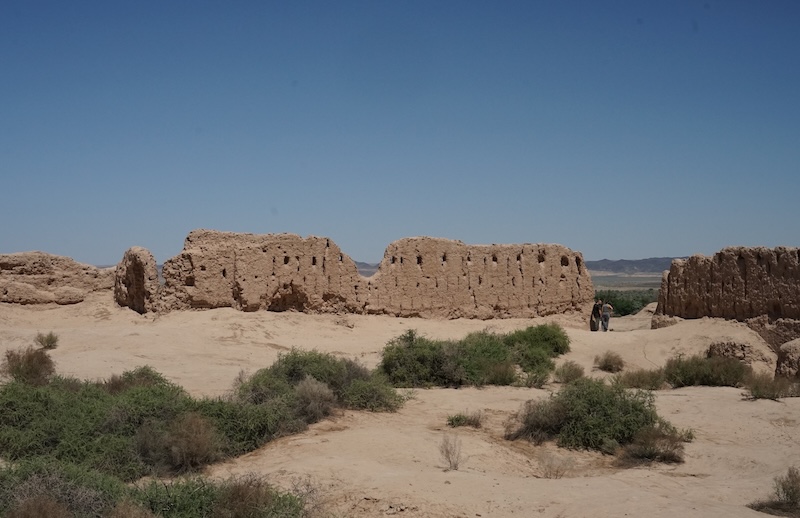
Whereas Topraz Kala was a developed city, Kyzyl Kala was a defensive post, so the interior is a lot less interesting, even though the exterior is very well preserved.
Up at the top, between the gaps in the walls, you can see out onto the desert plains — which is why it served so well as a defensive post, as it has extensive views for miles in the distance.
Stop Five: Chilpak (on transfers to Nukus only)
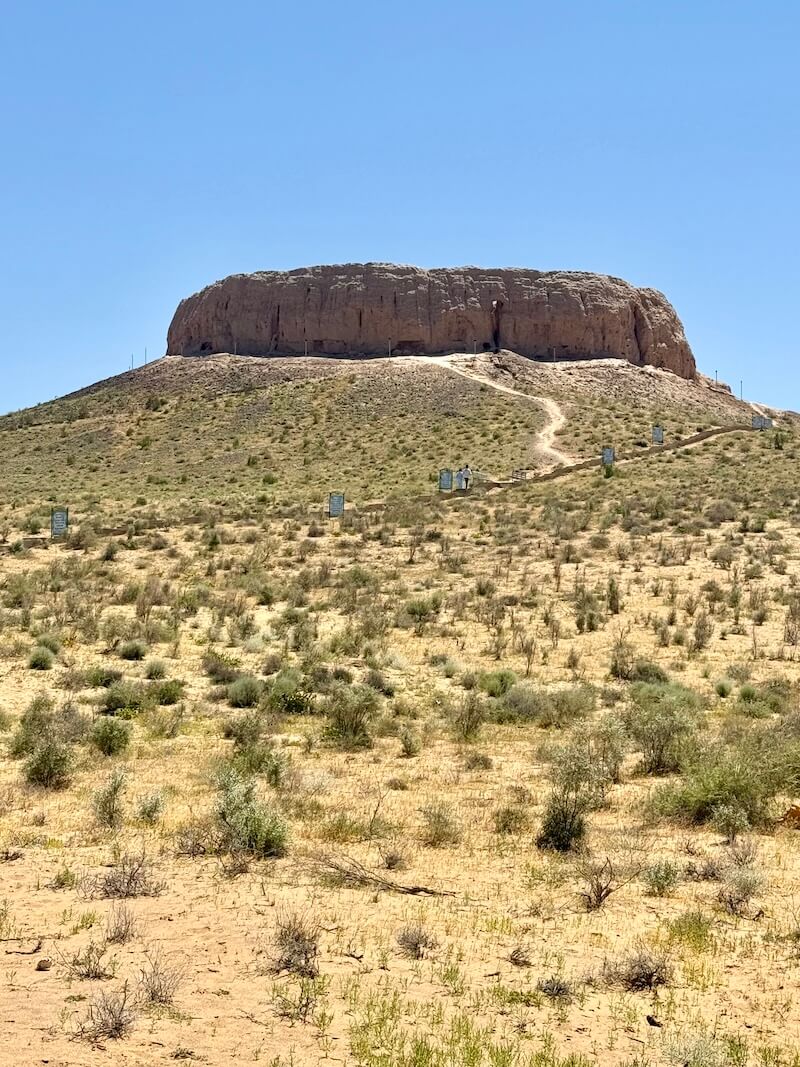
Not every tour of the desert fortresses of Khiva include a visit to Chilpak, because well, it’s not a desert fortress at all. It’s also not close to Khiva; instead, it’s just a short distance from Nukus (which is why it’s included on transfers to Nukus, and not on day trips from Khiva).
While at first, you may think it’s a simple hilltop fortress, Chilpak actually has nothing in common with the Khorezm fortresses seen earlier on this trip. Rather, Chilpak is a Zoroastrian burial site called a dakhma, or a tower of silence.
This is because according to Zoroastrian belief, the four elements (earth, fire, water, and air) are worshipped: corpses can contaminate those elements. Burial (earth and water) or cremation (fire and air) both risk polluting the sanctity of the elements. So in accordance with those beliefs, Zoroastrians came up with a creative way of safely disposing of their dead.
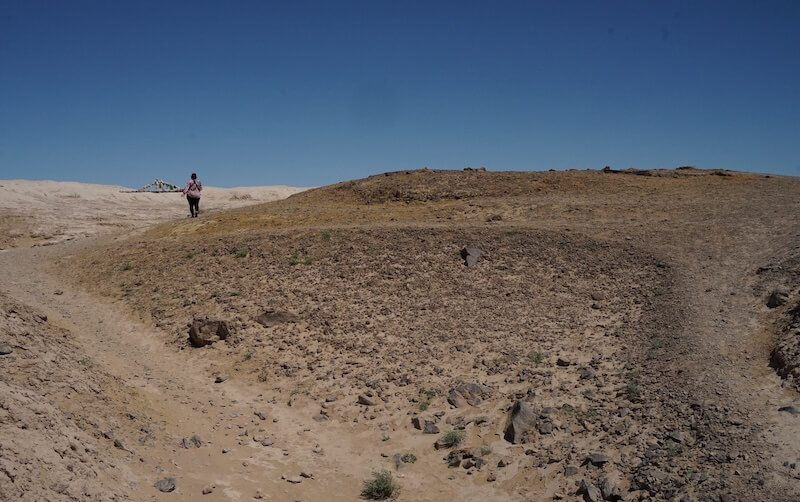
Raised platforms — typically mostly natural ones, such as stones on hills far away from their settlements — called dakhmas were designated places to leave the dead. This way, vultures and scavengers could consume the remains, and over time, only bones would be left behind.
After a period of time, typically one year, the bones would be retrieved and buried in an ossuary in a place like Mizdahkan.
Up at the top, there isn’t that much to see, but it is interesting to explore this area knowing its history and how important it once was to the Zoroastrians practicing their religion in the area.
***
And that’s it! A Khiva day trip returning to Khiva will typically include stops 1-4, with the possibility of other seasonal stops to try things like local produce. A transfer from Khiva to Nukus will likely include the fifth stop, Chilpak.
Which you choose depends on whether or not Nukus is on your Uzbekistan itinerary (I fully believe it should be, as well as a trip to the Aral Sea).
Either way, this day was a cool highlight of my time in Uzbekistan, an interesting contrast to the blue-tiled utopias of the Silk Road cities and a visible window to Uzbekistan’s multilayered past.
Have any questions about visiting the fortresses of Khorezm from Khiva? Any recent experiences you’d like to share? Please let me know below!

Allison Green is a former teacher who has been travel blogging since 2016, visiting 75+ countries in total. She has a Masters in Teaching and a B.A. in English and Creative Writing. As a former educator, she merges her writing and educational experience to encourage ethical, sustainable travel. She has been a speaker at the World Travel Writers Conference and TBEX. Her writing, photography, and podcasting work has appeared in National Geographic, CNN Arabic, CBC Canada, and Forbes, amongst others. When she’s not on the road, she lives in Bangkok, Thailand.