

How to Easily Visit Meteora (From Thessaloniki or Athens)
If you’ve seen even one photo of Meteora, you probably have already decided that it’s a must on any Greece mainland itinerary.
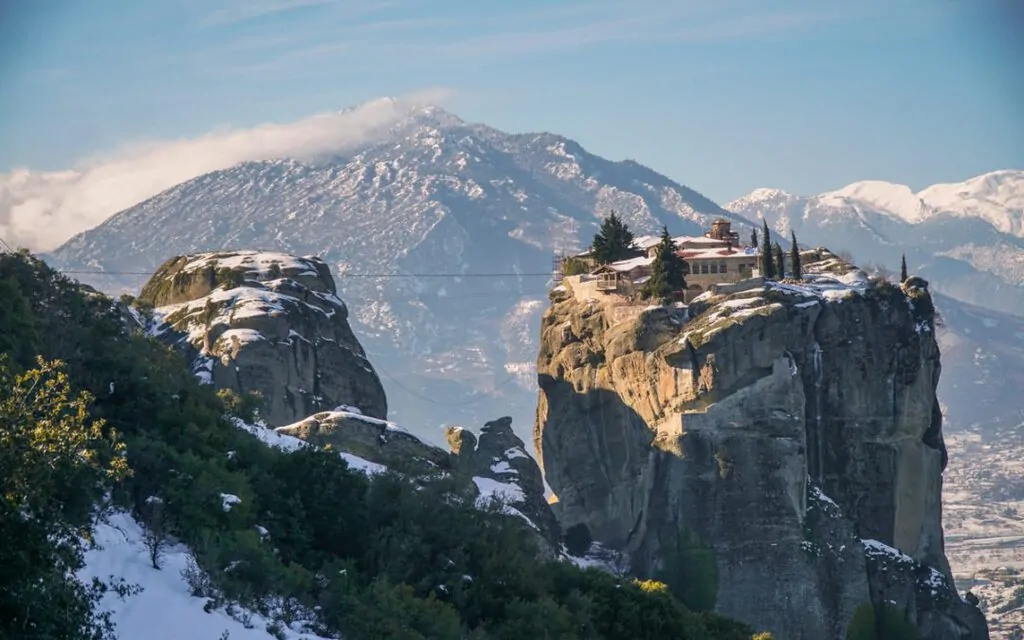
Giant rock pillars rising from the landscape, with monasteries balanced on top as precarious as Jenga towers and endless valley views below… it’s one of those places that doesn’t look real, until you visit it, and then you still can’t believe your eyes.
| 🇬🇷 Planning your trip to Greece in a hurry? ⛪ Best Tours to Meteora: – From Thessalonikki: Meteora Tour from Thessaloniki (best value) – From Athens: Meteora Tour from Athens (cheapest & best-rated) – From Kalambaka: Meteora Tour from Kalambaka or Kastraki (best if overnighting) 🏨 Best Accommodations: – Thessaloniki: MonAsty Autograh Collection (5* luxury), Vanoro Hotel (mid-range), Nea Metropolis (budget) – Athens: Gatsby Athens (boutique luxury), Moxy Athens (mid-range), Colors Hotel (budget) – Kalambaka: Divani Meteora (4* luxury), Centro Urban (mid-range suites), Hotel Kaikis (budget) 🚗 Renting a car? I always use Discover Cars when in Greece to help me find the best prices on my rental. You can search here from Athens or here from Thessaloniki. |
Meteora is definitely doable as a day trip from the two largest cities in Greece, Athens and Thessaloniki. Thessaloniki is a good deal closer, making travel times shorter, and it happens to be where I started my trip from.
However, even if you don’t have Thessaloniki on your itinerary and only Athens, and you have the ability to dedicate one day to a day trip, I think this should be your choice.
Since I lived in neighboring Bulgaria for many years, I visited Greece several times, and I often visited Thessaloniki since it’s only a 5-hour bus ride away from Sofia and I hate flying (weird quirk for a travel blogger, I’m aware).
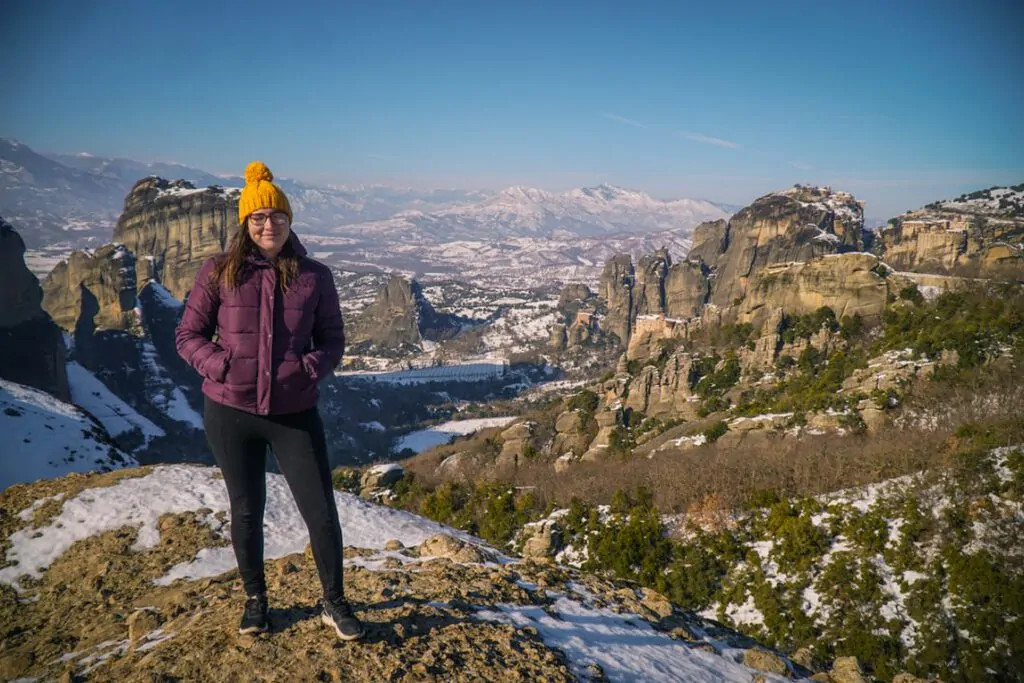
On one of my many visits to Greece, I visited Meteora on a guided tour from Thessaloniki in the winter and it was even more beautiful than I could imagine. Before going, I did all the research on what the best way to visit was, so I’ll be sharing that information with you so you can have as easy and flawless of a trip as I had!

I also thought about going back in the summer season when I was visiting Athens with friends, but we didn’t have enough time on our Athens itinerary to dedicate a full day to Meteora. However, I’ve done the research in the past, and I’ve updated it to reflect current prices and options as of publication in January 2026.
This post goes over the easiest ways to get to Meteora on a day trip from either Thessaloniki (closer) or Athens (a more popular tourist destination). I’ll weigh the different options to help you make your choice, with insight on which options are easiest, cheapest, and the best use of your limited vacation time. Let’s get into it!
How to Visit Meteora from Thessaloniki
There are three main ways to do a Meteora day trip from Thessaloniki (and the same goes for Athens, with a few changes).
- Guided tour (easiest & surprisingly, often cheapest) *I took this one
- Renting a car and driving yourself (most flexible)
- Public transportation (technically possible, but unnecessarily exhausting unless you plan to spend more than a day in the area)
Taking a Guided Meteora Tour from Thessaloniki (What I Did)
This is definitely the easiest way to visit Meteora from Thessaloniki — and actually, it’s somehow also the best value.
I went with this tour, which cost me about €49 round-trip (about $59), and I genuinely loved the entire tour.
Note, though, that this is more of a shuttle service with some guided commentary along the way. The price of the tour includes transportation and a guide, but not monastery entrance fees (3€ per monastery), lunch, or snacks. This is the exact tour I took, and yes, I’d book it again.
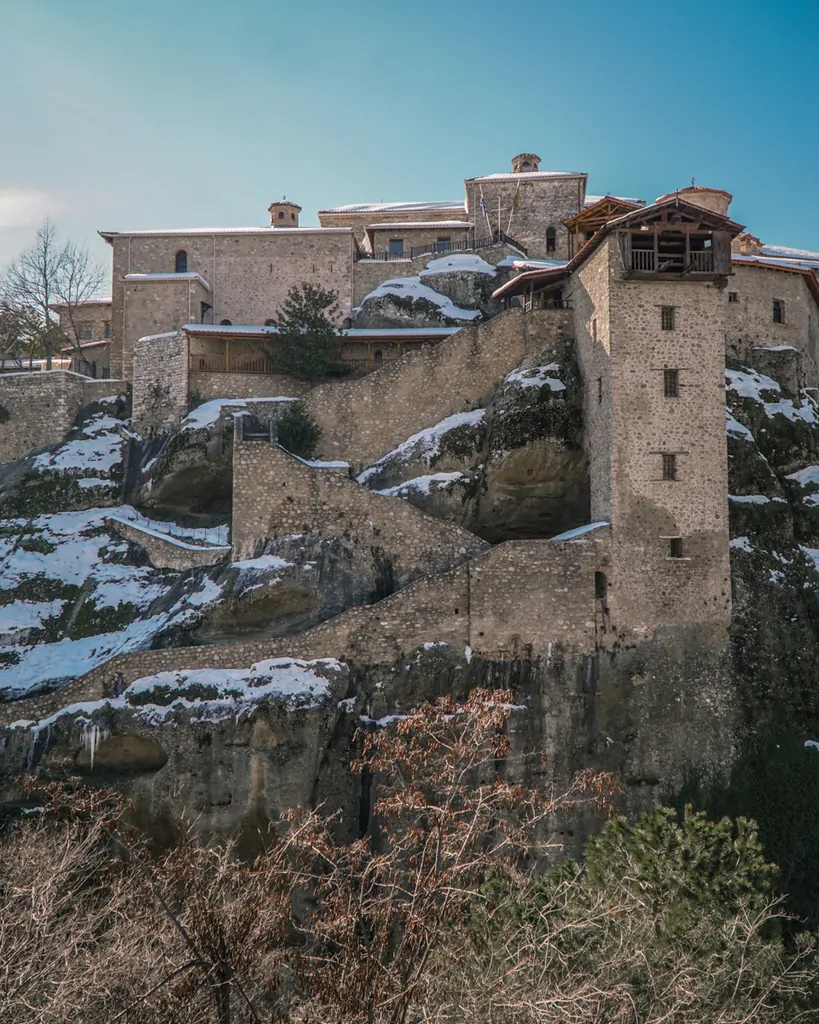
It also doesn’t necessarily offer door-to-door pickup and drop-off at your hotel, but they do have several convenient pickup points around central Thessaloniki. The drive in total is about 3 hours, so we drove for an hour and a half, then took a quick coffee and bathroom break, before finishing the second half of the drive.
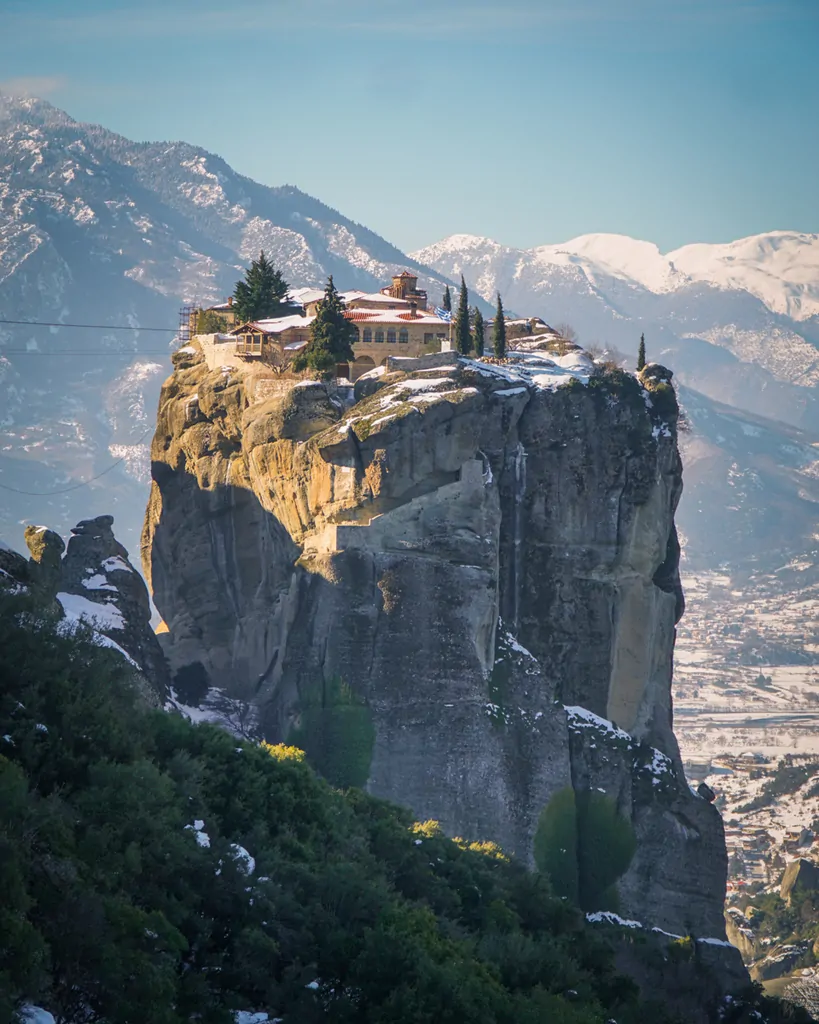
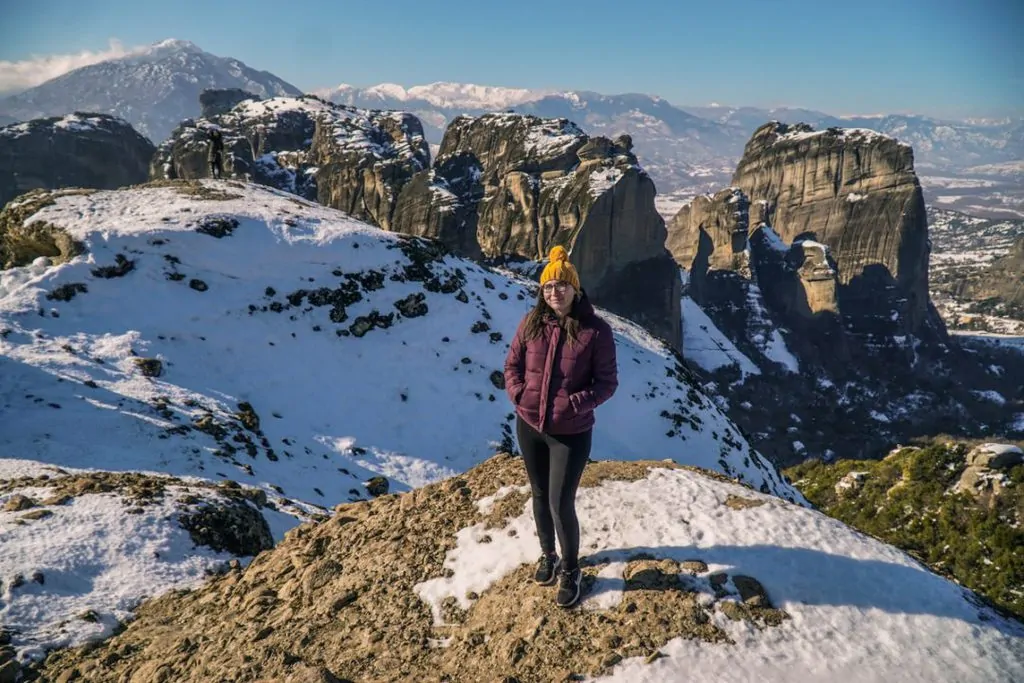
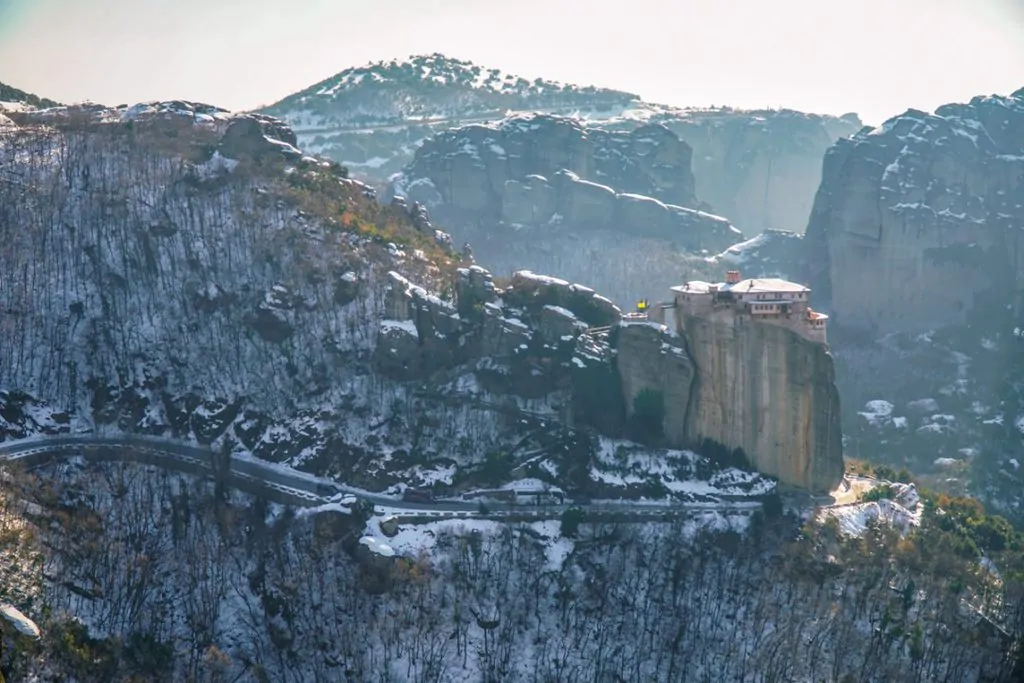
First, we stopped at that viewpoint. You know the one: it’s the one you’ve seen in every photo: the dramatic Holy Trinity Monastery perched atop on its own rock pillar, almost literally on a pedestal.
In terms of which monasteries you can visit on your tour, this will depend entirely on the monastery’s schedules. If you have your heart set on visiting a specific monastery in particular, check the opening calendar before booking or message the tour company to confirm.
Book this Meteora from Thessaloniki tour — top-rated and personally taken by me!
Each of Meteora’s six visitable monasteries take off at least one weekday off in the summer high season — and often more in winter. But the good news is that all of them are open every Saturday and Sunday year-round, so weekends are a no-brainer if you have maximum access without having to do individual research on each monastery.
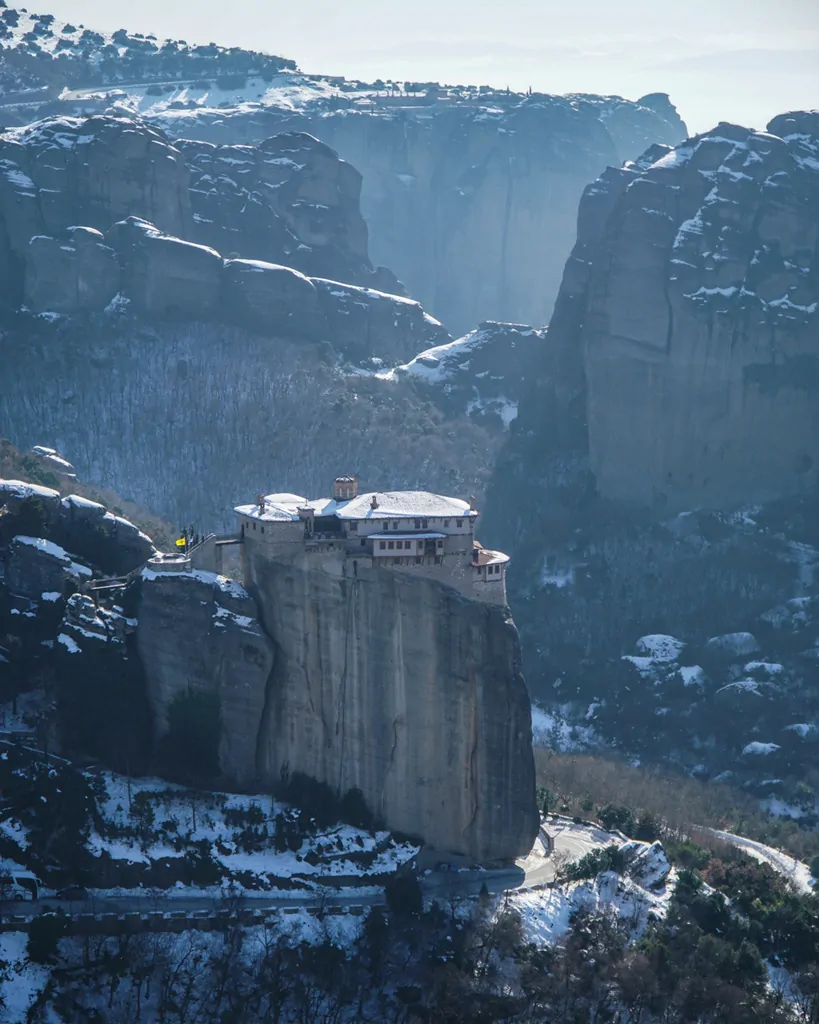
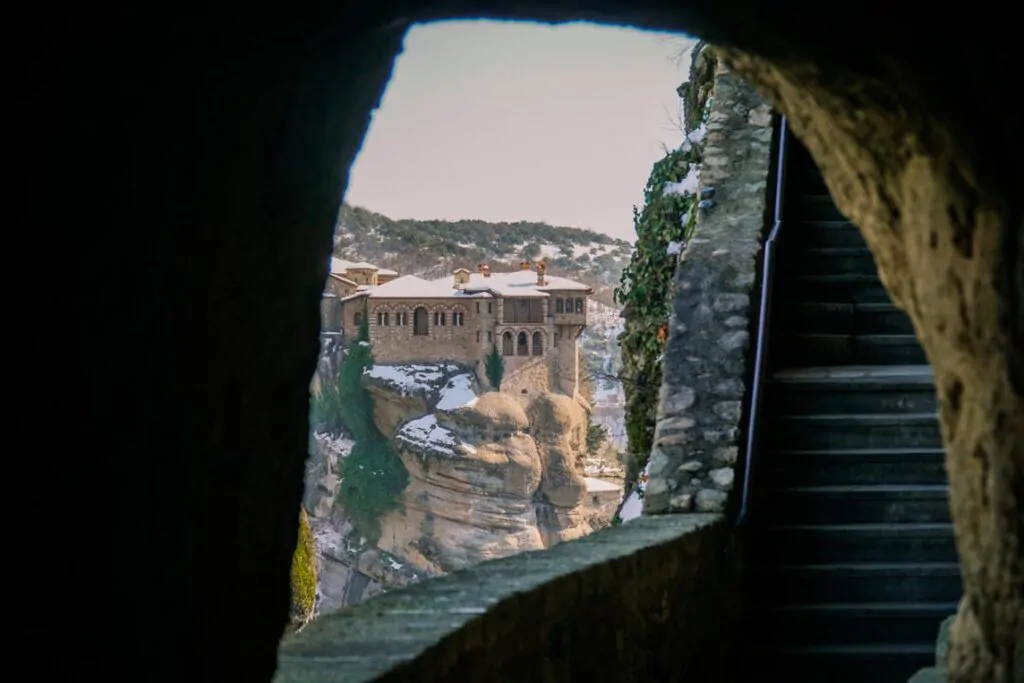
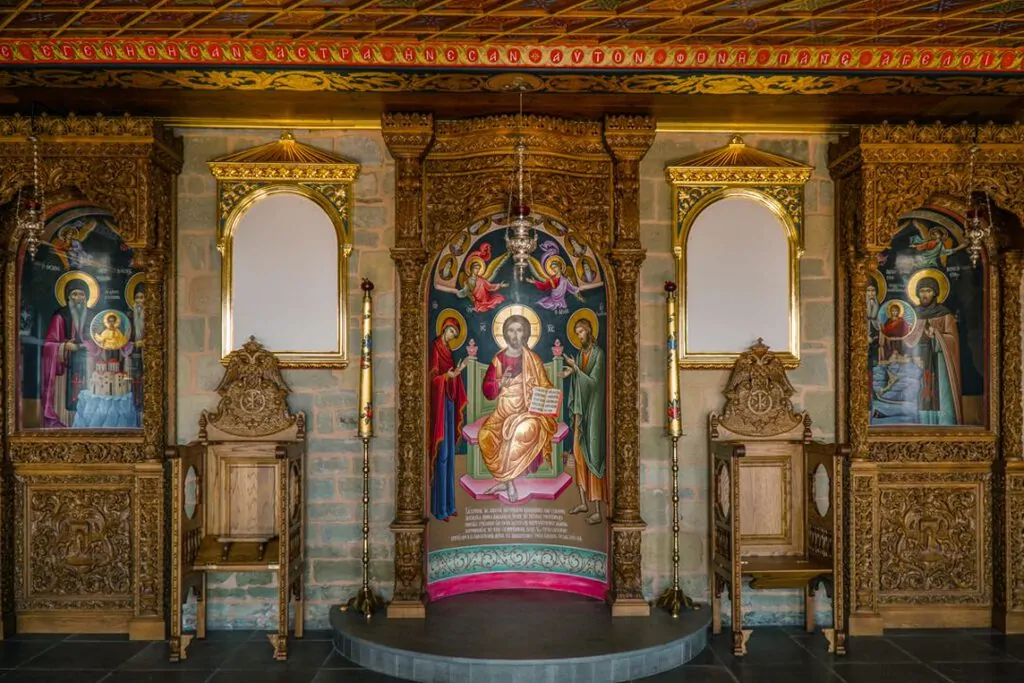
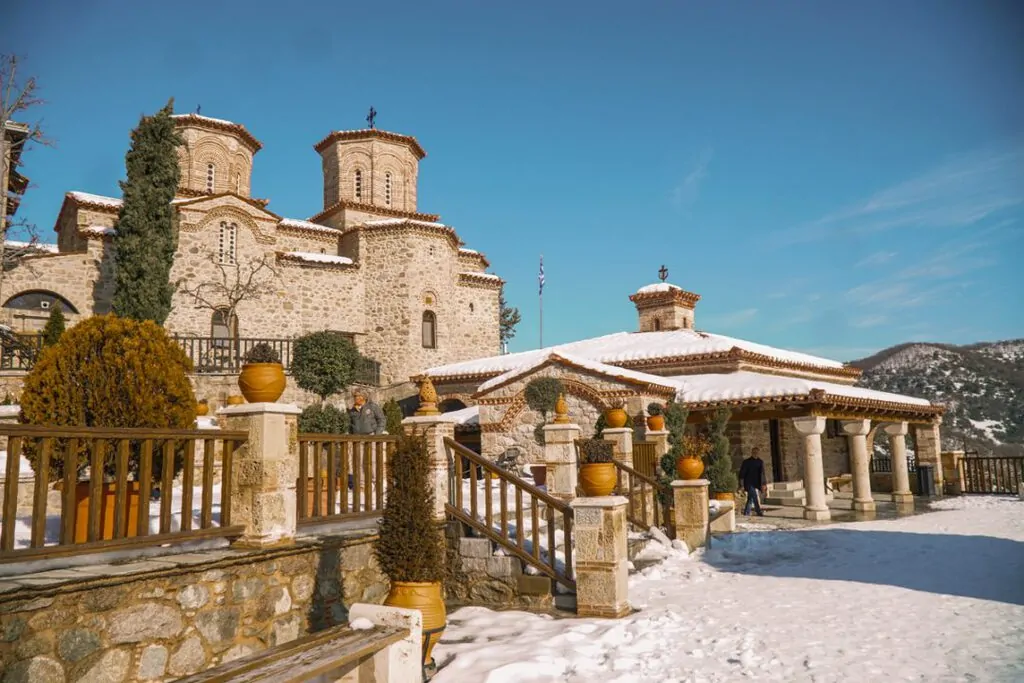
We were originally supposed to visit St. Stephen’s Monastery, but it was unexpectedly closed (so even the schedules must be taken with a grain of salt — especially if you visit in the off-season like we did). Instead we went to Varlaam Monastery and Great Meteoron, which is the largest of the monasteries.
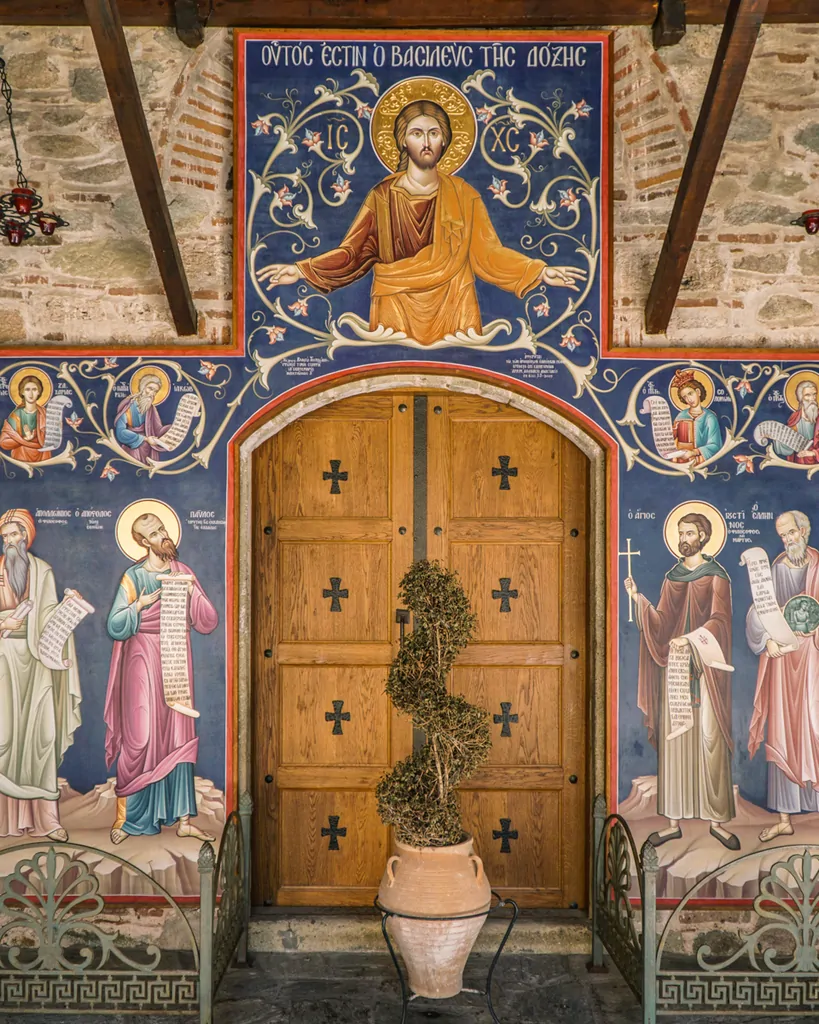
Honestly? Zero complaints, despite originally being excited to visit St. Stephen’s at first. Both were spectacular and dramatically beautiful in their own right.
Another thing to note about this tour is that your driver and guide won’t be able to guide you inside the monasteries themselves, as the permits for guiding the monasteries is tightly regulated and reserved for only local guides. To be honest, I didn’t mind it at all.
Our guide explained everything about the monasteries along the way and at viewpoints, and then when we were actually exploring the monasteries, we had ample time to roam and photograph freely without worrying about offending a guide by going on a little photo side quest.
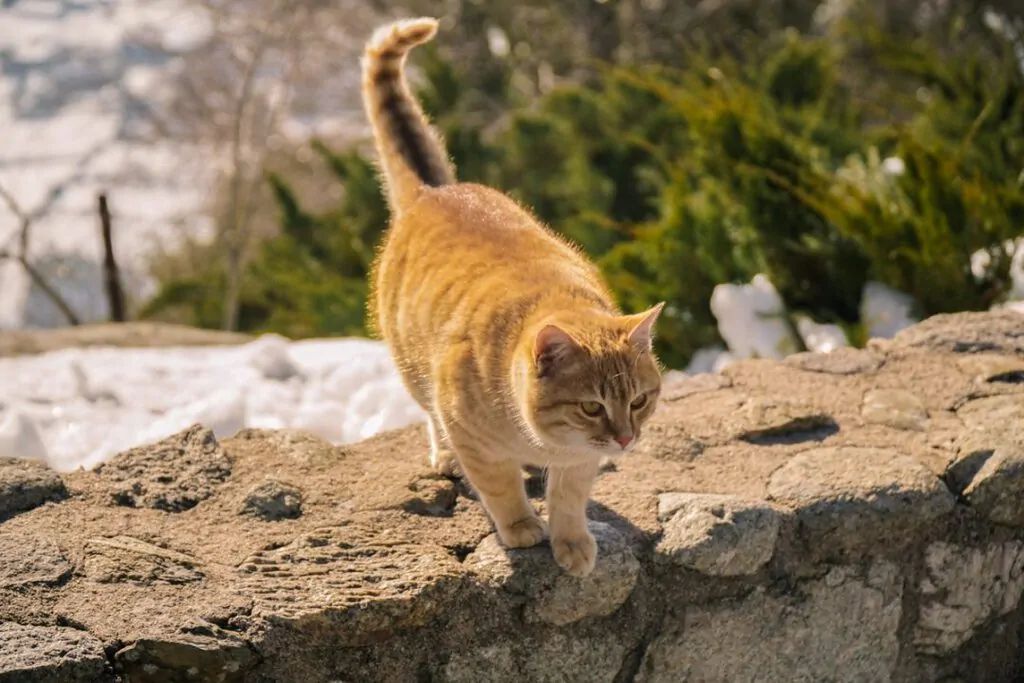
Personally, I loved having time to wander, shoot, pet monastery cats, and browse souvenir shops at my own leisure. We had 45 minutes at Varlaam and 1 hour to explore the Great Meteoron.
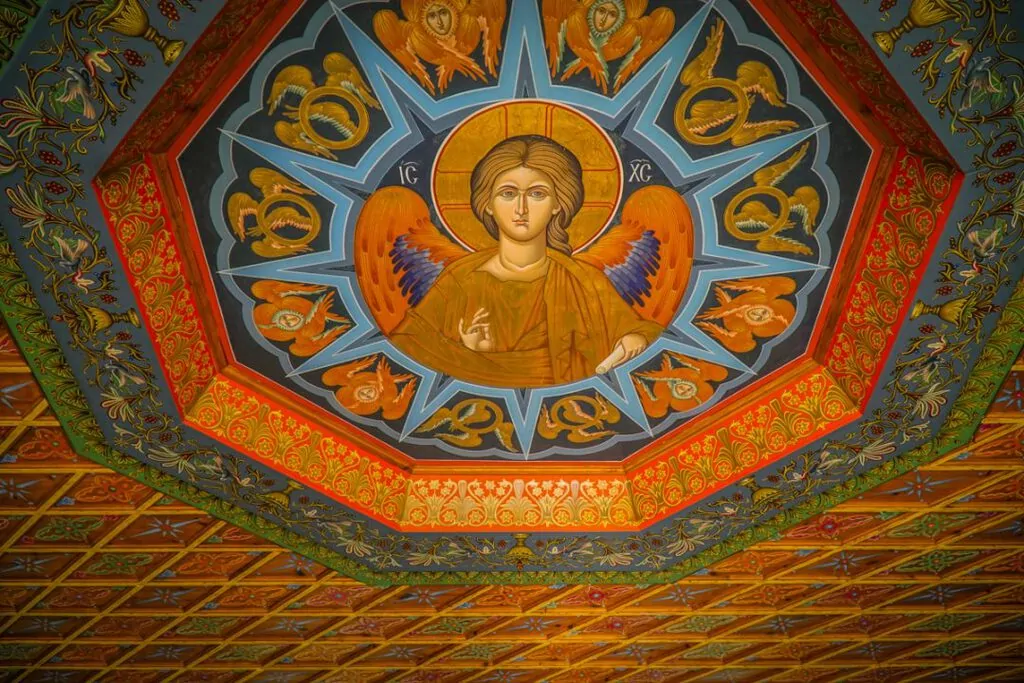
After that, we headed to Kalambaka for lunch. Since our group was tiny — just 3 people in the middle of January, as you can probably tell from the snowy pictures — we ate independently rather than doing a big group lunch.
I inhaled a gyro for a few euros and wandered town for a bit to get a sense of what staying in Kalambaka would be like on a future trip. In high season, there may be a more structured lunch stop, to make sure the groups stick to the schedule.
We headed back to Thessaloniki on the similar schedule — 90 minutes of driving, a quick pit stop for bathrooms and snacks, and then 90 minutes more. We got back to the city by 5 PM, but that was winter. In the summer, it may take a bit longer because you’ll likely need more time at the monasteries to deal with the crowds and the parking situation will require a little more patience.
Honestly, I loved this tour. Everything was smooth, low-stress, and super-efficient. Huge shoutout to our lovely driver and guide, Giorgios, who balanced knowledge, flexibility, and Greek warmth expertly.
Driving Yourself from Thessaloniki to Meteora
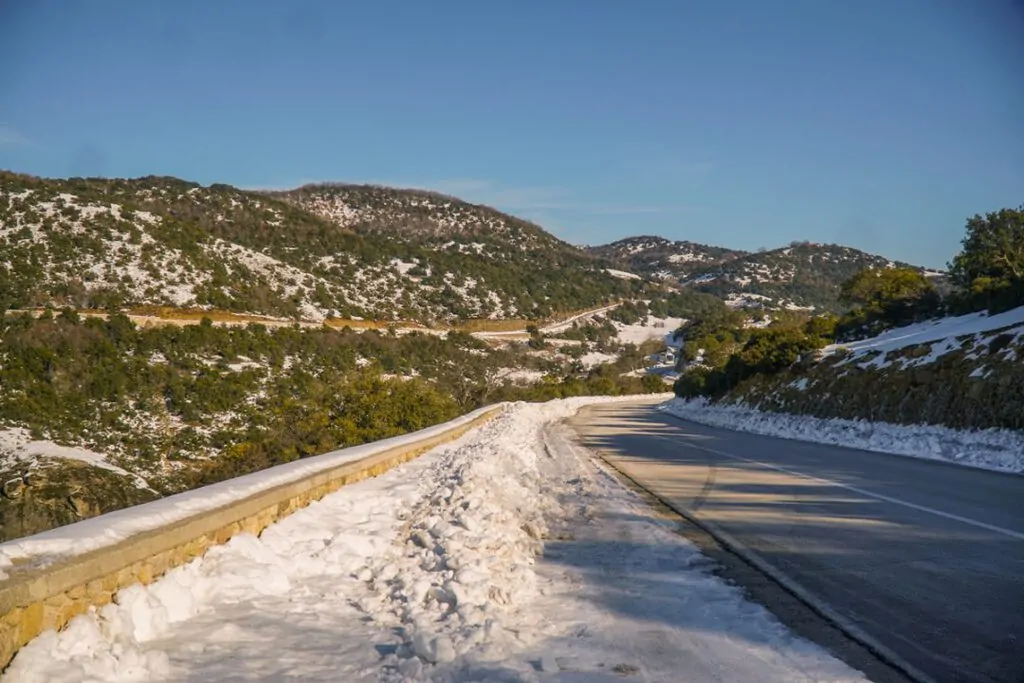
If you prefer being the master of your own schedule and being able to stop whenever, wherever, renting a car is totally doable…. but the parking situation at the monasteries may be heinous.
The roads to Meteora are in very good condition, however, note that if you visit in the winter certain things can get shut down in snowy conditions (yup, it actually snows quite a bit in this part of Greece!).
Depending on the size of your group and how much you enjoy your freedom, this may be a better value. As a solo traveler, the group tour was definitely the better value.
Renting a car in Greece can be surprisingly cheap. If you rent from the Thessaloniki airport and can drive a manual car, I’ve seen prices as low as ~€10/day for manual cars (though that does not include insurance) and ~€15/day for automatic transmission. Rental coverage is typically about €17/day, and I don’t consider that optional!
However, gas in Greece is rather pricy and the distance is far. As of this update in January 2026, the average gas price in Greece is €1.70/liter. Depending on the fuel efficiency of your rental vehicle, you’ll be paying about €40-60 for gas for the trip. There are also several toll booths along the way, but since I wasn’t driving, I didn’t track the costs. You’ll want to have extra coins on hand for this.
So you can expect to spend roughly between €70-€90 on renting a car for the day, not including transportation to and from Thessaloniki Airport which has the cheapest car rental prices (I search via Discover Cars).
If you rent at the downtown rental areas, like the Hertz downtown, you should expect to pay closer to ~€40/day, changing your total cost to €100-€120, plus monastery access.
Taking Public Transportation from Thessaloniki to Meteora
This is the option I really do not recommend, unless you’re staying in Kalambaka overnight… or just really love trains. You can take a train from Thessaloniki to Kalambaka, booking via the Hellenic Train website.
In this case, it’s €23 each way to and from Thessaloniki to Kalambaka… but the journey time is more than doubled. And the only train of the day leaves at a miserable 5:55 AM, getting you to Kalambaka by 12:30… and then you have to take a taxi, guided tour from Kalambaka, or walk up a literal mountain to see the monasteries.
For a day trip, this is more expensive and far less efficient than a guided tour. I’d only consider it if I was planning to stay multiple nights in Kalambaka so that I could explore Meteora over the span of a couple days and see all six monasteries. In my opinion though, unless you’re a historical completionist, you can really get a sense of the monastery by visiting at least two.
How to Get to Meteora from Athens
I talked a lot about Thessaloniki because it was the tour that I personally took, and it’s slightly closer. But for most travelers to Greece, Athens is the departure point they need.
Good news: Meteora is absolutely doable from Athens, but it’s a slightly longer day trip.
Taking a Guided Meteora Tour from Athens (Easiest Option)
Just like Thessaloniki, if you want to hand over your brain to a guide who knows these monasteries like the back of their hands — zero logistics, zero Google Maps curse-outs, and zero public transit meltdowns — this is the best way to do it.
Day tours from Athens to Meteora are really similar to Thessaloniki, but they’re longer and more expensive due to the longer transfer times. Sometimes, they’ll look very cheap on the website — but they’re doing that assuming you’re already in Kalambaka, and when you look at the option departing from Athens via shuttle, it’s much higher.
So don’t get confused by what seems like low prices: they are only that low if you are starting in Kalambaka. The best value if you are actually leavings from Athens is this top-rated Meteora tour; it’s €55 without lunch, and €62 with lunch included.
While tours from Kalambaka can look cheaper, getting to Kalambaka is not particularly easy nor cheap from Athens, and it’s not worth it for a day trip.
It costs €31 each way, and you have to take both a train and a bus, leaving at 6:58 AM as per the current railway schedule. If you add this up, that’s a €35 tour plus two €31 train/bus tickets, costing you €97 for something that’s less time-efficient and, in my opinion, more stressful.
A day trip to Meteora from Athens will definitely be a long day, as it’s a longer drive. These day trips typically are about 14 hours long (many of those spent in the car of course), having you leave Athens around 8 AM and returning around 10:30 PM, with a lunch break in Kalambaka.
Yes, it’s a long day — but it’s also the simplest way to see Meteora without spending a night in Kalambaka if you don’t feel like dragging your luggage around Greece.
Taking the Train from Athens to Meteora
If you want to DIY, it’s possible, but like I outlined above it is not efficient for a day trip. However, it is a good option for an overnight stay or if you’re heading onwards to somewhere like Thessaloniki after Athens.
Like I mentioned above, the train involves a bus transfer and takes about 5 hours, costing €31 per way. Once you arrive in Kalambaka, you can either join a tour that leaves from Kalambaka (or Kastraki), take a public bus, hire a taxi to drop you off in the monastery area, or walk (uphill) from Kalambaka which takes about 1 hour.
Generally, tours that start in the Meteora area will include a hotel pick-up in either Kalambaka or Kastraki, and this one costs €29 for a half-day (4-hour) tour.
If you want to stay overnight, you could stay in either Kalambaka or Kastraki. I’ve never done an overnight there, but if you’re big on photography and want to get all the best light conditions — sunrise, sunset, golden hour galore — than an overnight stay is probably the most logical options.
Driving from Athens to Meteora
Just like driving from Thessaloniki to Meteora, driving from Athens is doable, but it’s a long day that involves Athens traffic, which is way more hectic of conditions than I like driving in (think: lots and lots of motorbikes).
The drive is about 4 hours each way, and while the roads are excellent, it’s still a trek, especially for a day trip. I wouldn’t rent a car specifically for visiting Meteora, but if you happen to already have a rental car for the rest of your Greece explorations, it makes sense. You could also create a cool itinerary with a few stops, like visiting Delphi as well, if you wanted to.
Having a car in Meteora is great, up until the point that it isn’t (namely, when you have to park or when you get stuck behind a bunch of buses). In the peak season, it’s probably not a good idea. In the shoulder seasons, I think it’d be a lot more tolerable.
Like with Thessaloniki, your best prices are at the airport; if you pick up your rental car in downtown Athens, expect to spend more per day for your rental.

Allison Green is a former teacher who has been travel blogging since 2016, visiting 75+ countries in total. She has a Masters in Teaching and a B.A. in English and Creative Writing. As a former educator, she merges her writing and educational experience to encourage ethical, sustainable travel. She has been a speaker at the World Travel Writers Conference and TBEX. Her writing, photography, and podcasting work has appeared in National Geographic, CNN Arabic, CBC Canada, and Forbes, amongst others. When she’s not on the road, she lives in Bangkok, Thailand.