

I Lived in Sofia — Here’s the Best Way to Visit Rila Monastery!
Of all Bulgaria’s top tourist attractions, Rila Monastery figures highly on that list. And yes, it’s absolutely worth the hype. In fact, it actually may not be hyped enough, in my opinion.
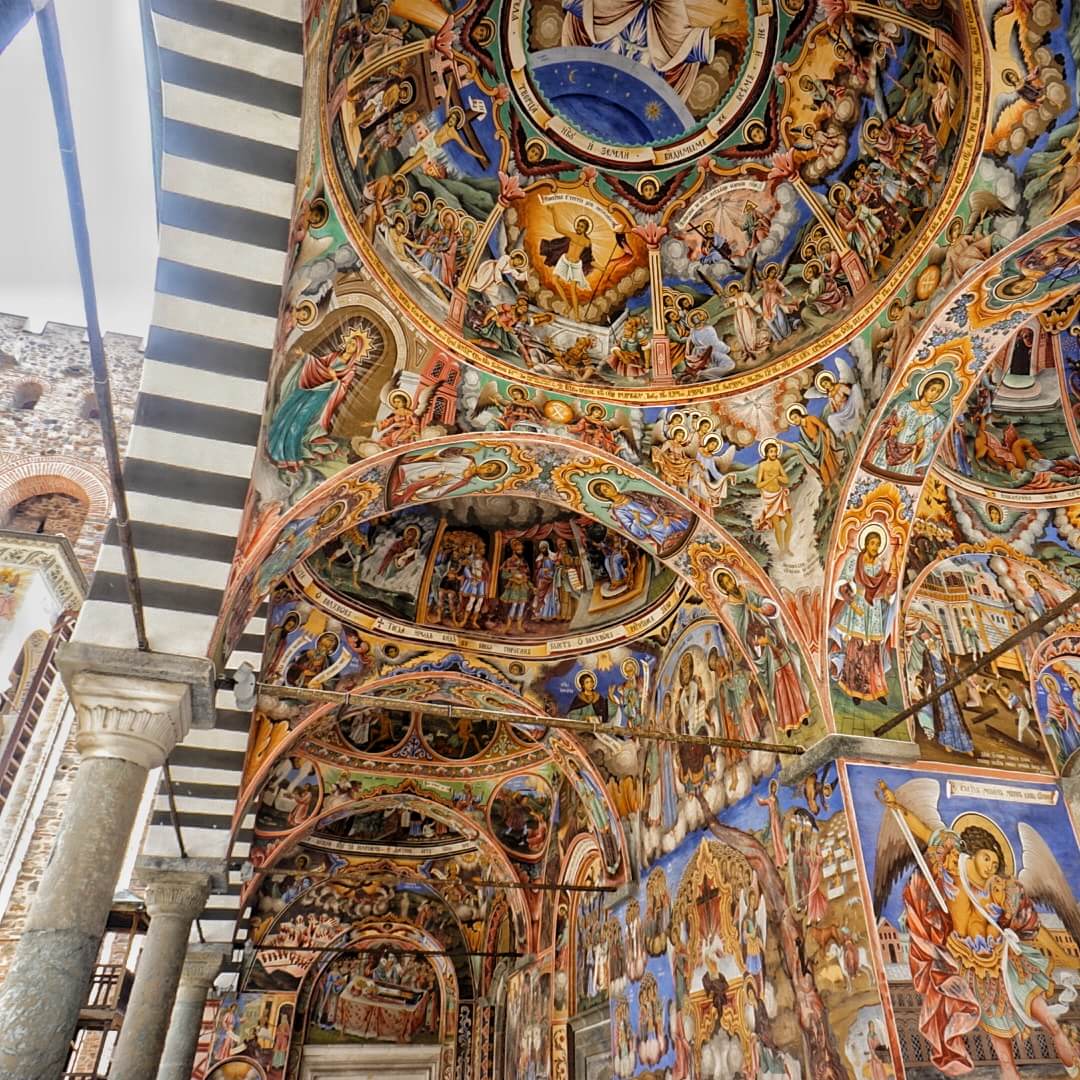
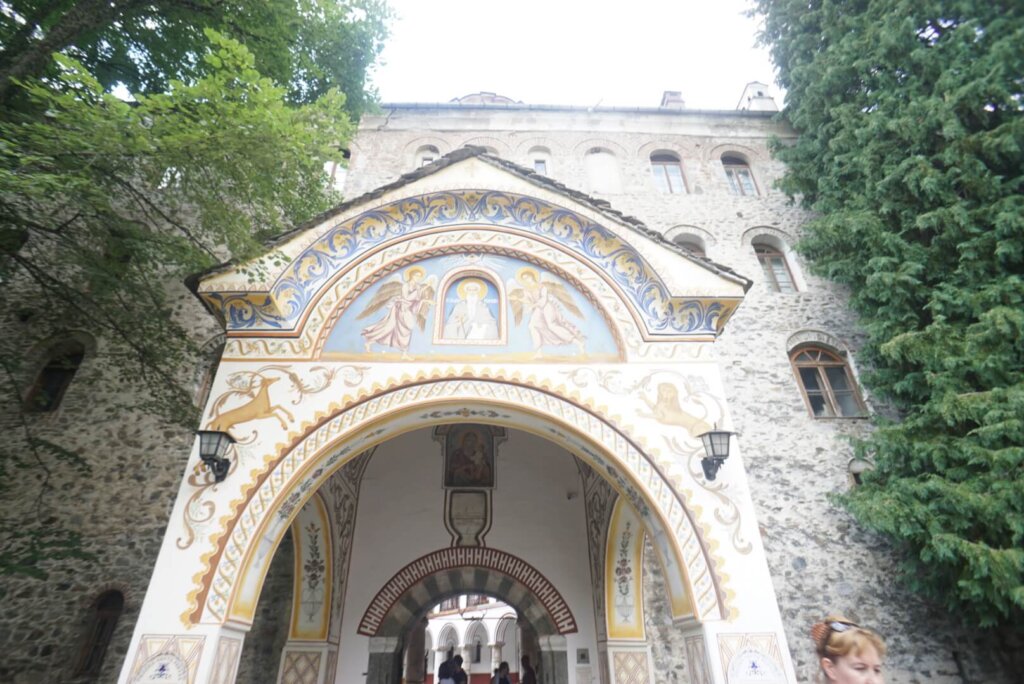
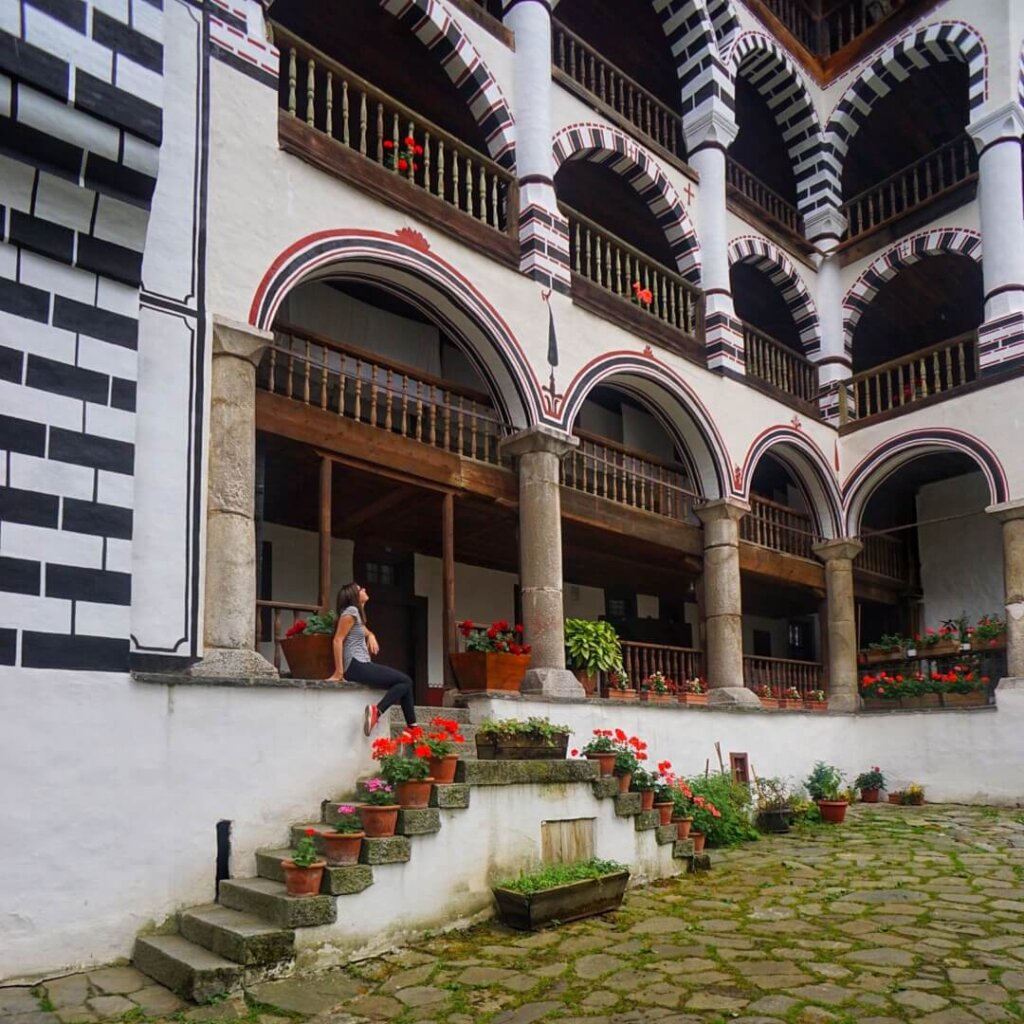
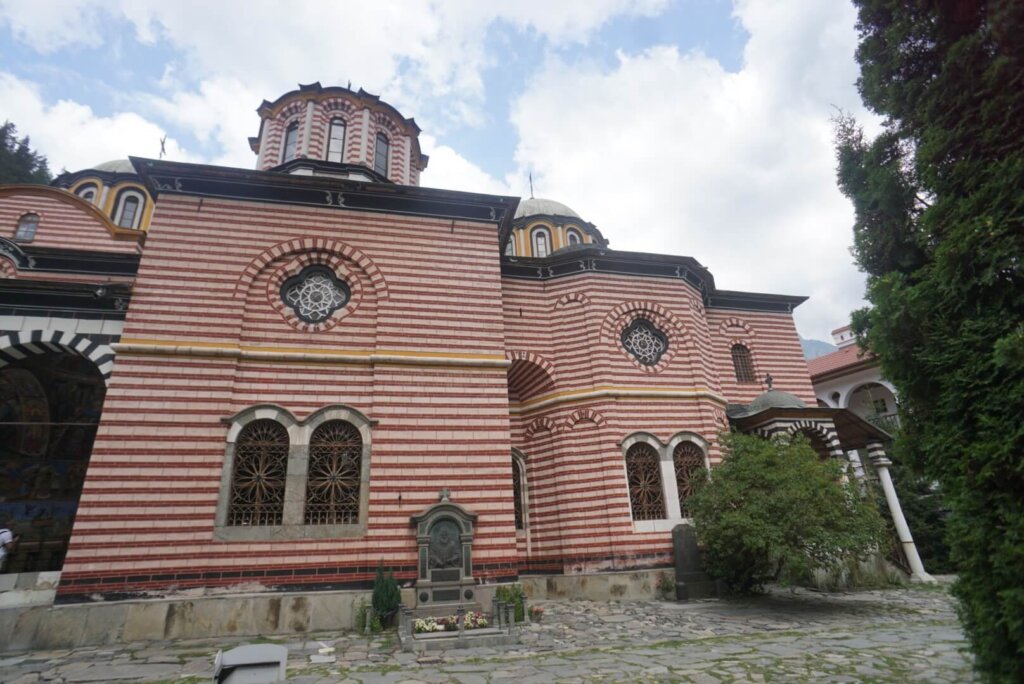
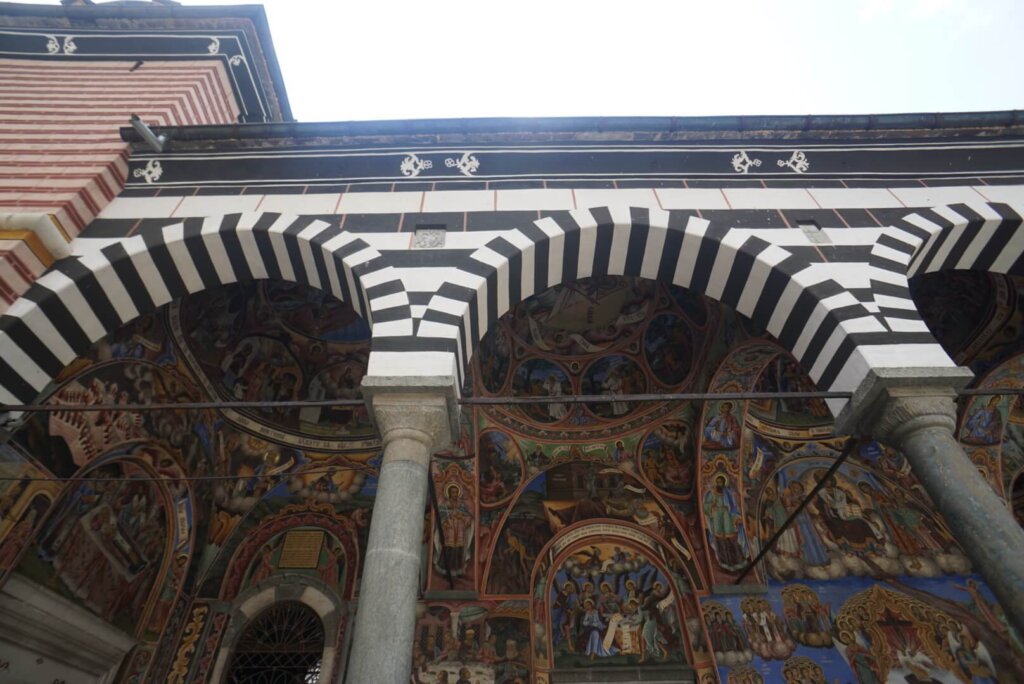
Tucked into the piney Rila Mountains, its Eastern Orthodox architecture stands out against the nature it’s hiding in: classic striped arches, jewel-toned frescoes, striking white walls, made all the more magical when you see the residing monks and priests wandering about the complex.
| 🇧🇬 Planning Sofia in a hurry? Here are my quick tips, from someone who lived there! ⛰️ Best Activities From Sofia: 1. Rila Monastery + 7 Rila Mountains Hike (all-in-one tour of Sofia’s two best day trips) 2. Sofia Communist Walking Tour (learn Sofia’s recent history through its architecture) 3. Plovdiv Day Trip (2 hour guided tour + 2 hours of free exploration) 🏨 Where to Stay in Sofia: $$$ Oborishte 63 by Sandglass (luxury hotel in Sofia’s trendy & foodie neighborhood) $$ Hotel Via Serdika (clean & beautiful hotel with super-central location) $ Art Hotel 158 (budget-friendly, but boutique and charming) 🚗 Getting Around Bulgaria: If Sofia is just a starting point for your adventures, I definitely recommend renting a car via Discover Cars for the best prices and most transparent shopping around. Prices are best from the airport, but you can also pick up downtown. |
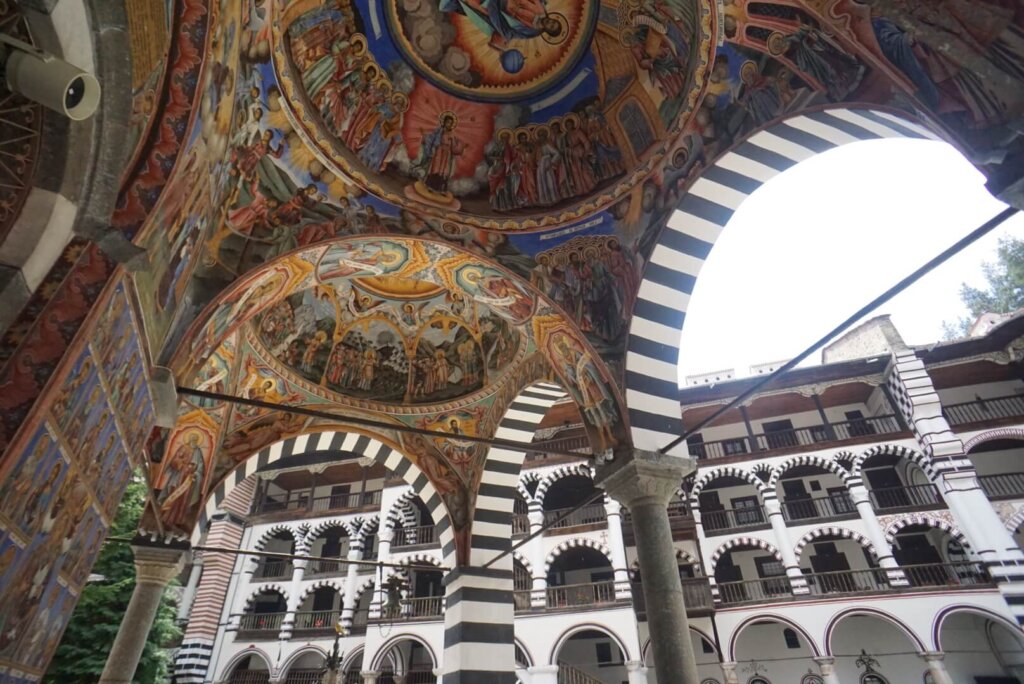
It feels remote and like you’ve stepped back in time, even though you’ll be made aware that you are very much in today’s time by people with ever-present phones taking pictures everywhere. But the people in the background very much fade away in the presence of such a beautiful place.
I lived in Sofia for four years and took literally every visiting friend and family member to Rila Monastery. It was a non-negotiable on every itinerary. I’ve been in every season, and at this point I feel extremely qualified to tell you exactly how to visit without the stress that Bulgaria can sometimes inflict on unsuspecting visitors who aren’t familiar with the country’s transportation infrastructure. Let’s just say there’s a learning curve.
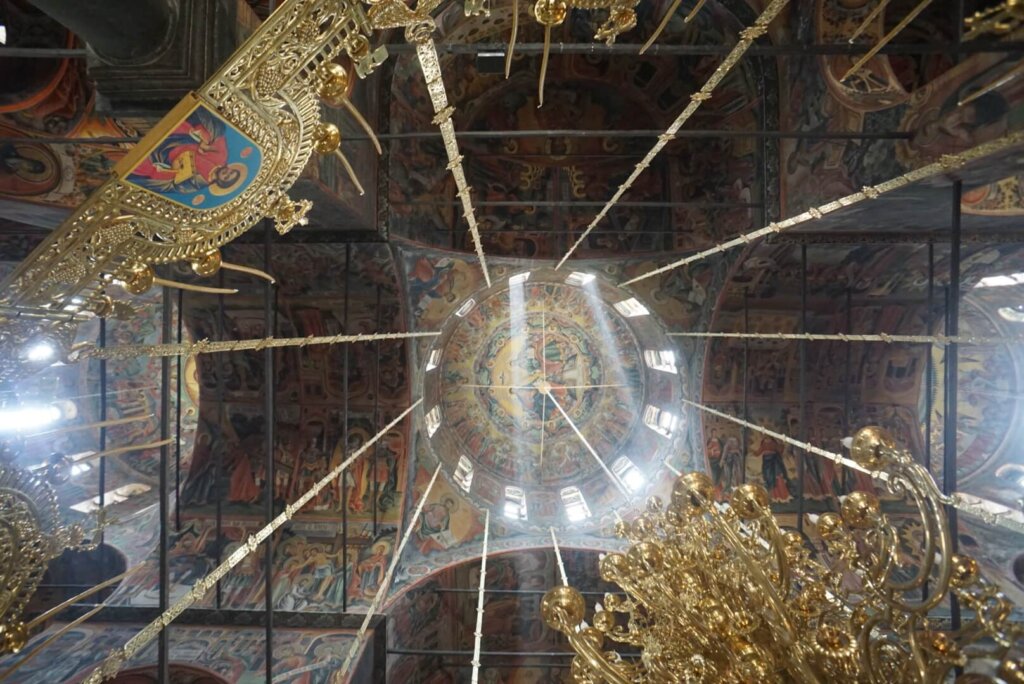
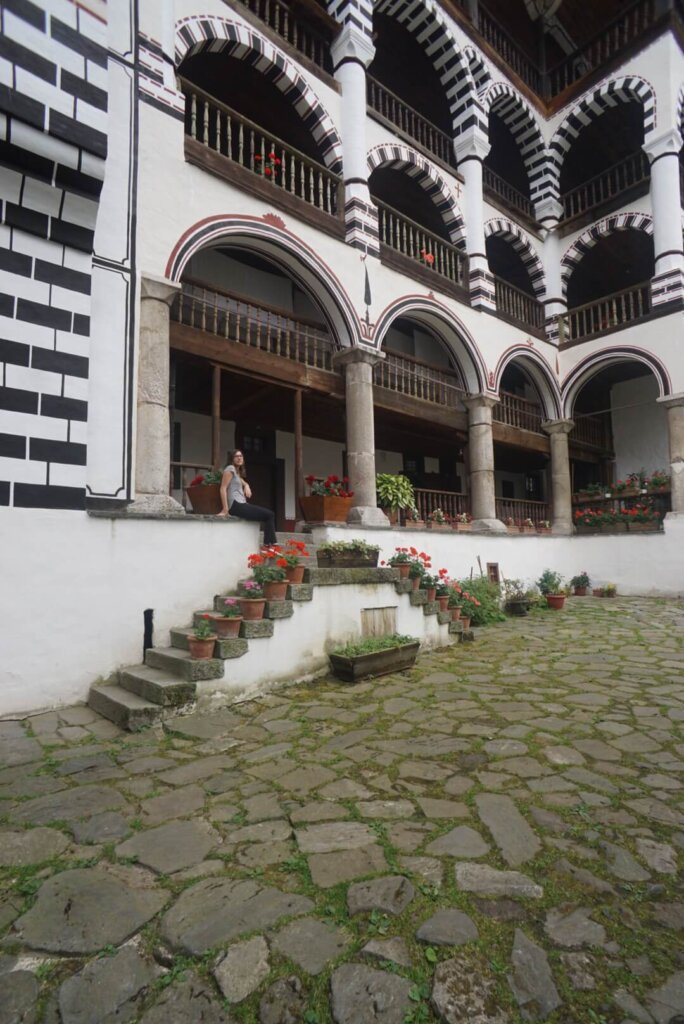
But getting here is absolutely worth it. The interior is one thing: walls inlaid with painted dramatic jewel-colored murals that tell biblical stories in panels, almost like a graphic novel. The monastery complex itself has those cheerfully-colored striped arches wrapped around a fortress-like courtyard, with mountains rising behind it.
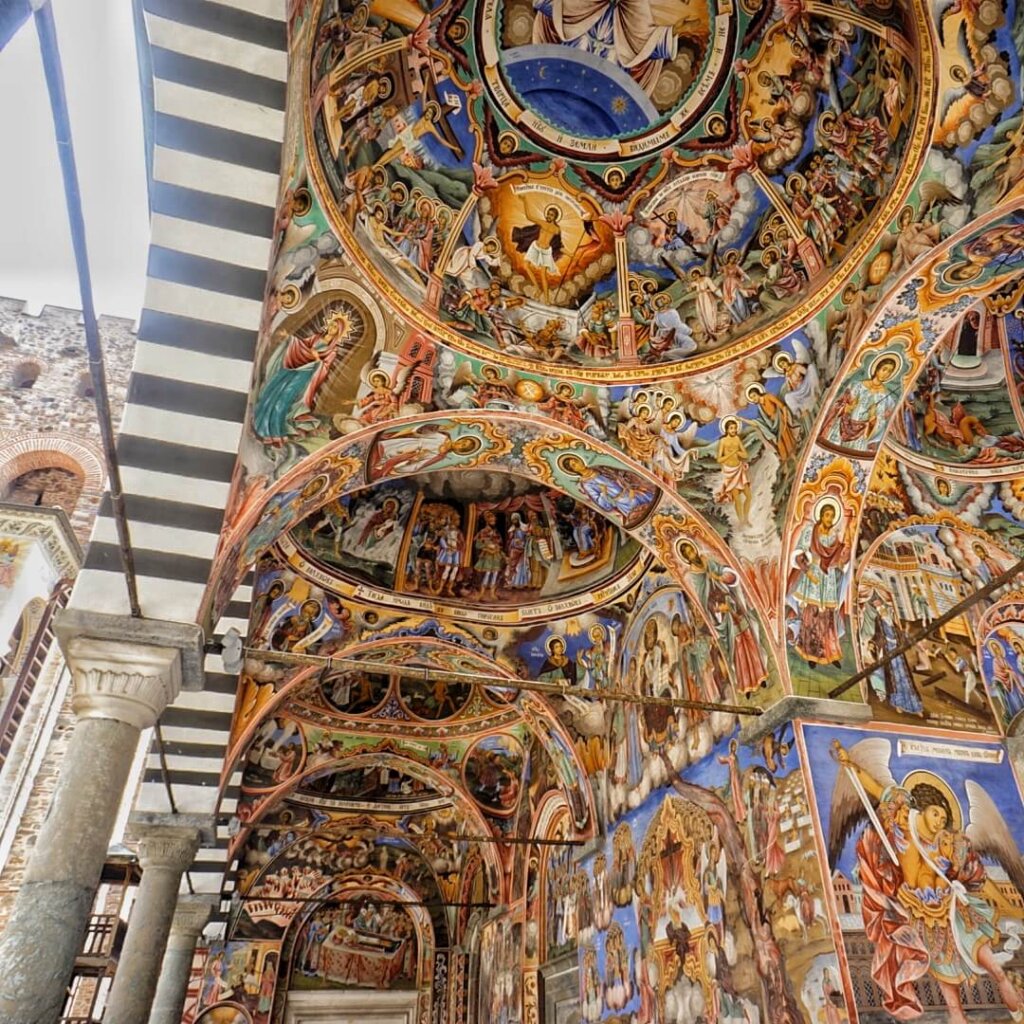
Somehow, no matter how many times I go, it still lands deep in my heart, this awareness that I am somewhere special.
OK, enough rhapsodizing about the beauty of Rila Monastery — I think you get it already. Let’s get into the logistics of how to get from Sofia to Rila Monastery. Your main options? By car, by tour, or by public transportation (for the masochists out there).
I’ll also give an overview of what you should see while there, so you don’t miss out on some of the lesser-known gems of Rila Monastery. Yes, there are still a few secret gems in this wildly popular spot!
Getting to Rila Monastery from Sofia by Car
This is my preferred method for visiting Rila Monastery… but it’s only for the brave. If you’re comfortable driving in countries that have… interesting driving conditions, this is hands-down the best way to visit Rila Monastery. It gives you the most flexibility, but better yet, it gives you the ability to embark on weird little side quests — which is honestly half the fun of road tripping in Bulgaria.
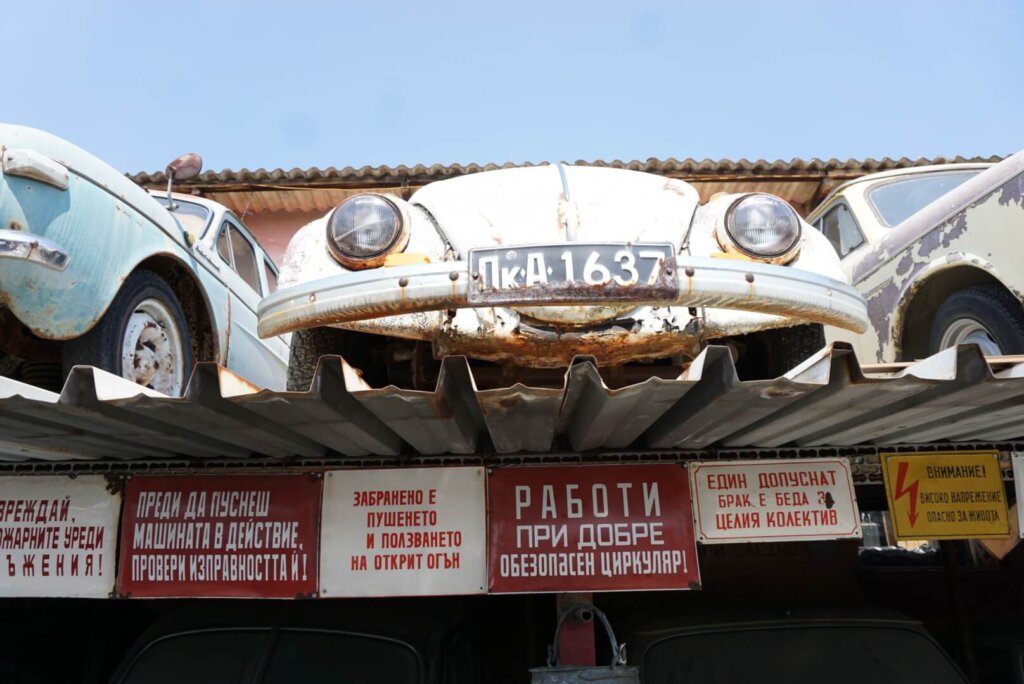
Because I visited Rila Monastery so often, I kept finding myself adding new stops every time: the Stob pyramids (natural rock formations that look otherworldly), a time-capsule of an unhinged junk museum in Kocherinovo, Iskar Reservoir, Boyana Church, Dragalevski Monastery on the edge of Sofia…
Driving here isn’t scary, but it is… Balkan. What I mean by that is: expect assertive passing, a very casual interpretation of traffic laws, and an attitude from other drivers towards turn signals and slower-moving vehicles that can only be described as loathing.
That said, the drive from Sofia to Rila Monastery is actually one of the easier ones in terms of the actual conditions, minus the drivers: good roads, mostly highway or countryside, and once you’re out of Sofia’s stop-and-go traffic, it’s pretty chill.
If you don’t get on well with aggressive driving culture, or just don’t want to deal with rental cars in another country, skip ahead to the tour section — but if you’re game, this is a great introductory mini Bulgaria road trip, before going out further into the country (and I’ll have more tips on that soon!).
If you’re renting, I’ve used Discover Cars dozens of times in Bulgaria and it’s consistently been the least annoying way to have a car reserved for me at the airport.
As for getting there, Google Maps or any offline map will get you there without any difficulty, and there are signs every turn along the way for Rila Monastery.
Bonus Stops Along the Way if You Drive
Stob Pyramids
Weird, wonderful rock formations you can hike up to in about 30 minutes each way. Enter “Стобски пирамиди” in Google Maps. There is a small entry fee, but I’m not sure what it is now. It was 3 lev, the equivalent of about €1.50, a few years ago, but I’m not sure if they’ve changed it now that Bulgaria uses the Euro.
Kocherinovo Junk Museum
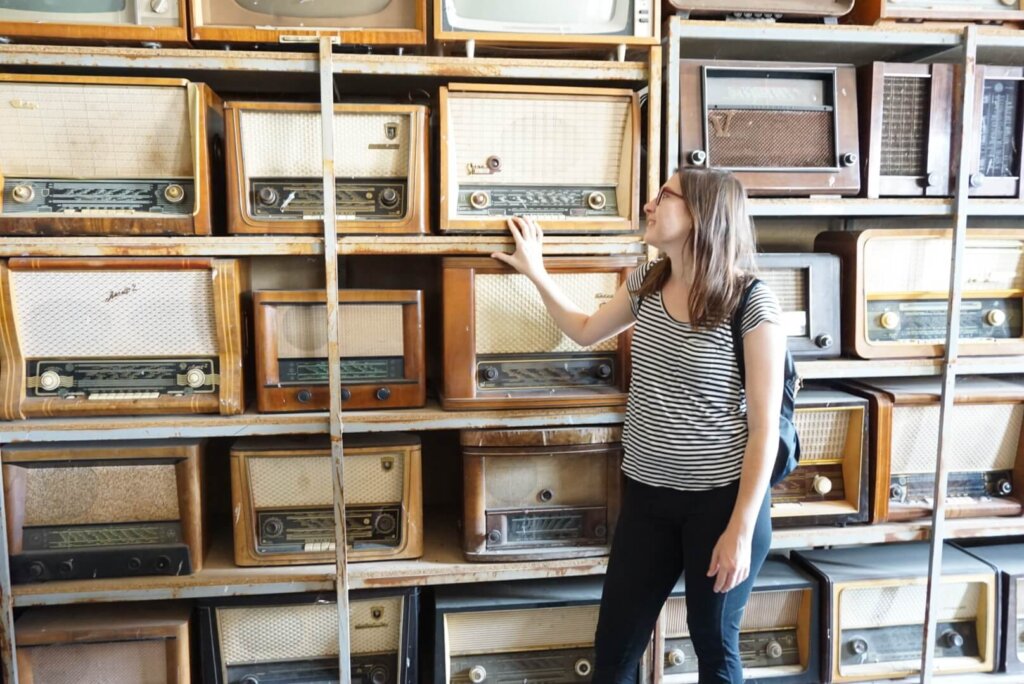
Officially labeled on Google Maps as “Junk Museum,” this is a donation-based unique sight, exactly as chaotic as it sounds. It’s directly on the route and takes about 20 minutes to explore.
Taverna Magic of Rila
My favorite restaurant to visit on a Rila day trip. You’ll find all the traditional Bulgarian food, in generous portions.
Getting to Rila Monastery from Sofia by Guided Tour
If you don’t want to drive and don’t want to decipher Cyrillic-script Bulgarian bus schedules, tours are the sweet spot.
Many tours combine Rila Monastery with another site so you get more bang for your buck when it comes to your day trip.
Rila Monastery & Boyana Church
For about €20, this takes you to two UNESCO sites in one day, with A/C transportation and an English-speaking guide.
It’s genuinely great value, cheaper than trying to navigate the public transit on your own. You’ll have to pay for entry to Boyana Church (€6) and any of the museums at Rila Monastery (€2.5-4 per museum), although the monastery itself is free.
Rila Monastery & Seven Rila Lakes
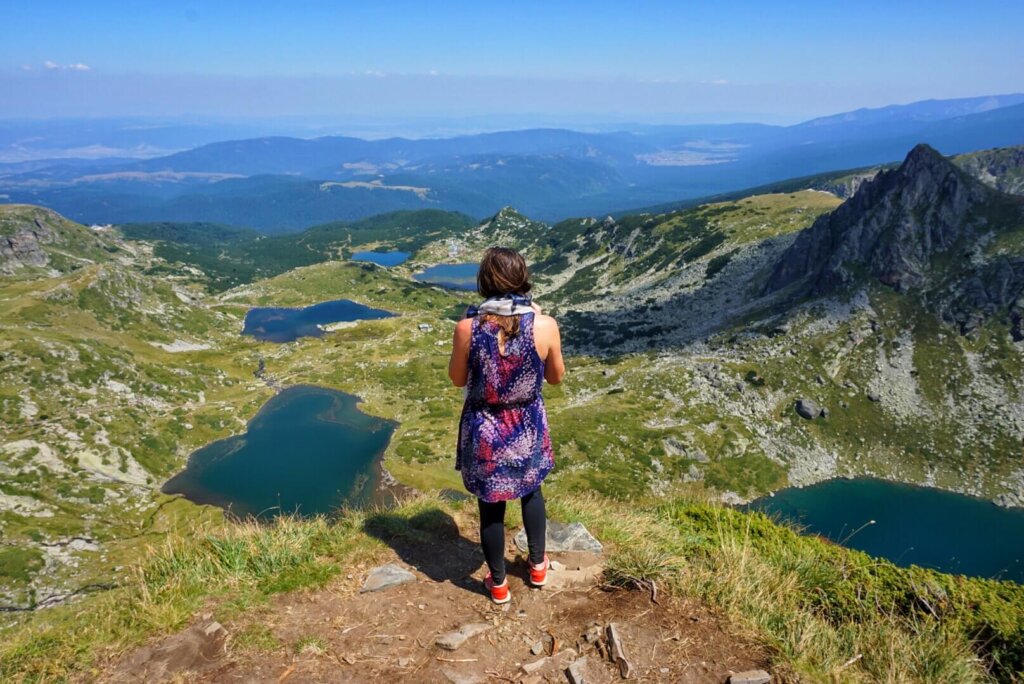
If you want the full Bulgaria postcard-perfect experience, this combo tour is excellent. Honestly, getting to the lakes can be a pain in the ass (and once you’re there, it’s so beautiful it’s hard to keep yourself on track) so doing it with a guide keeps things efficient.
Note that this tour runs from the beginning of June through the end of September due to the altitude of the lakes, as it sees snowfall as early as end of September or October.
Keep mind as well that this is not an easy hike (I’ve written about it here, if you want to see if it’s appropriate for you) — if you want to do the whole thing, it’s about 5 miles / 8 kilometers with 1,500 feet / 500 meters of altitude gain. The loop hike takes anywhere between 3-5 hours. You’ll also have to pay an additional €16 for the roundtrip cable car to where the hike begins (mandatory).
Rila Monastery & Plovdiv
While I think Plovdiv is worthy of at least a two-day visit, if you have limited time in Sofia and want to visit some of the most iconic Bulgarian sites in a day — but you aren’t interested in a long hike and prefer cities, history, and culture — than you can opt for this Rila Monastery and Plovdiv day trip.
This tour allows you to visit Bulgaria’s cultural capital and see some of the best-preserved Roman ruins like the Plovdiv amphitheater as well as Rila Monastery, on a single day trip, with lots of free time for exploring.
Getting to Rila Monastery from Sofia by Public Transport
Full transparency: despite going to Rila Monastery constantly while living in Sofia, I have never once taken public transport there. That should tell you something.
To be fair, we did own a car while we lived in Bulgaria for 2 of those years, and the other 2, we just rented a car as we usually were seeing a few things.
There’s a shuttle which you can buy tickets for here, but it’s not cheap. Each way is €18. It leaves from Vasil Levski monument, in front of the Embassy of Slovakia. It leaves at 9 AM and gets to Rila by noon.
The return leaves at 3 PM and gets back at about 5:20 PM, which only gives you 3 hours at Rila… it’s enough time, but you are confined to that schedule. And for a total of €36 return, you might as well just take the Boyana + Rila tour, in my opinion. It’s quite literally cheaper.
Sights in & near Rila Monastery
There is no fee to enter Rila Monastery or the main church of the monastery. However, there are some additional museums that you can add on to your experience, each which has a different cost.
There is a combined ticket you can purchase (thanks to reader Elle for the update!) for €12, otherwise, you can purchase each ticket separately if there are only some museum you are interested in and you’d rather skip the others.
- Church History Museum: Entry is €4.50 and includes several important artifacts like Raphael’s Cross, an important piece of miniature woodcarving. There are also manuscripts and prints about the history of the monastery.
- Icon Gallery: Entry is €2.50 and includes a viewing of 80 classical Orthodox icons as well as portraits of the abbots who have been guardian to this monastery over the centuries.
- Hrelov Tower: Entry is €2.50. From the 14th century, this is the oldest structure in the entire Rila complex… but the best part is the views. There’s also a chapel with the famous “Transfiguration” fresco work.
- Ethnographic Museum: For €3.50 you can see traditional living quarters from Bulgaria’s past as well as different relics of everyday life, like traditional Bulgarian textiles, jewelry, and clothing.
- The Cave of Ivan Rilski: If you drive about 3 km past the monastery, there’s a short hike (20 minutes) to the cave where Saint Ivan of Rila lived as a hermit. No fee as far as I know.
Expected Behavior & Rules
Rila Monastery is an active religious site, not just a pretty stop for photos. In order to not be That Tourist, here’s a list of things to do avoid doing — so you don’t get a side-eye or an elbow from a monk or a Bulgarian baba (grandma).
In the monastery complex, please don’t:
- Smoke anywhere on the grounds
- Enter wearing short skirts, shorts, tank tops, or super skimpy outfits. Basically, cover shoulders and knees.
- Take photos or videos inside the church or museums
- Wander upstairs into the residential areas (these are clearly marked)
- Be loud, rambunctious, or curse
- Bring pets
Inside the church:
- Keep your voices low
- Men should remove hats
- No strollers, big backpacks, or bulky bags
- Don’t touch icons or relics with your hands — they’re honored by kissing only, in the Orthodox tradition
- Candles go in the candle stands (low ones for the departed, tall ones for the living)
- Avoid sitting with crossed legs, keeping hands in pockets, or using your phone

Allison Green is a former teacher who has been travel blogging since 2016, visiting 75+ countries in total. She has a Masters in Teaching and a B.A. in English and Creative Writing. As a former educator, she merges her writing and educational experience to encourage ethical, sustainable travel. She has been a speaker at the World Travel Writers Conference and TBEX. Her writing, photography, and podcasting work has appeared in National Geographic, CNN Arabic, CBC Canada, and Forbes, amongst others. When she’s not on the road, she lives in Bangkok, Thailand.
I just visited Rila Monastery today and there is a combined ticket for the museums now! It was €12. I didn’t choose it, I just visited the Ethnographic Museum which is now €3.50. Just in case you want to update the prices.
Thank you so much Elle! I’ll update the post to reflect that.