

Is an Aral Sea Tour Worth It? My Experience in 2026
Visiting the autonomous region of Karakalpakstan is a great addition to Uzbekistan itineraries for travelers who want to get off the typical Tashkent-Samarkand-Bukhara-Khiva route.
If you make it to Khiva, I definitely think it’s worth it to continue onwards to Nukus, the capital of Karakalpakstan and the beginning and end point of most Aral Sea excursions.
Nukus is a great city in its own right, possessing of the best art museums in Asia, unique architecture, and excellent boutique hotels. It’s also where most tours to the Aral Sea leave from.
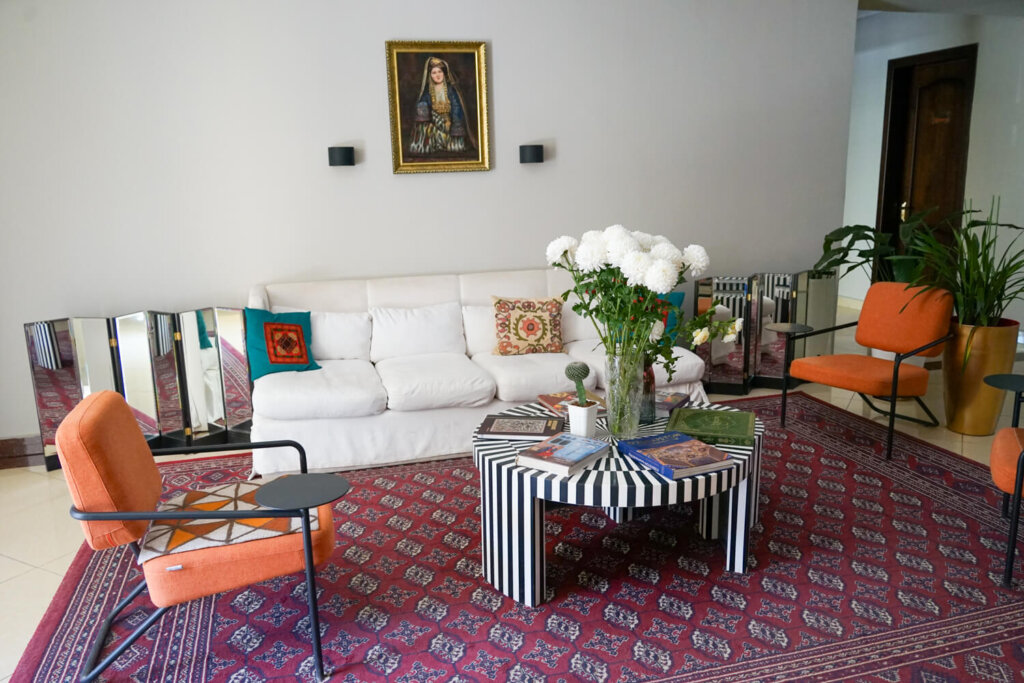
| 🇺🇿 Planning to visit Nukus? Here’s a quick guide with recommendations! 🏜️What to Do in Nukus 1. Aral Sea excursion with yurt camp overnight (a must-do!) 2. Khiva transfer with Khorezm fortress stops (sightsee + transfer) 3. Muynaq and Ship Graveyard tour (if you can’t do an overnight tour) 🏨 Where to Stay in Nukus 1. Hotel Jipek Joli (artsy boutique hotel in a great location) 2. Pana Hotel (comfortable hotel with a great aesthetic, a little out of the center) |
I knew that I wanted to reach the actual Aral Sea, what remains of it at least. 90% of the water from the Aral Sea is now gone, a manmade ecological disaster caused by the Soviet Union’s insistence on trying to make a desert region a cotton-growing powerhouse.
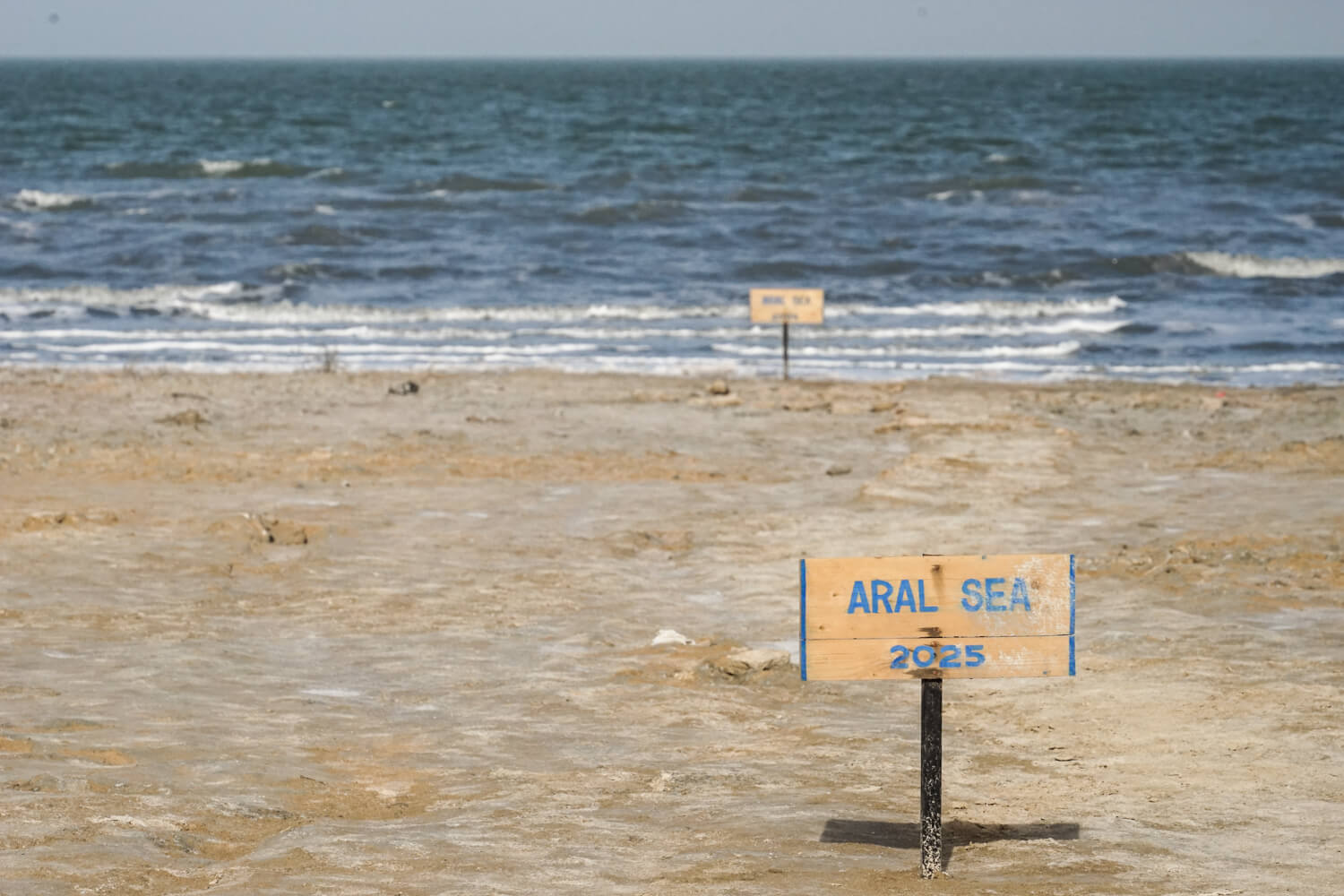
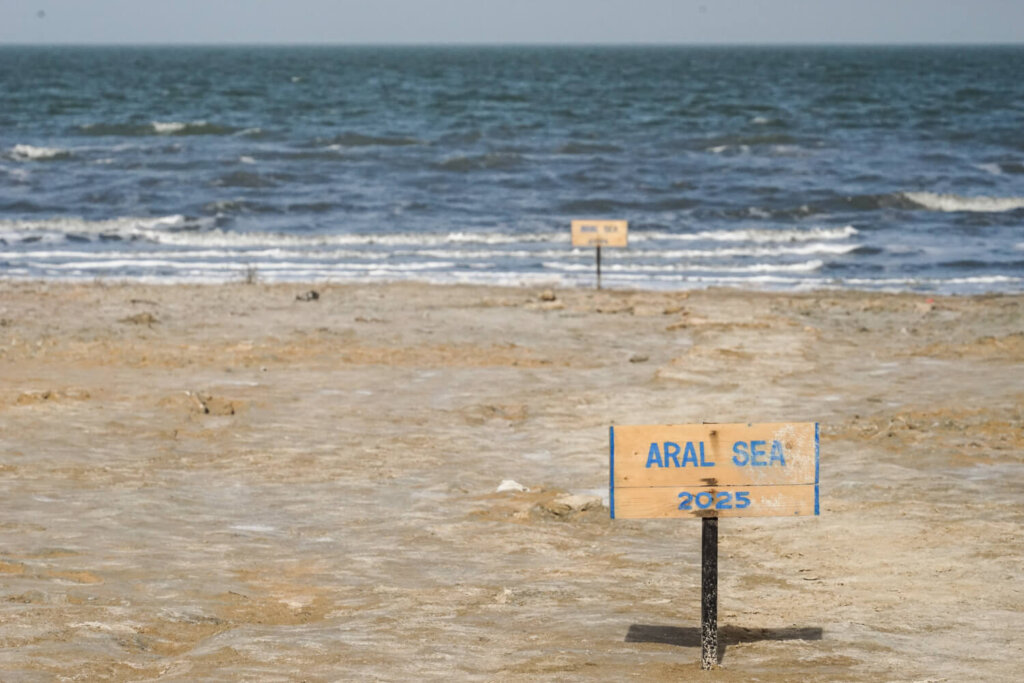
Scientists have explained the origins of the disaster far better than I ever could. The Aral Sea still shrinks to this day, which you can very visibly see when you visit, with markers showing where the shore stood each year.
Haven’t booked your Aral Sea adventure yet? This Aral Sea tour is offered by Jipek Joli’s tour company, and I highly recommend it.
Left behind in its wake is a true wasteland: the youngest desert on Earth, the Aralkum Desert, which is extremely hostile to life due to the salt soaked into the soil, as well as pesticide contamination. Crossing the floor of what used to be the Aral Sea is surreal: a bumpy road that jolts you around, nothing but a wasteland around you.
This post will go over what a typical Aral Sea itinerary looks like if you choose the 2-day, 1-night option (day trip options will likely only bring you to Moynaq, the Ship Graveyard, and back).
At the end of the post, I’ll give my thoughts on if it’s worth it, important things to know before your trip, and what you should definitely not forget to bring.
Want to know the full itinerary and details of the tour I took? Keep reading or skip to the tour page, which lists the itinerary and inclusions!
Aral Sea Itinerary: My Experience
Mizdarkhan Necropolis
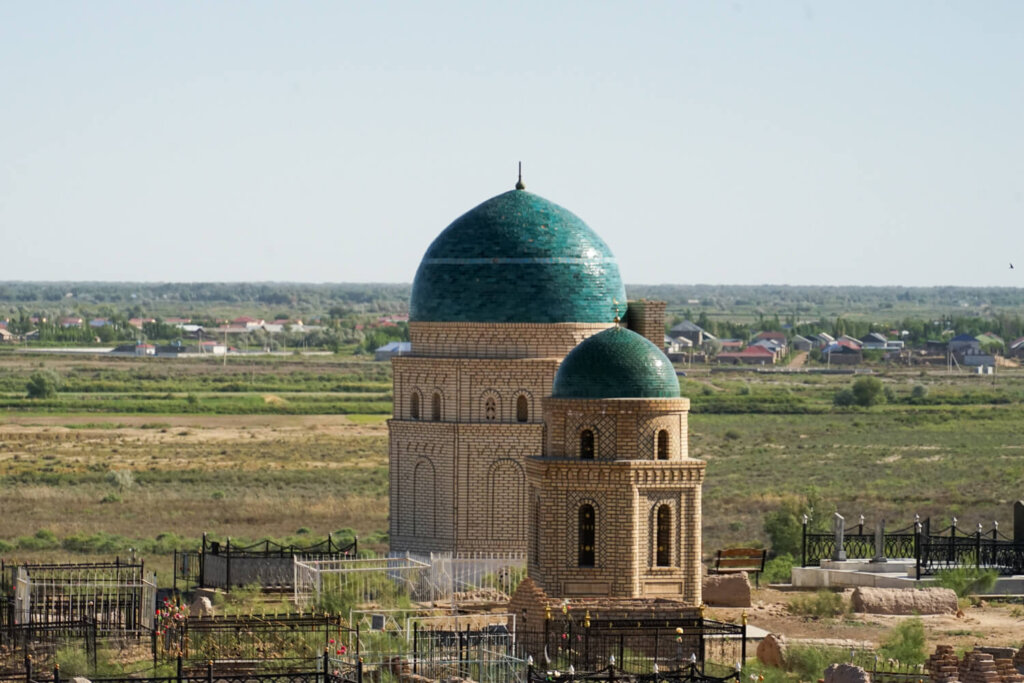
The first stop we made was about 30 minutes outside of Nukus, at the Mizdarkhan Necropolis. Our driver was more of a driver than a guide, so we visited this site solo and didn’t get much information about it until I researched it extensively after.
I’ve actually written a full guide to visiting Mizdarkhan Necropolis chock-full of my research, because I had such a great time visiting it and found it so compelling.
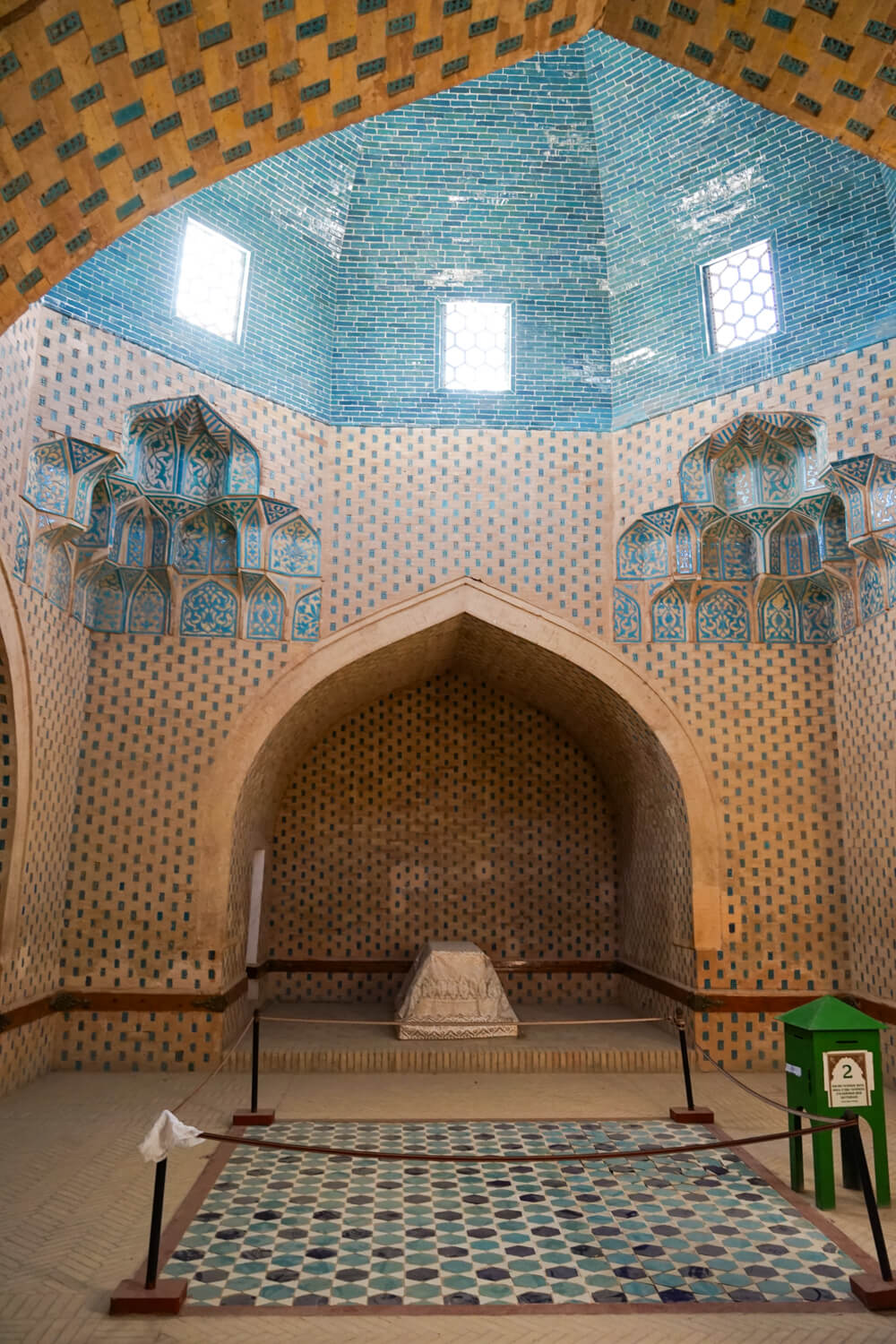
There are plenty of sites to see while there, but the most interesting to me was the Mazlumkhan-sulu Mausoleum with its beautiful turquoise tiles and unique semi-underground structure.
Another site worth visiting while there are the crumbling remains of the Khalifa Erezhep Mausoleum, a unique pilgrimage site and source of many legends across a number of religions, including Islam, Christianity, and Zoroastrianism.
Moynaq & Ship Graveyard
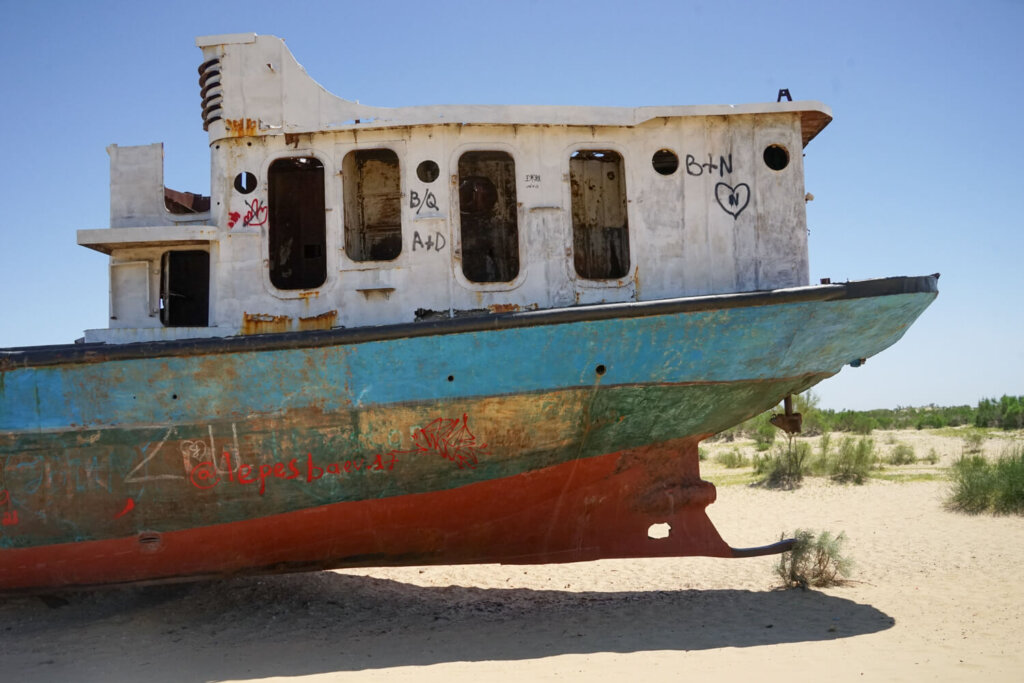
There are some places that can communicate the immensity of the Aral Sea disaster in just a single picture: the Ship Graveyard in Moynaq is one of those places.
Moynaq was once a thriving and prosperous port and fishing town, with an estimated population of over 50,000 people before the Aral Sea began to shrink.
More than 10,000 people directly lost their jobs as a result of this: fisherman, cannery workers, shipworkers all without a purpose once the water was gone.
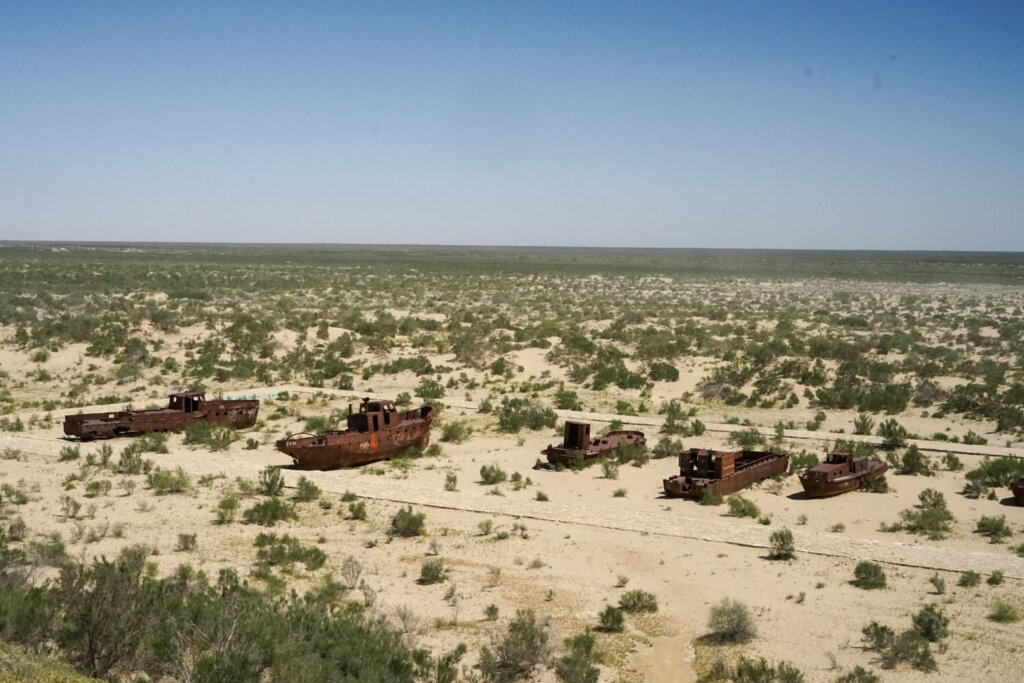
And so like the Aral Sea, Moynaq too shrunk: it now numbers only 13,500 people as of the last census. Once a waterfront town, Moynaq is now 150 kilometers to the nearest part of the Aral Sea — that’s how severe this disaster was and continues to be.
Besides the ship graveyard, there are a few interesting sights in Moynaq, all in the same area. There is the Regional History and Aral Sea Museum, which details the disaster and its impact on Karakalpakstan.
It also includes replicas of the wildlife that once used to thrive in Moynaq and no longer can be found here. You can also watch an informational video about the Aral Sea disaster in case you are still unaware of its history.
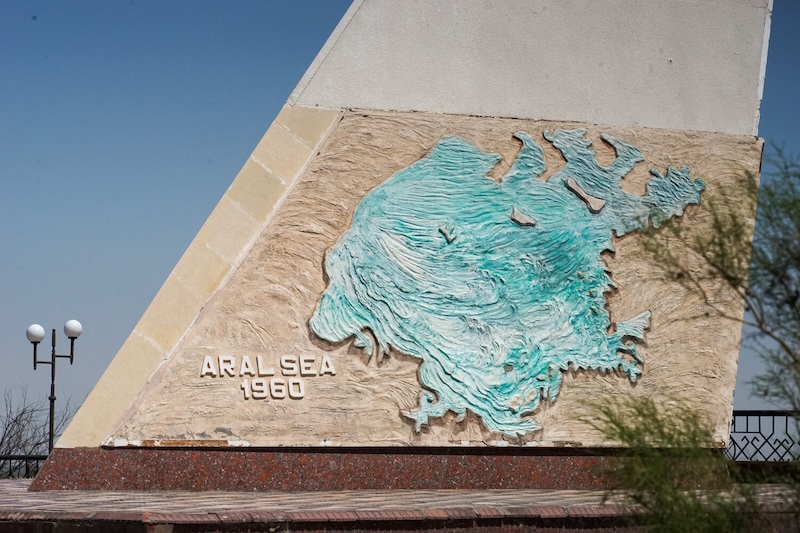
Another site, right in the parking lot for both the museum and the Ship Graveyard, is the Aral Sea Memorial, a triangular structure that shows the disappearance of the Aral Sea across the years.
We had lunch at a local Moynaq home that welcomes visitors from day trips; the food was excellent and very filling, good as we still had quite a while to go!
Crossing the Aralkum Desert
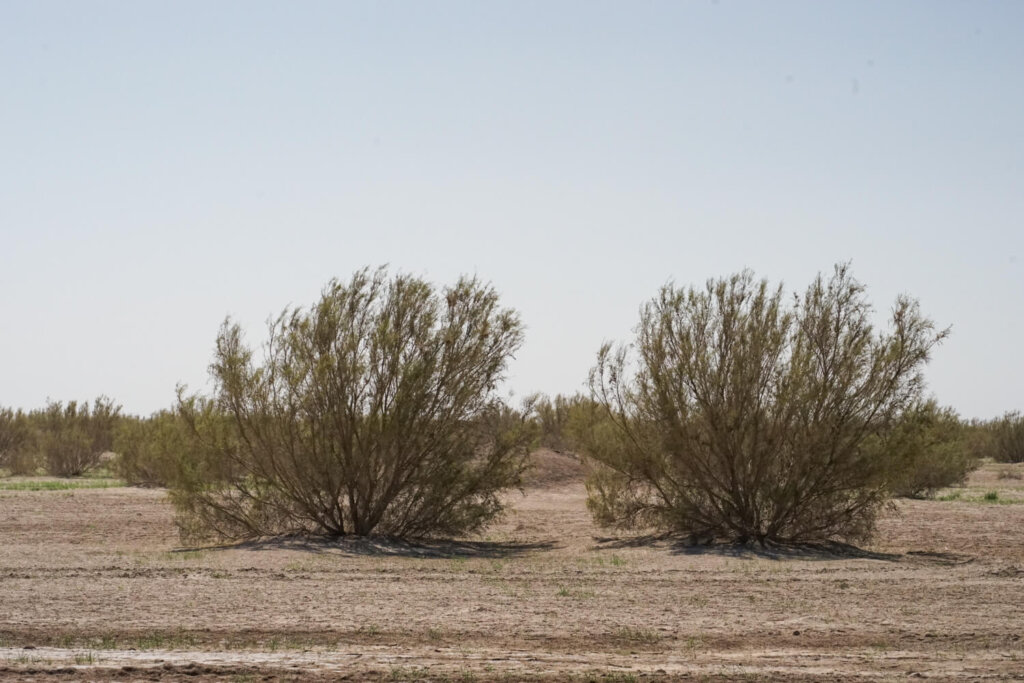
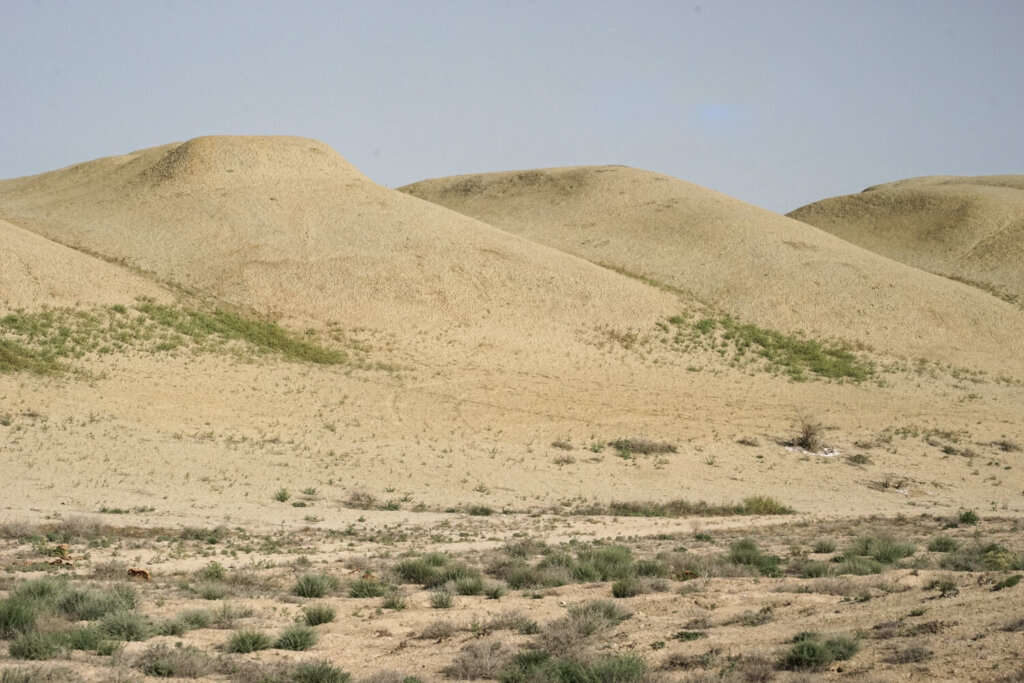
I never though about what it would be like to drive across the craggy remnants of what used to be a sea floor, now a salt-warped moonscape, with very little life able to grow in its wake.
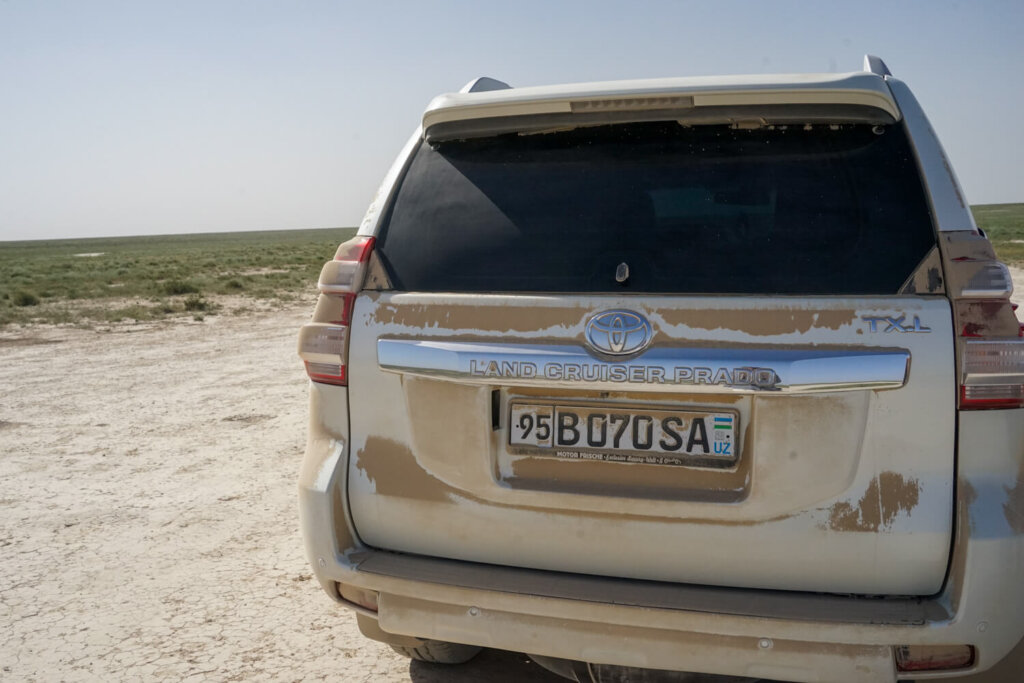
This part of the ride was extremely bumpy — the land here is gnarled and wild, and attempts to build tracks for 4WD cars barreling through the desert make it passable, but barely so.
For me, this was one of the more somber parts of the tour, crossing what felt like endless desert, knowing this all used to be sea.
Vistas & Viewpoints
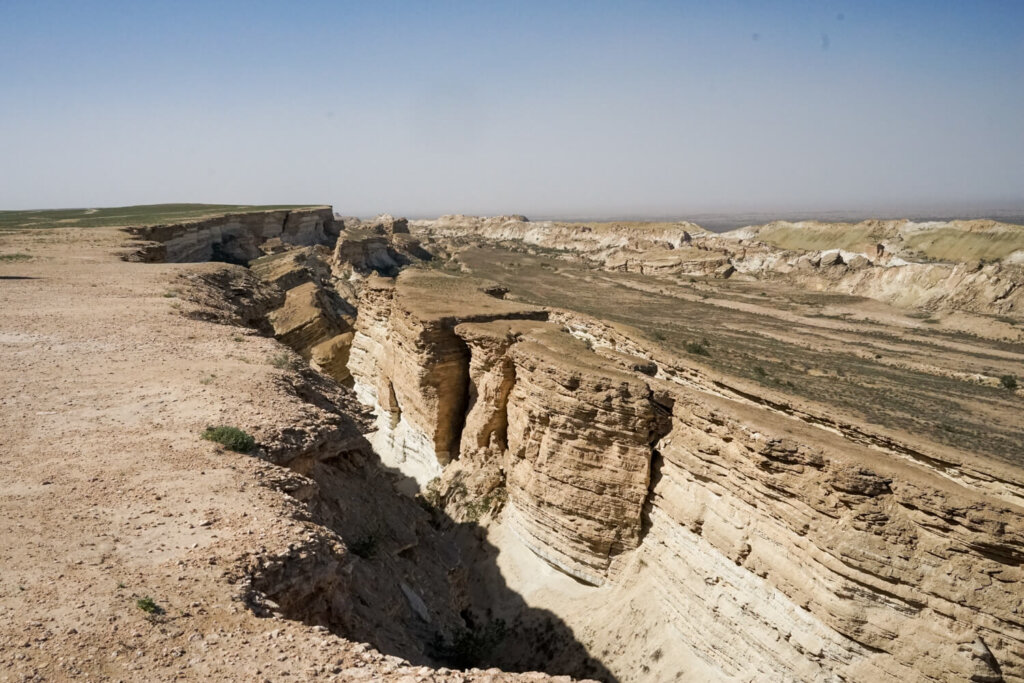
Once you’ve crossed the Aralkum Desert, you’ll reach a series of switchbacks that will bring you up to the steppe at a higher plateau.
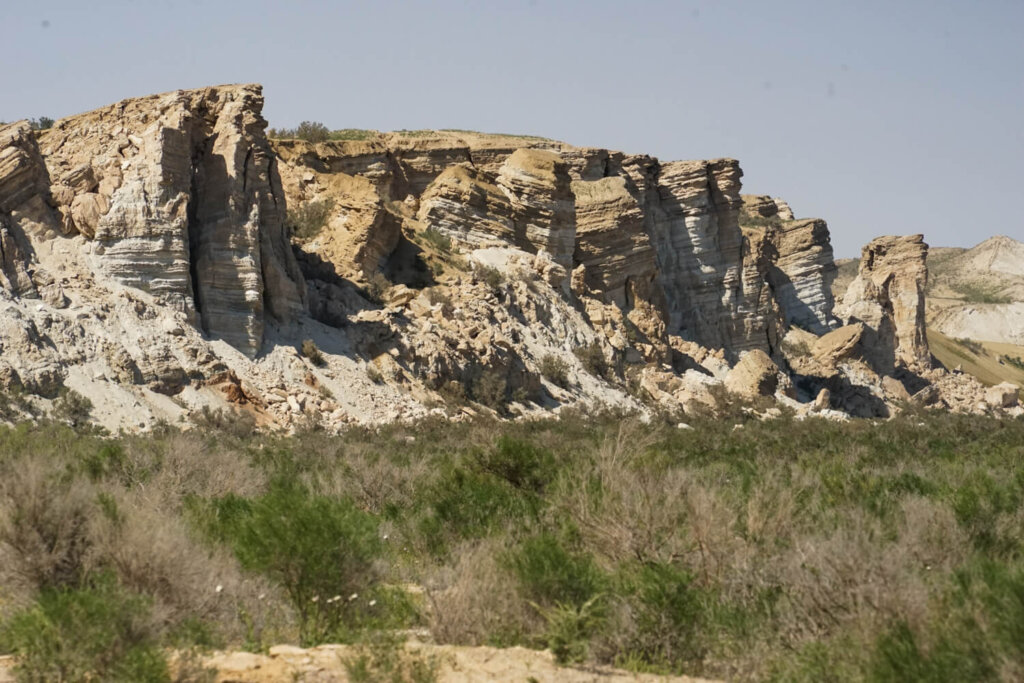
Here, there are several viewpoints you can stop at, where you can admire interesting canyons. Note that it is extremely windy and dusty here!
Crossing the Karakalpak Steppe
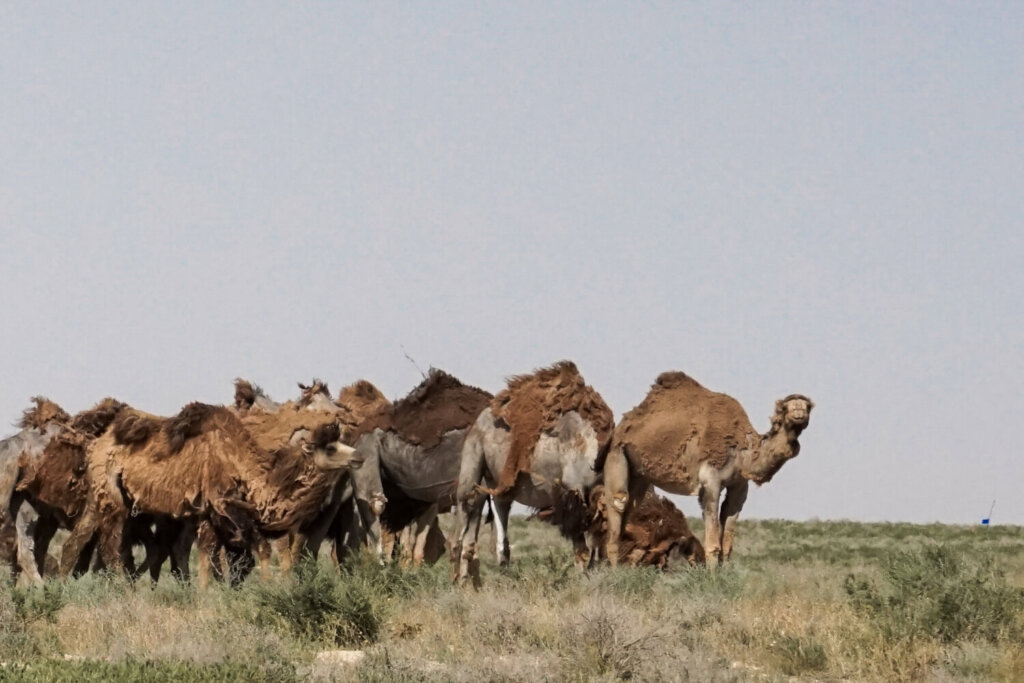
The Karakalpak steppe feels endless, like being lost at sea but on land. Very little marks any horizon: you can look out in any direction and see almost nothing that differs from the land in front of you.
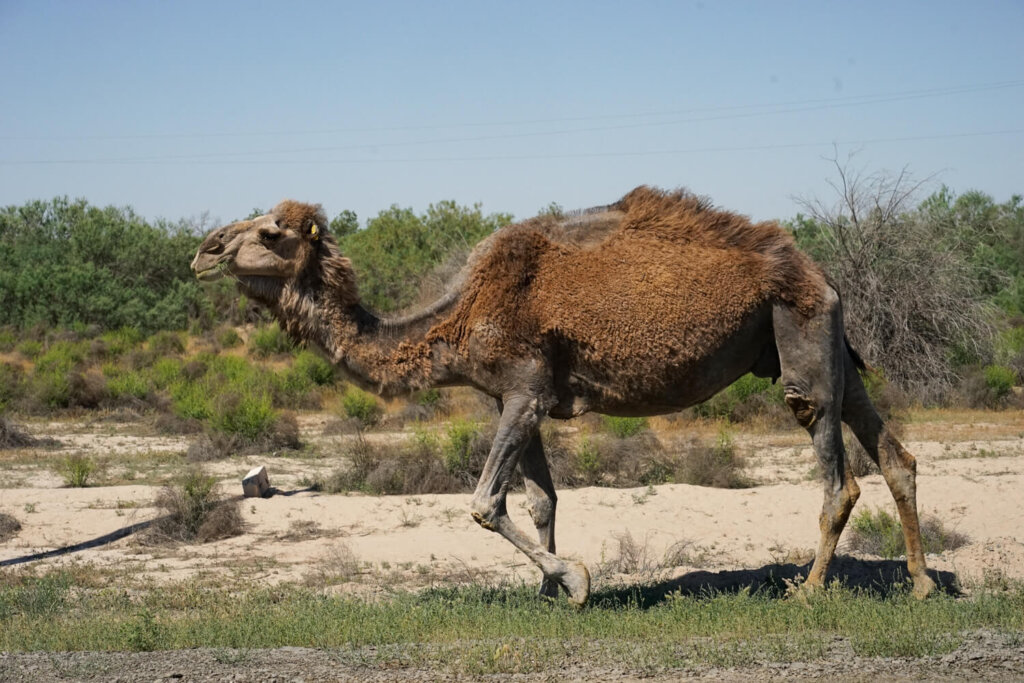
However, there are hints that you are in a less hostile land: much more dense plant life, as well as several animals that make their home in the steppe, like the Central Asian tortoise and camels (note: while they may seem unattended, no camels in Uzbekistan are wild; all are tended to by their owners, who move them nomadically through the land)
Nomad Stones Burial Site
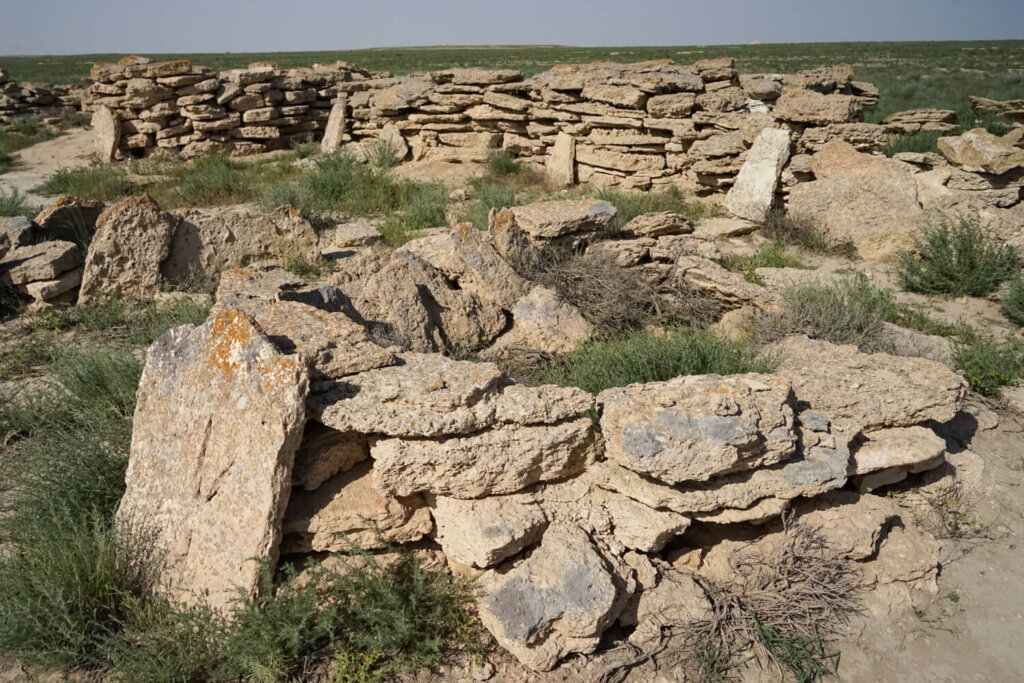
The steppe seems invariable, yet one stop you’ll make along the way stands out, a telling piece of history amidst the harsh landscape.
Generally, the steppe shows very little signs of past human habitation; it was home to nomadic people who moved through the region yet didn’t set up any permanent settlements.
There is one exception: the burial site of past nomads, marked by stones and carefully piled rocks, a graveyard amidst the steppe.
Reaching the Aral Sea
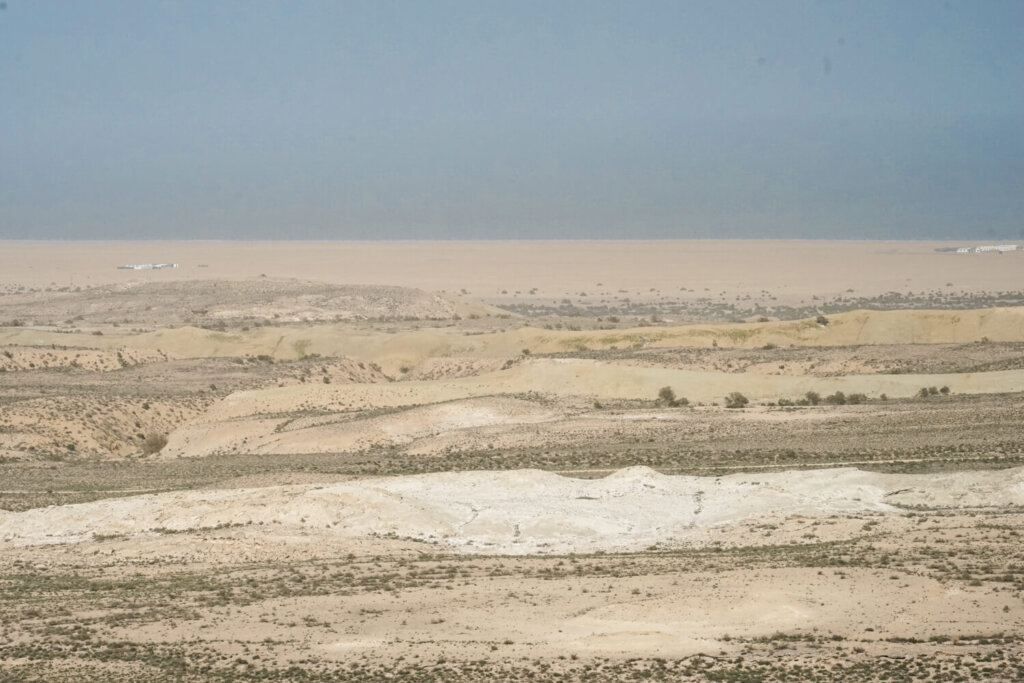
After passing through the endless step, you’ll finally stop at a vantage point where you can see your final destination off in the distance if you squint: the Aral Sea.
After a bit more driving, you’ll drive down to the shores of it, and see the fabled, troubled remnants of a dying sea.
Reaching the Aral Sea, I felt no joy or excitement. Mostly, I felt a profound sense of sadness, mixed with anger at what mankind is doing to our beautiful planet.
The Aral Sea is still disappearing to this day, and it’s rendered visible in a casual yet striking way: signs marked with the year, showing the continued disappearance of the Aral Sea.
You can walk the distance that the Aral Sea has receded in a year; at one point, I counted 30 paces (86 feet or 26 meters) — that’s how much the sea shrinks.
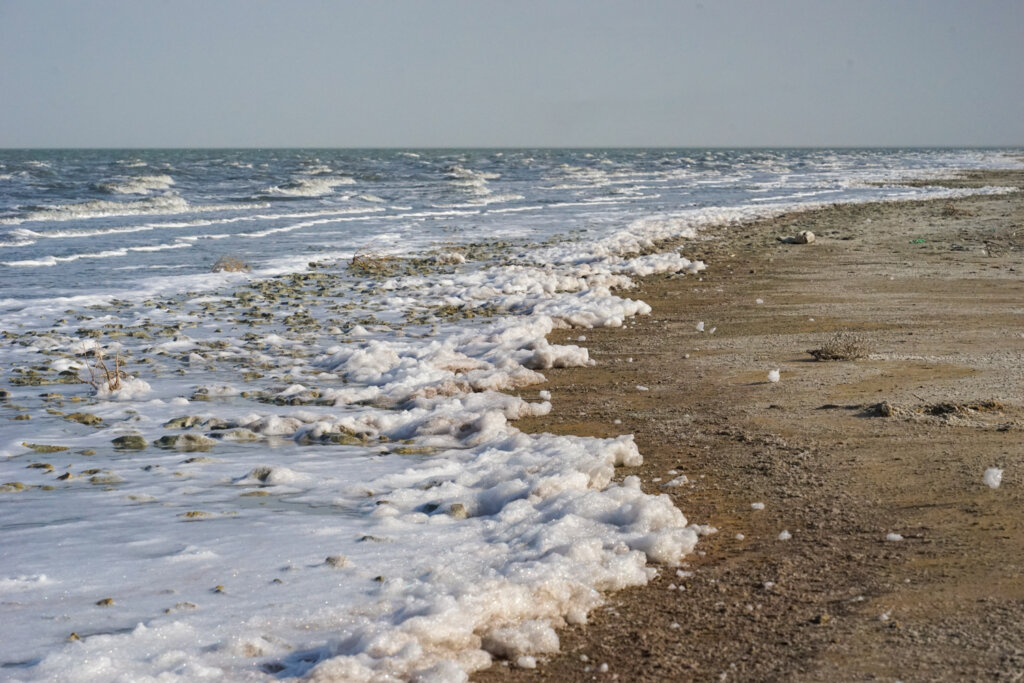
The sea is also rather strange due to its high salinity: foamy, salty, crystallizing any brush or plants that end up in its wake.
It’s also extremely windy, so you can watch the foamy bits fly around like tumbleweeds, adding to the feeling of desolation.
Old Caravanserai
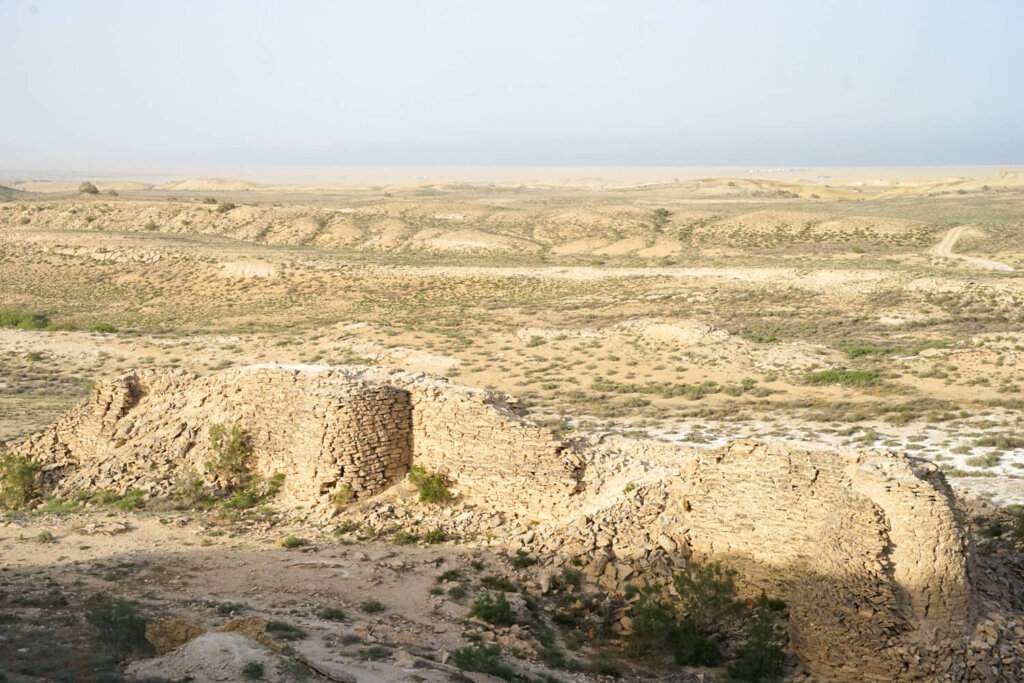
Our final stop before reaching our yurt camp for the night was the ruins of an old caravanserai, an inn used by travelers on popular trade routes.
These caravanserai were typically placed about one day’s travel worth of distance apart, serving as a safe and comfortable refuge after a hard day’s travel.
Very little remains of this particular caravanserai, but I can imagine that its location within striking distance of the Aral Sea made it an important stop along trade routes.
Staying Overnight in a Yurt Camp
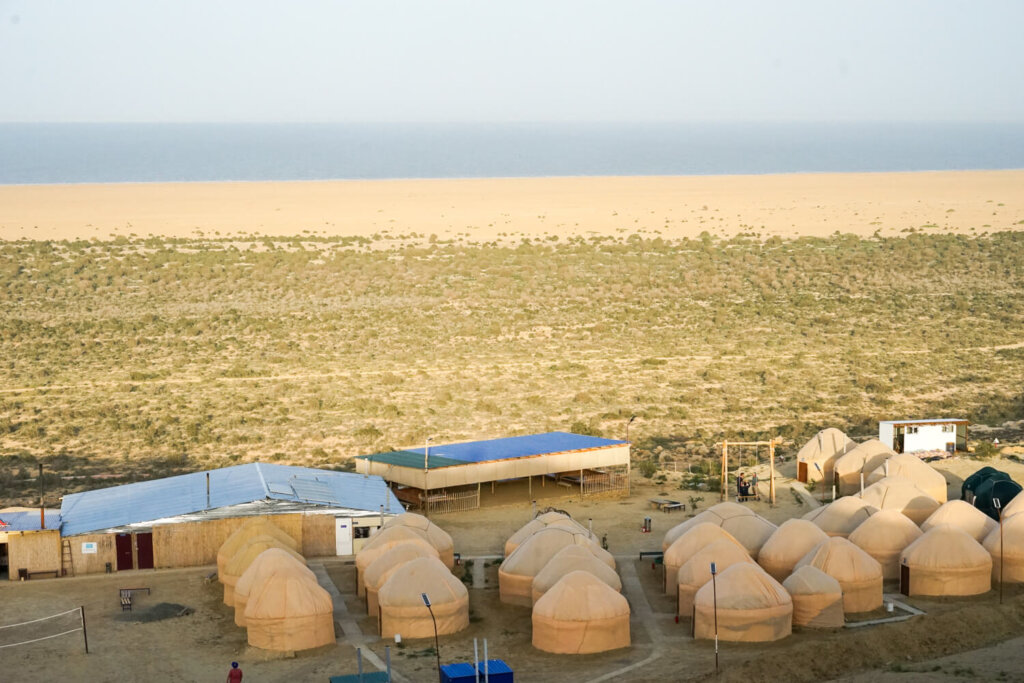
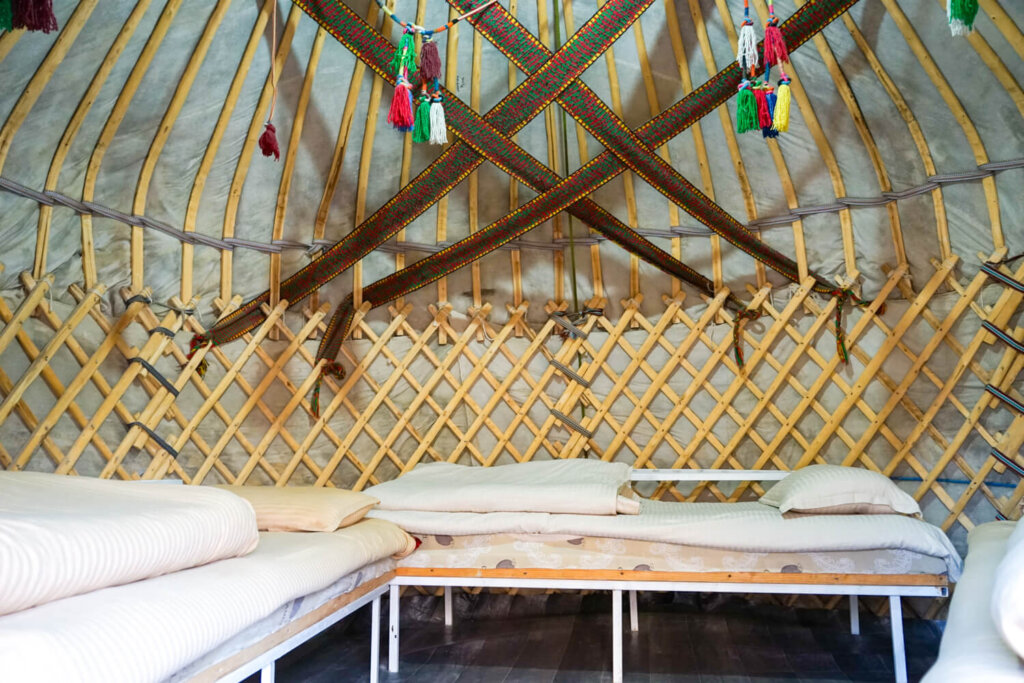
After climbing up to check out the old caravanserai, we arrived at our home for the night: Discovery Yurt Camp. I personally loved it!
I found that the yurts were rather spacious on the inside despite looking rather small from the outside, and there were small details that I found thoughtful, like an outlet (electricity provided by generator and only until midnight).
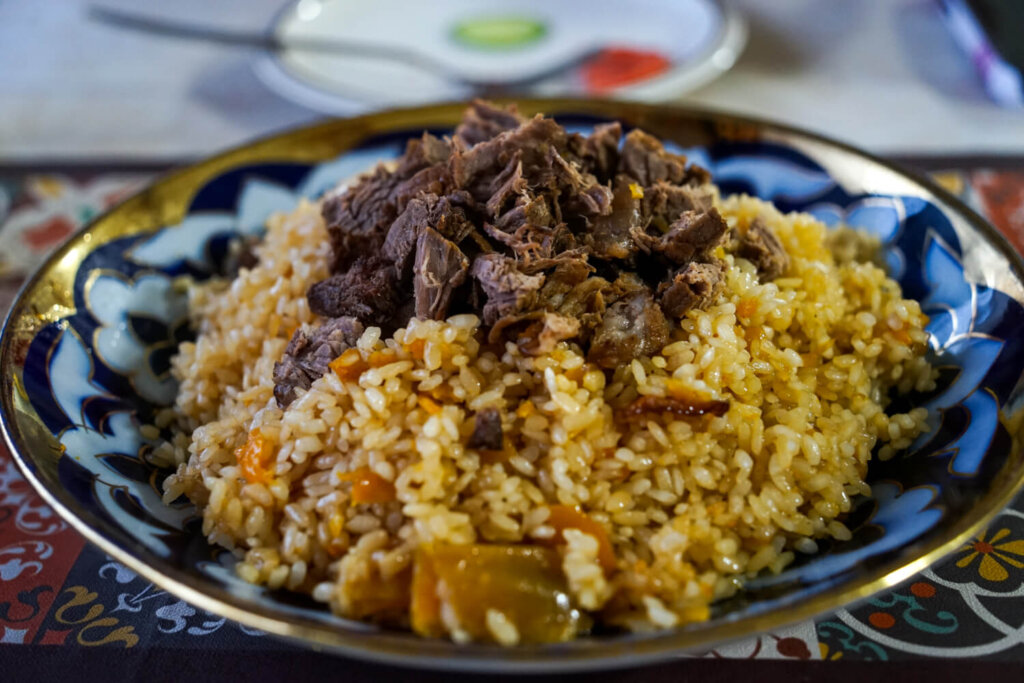
The one thing I have to say though is that I ate the worst plov of my life here. I am not a massive connoisseur of plov to begin with, not like my travel buddy Megan, who loves plov so much she quested for days in search of the best plov in Tashkent.
But this plov was objectively terrible, with rice so undercooked it was chalky to the tooth. We asked other travelers having the plov if they were having the same issue or if we just got a bad batch; they all reported the same. Breakfast, however, was much better.
Like much of the yurt camp, I woke up around 5:30 AM to watch the sunrise over the Aral Sea. But this too was more sorrowful than beautiful. Rather than an endless horizon of water, you could already see the other side of the Aral Sea in the distance, showing how truly narrow this body of water now is.
Visiting Qubla-Ustyurt for Camel Milk
After sunrise and breakfast, we made our way back to Nukus — but with a few stops in between. One of the more interesting stops was at a small settlement in the middle of a desert plateau, Qubla-Ustyurt.
We stopped there to meet a local woman, who also happens to be the schoolteacher to every school-aged child in this village of 500 people. She also runs the Shubat Bar from her house, serving guests icy cold and deliciously frothy shubat (fermented camel milk) with a smile.
It is surprisingly delicious: like a creamier, slightly effervescent Turkish ayran. Personally, I loved it and polished off several glasses!
Urga and Sudochye Lake
Next up on the itinerary was the abandoned village of Urga, where there used to be a thriving cannery. Now, the Urga cannery is in total ruins despite its facade looking relatively in tact.
Unlike Moynaq, which is extremely far from any body of water, Urga is still on the water, on the beautiful Sudochye Lake. This lake used to be connected to the Aral Sea via the Amu Darya delta. However, when the rivers were diverted by the Soviet Union, the connection to the Aral Sea — and thus the ports bringing the fish to other regions — evaporated.
But Sudochye Lake is a bright and hopeful spot on a tour that otherwise spotlights ecological disaster. While the human settlement of Urga has dispersed, its animal residents have actually thrived.
In 2023, Sudochye Lake became part of the Ramsar Convention on Wetlands, creating a sanctuary for 25 different species of animals and more than 200 species of birds, including the pink flamingos who I saw as we arrived (they left in a hurry, unwilling to be photographed!)
Returning to Nukus
Urga was the last formal stop of our tour; on the way back, we briefly stopped at a roadside restaurant for some mildly disappointing food.
We got back to Nukus a bit late in the day, checked into our next hotel (sadly not the epic Jipek Joli Hotel, but Pana Hotel was fine), and enjoyed the delights of a hot shower.
Book this Aral Sea 2-day, 1-night tour here!
Is an Aral Sea Trip Worth It?
I’ve outlined the stops of my Aral Sea overnight trip rather extensively, and as you can see, you do see quite a lot on one of these tours.
In my opinion, if you have any sort of curiosity about this time period or learning about the region and the disaster, it’s absolutely worth visiting. There is nowhere else on the planet that tells the same story, and it’s an important story to hear.
While I spoke of the moments of sadness I felt during my tour, I felt like those moments were very powerful, the kind of travel moments that shift something inside you as a person.
If it’s right for you, this is the Aral Sea trip I went on!
What to Know Before You Go
There are a few things to be aware of before deciding “yes” to an Aral Sea tour that I can think of.
For one, you will be on rough and extremely bumpy and dusty roads. If you have severe back problems that can flare up easily or if you’re pregnant, I can’t imagine that this is an easy journey. It’s also probably tough on those with asthma or respiratory conditions.
For another, you will be heading into places where you have little to no cell or data coverage. This is great if you want to unplug, but if for some reason you are unable to disconnect for the majority of 48 hours (if you work fixed hours on a remote schedule, etc.) this is not the trip for you.
Lastly, be aware of the fact that the Aral Sea is, in fact, the site of a disaster. You will be seeing ecological devastation and its impacts on the human and animal residents of these lands. It’s not a “magical” experience, though it does have its otherworldly moments.
My trip was extremely enjoyable but I had many mixed emotional moments: sadness, anger, grief. If you want your travels to only be rosy and positive, this is not the tour for you.
Read more about the Aral Sea tour itinerary here
What to Pack to Visit the Aral Sea
Going out into the wilderness to reach the Aral Sea requires a little bit of preparation. You may be able to arrange leaving large luggage behind at your hotel, be sure to speak with your hotel to ensure that they can accommodate that. We were traveling rather lightly so we just brought everything we needed with us.
Be sure to bring plenty of water. We made a few stops along the way to the Aral Sea, but still, it’s nice to always have some spare water in case you finish off a bottle of water and don’t have your next one close-at-hand.
If you go in the late spring or summer, it will likely be rather hot during the day and surprisingly cold at night. Be sure to bring a variety of clothing that will accommodate this.
I suggest a lightweight button-up shirt that covers your arms and loose pants for the daytime, and be sure to bring a jacket and leggings for the cold morning, especially if you plan to wake up for the sunrise!
Toilet amenities along this stretch of road are often lacking, so be sure to bring your own tissue paper and hand sanitizer. You’ll also want a bunch of small Uzbek money to use pay-to-use restrooms in case you encounter any along the way.

Allison Green is a former teacher who has been travel blogging since 2016, visiting 75+ countries in total. She has a Masters in Teaching and a B.A. in English and Creative Writing. As a former educator, she merges her writing and educational experience to encourage ethical, sustainable travel. She has been a speaker at the World Travel Writers Conference and TBEX. Her writing, photography, and podcasting work has appeared in National Geographic, CNN Arabic, CBC Canada, and Forbes, amongst others. When she’s not on the road, she lives in Bangkok, Thailand.