

Great Emptiness Museum: Bishkek’s Most Eccentric Cultural Sight
One of my favorite ways to discover unusual sights in a city is by playing around on Google Maps. I’ll enter some sort of word like “attraction” or “sight” or something of the sort, and then I’ll see if anything unexpected pops up.
Well, did that technique ever serve me well in Bishkek. On my last day there, I ended up visiting a place I simply never would have stumbled across (due to its position outside the city center), the Great Emptiness Museum.
My Experience Visiting the Great Emptiness Museum
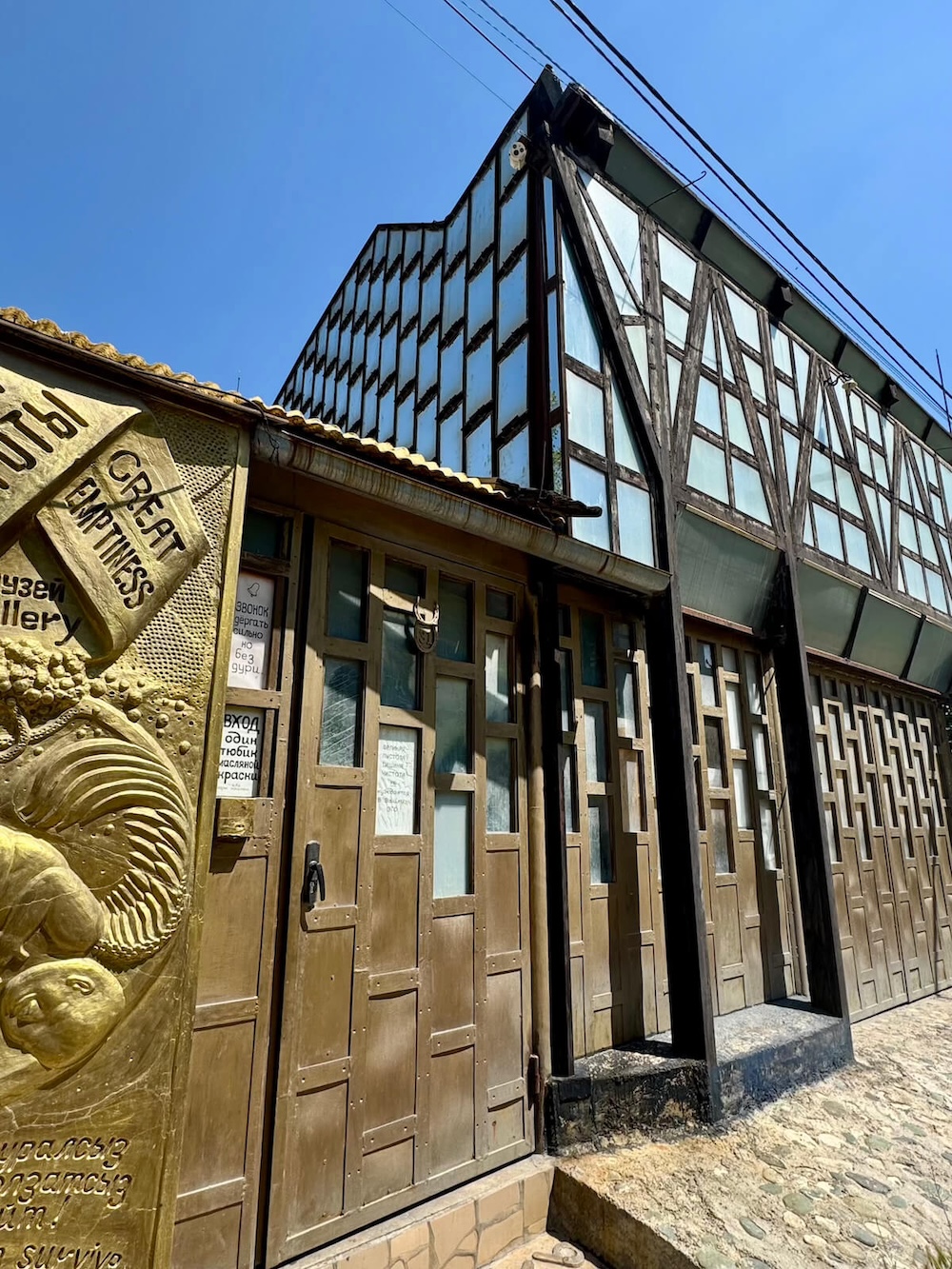
Officially, the museum is only open on weekends from 10 AM to 6 PM, and a donation is requested before entry. However, I have also read reviews that he has granted access to those visiting on weekdays. I personally visited on a Saturday.
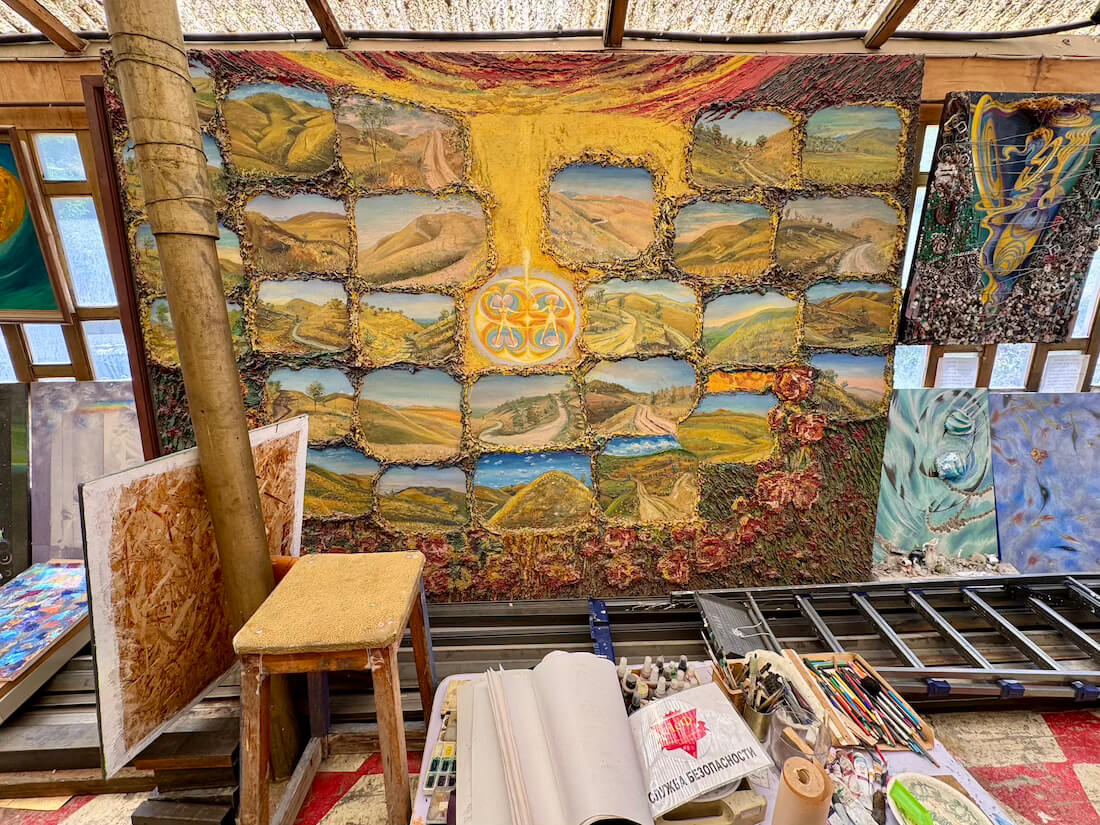
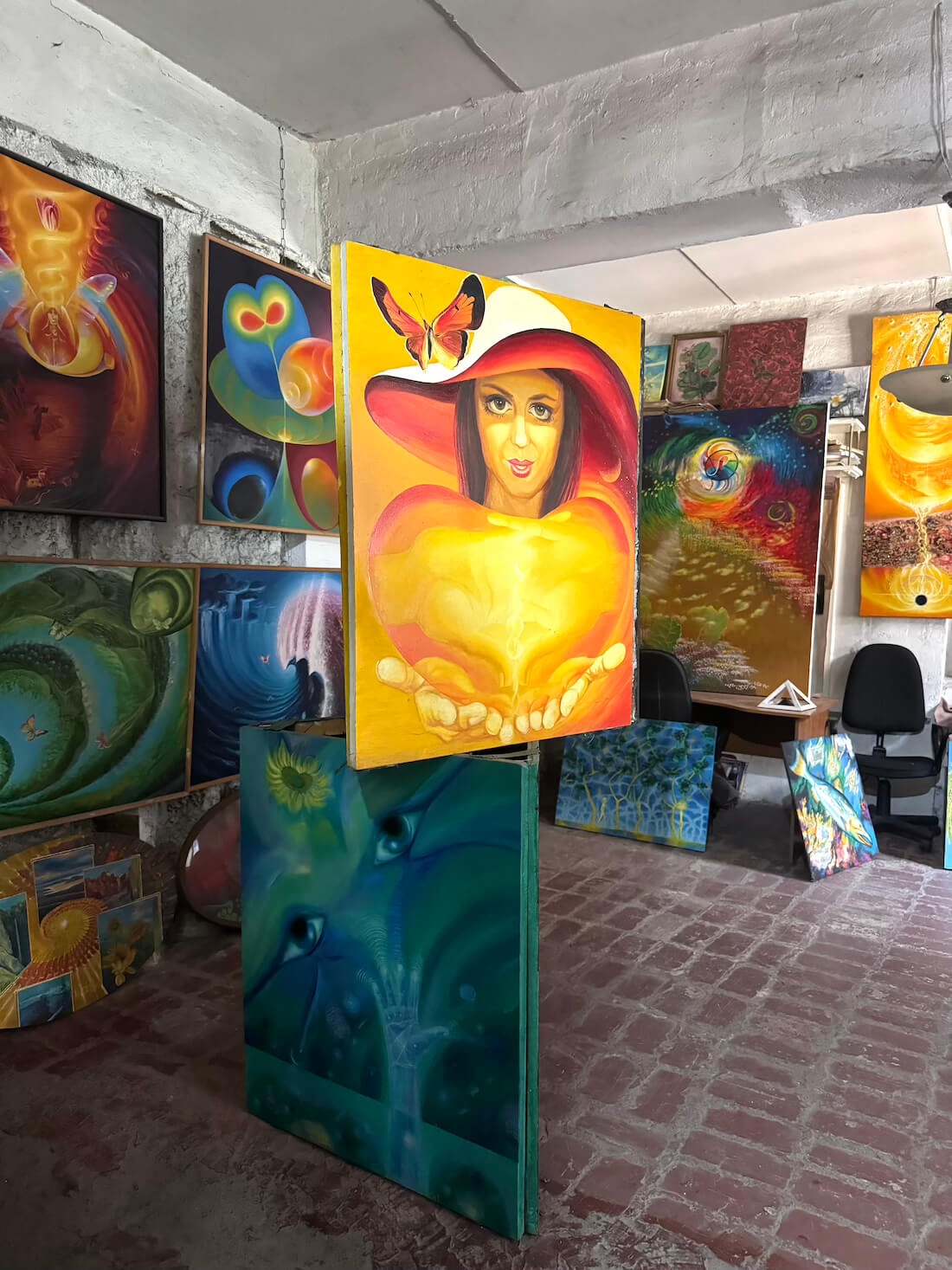
The name of the museum belies what you see when you enter, which is the utter opposite of emptiness. Virtually every blank space has been filled, and vibrant canvases cover nearly every wall.
The name comes from the artist — a rather eccentric older man, Alexey Skreplyov — who believes in a concept called The Great Void. He has several written texts around the museum, written in Russian, which I photographed so I could read and understand better later.
I Google-translated his treatise, and in summary, it’s something like this: “Emptiness is not the absence of something, but rather the potential from which all things are born.” He also states that this is a shared belief in many of the world’s religions, which is certainly true.
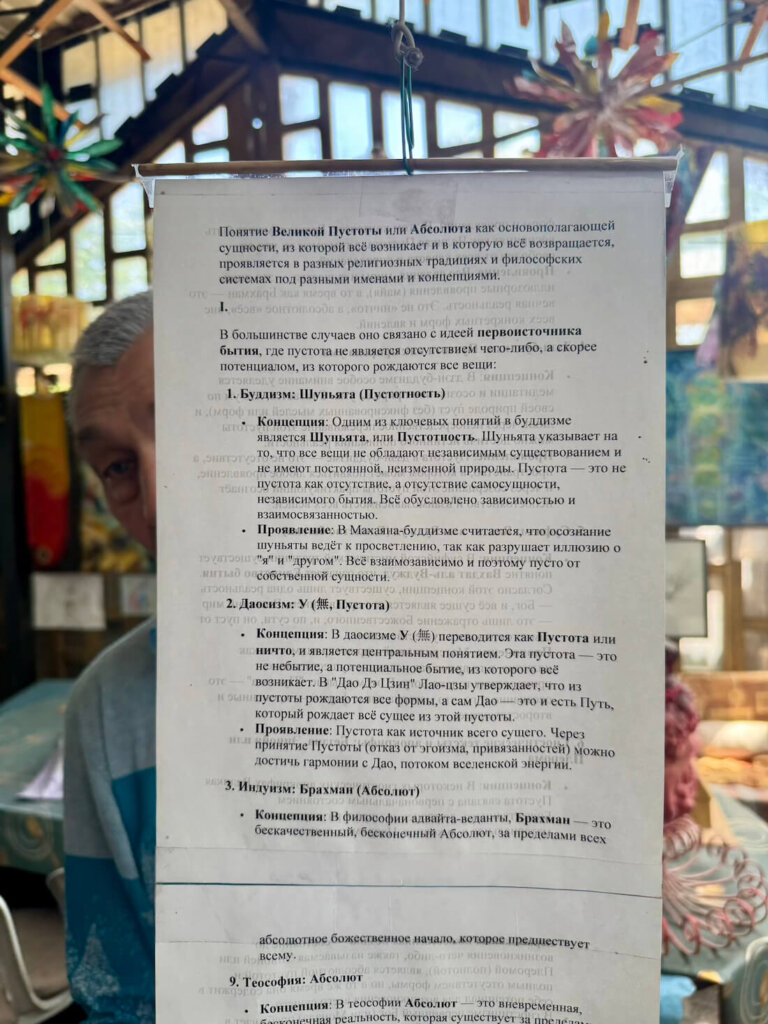
To be rather honest, how it connects to his own belief system and his work as an artist is still a little unclear to me. That being said, I think you can still enjoy this museum without quite understanding its purpose; I often enjoy art I don’t understand.
His museum is also his house, but it’s also a self-described labyrinth, which I certainly experienced while visiting. Many times, I assumed I had seen the extent of what the museum had inside it, only to be shown another pathway or room which was packed to the gills with even more art.
There’s even a gold pyramid inside the house, which features a small water pool, and you are asked if you would like to meditate inside it (he specified for “7 to 11 seconds”).

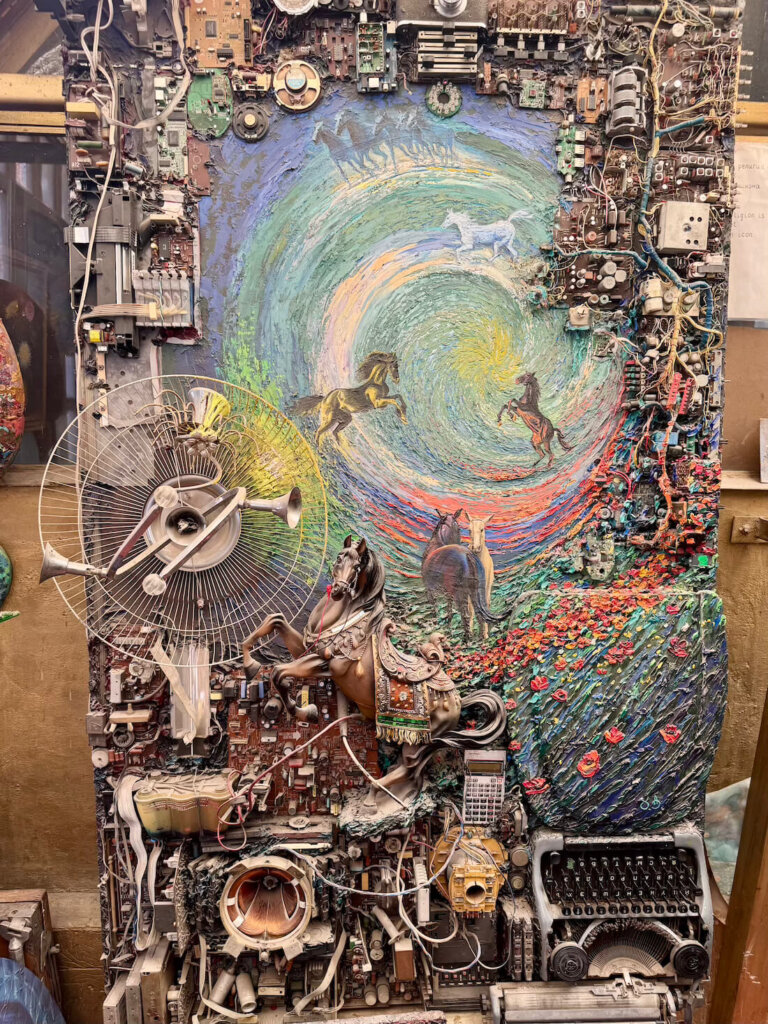
He told me that his art comes from spirit communication, and his paintings are vivid with color and eclectic, using mixed media and acrylic to communicate these visions and put these images from his mind into the world.
The range of materials he uses is really extensive, from reclaimed knickknacks that were likely once thrown out to mirrors to lampshades and even to toilet seats.
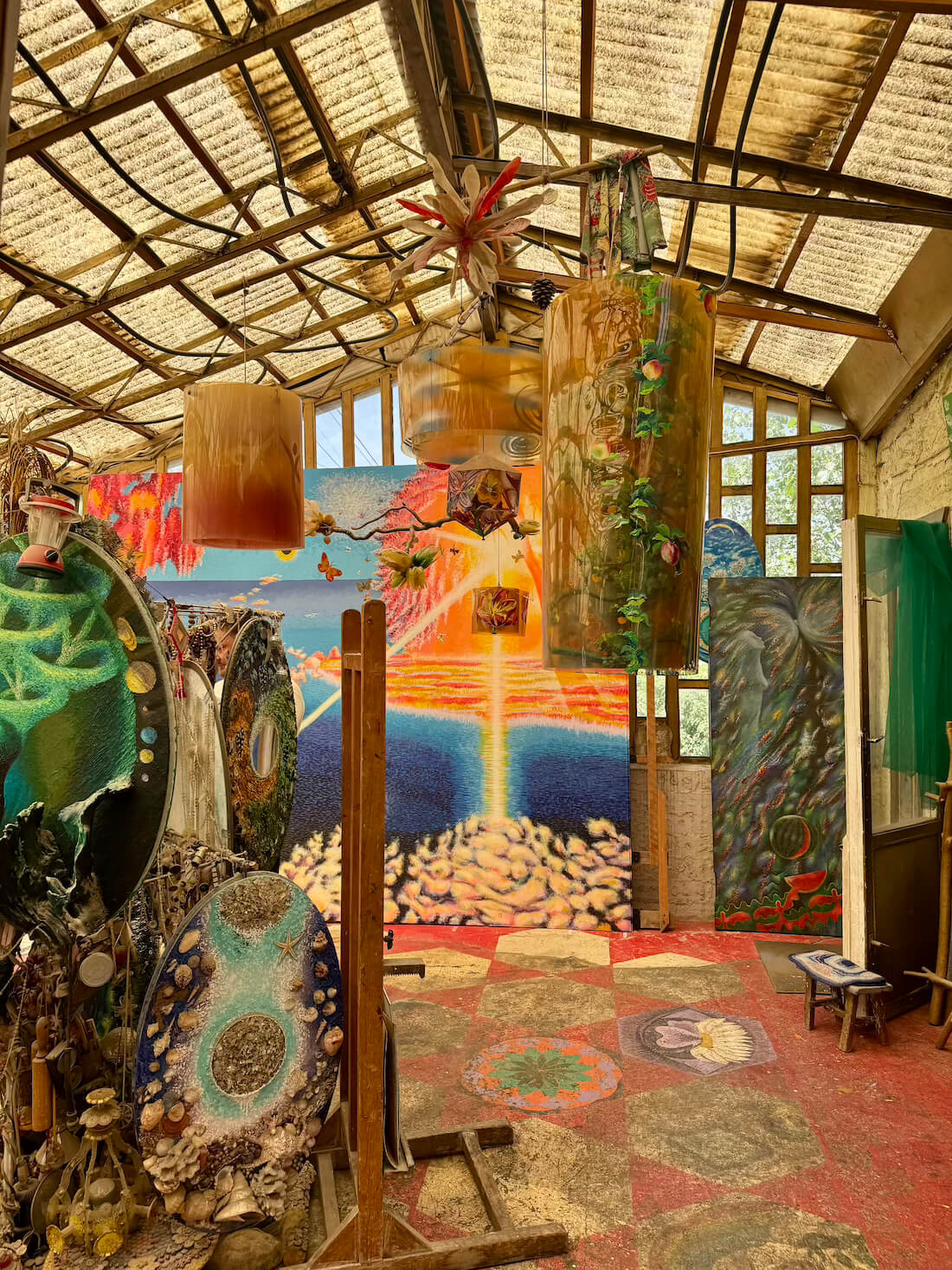
Alexey is very friendly and speaks some English so he is happy to direct you around the labyrinth of his house and give you some direction and sense of what the work means to him.
Of course, I’m sure you get a far fuller understanding of his vision if you speak Russian, but several of his messages speak loudly and clearly. He quite clearly condemns war, weapons, and the brutalization of our planet.
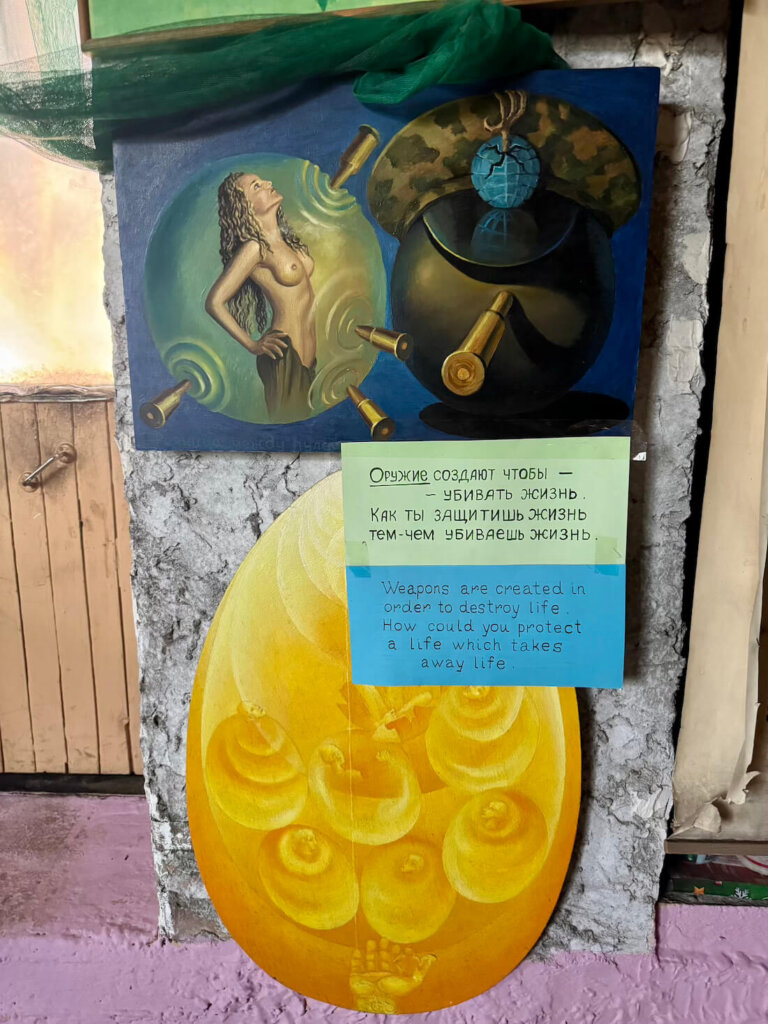
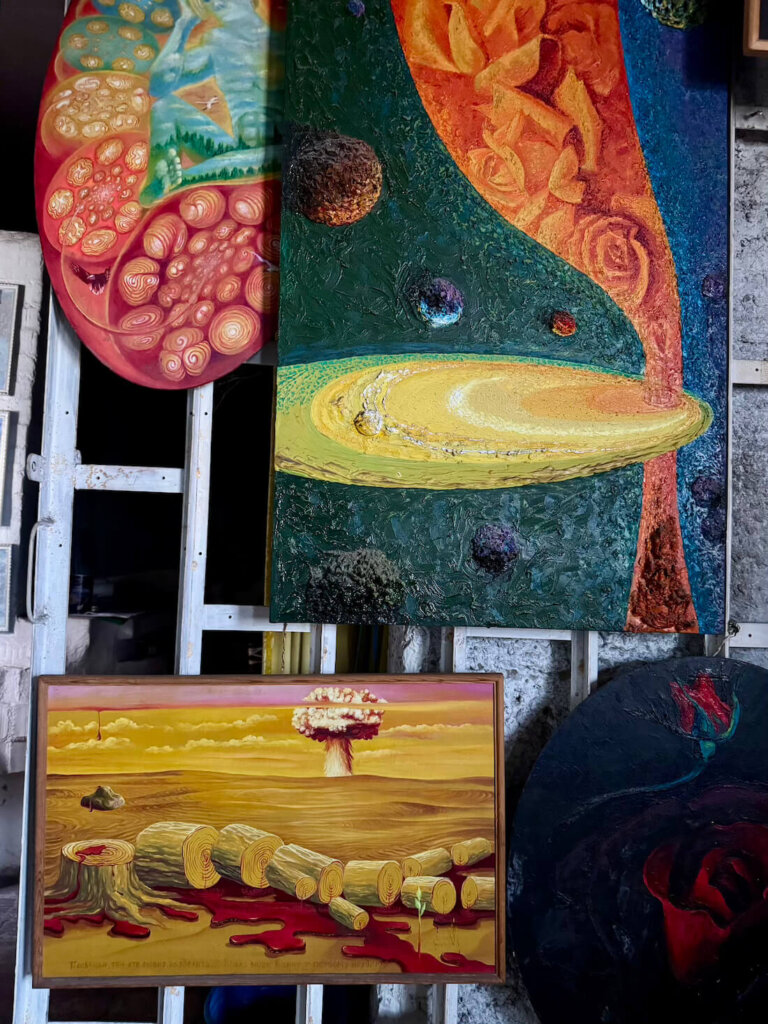
Other works of his art are far more abstract and thus rather hard to parse meaning from. However, seeing that these pieces come from his dreams — or his spirit communication, as he puts it — the nonsensical nature of these pieces make their own sort of logical sense.
The great thing about the Great Emptiness Museum is its breadth: with so much art in such high density, you are almost certain to find at least one piece of art that speaks to you in some sort of way, even if other pieces don’t resonate.
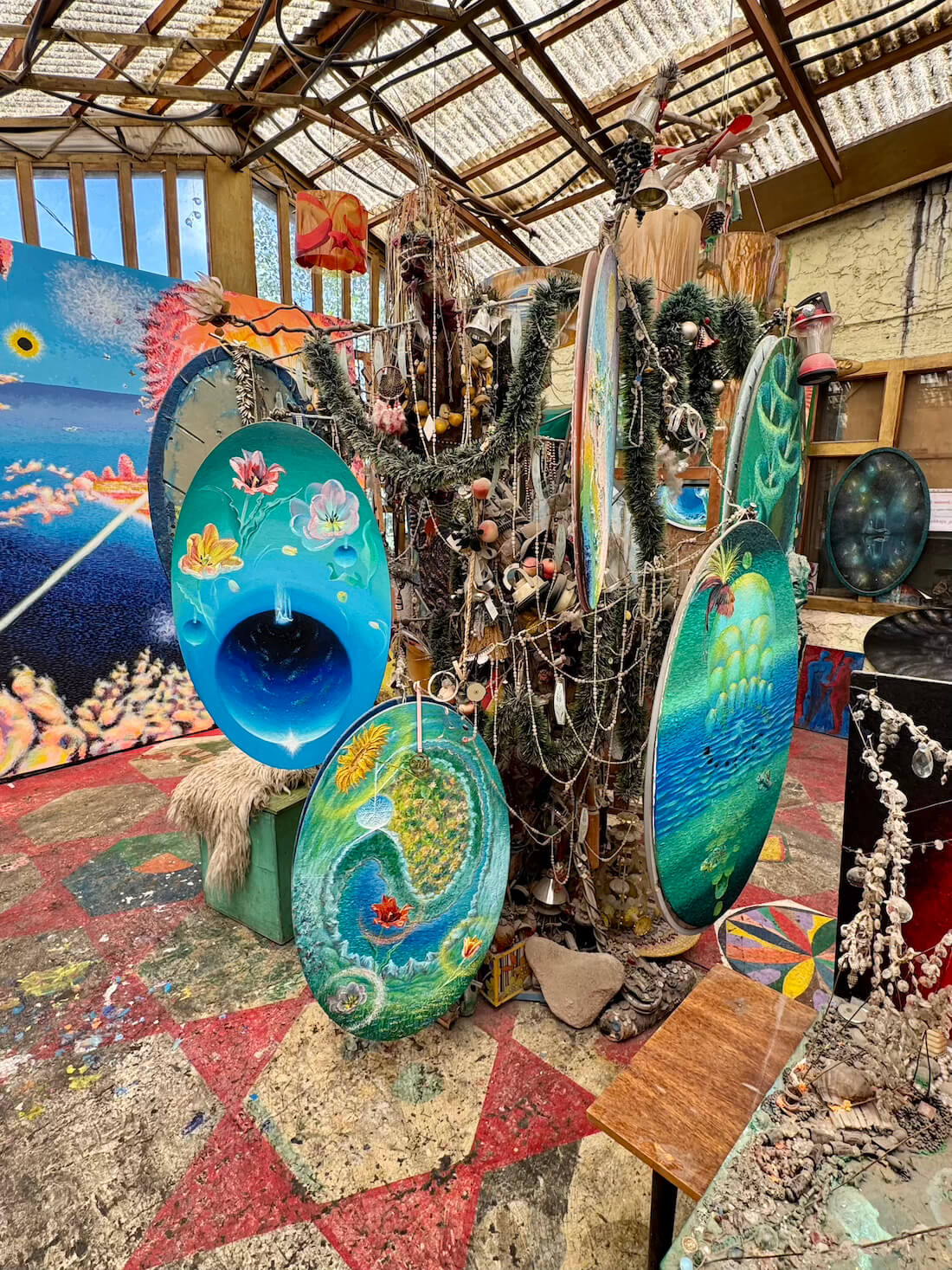
I can’t even begin to count how many individual works of art are likely in this home. It almost certainly exceeds 100 pieces, possibly even 200.
Just when you think you’ve seen the last of his collection, he’ll direct you into another room and flip on a light switch, showing you more of his art.
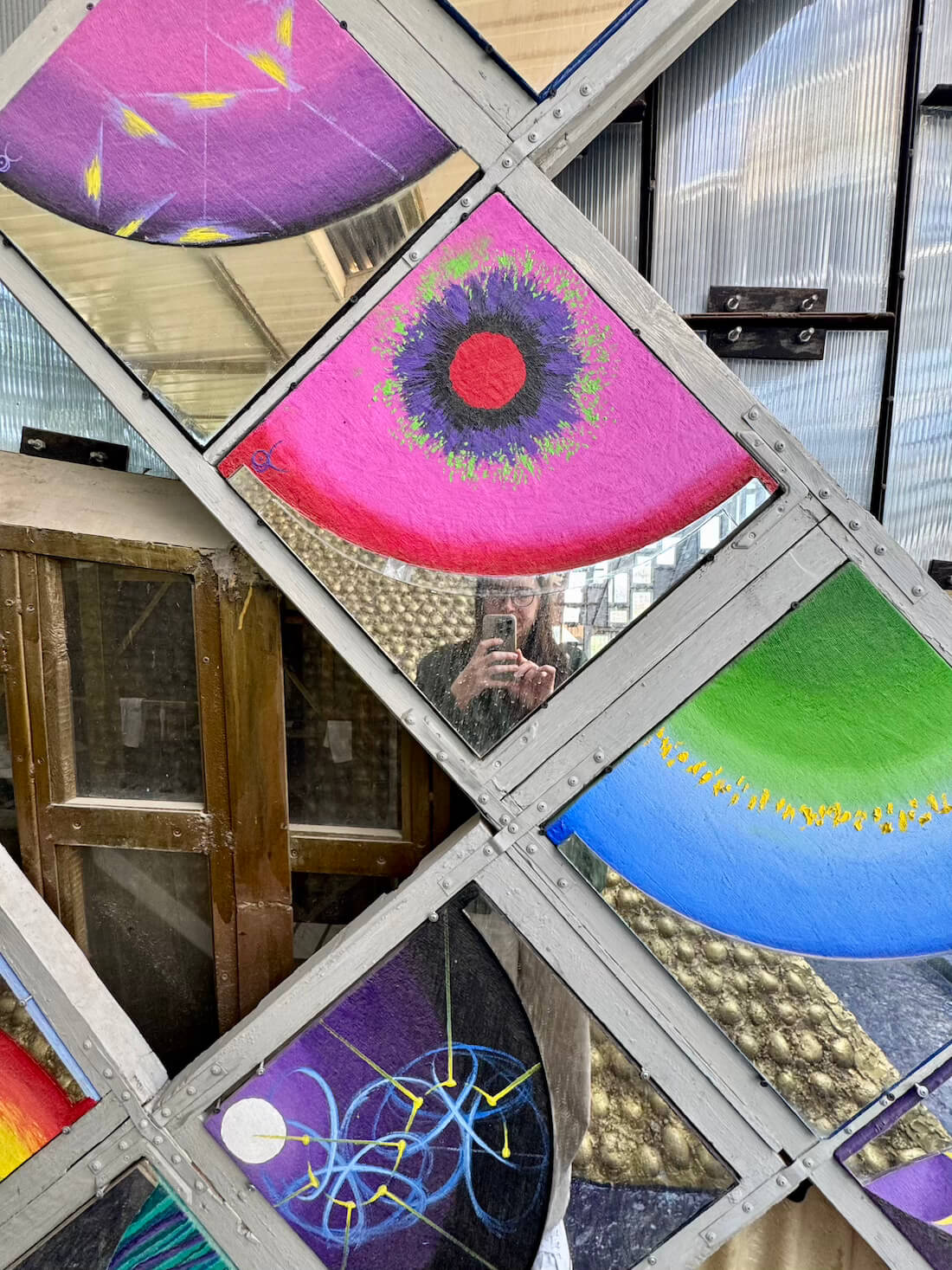
Geometry seems to be of particular interest to him. I found the room with the pyramid in it very interesting, with painted mirror squares connected into a Tetris-like configuration, with semi-circles of abstract art painted over them.
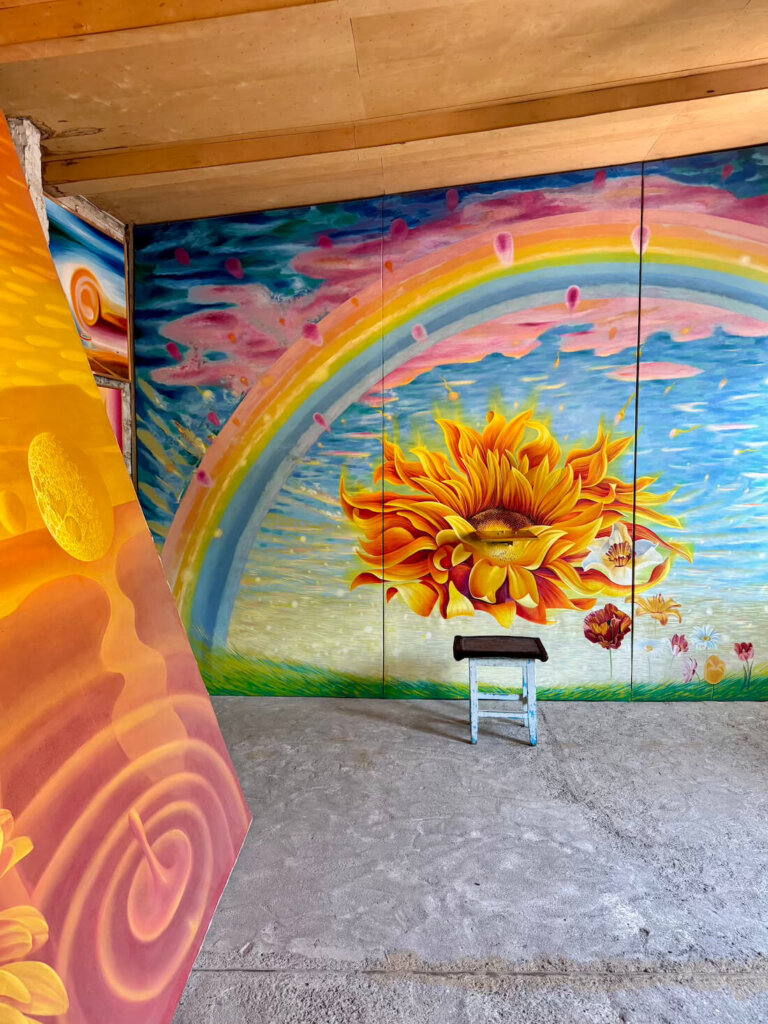
His use of color is also really dynamic and full of contrast, mixing unexpected colors like pink and green.
Whatever the messages intended by the art may be, the main message I came away with came not from any one particular piece of art itself, but rather the cumulative experience of visiting the Museum of Great Emptiness.
By tapping into your free will and exercising that to the fullest, you can accomplish incredible feats. This museum — a testament to 25 years of living an unconventional life, pursuing his visions and putting them into tangible form — could never have come to be without Alexey’s sense of self-determinism as well as his rejection of more commercial forms of being an artist.
Do I Recommend Visiting the Museum of Great Emptiness?
I know that this type of museum is not for everyone. If you’re someone who finds the esoteric and New Age somewhat eyeroll-inducing, I don’t think you’ll enjoy this experience.
I’m not particularly receptive to esotericism or theologies in general. I live a rather agnostic life and consider myself more skeptical than most when it comes to New Age anything. I acknowledge that this is a bit of a self-protective response after losing decades of contact with my grandparents after their involvement in a New Age cult.
However, I found my visit to Alexey’s Great Emptiness Museum rather interesting and definitely worth my time, despite it being rather out-of-the-way compared to central Bishkek. By taxi, it takes 20-30 minutes from the center and costs approximately 350-400 som (approximately $4 USD) to reach.
With that in mind, I still enjoyed my visit and I’d recommend it to anyone who has a little extra time in Bishkek and has seen all the main sights and wants to add something a bit unique to their Bishkek itinerary.

Allison Green is a former teacher who has been travel blogging since 2016, visiting 75+ countries in total. She has a Masters in Teaching and a B.A. in English and Creative Writing. As a former educator, she merges her writing and educational experience to encourage ethical, sustainable travel. She has been a speaker at the World Travel Writers Conference and TBEX. Her writing, photography, and podcasting work has appeared in National Geographic, CNN Arabic, CBC Canada, and Forbes, amongst others. When she’s not on the road, she lives in Bangkok, Thailand.