

Kiruna in Winter: 7 Magical Things to Do in Swedish Lapland [2026]
The first place I ever set foot in the Arctic was Kiruna, Sweden. It was a crisp February day that practically shimmered with cold, and I instantly fell in love. This quirky little Arctic city surprised me with its liveliness and I swore I’d come back someday. And ten years later, I finally did, curious about how much it had changed.
Let’s just say that “changed” is an understatement. The city has literally moved since my first visit. Because of the LKAB mine (it’s inescapable, you’ll see the logo everywhere), the ground beneath Kiruna became unstable.
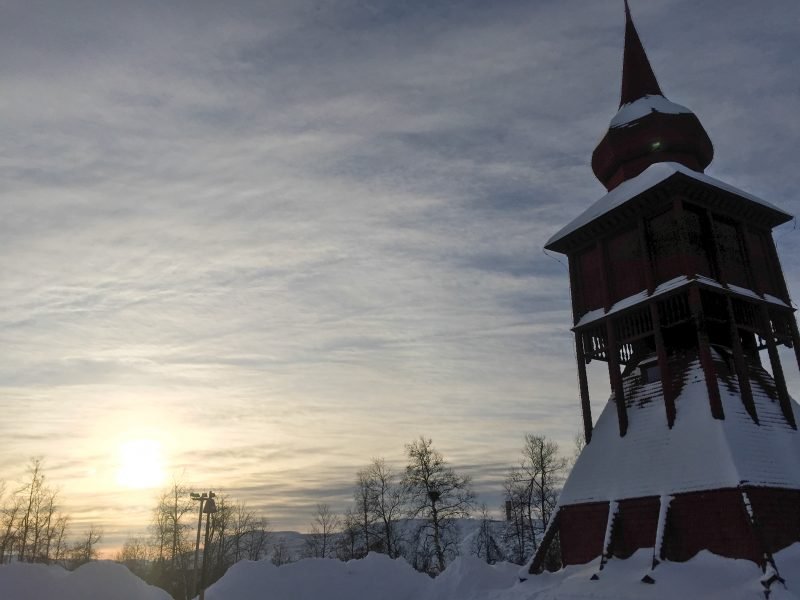
This forced the entire town (including its gorgeous, century-old wooden church) to be relocated two kilometers away for safety and longevity. When I visited this time, the church had just been moved, and the city was still buzzing with construction and rerouted roads.
Things felt a bit chaotic, but honestly? That just added to the city’s weird story. It’s wild to think of a place literally replacing and replicating itself a few kilometers away. That story intrigues me, even though it frustrates me that it had to happen in the first place.
| 🇸🇪 Planning a last-minute winter trip to Kiruna? Here are my quick picks! ❄️ Best Winter Activities in Kiruna Northern Lights Photography Tour (includes professional photographer photos) Dog Sledding Self-Drive Tour (includes a fika break, the Swedish way!) Snowmobile Tour with Coffee Break (explore the river valley and off-road areas) 🛌 Best Places to Stay in Kiruna Aurora River Camp Glass Igloos (only glass igloos in this part of Sweden, at a good price) Camp Ripan (stylish chalet style accommodations — a favorite with restaurant + spa!) Scandic Kiruna (modern hotel with unique architecture in the city’s new relocated center) |
Stories aside, Kiruna has plenty to offer year-round, but winter is when it truly shines, both literally and figuratively. I went in February, and conditions were perfect: a thick, fluffy blanket of snow for all the winter adventures, and just enough daylight to actually do things (okay, six hours, but that’s enough if you use them wisely!)
Plus, when the sun sets, the long, dark Arctic nights begin. I saw Northern Lights shows almost every single night I was in the Kiruna and Abisko region on my first trip!
7 Best Things to Do in Kiruna in Winter
Chase Northern Lights across the Arctic skies
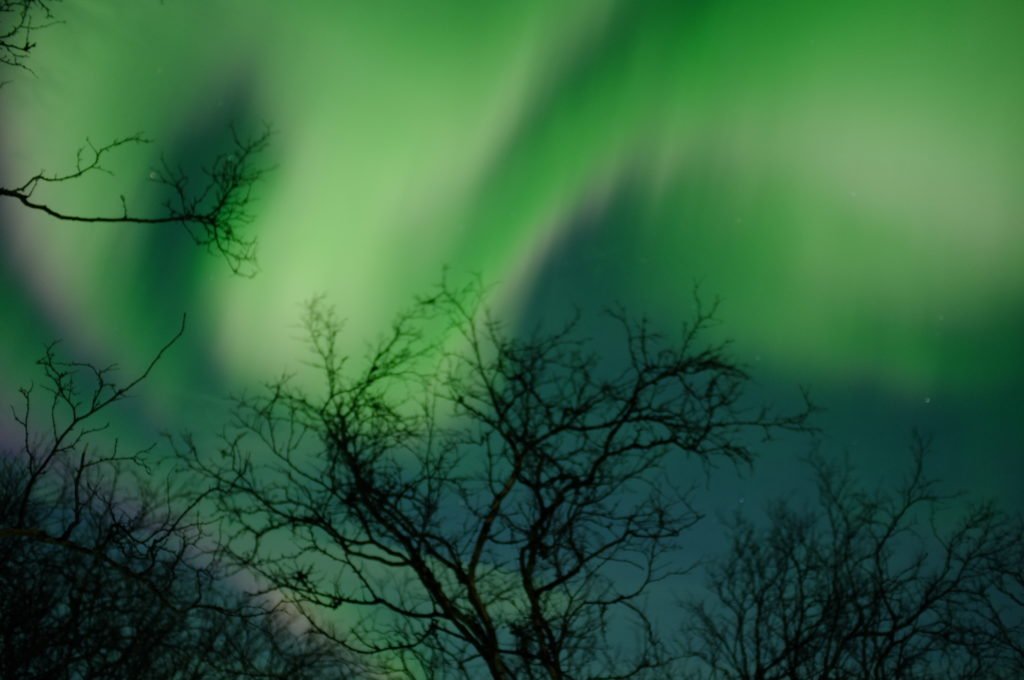
One of the reasons Kiruna is such a popular Northern lights destination is its inland location. Unlike coastal places in Norway like Tromsø or Svalbard, which are beautiful but often extremely cloudy or snowy, Kiruna’s climate is drier and has clearer skies — giving you better odds of catching the aurora.
Those odds get even if you head more towards the Abisko area, where Lake Tornetrask has a unique effect called the “Blue Hole” where the microclimate there pushes clouds towards other areas in the region
Personally? The first time I visited the Kiruna/Abisko region, I stayed for three nights and I actually saw them all three evenings. One night was particularly explosive, with vivid-to-the-naked-eye greens, a touch of purple, and that surreal swirling motion that still photos can never quite capture, just gesture at.
While it can be possible to see the Northern lights on your own, keep in mind that Kiruna is a rather large town by Arctic standards, with a rather high amount of light pollution especially due to the mining activity outside of town.
Unless the Northern lights are putting on the show of their life, you’ll want to either use your rental car to get somewhere with less light pollution, like Abisko or Jukkasjarvi, or you’ll want to book a Northern lights excursion if you can’t or don’t want to drive.
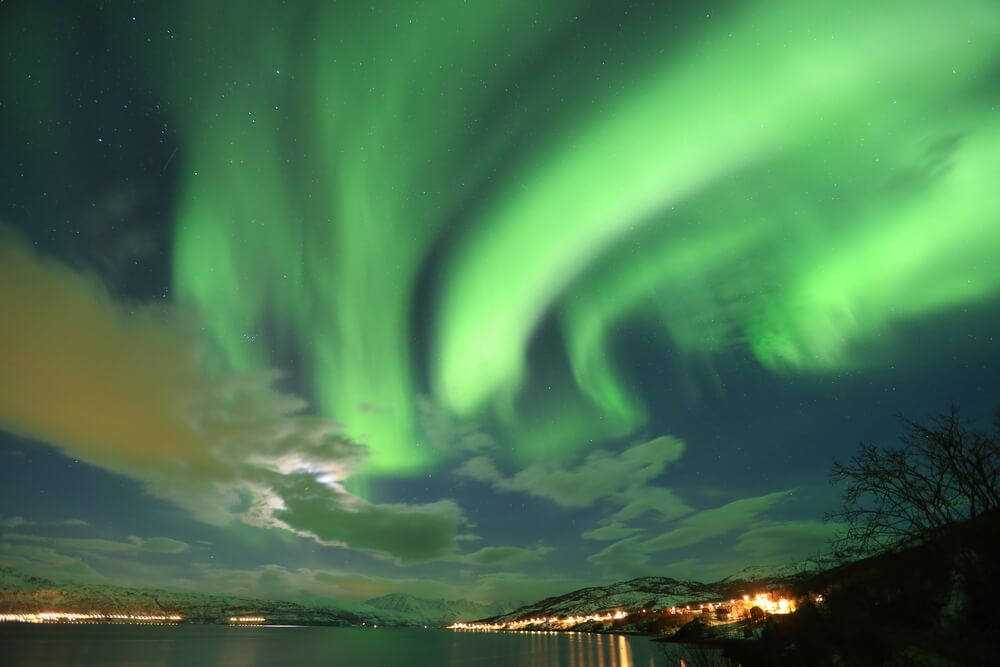
I suggest booking a Northern lights photography-focused tour — these guides are aurora nerds (this is a term of endearment; I consider myself one as well) who read solar forecasts like the newspaper and chase down clear skies like pros.
The tour I recommend includes a professional photographer on the team, who will take high-quality photos for you (or, if you want to take your own photos, advise you on the right settings for epic aurora shots.
On a tighter budget? There’s also a more affordable lights-chasing tour which has the added benefit of including dinner at Stejk Street Food — the most highly-rated restaurant in all of Sweden, literally! — saving you quite a bit of money compared to other tours.
Book the budget Northern lights chasing tour (with dinner!) here
Self-drive your own dog sledding — and meet the huskies!
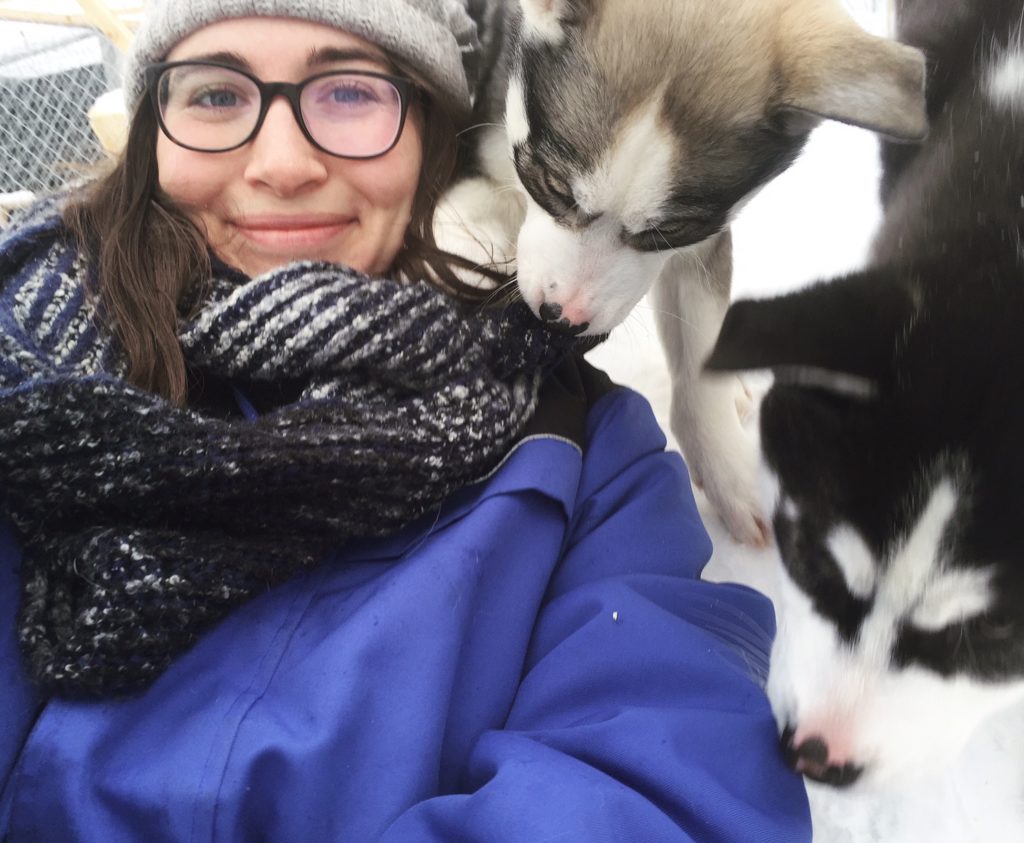
Dog sledding nearby Kiruna was my favorite experience of my whole winter trip to Swedish Lapland. Honestly, I enjoyed my first time dog sledding with even more excitement and whimsy than my first time seeing the aurora, but what can I say? I’m a huge dog lover.
I found that the teams of huskies were absolutely ecstatic to run, and after the tour, we even got to cuddle some husky pups (this is luck and timing-dependent, of course — there won’t always be puppies).
While I’m cautious about animal tourism, dog sledding is an activity I feel really good about. These huskies are truly in their element — excited, healthy, well-cared-for, and treated with respect. They literally howl with excitement when they see the sleds being prepared!
This dog sled tour includes warm clothing, hotel pick-up, and a proper Swedish fika stop with coffee and sweets beside a fire. Spaces are limited and book up quickly, so reserve early!
Visit the famous Icehotel in Jukkasjärvi
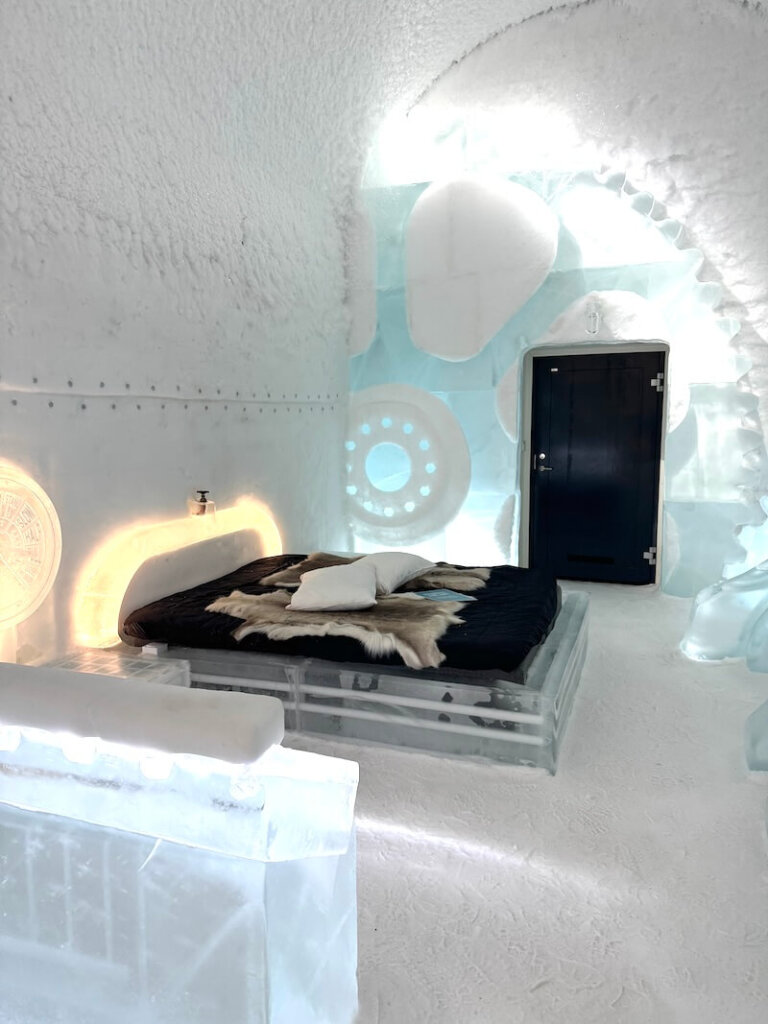
Just a 20-minute drive from Kiruna is Ice Hotel, the world’s first hotel made entirely of ice and snow. It would later be the inspiration for all future ice hotels!
The winter ice hotel is rebuilt from scratch every year by a team of international artists, and is open for only a few months each year. It’s absolutely stunning — each room is kind of like its own blue-hued ice sculpture that doubles as a room you can actually sleep in, if you (and your wallet) are brave enough.
Even after visiting several ice hotels across the Nordics, from Norway to Finland and everything in between, I still think the original Ice Hotel is one of the best (though I think my personal favorite is the beautiful Sorrisniva Igloo Hotel in Alta).
You don’t have to stay overnight (though you can — but prices are high!). If you have your own transportation, you can go here yourself and buy an individual entrance ticket for 315 SEK (about ~$33.50 USD).
If you don’t have your own transportation, you can book a ticket which includes the Sámi museum as well as transfers to and from Kiruna. It definitely is more pricy but can be easier than organizing a taxi to and from Kiruna and Jukkasjarvi, since taxis are limited and usually extremely busy during the winter season.
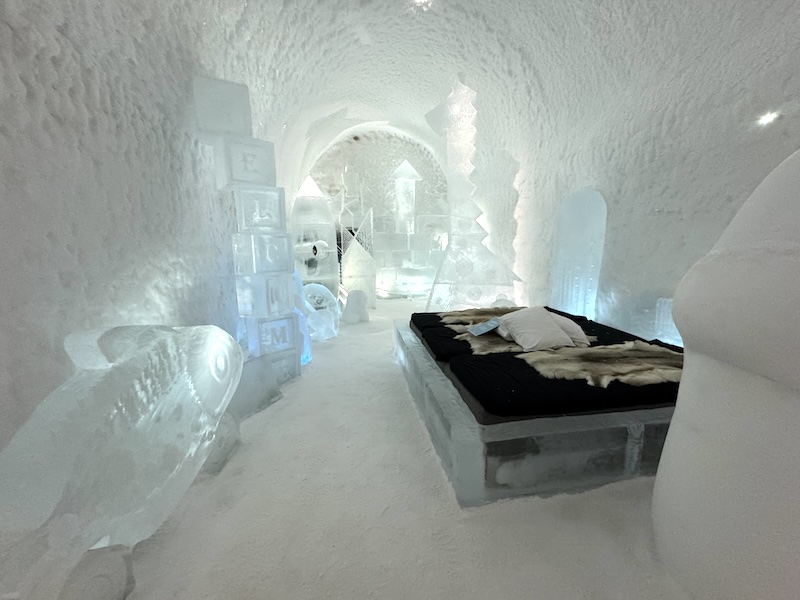
The winter ice hotel opens in mid-December and closes in mid-April. As of update in August 2026, the expected 2026-2027 seasonal dates have not yet been announced.
At the end of the day, Mother Nature calls the shots up here, and if temperatures rise too early (which has happened before, and will happen more often as the Arctic is the region warming the fastest due to climate change). If the temperatures don’t cooperate, the hotel may have to delay its opening or shut its doors ahead of schedule.
If you happen to travel outside of those dates, don’t worry. Icehotel 365 is open year-round with installations from dozens of international artists, which change on a rotating basis.
I recently visited and only visited the 365 building, as it was too early in the season for the winter ice hotel, and it was absolutely worth the price of admission.
Experience Sámi culture at a reindeer farm
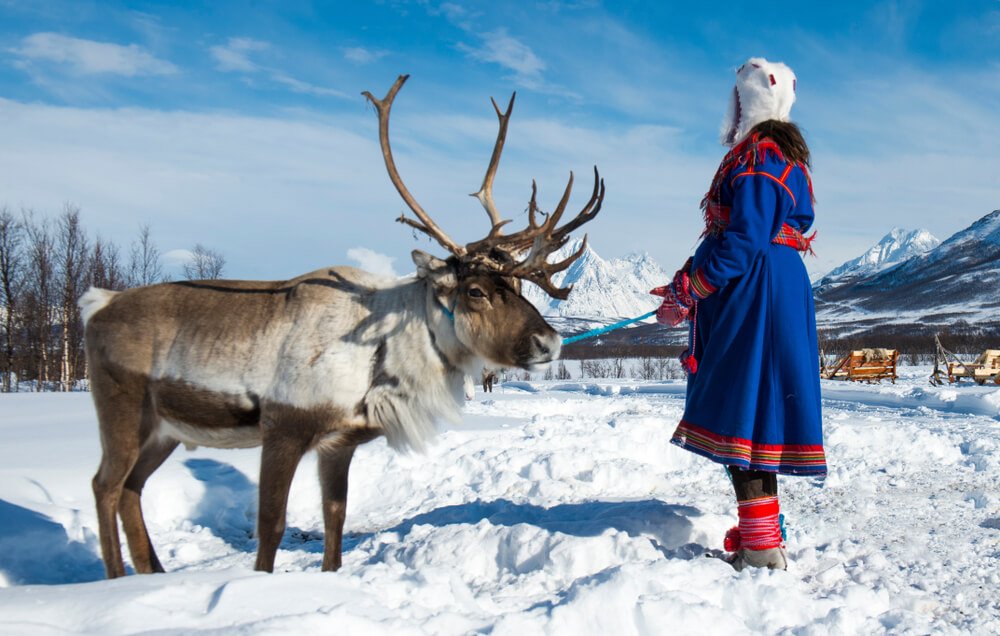
The Sámi people are the Indigenous people of Arctic Europe, and they’ve lived in this region for millennia. One of the most respectful and engaging ways to learn about Sámi culture is by visiting a Sámi-operated reindeer ranch.
On this full-day Sámi reindeer herder experience, you’ll travel to the Norbotten area where you’ll meet local Sámi reindeer herders and get a chance to hand-feed reindeer (they love Arctic moss!), and learn about traditional life of these Arctic Indigenous people, including how reindeer herding, spirituality, and storytelling through song (joik) all weave into their everyday lives.
This full-day trip includes the chance to go reindeer sledding as well as enjoy some time in a Sámi lavvu tent enjoying a hot drink and hot dinner of a typical Sámi delicacy (typically a reindeer-based stew, though vegetarian offerings are available if you inform them at the time of booking).
Book your reindeer and Sámi culture day trip and dinner experience here
Budget Tip: If this experience is too pricy for you but you still want to enjoy and learn about Sámi culture, you can visit the Nutti Sami Siida (a Sámi-owned and operated museum with an on-site restaurant and open-air exhibits, including reindeer you can meet and feed) in nearby Jukkasjarvi. As of 2026, the tickets are 250 SEK or about $26.50 USD, plus you’ll need to get yourself to Jukkasjarvi.
Check out the unique Kiruna Church
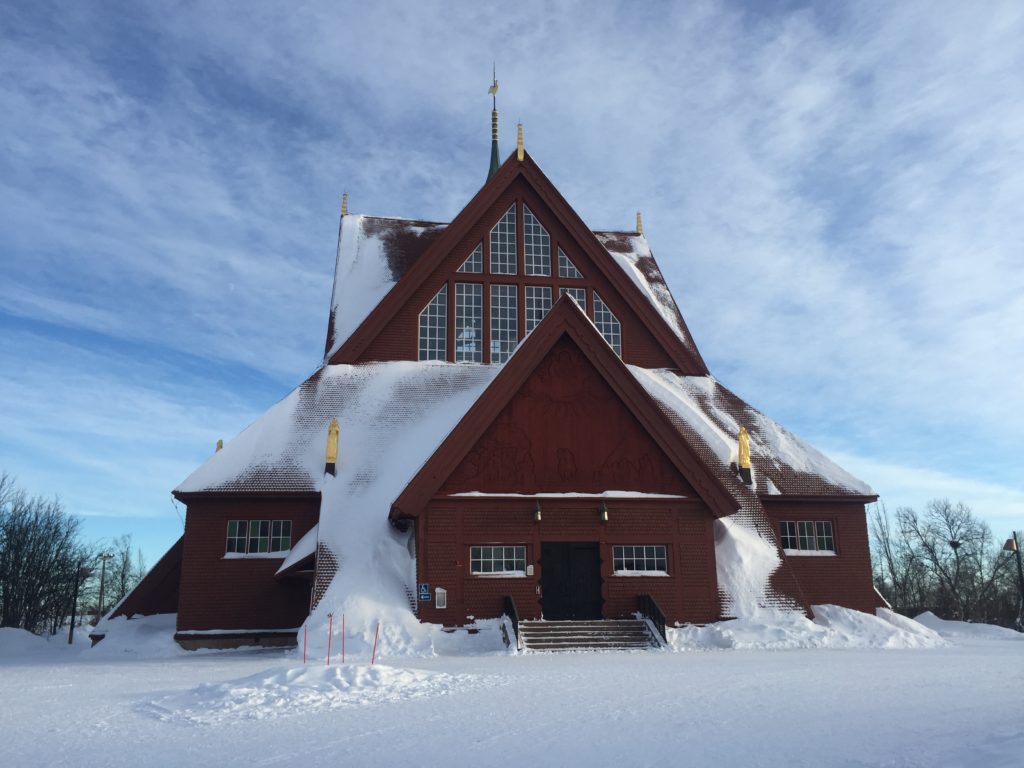
Kiruna is unlike any city I’ve visited. In fact, the entire city was relocated — including the church above — to avoid sinking into the earth due to decades of mining activity.
Bit by bit, the new town center has been relocated, and it’s one of those things that’s really cool to see happening in real time. The project is almost finished, and then it’ll be just a part of Kiruna’s history.
While visiting Kiruna, be sure to spend the time wandering the town center to visit Kiruna Church, one of Sweden’s largest wooden buildings with a stunning interior. The church moved location in the fall of 2025. There may still be some quirks they are ironing out, so be a bit patient as Kiruna re-settles itself.
Wander (and eat) your way through the city
Want to stop and shop? Pop into Kvadrat, a beautiful local design store for unique souvenirs like Lapland-made textiles and ceramics.
I loved their beautiful selection of coffee mugs and took one home that said ‘fikapaus’ because I always need a reminder to take a coffee break!
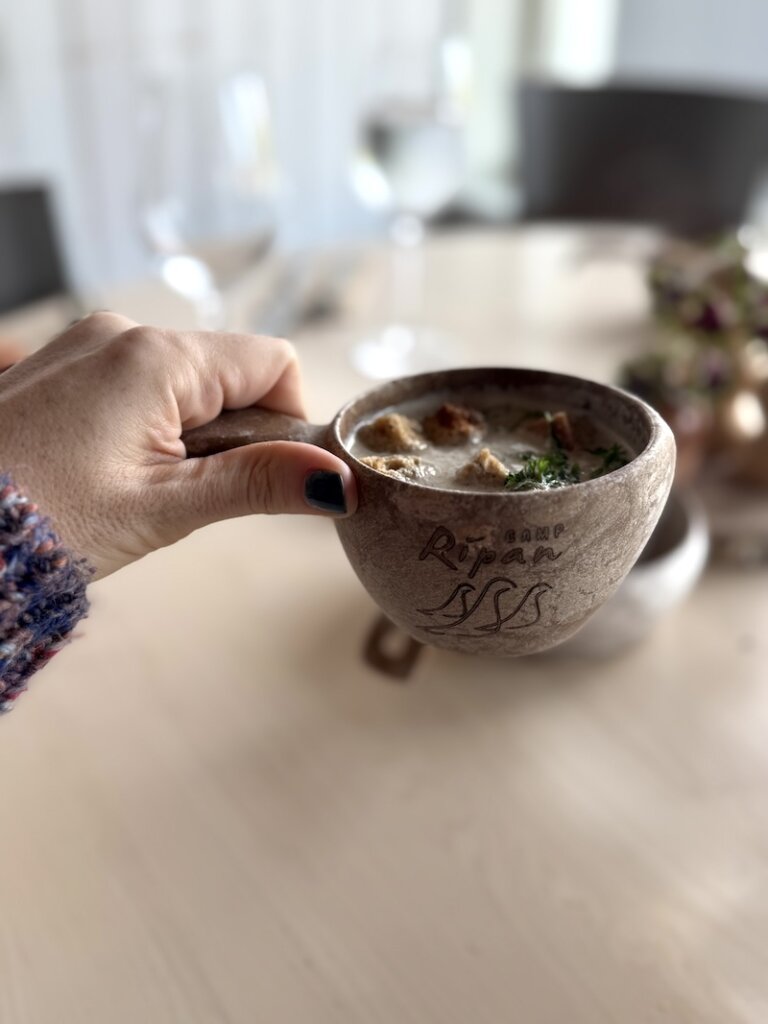
If you get peckish, grab a bite at Stejk Street Food or Ann’s, two local favorites. If you have a car and have a bit of mobility, I really liked the restaurant (Ripan Kitchen) at Camp Ripan, which is also one of the better places to stay in Kiruna. Their mushroom and cherry soup was to die for!
Take a scenic snowshoe tour (with optional ice fishing)
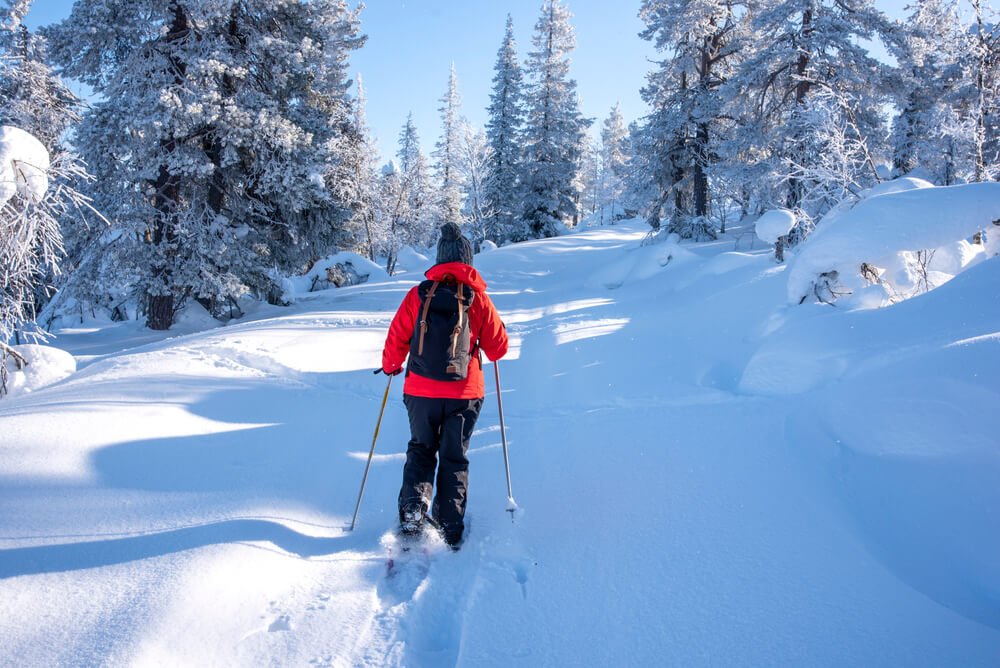
For a low-key activity that takes place at a slower pace than dog-sledding or snowmobiling, why not try snowshoeing if you never have before? After all, Kiruna is surrounded by snowy wilderness perfect for snowshoeing!
There are guided snowshoe walks that bring you out of the city center of Kiruna and into the beautiful forests, with chances to spot animal tracks like reindeer or possibly even moose!
To add a unique element to your snowshoe walk, you can do a snowshoe hike with ice fishing, organized by a husky farm, so you can meet the huskies before you go on your walk!
Book here for a guided snowshoe hike or a snowshoe hike that includes ice fishing as well

Allison Green is a former teacher who has been travel blogging since 2016, visiting 75+ countries in total. She has a Masters in Teaching and a B.A. in English and Creative Writing. As a former educator, she merges her writing and educational experience to encourage ethical, sustainable travel. She has been a speaker at the World Travel Writers Conference and TBEX. Her writing, photography, and podcasting work has appeared in National Geographic, CNN Arabic, CBC Canada, and Forbes, amongst others. When she’s not on the road, she lives in Bangkok, Thailand.