

Renting a Car in the Faroe Islands: 13 Tips for An Epic Road Trip
If you’re planning to rent a car in the Faroe Islands, good news: it’s one of my favorite ways to explore the Faroe Islands simply and easily, bringing you to every remote corner of these jaw-dropping scenic islands through a network of well-maintained roads and tunnels.
I’ve been to the main islands of the Faroes (Streymoy, Eysturoy, Vágar, etc.; namely, the ones connected by tunnels and ferries) as well as Suduroy, which will pretty much cover anywhere travelers will go.
| 🇫🇴 Planning your Faroes trip in a hurry? Here’s some helpful tips! 🚗 Getting Around: Rent a car via Discover Cars (searches 500+ agencies including local options for the cheapest rates — I recommend 62N as your Faroes rental agency) 🐧Top 3 Faroe Islands Activities: 1. 2 Hour Puffin Tour (see puffins and other seabirds on Nólsoy, a birding paradise!) 2. 1.5-Hour Boat Tour from Sørvágur (see Drangarnir Sea Stacks and the Múlafossur waterfall!) 3. 4-Hour Sailing Tour from Tórshavn (see cliffs, fjords, and possibly puffins, seals dolphins, or whales!) 🛏️ Top 3 Accommodation Picks: 1. Havgrim Seaside Hotel 1948 (central Tórshavn hotel with Accidentally Wes Anderson vibes) 2. The View (beautiful luxury Vágar accommodations with turf houses and friendly hosts) 3. Gjaargardur (homey guesthouse in Ggjov, one of the most scenic villages in Streymoy) |
There are some definite mental challenges to driving in the Faroe Islands — namely, wandering sheep, intense fog, steep cliffs, narrow roads, and one-lane tunnels. But trust me: unless you want to rely on sparse bus schedules with limited routes, you’re going to want your own wheels.
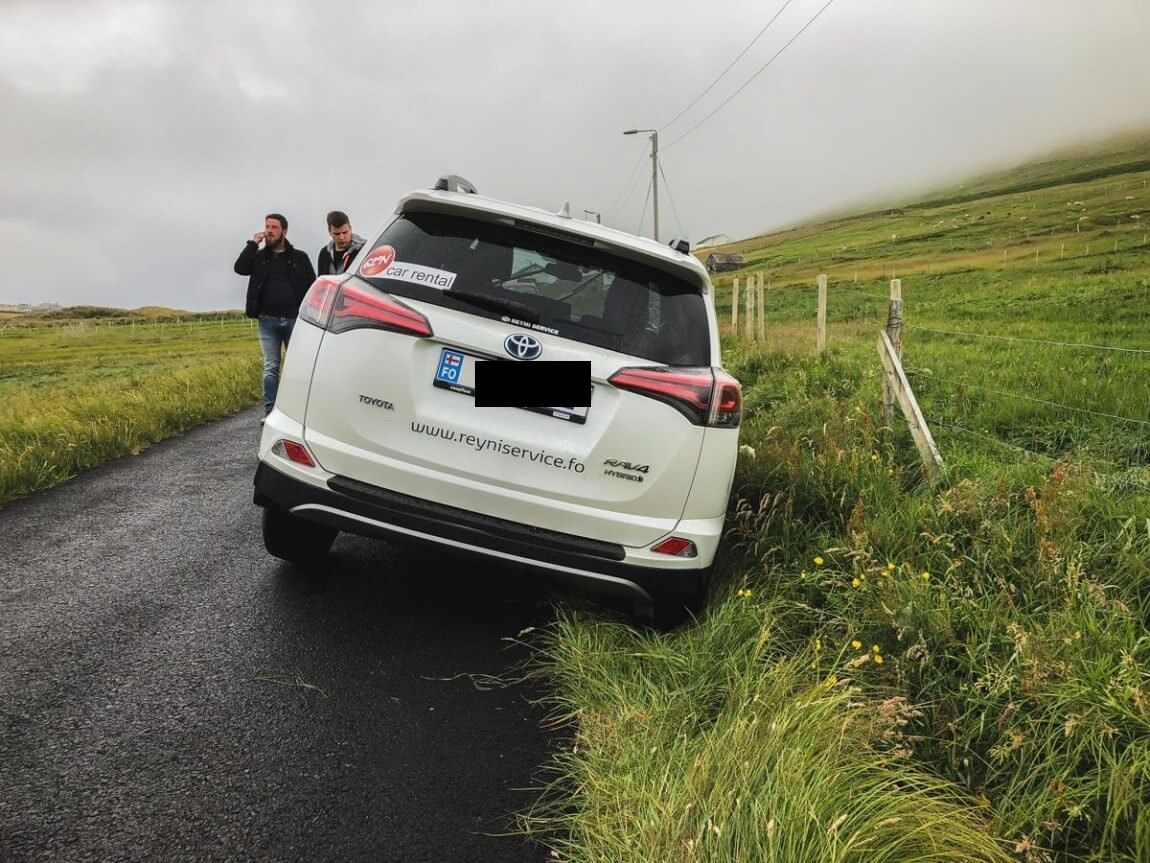
I find that when something is a mental challenge, it’s better to be aware of what you’re going into ahead of time. That way, you don’t end up in a bind… or with your car in a ditch needing to be rescued by local villagers, as I found myself. Read on for that saga!
Top Tips for Renting a Car in the Faroe Islands
Book early — especially if you want an automatic car
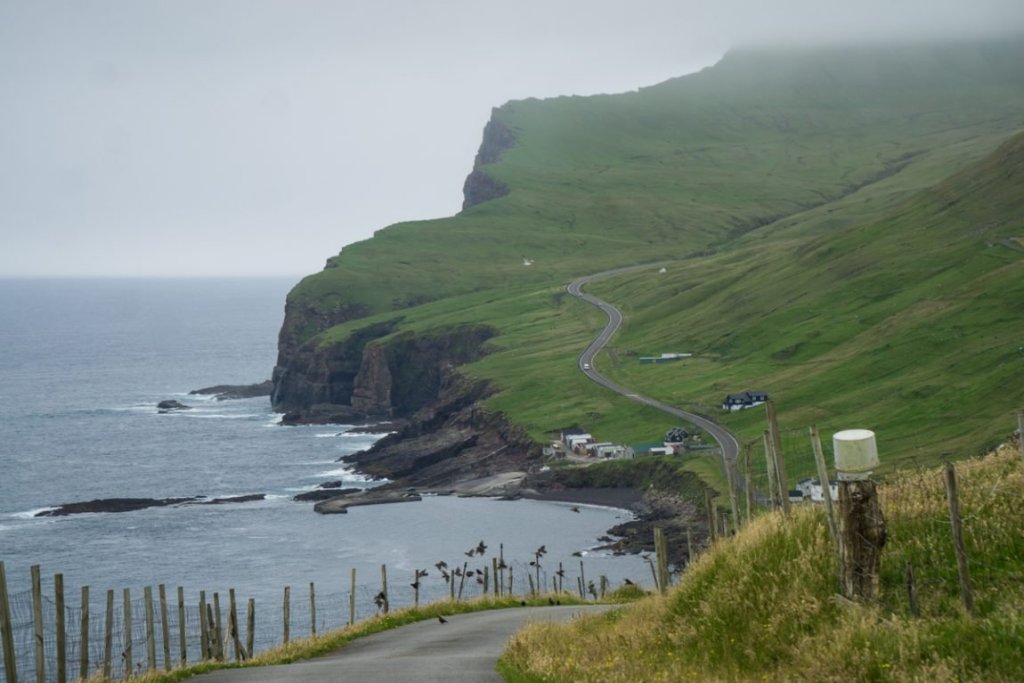
The Faroe Islands has a limited car inventory, so no matter what, you’re going to want to book your rental car well in advance to ensure that, well, you have one for your trip.
One thing that you should keep in mind is that similar to many parts of Europe, the Faroe Islands rental agencies often have quite a few manual transmission cars, so if you can’t drive stick (no shame—same), book as soon as you know your travel dates.
This advice is especially relevant if you’re visiting in summer, when demand spikes. Automatics tend to sell out quickly and once you get down to the last few automatics, the prices are usually out of control.
I always book my car rentals in Europe through Discover Cars, as they search through 500+ agencies and not just the big names — they even have 62N’s rental inventory in their system, which is great because that’s the best-trusted rental agency in the Faroes (and the one I personally went with).
They drive on the right
If you’re used to driving on the right side of the road, you’re in luck—the Faroe Islands follow the same rule.
That said, don’t rejoice juuuust yet. The roads in the Faroe Islands are often narrow, nearly always cliff-hugging, and occasionally involve one-lane tunnels shared with oncoming traffic (more on that in a minute).
But don’t worry too much. Local drivers are generally respectful, patient, and unaggressive, which makes it less stressful than it could be elsewhere. If you go slow and carefully, you shouldn’t have any problems.
For anyone coming from left-side-driving countries like the UK or Ireleand, be honest with yourself about your comfort level switching sides, especially if you’re used to wide city roads and not sheep-filled mountain passes.
Be ready for large credit card deposits
Depending on which agency you book with, you may end up paying a really high credit card deposit. As someone used to U.S. credit limits, it worked out okay, but if you tend to travel with only a debit card or you don’t have a high credit limit, it can be an issue.
I was a guest of the tourism board on my last trip to the Faroes so I didn’t handle the rental car myself, but when looking now, I can see that virtually all companies charge a deposit in the neighborhood of €1,000-€2,000. This is fairly typical of rental agencies on islands, but it still stings if you aren’t expecting it.
Double check the deposit requirements before you book — on Discover Cars, you can simply hover over the “i” button next to where it says “average” or “high” deposit to see what the deposit actually is.
Be aware of this quirk especially if you’re using a debit card or come from a country where credit cards aren’t the norm, and ensure you have the funds for the security deposit before renting.
Get the best insurance you can afford
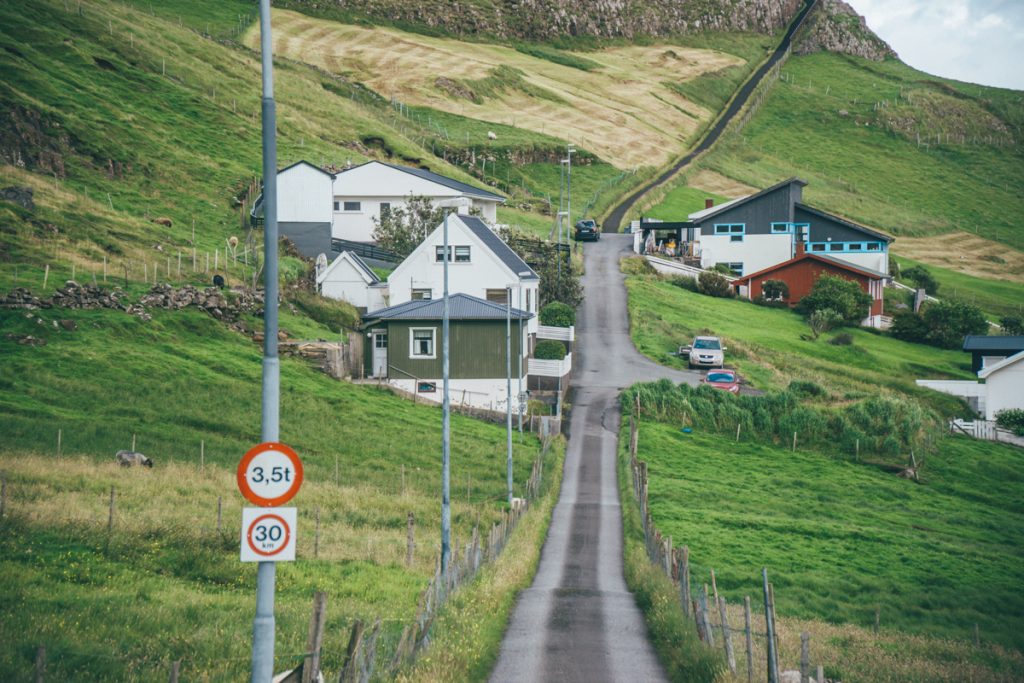
Driving in the Faroes is both magical and intimidating. Weather changes in the blink of an eye, sheep can pop up anywhere, and some of those tunnels will test your will (and your depth perception).
I strongly recommend opting for the full insurance package for peace of mind. I ended up having a small incident with my car that luckily didn’t require activating my insurance (more on this in just a bit!), but I was definitely glad that I had it.
Don’t underestimate the weather, especially the fog
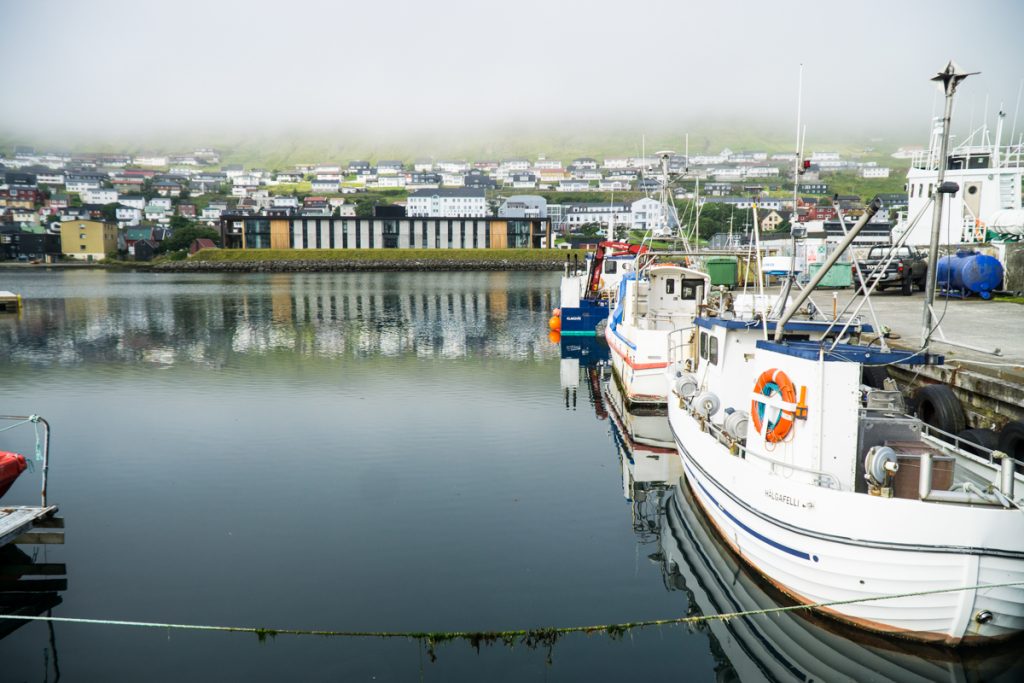
The Faroe Islands are wild and beautiful… and unpredictable. Fog, wind, rain, sleet, hail… sometimes all in a matter of hours.
Visibility can drop to nothing in seconds, especially on the mountain passes between towns like Tjørnuvík and Saksun or over the high roads near Gjógv. If that happens, pull over and wait it out. Also, keep your headlights on at all times, even during the daw. It’s the law!
Watch for errant sheep!
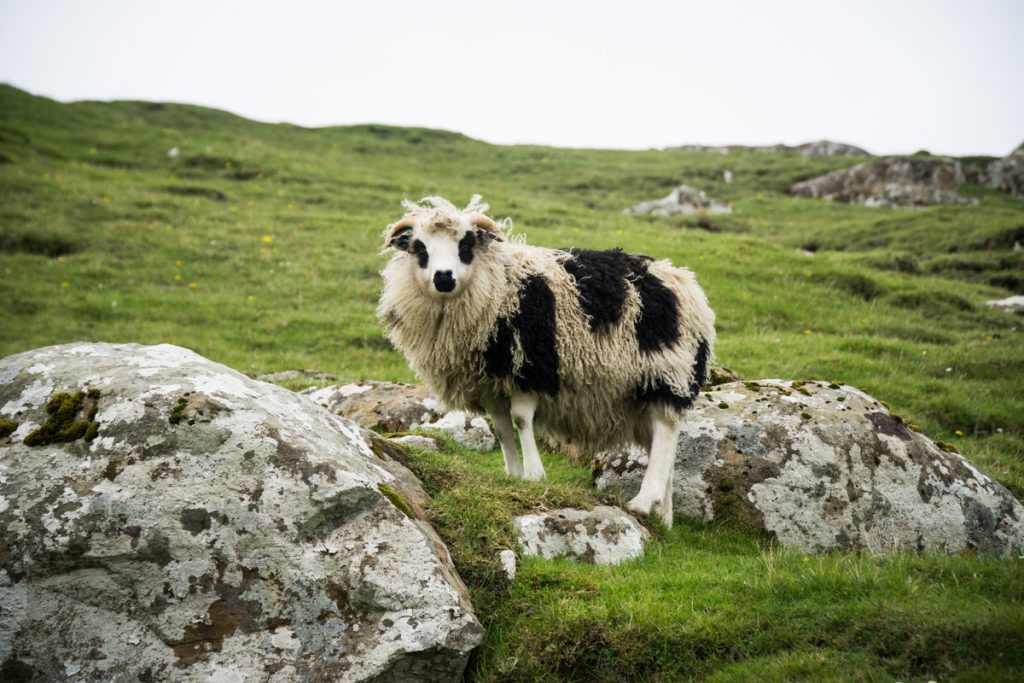
One of the most iconic (and slightly chaotic) parts of driving in the Faroe Islands? The sheep. They outnumber humans nearly 2:1 and have zero regard for your rental car or your itinerary!
While usually they’re hanging out in grassy areas, it’s not uncommon that you’ll see them on roads, hanging out on the shoulder of a highway, or even just slowly ambling across a highway without a car in the world.
With that many free-roaming sheep, it’s inevitable that you’ll cross a few. Be careful when driving, especially when it’s foggy or when you’re navigating a bend in the road. Sheep can appear out of nowhere and sometimes they can be skittish around cars when startled and move unpredictable.
Ask what kind of fuel your car takes
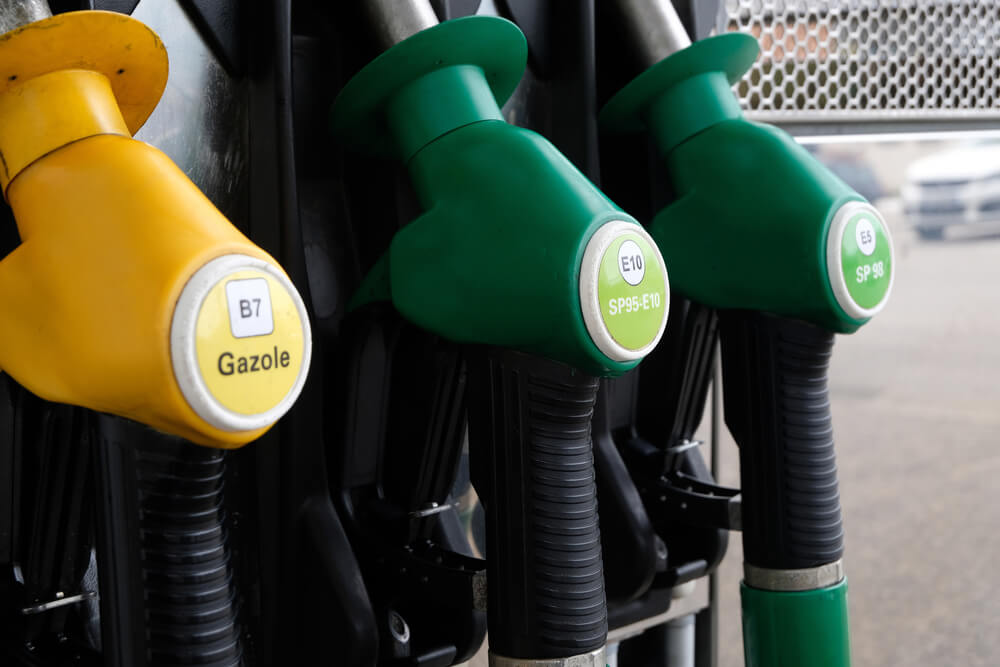
Like in much of Europe, many cars take diesel fuel in the Faroe Island. Double-check whether your car needs diesel or petrol (standard gasoline). Mess it up and you’re looking at a car repair bill in the thousands.
Also keep in mind that fuel stations are few and far between, so don’t let your tank dip too low, especially if you’re heading out to more remote areas. Gas in the Faroe Islands is pricy, around 15 DKK per liter ($2.35/liter, which is equal to about $9/gallon).
There are no toll roads — but there are toll tunnels
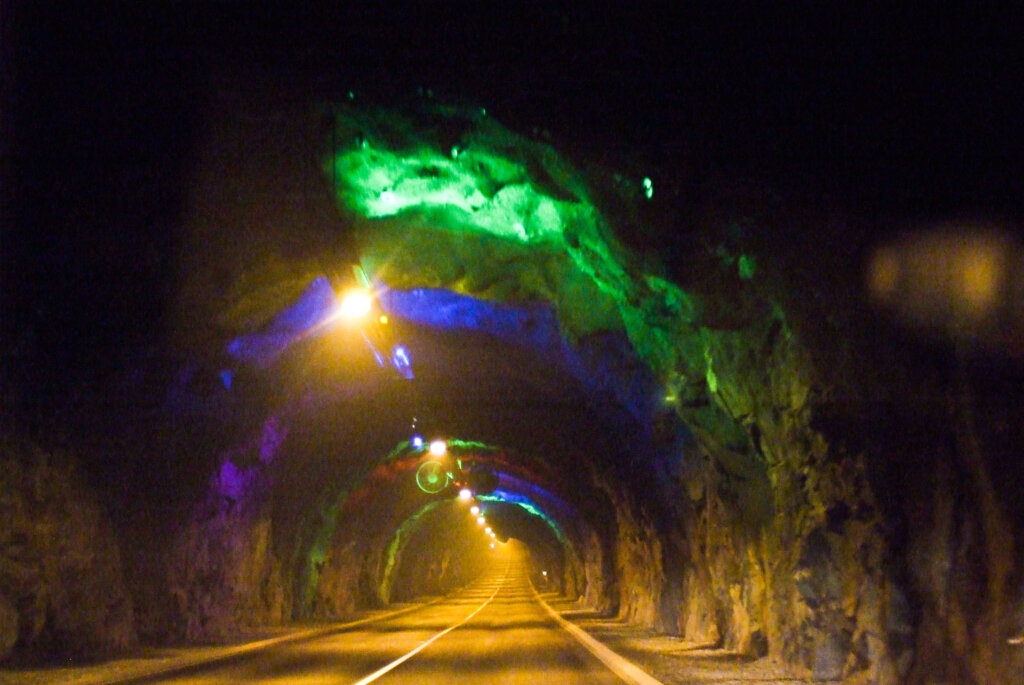
There are no toll roads in the Faroes, sure, but there are toll tunnels! These toll tunnels don’t have your typical toll booths like you’d see elsewhere; your license plate is processed via camera as it passes through the tunnel and charged to your final bill.
As of 2025, the prices for the undersea tunnels are as follows:
- Vágatunnilin (Vágar–Streymoy): DKK 100 round-trip
- Norðoyatunnilin (Eysturoy–Norðoy/Klaksvík): DKK 100 round-trip
- Eysturoyartunnilin (Streymoy–Eysturoy): DKK 175 one-way (~DKK 350 return)
- Sandoyartunnilin (Streymoy–Sandoy): DKK 175 one-way (~DKK 350 return)
There are lots of roundabouts (but don’t worry about them)
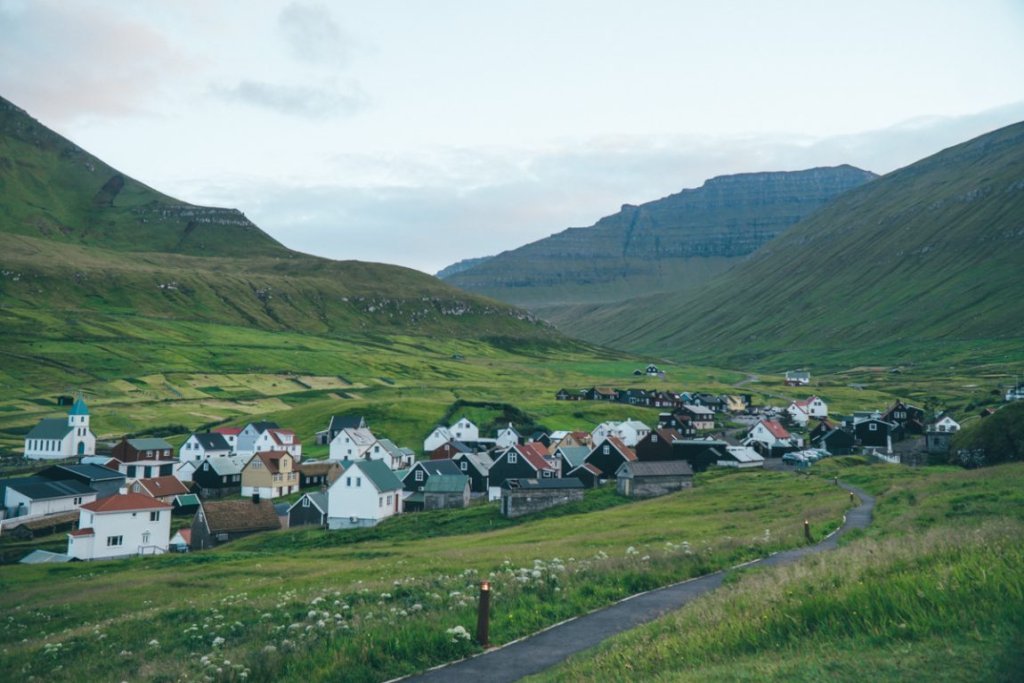
Expect to encounter lots of roundabouts while driving in the Faroe Islands. Honestly, they’re usually really laid-back — often, you’ll only be the only car navigating them.
The archipelago only has three actual traffic lights, all in the town of Tórshavn. Everywhere else, traffic is managed via a roundabout… including under the sea.
Wait, what? Before you wrinkle your nose in confusion, here’s a little fun fact for you: the Faroe Islands are home to the first (and only) undersea roundabout, set right on the ocean floor, in the tunnel that links Streymoy and Eysturoy. Pretty neat, right?
There are lots of one-lane tunnels (do worry about them, a little)
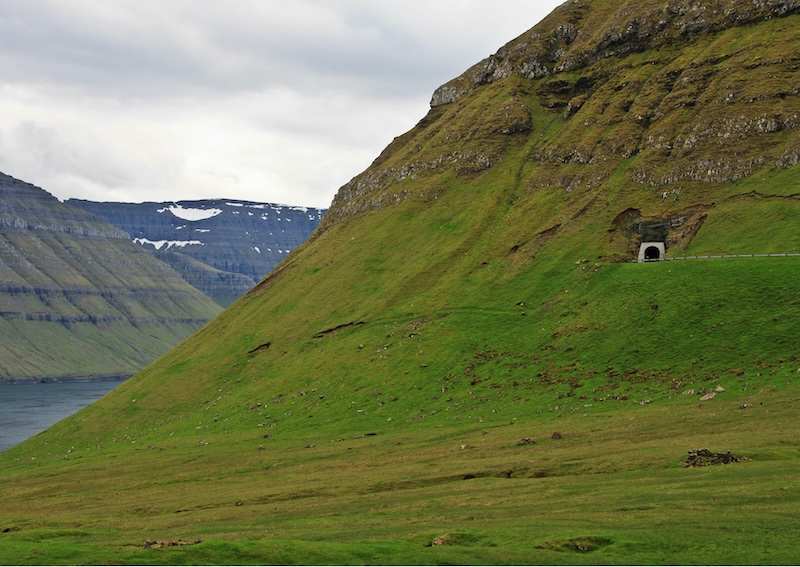
I know that the phrase one-lane tunnel may seem a bit terrifying, when you consider the fact that the traffic is two-way… but there’s a logic to it and it’s not as scary as it seems, though some caution is absolutely necessary. My friend got into an accident on her first trip to the Faroe Islands while in a one-lane tunnel, so it does happen.
Before you enter any one-lane tunnel, prepare your nerves a bit and take a look at the sign. All one-lane tunnels are clearly marked and the sign will indicate which direction has the right of way. If you’re the one yielding, you’ll be expected to pull into one of the turnouts to wait for oncoming cars to pass.
Here’s the thing that is a little spooky though: the majority of these one-lane tunnels don’t have any lights, which means you’ll probably want to use your high-beams for the entirety of the tunnel, unless you see another car coming, at which point you’ll definitely want to switch to regular lights.
It sounds scary, and it is admittedly a little unnerving, but it’s very manageable.
The real menace are the one-lane roads
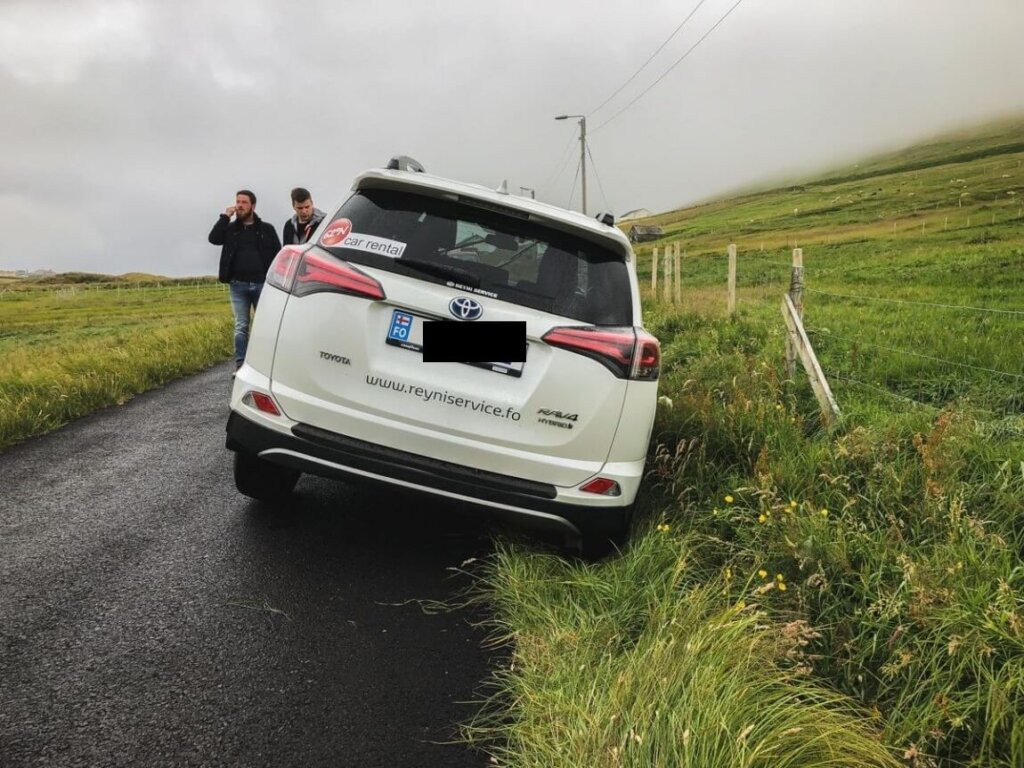
While one-lane tunnels in the Faroes get all the attention (and a fair share of nervous side-eyes), it was actually a one-lane road where I ran into trouble… literally. While driving in the small village of Viðareiði, I saw a car approaching on a one-lane road and knew I needed to pull over.
I thought I was being proactive… but I pulled off just a few meters too soon, before the proper asphalted pull-out. What looked like solid grass turned out to be a deceptively deep drainage ditch… and two of our wheels ended up dangling over it like a cartoon car, caught mid-fall.
Luckily, a bunch of locals were quickly at our aid, and a village resident with a truck and some heavy-duty ropes came to give us a quick, friendly hand. Luckily ,we didn’t end up needing a tow truck or anything more serious, and the car wasn’t damaged, but it was certainly stressful while trying to figure out how that situation would resolve.
I have to just send my love to the people of Viðareiði for their help. No complaints, no judgment (though definitely some friendly laughs were had all around). They wouldn’t accept any money and just sent us on our way with well wishes for the rest of our trip. Honestly, I think we may have been the most exciting thing to happen in the village that day.
Tórshavn parking is weird, so understand it ahead of time
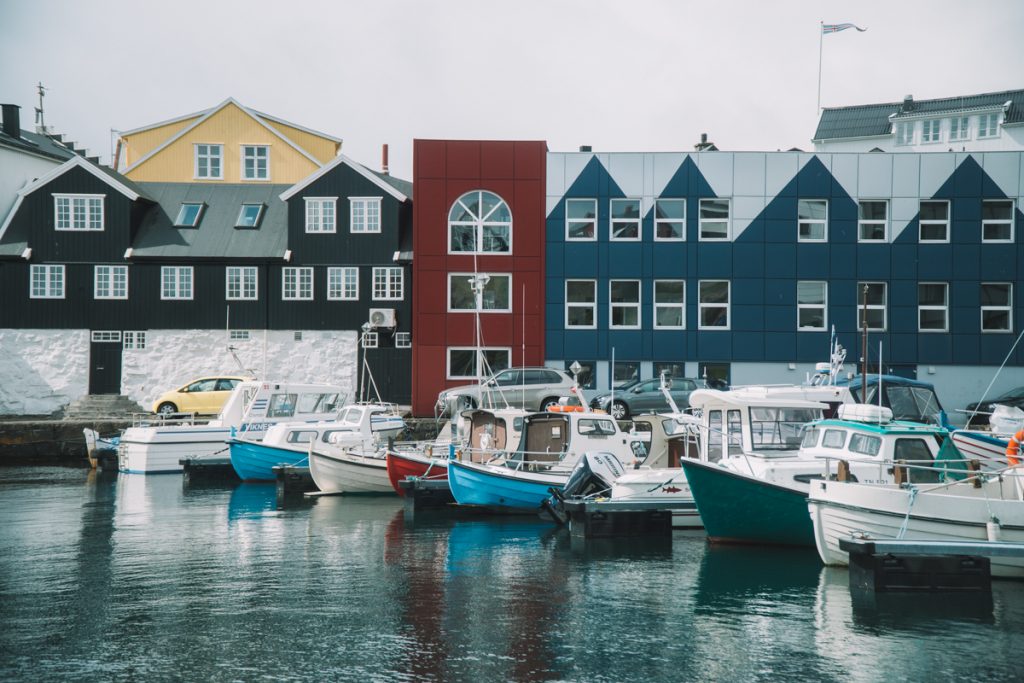
Luckily for your budget, parking is free in most villages and towns. However, in Tórshavn, you may need to display a parking disc for time-limited zones. Your rental car should come with one, check the glove box and if it’s not there, ask at the rental car counter desk to ensure you have one.
If you’re spending time in the capital, know that street parking in central Tórshavn often uses the “P-disc” system. It’s like a little analog clock you can set yourself: Just set the dial to the time you arrived and leave it on the dashboard.
The signage is a little confusing if you’re not super used to it. The times indicate the time periods during which the time limit applies (sometimes 30 minutes, sometimes 2 hours — it’ll say on the sign). The sign generally will have three different times listed: weekday monitored hours are in black (no parenthesis), Saturdays are also black but with parenthesis, and Sundays are in red.
There will also be arrows, but this is pretty straightforward: the arrow up means that rules apply from this sign forward to the next intersection and vice versa for a downward-pointing arrow.
The times listed on the signs are the times in which you must use your parking disc and during that time, tickets may be given to those who do not follow the rules. If you park outside of a time limit, i.e. after the day’s monitoring period is over, I suggest setting your parking disc to the start of the restriction the next day.
Be early for ferries (especially to Kalsoy)
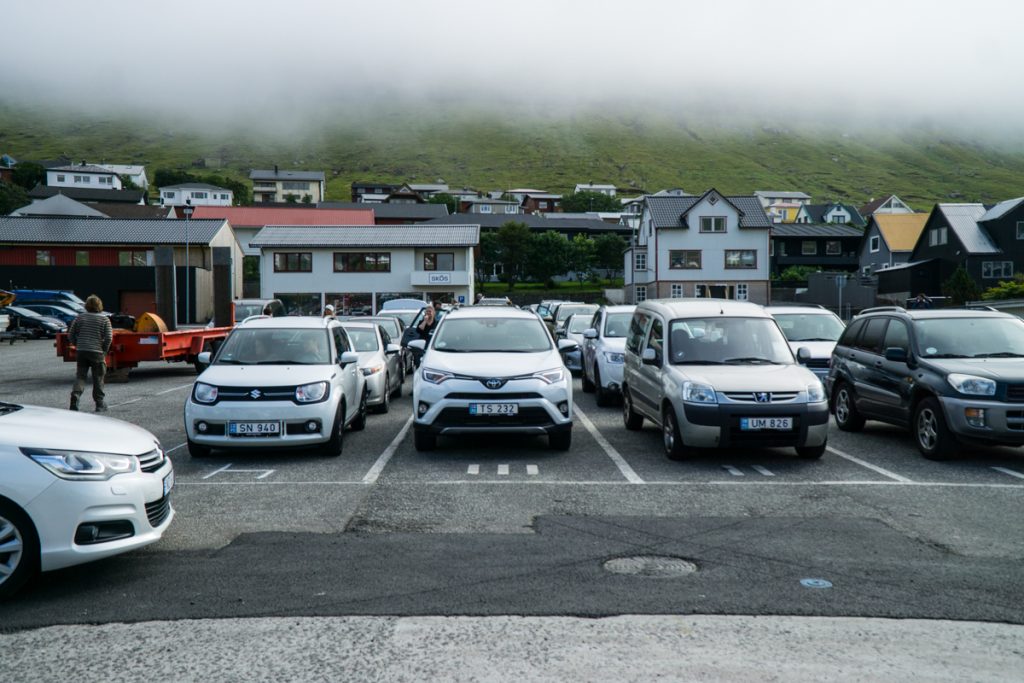
If you’re planning to take your rental car on one of the ferries, like the popular one from Klaksvík to Kalsoy, arrive early. We pulled up about an hour and fifteen minutes before the 8 AM ferry departure, which felt slightly excessive… until it wasn’t.
When the ferry started boarding, every single space was full. The people who came only about 45 minutes beforehand were turned away and had to stay there waiting for the 10 AM.
When you arrive, just park in one of the boarding lanes (but don’t park in the first lane, because that one is reserved for locals who use the ferry to commute).
Once you’re in line, you can safely leave your car to stretch your legs or snap photos of the beautiful Klaksvík harbor. Just make sure you’re back in your car well before boarding starts, at least 20 minutes before departure.

Allison Green is a former teacher who has been travel blogging since 2016, visiting 75+ countries in total. She has a Masters in Teaching and a B.A. in English and Creative Writing. As a former educator, she merges her writing and educational experience to encourage ethical, sustainable travel. She has been a speaker at the World Travel Writers Conference and TBEX. Her writing, photography, and podcasting work has appeared in National Geographic, CNN Arabic, CBC Canada, and Forbes, amongst others. When she’s not on the road, she lives in Bangkok, Thailand.