

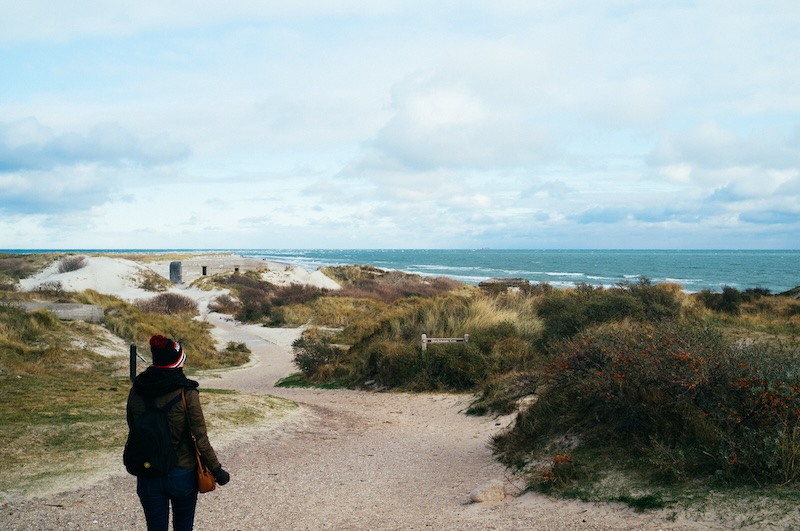
12 Things to Do in Skagen, Denmark’s Northernmost Town
I had never heard of Skagen in Denmark until visiting my friend who lived in Aarhus. Knowing literally nothing about it, immediately I said yes.
And I was so glad I did. Even though we visited in the off season in winter, November to be precise, I felt like I was able to get a great sense of why this beach town in Northern Denmark is so beloved by Danes — even if it’s relatively unknown by tourists.
| 🇩🇰 Planning a last minute trip to Skagen, Denmark? Here’s where I suggest you stay! – $: Toftegarden Guesthouse Rooms (great budget pick!) ** where I stayed – $$: Brøndums Hotel (artist history, great rooms, in the heart of town) ** top pick! – $$$: Ruths Hotel (a bit outside of town, but very quiet and luxurious) |
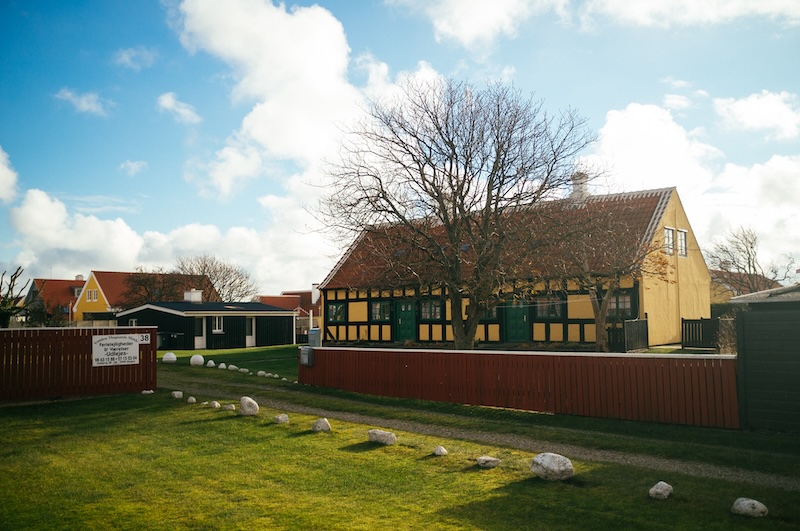
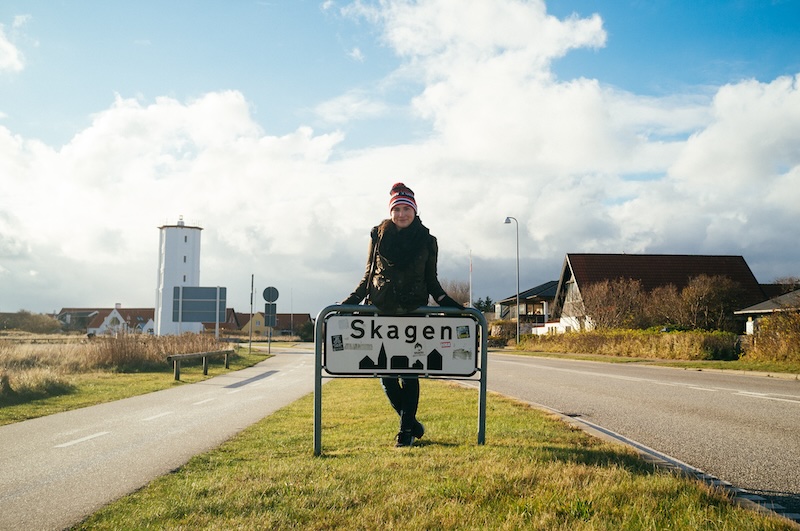
Here’s what to do in Skagen, no matter the season, including relevant information on opening hours and prices where available.
I hope you enjoy your stay and that it’s as magical for you as it was for me!
Admire the town’s commitment to yellow
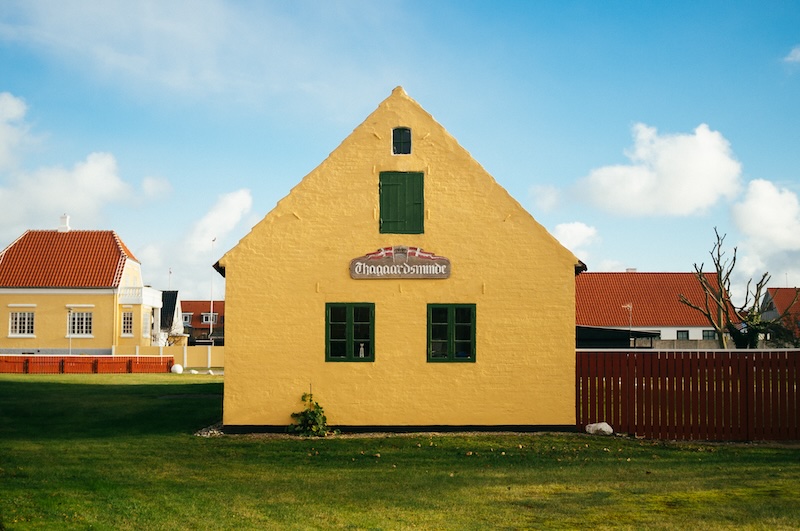
Have you heard of any town that loves a color so much it literally has a name dedicated to it? This, my friends, is Skagen yellow. And it’s the color of yellow that puts a smile on my face in any kind of weather, but admittedly, does look best in some (rare) sunshine).
Back before becoming a tourism destination in Denmark, Skagen was nothing but a poor fishing town with limited building materials. Hard to believe in the aesthetics-obsessed Denmark of today, but that’s the history.
So because of this, locals used whatever they could get cheaply — including a yellow paint made out of ochre and linseed oil and terra cotta red roof tiles, a Danish classic (learn more on this here!). This combination turned out to be durable even against Skagen’s harsh coastal winds: aesthetic on accident, but oh, what a happy accident.
Now that Skagen is a tourist destination, the town leaned into its historic look and has preserved it through building regulations, so as to not change the beauty of this historic town.
See Denmark’s second-tallest lighthouse
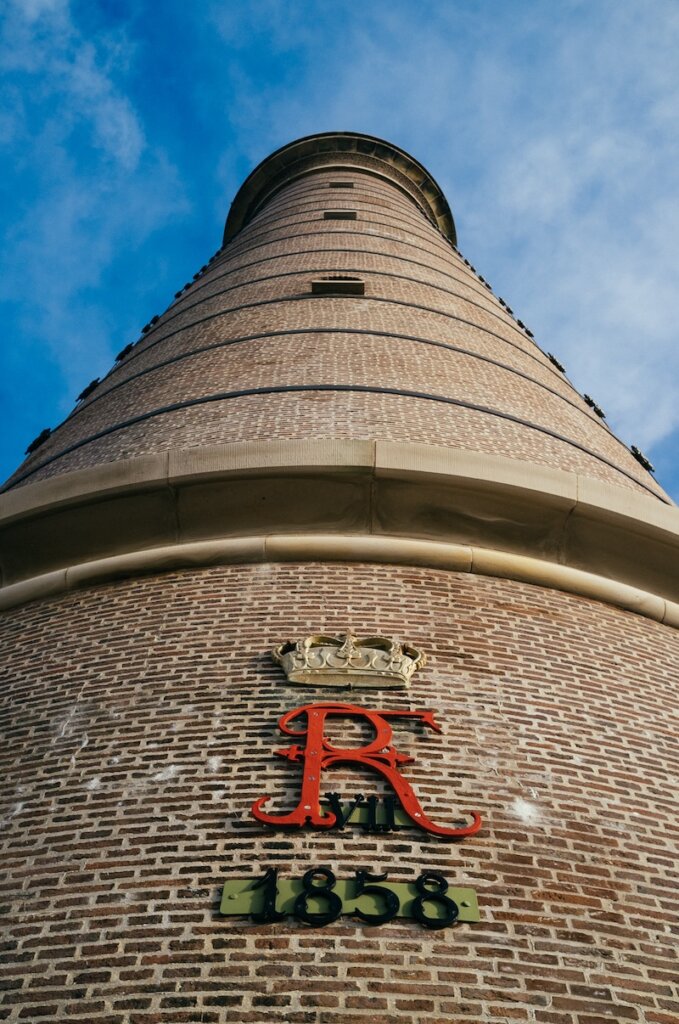
Skagen’s Gray Lighthouse (Det Grå Fyr in Danish) is rather unique amongst lighthouses. While normally they are painted in colorful tones, this one is different: a tall, no-nonsense brick tower. Don’t worry, though — the yellow keeper’s house that is attached to the base of the lighthouse is, of course, Skagen yellow.
At 46 meters (151 feet), it was once the tallest lighthouse in Denmark… until Bornholm had to go and steal its crown by just one meter, which is a bit unnecessary if you ask me.
These days, it’s also home to a bird migration center, complete with an interactive exhibition and a working bird observatory since this coastal area is really popular with birders and conservationists.
The lighthouse is open to visitors from April to October (roughly 10 AM to 4 PM in shoulder season and 10 AM to5 PM in summer). But since we visited in November, we didn’t get to climb to the top for the views, sadly.
Still, it was absolutely worth the visit: the landscape around it is captivating, and the lighthouse is no slouch to look at, either
Check out Skagen’s other, older lighthouse
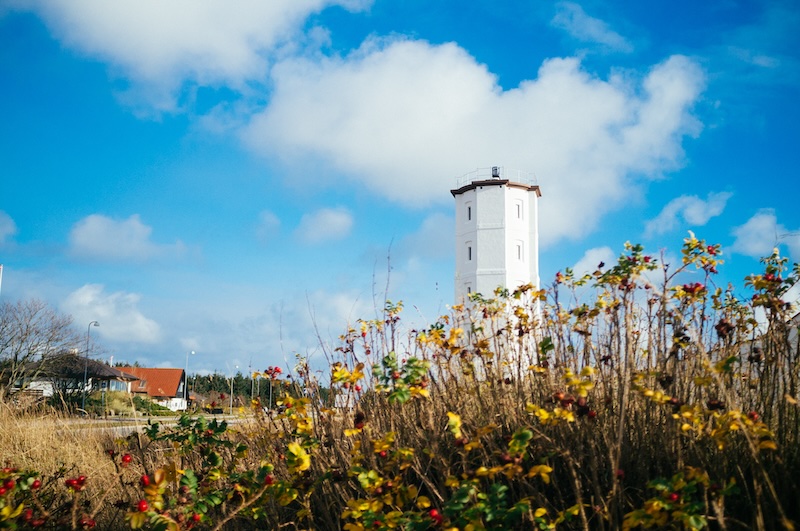
Skagen has two lighthouses in one small town, and yes, I am deeply convinced that you need to visit both. Am I lighthouse obsessed? Guilty as charged, I suppose.
The White Lighthouse (Det Hvide Fyr) is the older of the two. It was built in 1747 and was operational until 1858, when it was replaced by the Gray Lighthouse farther north. It was the first brick lighthouse in Denmark, but later it was whitewashed to truly be the white lighthouse (I’m not sure why the Gray Lighthouse is called that when it’s in fact made of red brick, but I digress.)
It’s shorter than its newer sibling at 21 meters (69 feet), but it’s right near town, whereas the Gray Lighthouse requires a further walk, so it’s something you can’t easily miss.
Watch two seas meet and mix at Grenen
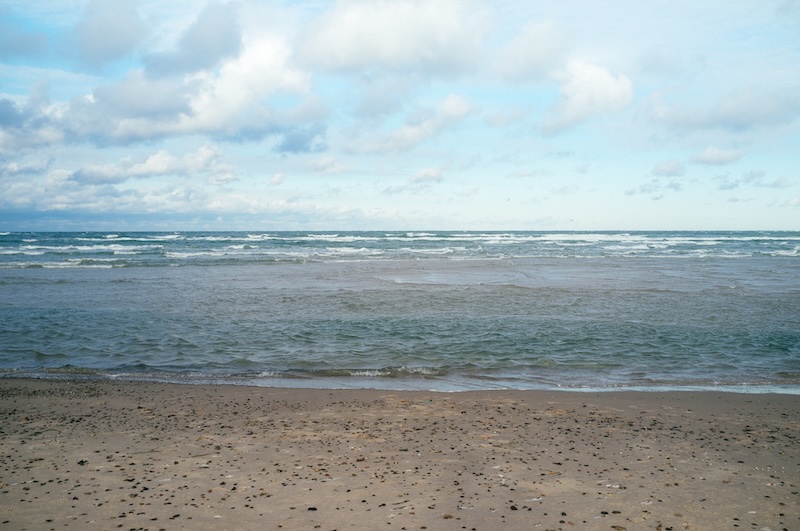
The most remarkable part of Skagen is Grenen Beach, a place where two seas quite literally collide. Here, at the tip of Denmark, you can watch two seas interact and mix: the Baltic Sea and the North Sea. You can actually watch the water and waves from two vastly different bodies of water crash into each other. Emphasis on watch: the waters here are very dangerous and swimming is not permitted.
You can walk there from town if you’re feeling ambitious. Personally, we loved the coastal walk, so we kept on walking even though it was freezing cold and windy on that particular day. You can also hop on the Sandormen — which literally means The Sandworm in Danish. Don’t worry, it’s a lot smaller and less threatening than the creature of the same name in Dune: it’s just a tractor-pulled wagon.
Tickets are about 35 DKK (~$5 USD) for adults and 15 DKK (~$2 USD) for kids, which is a pretty good price for a ride to the tippy-top of the country.
Check out the trippy sand formations at the beach
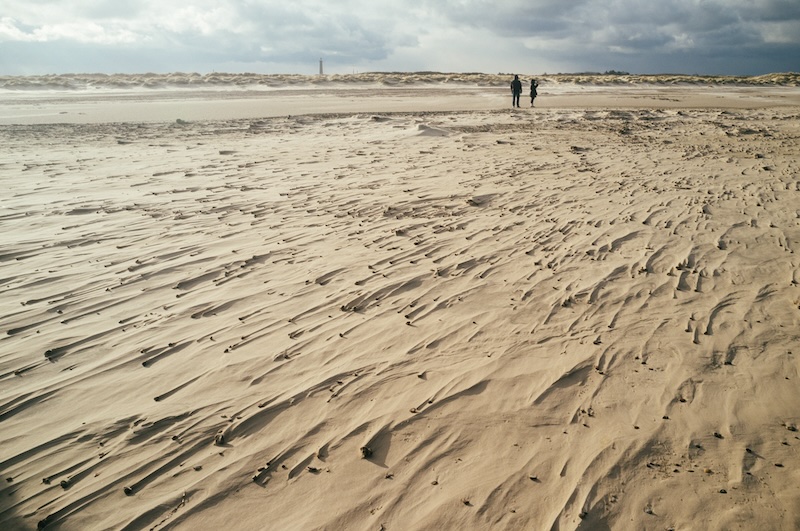
One result of the constant churning of the two seas in Grenen is that it produces a lot of stones and super fine sands.
And when you combine those stones with the extra-fine sand and the high winds and high moisture of the air around Grenen? You get incredibly unique looking sandy beaches like this one, where you can literally see the paths of stones being pulled through the sand by the wind.
I’m not sure if it looks like this year-round or if it’s a winter-only phenomenon, but I thought this was one of the most unique things about Grenen. I’ve never seen it elsewhere.
Check out the strange beachside bunkers
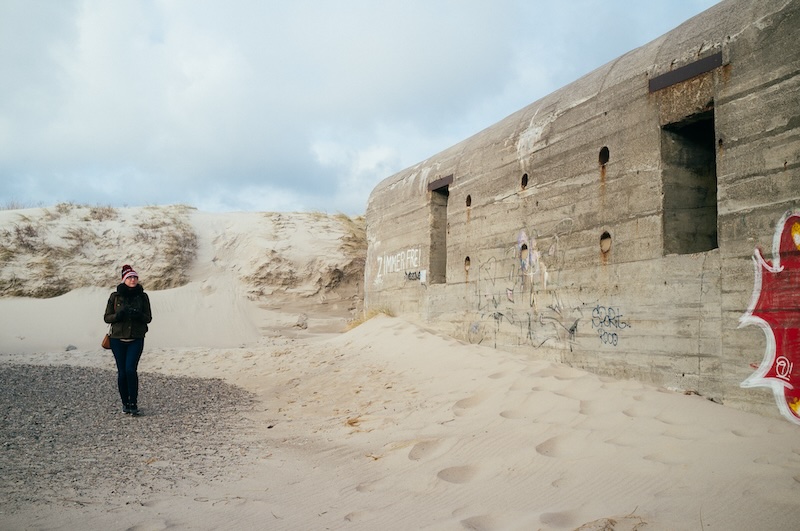
If you’re walking along the coast between the Grey Lighthouse and Grenen Beach, you’ll start spotting crumbling concrete bunkers in the dunes, left over from the German invasion of Denmark. I had somehow forgotten that Denmark was invaded by Germany during WWII, until I was quite literally looking at the physical remainders of it.
There’s also a Bunker Museum nearby (about 65 DKK / ~$9.50 USD), located inside an actual former German bunker meant to be used as an infirmary for the wounded. It’s open daily from April to October — usually 11 AM to 4 PM in the shoulder season, and 10 AM to 5 PM in the peak summer months, similar to the lighthouse).
You guessed it — this is another spot we missed visiting in the off-season. I guess there is something to be said for visiting in high season! Still, you can get an eerie sense of the area’s wartime history just by observing the concrete bunkers as you walk along an otherwise-pristine beach.
See the old sand covered church
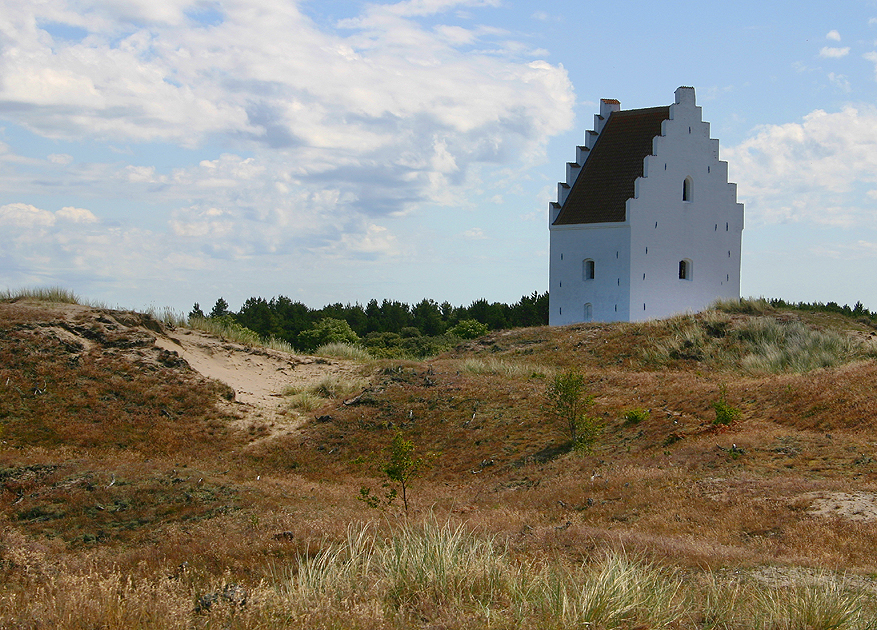
Also known as Old Skagen Church or the Sand-Covered Church (Den Tilsandede Kirke in Danish), this building shows what happens when nature wins the battle over man. Built in the late 1300s, it was once the largest church in the region, a Gothic beauty complete with a nave, buttresses, a tower, a gable… all the fixings, basically.
But by the 1600s, the drifting sand from Råbjerg Mile began slowly swallowing the surrounding landscape, destroying villages, farms, and eventually, the very church you can see partially standing seeing today. Apparently, in the 1700s, churchgoers would have to dig out the entrance to even enter for a church service!
Perhaps at some point these parishioners took it as a sign from God, because by the end of the century, they gave up and dismantled the majority of the church, building a new one somewhere safer from the sands.
All that remains today for you to see is the tower, rising from the sand, a little defiant bit of architecture that tells the story of the futility of battling the inevitable.
See the works of Impressionist Skagen painters
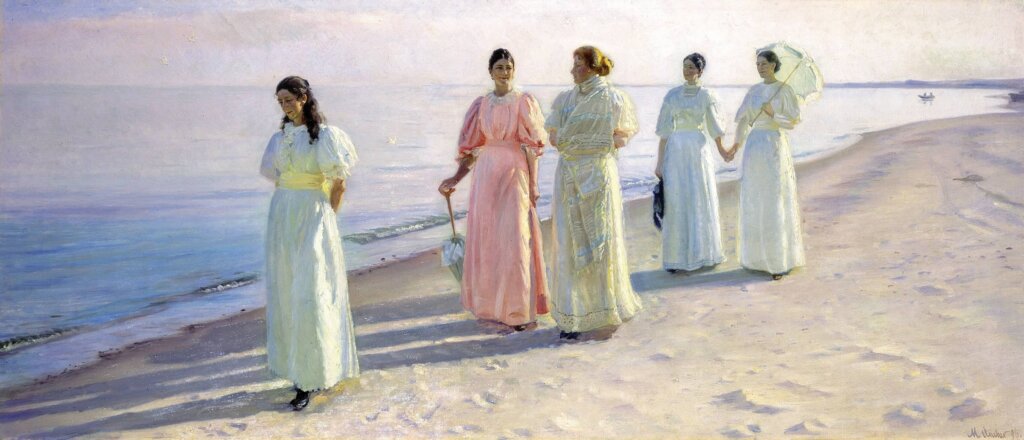
The Skagens Museum was founded in 1908, the idea conceived in the dining room of Brøndums Hotel. This hotel was a popular gathering spot for the artist colony who called themselves the Skagen Painters, primarily Impressionist artists.
The museum had many temporary locations until it secured funding and built a dedicated museum in 1928, with a permanent collection of nearly 2,000 works.
One of the coolest details is that Brøndums Hotel’s original dining room was eventually moved into the museum in 1946! It’s lined with portraits the artists painted of each other. There’s also a sculpture garden and a historic garden house that is now a café incorporated into the museum.
Admission costs 140 DKK ($22 USD) for just the Skagens Museum (or 200 DKK / $31 USD for a combination ticket that also includes Anchers House and Drachmann House, two historic houses) and can be purchased online here.
The website is a bit of a mess if you don’t read Danish as there’s no website in English, so I’ve tried to translate it and parse the opening hours as it changes quite a bit with seasonality.
Generally, the museum is open year-round. In summer, from June 1 to August 31, it is open daily, from 10 AM to 5 PM. In spring and fall (April and May, September and October) it is open Tuesday through Sunday from 10 AM to 5 PM, though it is closed on Mondays.
In the winter season, it is open from 10 AM to 4 PM daily except Mondays. The winter opening days are November 1 to December 22, December 27-30, and February 7 through March 31.
It is closed on the following days: January 1 – February 6, December 23 – 26, and December 31.
Enjoy the local restaurant scene

Skagen has quite a few nice cafés and restaurants serving seafood, soups, and sandwiches.
But it’s mostly known for its delicious seafood, as just because Skagen used to be a fishing down doesn’t mean it has totally forgotten its fishing roots!
A few restaurants you can try are:
- Restaurant K: The highest-rated restaurant in town with 5.0 rating on Google at the time of writing! Dishes are rather pricy though, even for Denmark, with mains costing between 250-400 DKK ($39-63 USD at current conversion)
- Skagens Hotel: Another highly-rated restaurant with lots of options ranging from seafood to vegetarian to meat. Most dishes are around 200-300 DKK ($31-48 USD).
- Skagen Bryghus: Yes, even a tiny Danish town has its own brewery! Opened in 2005, it serves about 30 varieties ranging from seasonal ales to specialty brews like its famous dark lager, Skawskum Mørk Lager. And of course, it has pub food to go with it!
- Skagen Bageri & Café: One of the better budget options and a great choice for lunch if you’re trying to save some money. They also have the best breakfast special in town, where you can get a freshly baked bun, cheese, soft-boiled egg, jam, and butter for 79 DKK, or add 20 DKK if you also want a croissant ($12.50-16 USD at time of writing). But you have to get it before 11:30 AM!
Go birdwatching in the protected areas
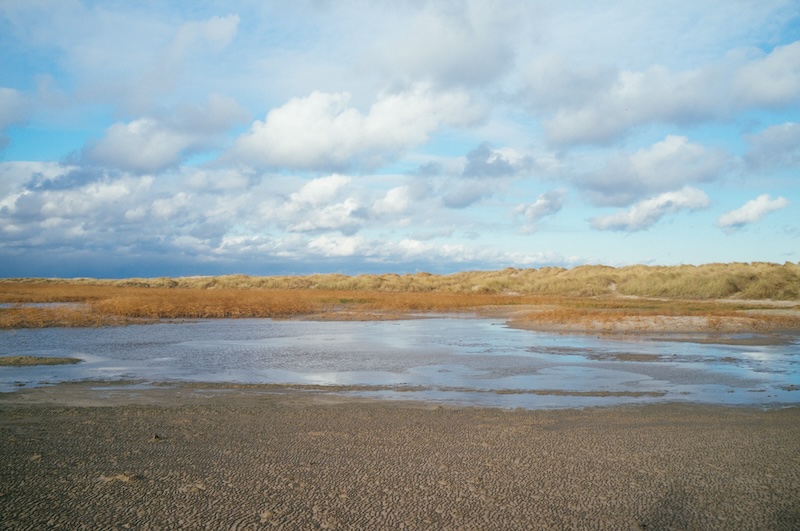
I’ll be honest, I know next to nothing about birding. However, it’s supposed to be the best place for birding in all of Denmark, according to people who actually know stuff about birding.
A lot of the area around Skagen and Grenen Beach is protected land, and as a result, you can find over 380 different species of birds here, including the common chaffinch, brambling, common crane, sparrowhawk, osprey, and white-tailed eagle.
You can go to the Skagen Fuglestation to find out more about birdwatching, which is operated by the local birding organization, Dansk Ornitologisk Forening (translated into English, Birdlife Denmark). Also, you can come during the second weekend in May, when there is the Skagen Bird Festival!
See the shifting sand dunes of Råbjerg Mile
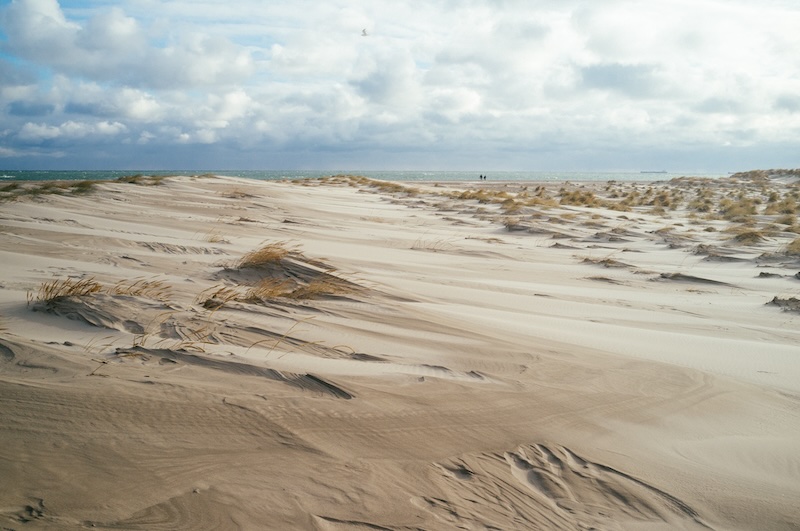
So you know how I mentioned the sand-covered church before? You can see the dunes that engulfed it at Råbjerg Mile, the largest migrating sand dune in (Northern) Europe. These incredible formations move roughly 15 meters to the north and east every year.
Some of the dunes are as tall as 40 meters high… which in mostly-flat Denmark, feels like a near-mountain. The sands cover quite a bit of the coastline, but there are several places you can park along the way (and it’s free!)
Admire the strange structure and history of Vippefyr
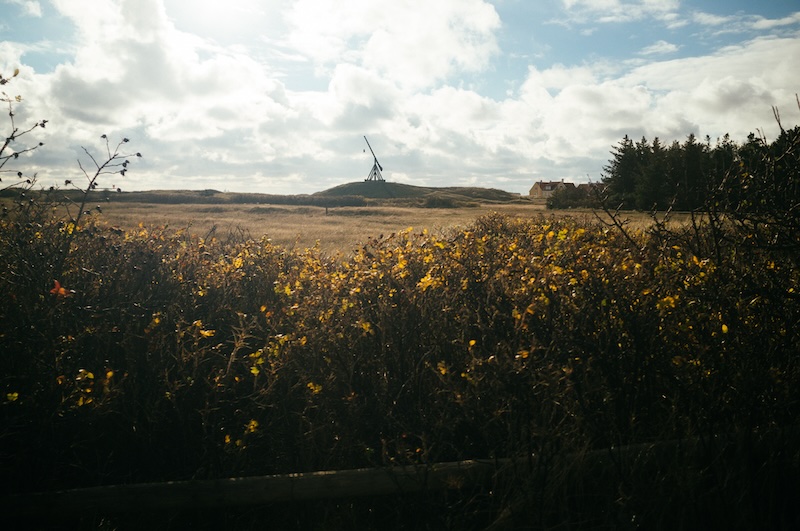
Have I managed to obsessively sneak a third lighthouse onto this post? Sort of.
The Vippefyr is Skagen is a replica of an early way of using light to navigate — but with less resources needed than a lighthouse would require. It was built in 1627, way before the lighthouses in the island, and was used until 1747 when the White Lighthouse was built; this is a faithful replica of the original, to preserve this unique story.
Vippefyrs use a unique technique with a rocking basket (which is what the word literally means in Danish, “tipping light”), which uses a unique mechanic with a coal filled iron basket that made light visible yet less prone to catching fire than the previous style of warning lights.
The first replica was created by Carl Locher from the Skagen Painters artist colony in 1913, and then it was replaced in 1958 by the local rotary club. Once a year, for midsummer (Sankt Hans Aften, on June 23rd), the beacon is lit and there is a beach bonfire celebration, so this can be a unique — albeit very busy — time to visit Skagen!

Allison Green is a former teacher who has been travel blogging since 2016, visiting 75+ countries in total. She has a Masters in Teaching and a B.A. in English and Creative Writing. As a former educator, she merges her writing and educational experience to encourage ethical, sustainable travel. She has been a speaker at the World Travel Writers Conference and TBEX. Her writing, photography, and podcasting work has appeared in National Geographic, CNN Arabic, CBC Canada, and Forbes, amongst others. When she’s not on the road, she lives in Bangkok, Thailand.