

Horseback Riding in Iceland’s Westfjords: Is It Worth It?
There are so many photogenic ways to experience Iceland — its thunderous waterfalls, its uneven and otherworldly lava fields, its windswept beaches, its glacial lagoons.
But then there are the experiences that go beyond the ability to be photographed: experiences that you embody and bottle up, a memory to take home with you that can’t be captured with any camera.
And for me, no other experience comes nearly as close to that as riding Icelandic horses in the Westfjords.
| 🇮🇸 Planning your trip to the Westfjords in a hurry? I recommend staying in Ísafjörður and using that as your transit hub. ⛰️Best Tours in the Westfjords: – Simba Horseback Tour from Þingeyri (must self-transfer, no pickup available) – Whale Watching Tour from Ísafjörður (humpback whales & more!) – Dynjandi Waterfall Tour from Ísafjörður (in case you aren’t driving/prefer not to drive these windy gravel roads) 🏨 Best Hotels in the Westfjords & En Route: – Ísafjörður (Westfjords): Hotel Ísafjörður Torg (where I stayed in Isafjordur, the capital of the Westfjords, and where I highly recommend, especially for their breakfast!) – Hellnar (Snaefellsnes): Fosshotel Hellnar (Fosshotel is a trusted chain in Iceland; I stayed with them many times, including here on my way to the Westfjords!) – Reykjavik (Arrival point): Hotel Holt – The Art Hotel (central & mid-range for Reykjavik, which is way pricier than other places in Iceland) 🚗 Getting Around: I recommend booking your car rental through Discover Cars. However, rather than use their full coverage insurance, be sure you buy insurance through the agency itself. Iceland is a special case where you have to buy separate insurance bundles — such as a gravel/windshield insurance, etc. — which are often not included in “full coverage”, despite the name! |
Sure, you can ride Icelandic horses in many parts of Iceland. For me personally, my itinerary had me exploring a more offbeat side of Iceland: Western Iceland and the Westfjords to be exact.
Businesses up in the Westfjords are few and far between — life here is seasonal, as demand is small — which also makes making choices incredibly easy. I went with Simba Horses in Þingeyri (pronounced Thingeyri, because #Icelandic).
Simba Horses offers two options: I picked the Valley to Sea ride through the Sandar Valley as I’m a somewhat-experienced horse rider, though there are definitely a lot of gaps in my horse-riding days.
And while I wouldn’t say riding a horse is like riding a bicycle, there are definitely things you don’t forget, and a certain level of comfort and trust you develop after you’ve ridden horses a few times.
I grew up near horse stables and I took a lot of lessons as a kid. Actually, in my more agile days, I even did bareback riding, jumping, and vaulting, which is standing on top of a horse doing tricks. I have no idea why or how one does that… let alone past-me, an uncoordinated and anxious mess of a teenager… but I digress.
I even did a weeklong dude ranch expedition in Wyoming where we herded 500 cattle up a mountain!
Still, those experiences pale in comparison to my favorite horse memory of all: tölting on an Icelandic horse through the Westfjords.
Looking back on my trip, it was the best day I spent while traveling in this remote corner of Iceland: adventurous enough to make me feel more alive than anything else I had done all year, but also deeply soul-calming, both an adrenaline rush yet also incredible peaceful at the same time.
Here’s what it was actually like — plus the differences between the two tour options, so you can choose how much you want to channel your inner horse girl (gender neutral).
My Experience Riding Horses in the Westfjords
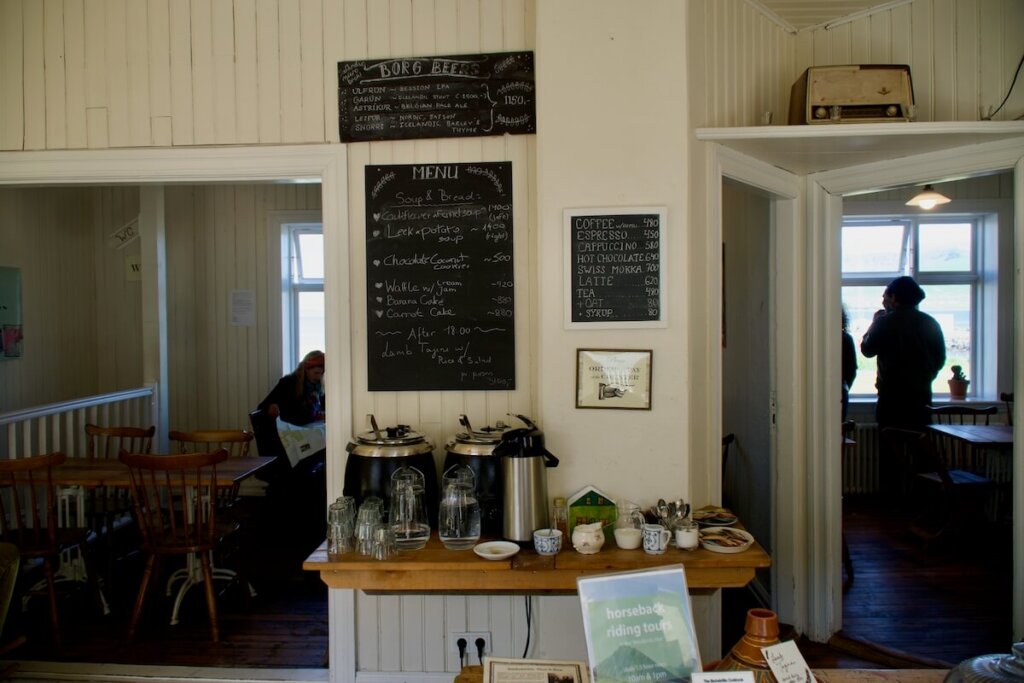
The intermediate rider tour I took began at 1 PM, and it started the way almost all good things in Iceland start: with a cup of coffee, when I checked in at the operator’s small coffeehouse.
We then took a ride down to the stables with the world’s best safety chaperone.
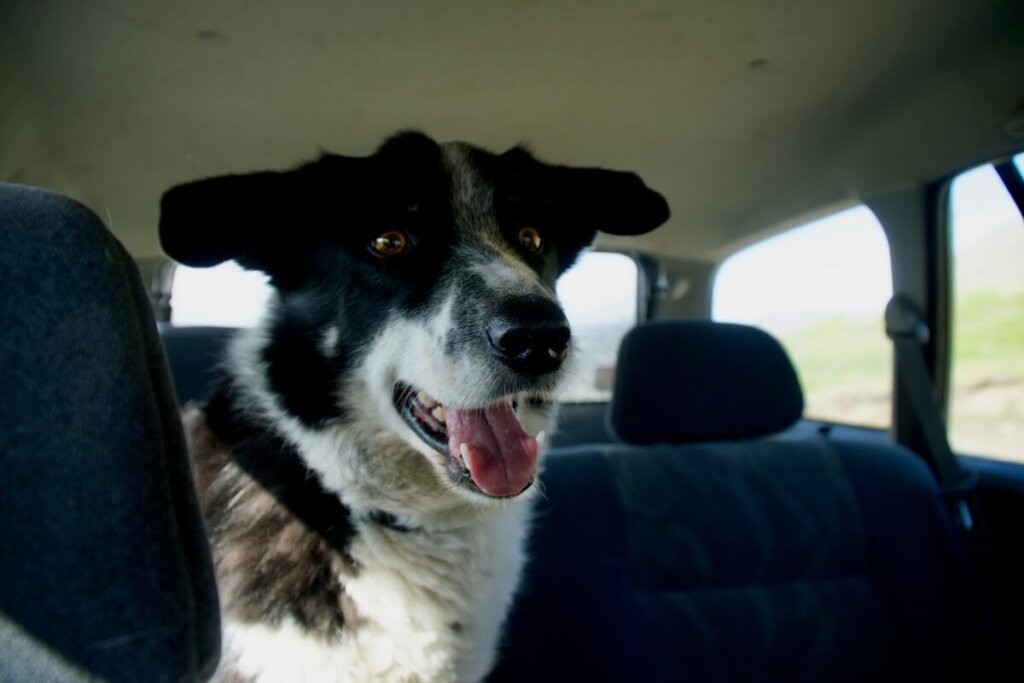
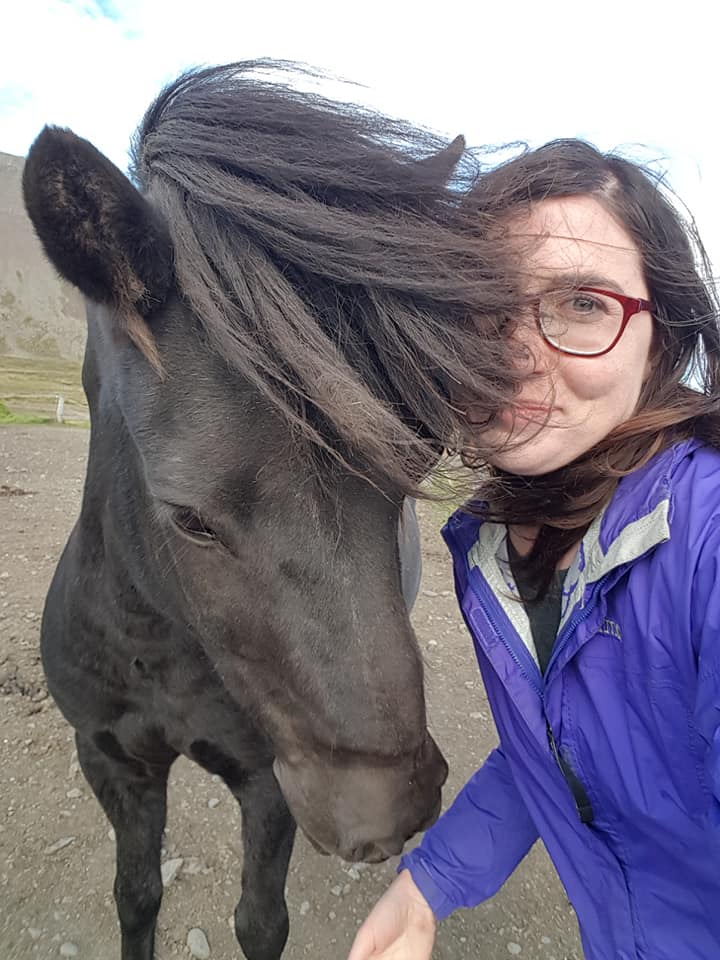
Our group then gathered and went to the stables, where we donned our helmets, met the horses we’d be riding with, and got a short safety briefing and overview of where we’d be riding that day.
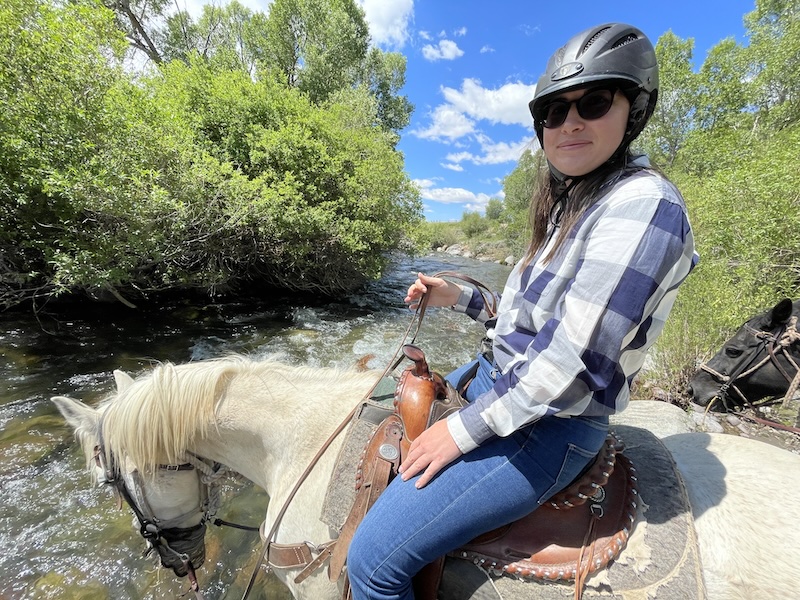
This was my horse companion for the day, and I think we look fabulous.
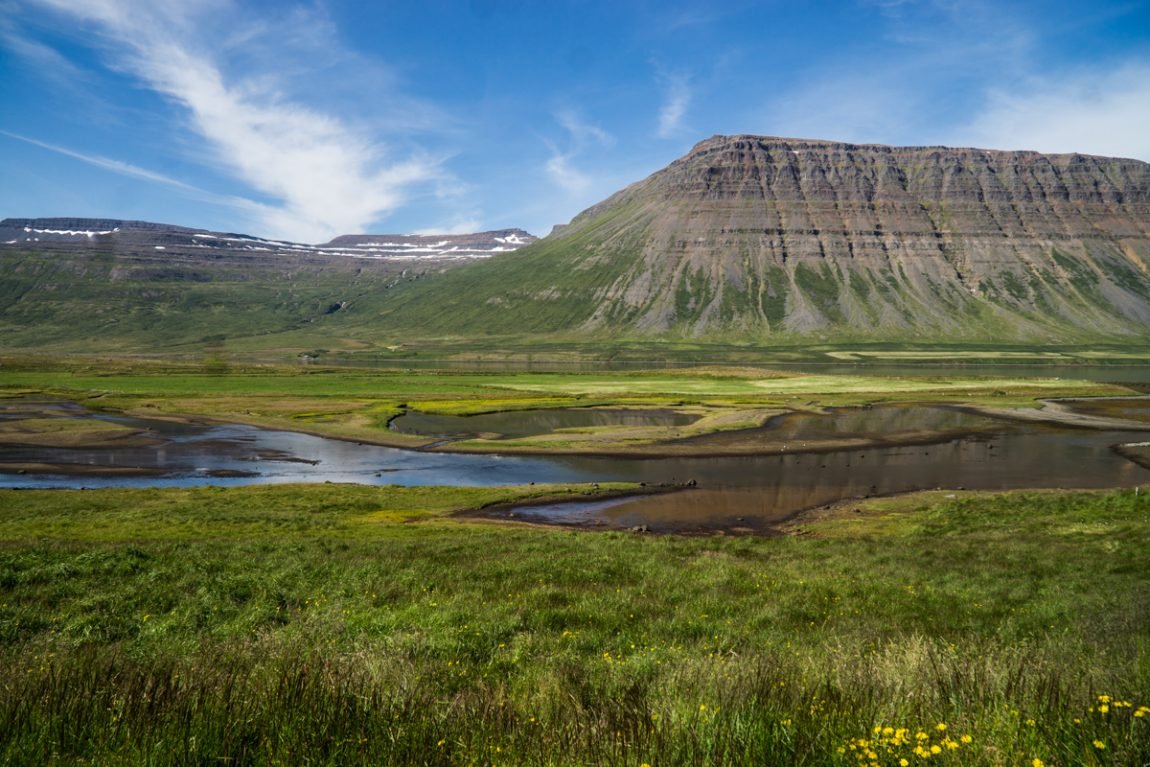
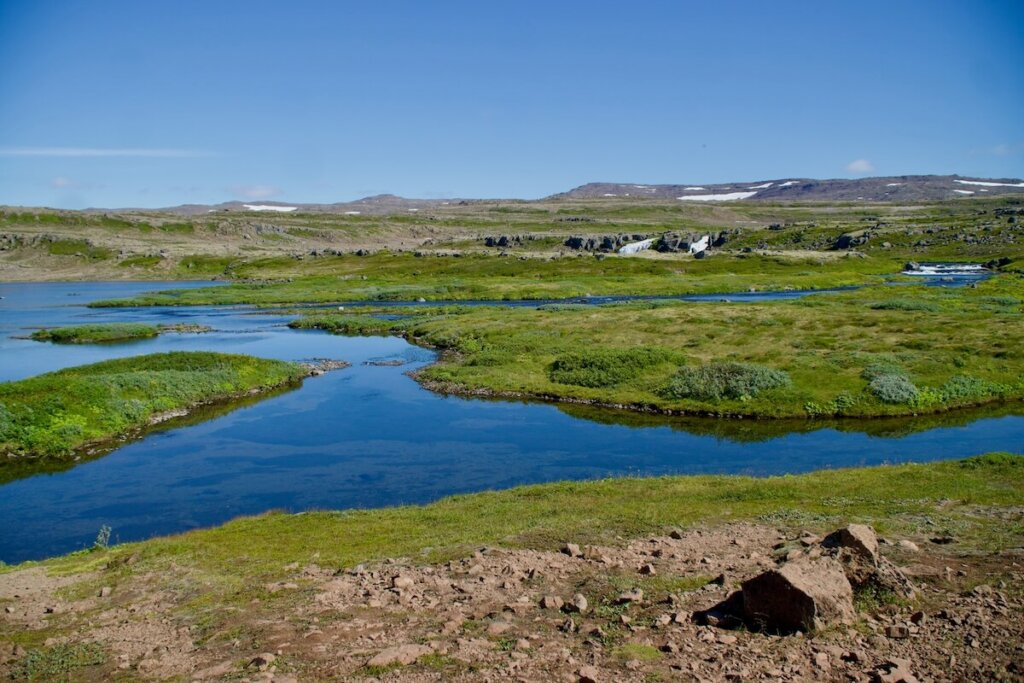
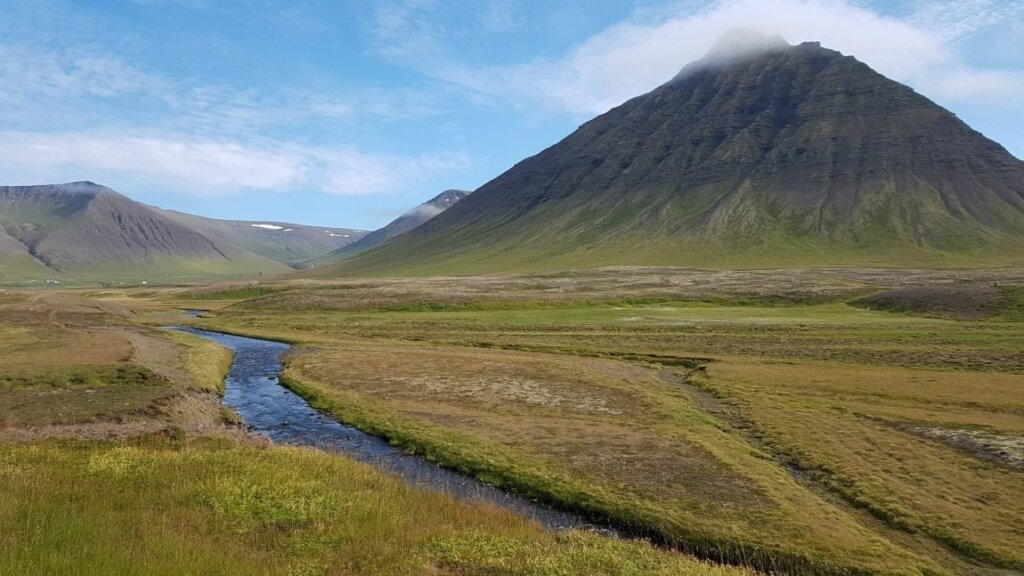
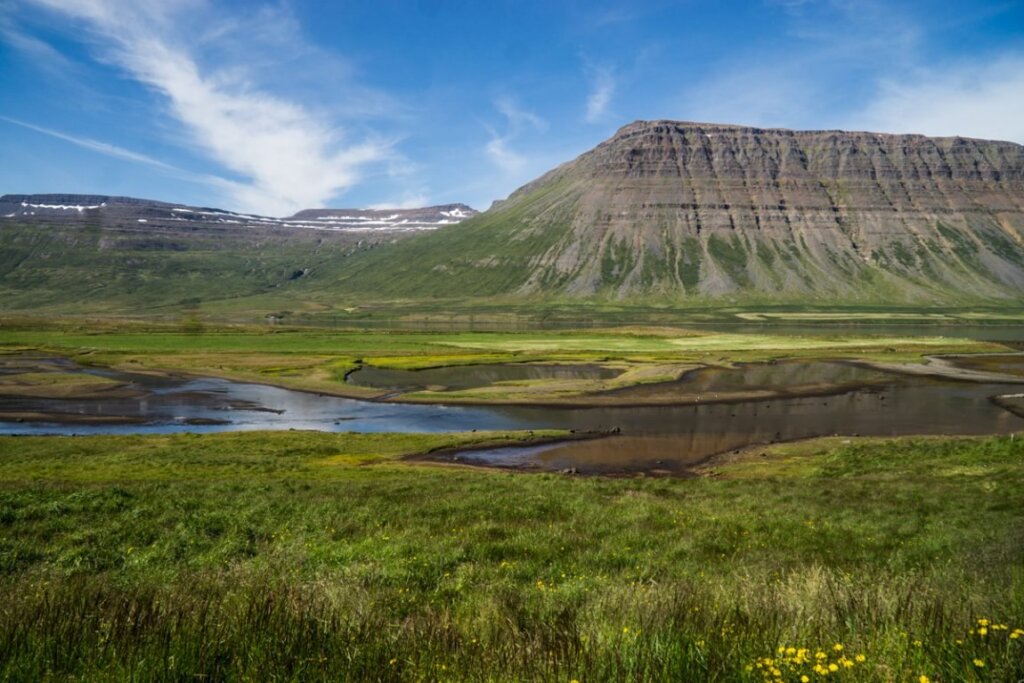
We were then led into the incredible Sandar Valley, where you ride between some of the highest mountains in the Westfjords — nicknamed the “Westfjords Alps”.
But don’t worry about the ‘Alps’ in the name, there’s no steep terrain. In fact, it’s not difficult terrain at all, mostly wide grassy stretches, though we did have to cross the Sanda River at a point.
Still, that part was easy — not too deep, though your horses may go for an unexpected drink (contrary to the saying, I have always found that when you lead a horse to water, they always want a drink, and they are willing to nearly fling you head-over-neck to get it).
We started at a relaxed walk, giving everyone time to settle in. I wouldn’t call myself an extremely experienced rider — let’s go with comfortable — and the ride was a really nice pace for me. We picked up the pace to a trot as we headed deeper into the valley…. and then came the really, really fun part.
In certain stretches of the valley, we picked up the pace and moved into a trot, and then into the tölt. If you’ve never tried tölting before (I expect you haven’t!) it’s hard to explain without sounding like you’re lying or exaggerating.
It literally feels like flying, it’s so smooth. It’s faster and way less bouncy than a trot, but not fear-for-your-life speed like you feel when you’re at a canter (I’ve never reached a gallop pace before but it sounds terrifying).
Tölting is surprising: like a trot but without the pain or need to post in unison with the horse’s gait. You’re gliding across the landscape rather than bouncing across it bruising your bum bones the way you do in a trot (also, I’m bad at trotting).
By the time we followed the Sanda River out toward Dýrafjörður and the water, I was in pure heaven, enjoying everything about the moment far too much to capture that many pictures, despite being there to blog about it.
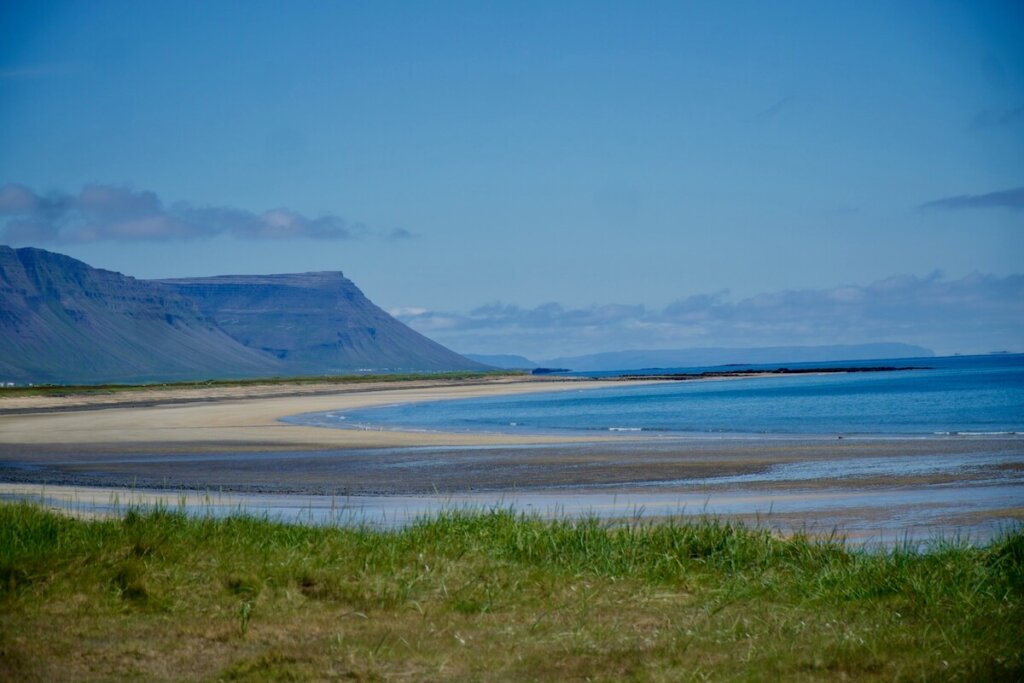
It literally made me forget I had a job, that’s how incredible the experience was. So I’m very sorry for the sparse pictures in this post and I hope my words will suffice to convince you that this experience is fully worth it!
All in all, the entire experience lasts about 2.5 hours total, with about an hour and 45 minutes of active riding (the rest is prep and getting organized). I was very satisfied with the length of the ride, and grateful that I didn’t feel very sore the next day… that’s the magic of tölting, I believe!
Why Icelandic Horses Are Special
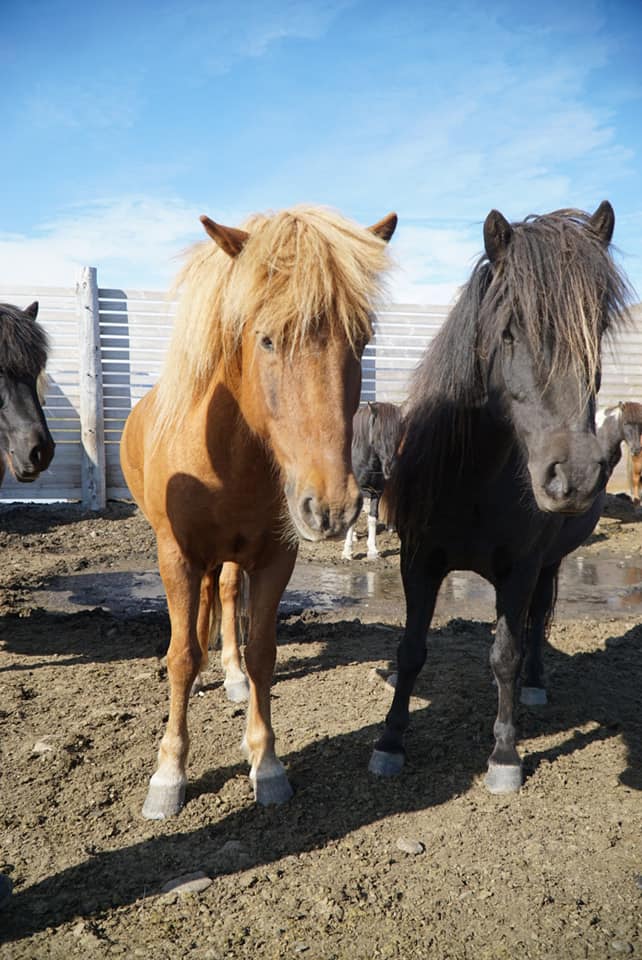
The Icelandic horse has been isolated in Iceland for over a thousand years. While not originally native to Iceland — they were originally brought over by Norse settlers — they have been bred into a pure, consistent breed that is unlike any other elsewhere in the world. Strict breeding laws mean once a horse leaves Iceland, it can’t return… ever.
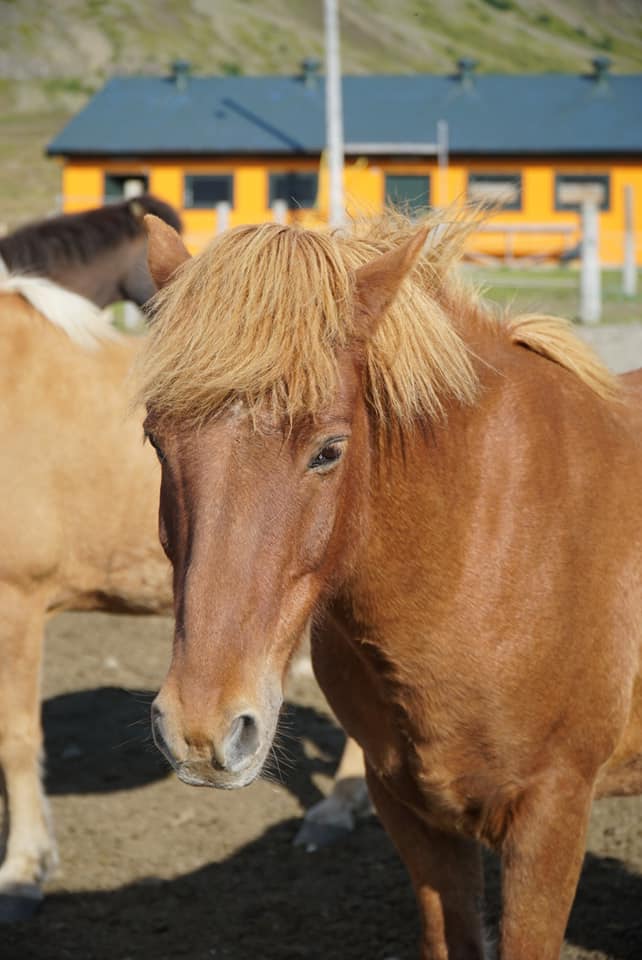
Icelandic horses are surprisingly small. You’d never know it from their strength and agility, though! They are also incredibly sassy, but usually not when on horseback, when they are very focused.
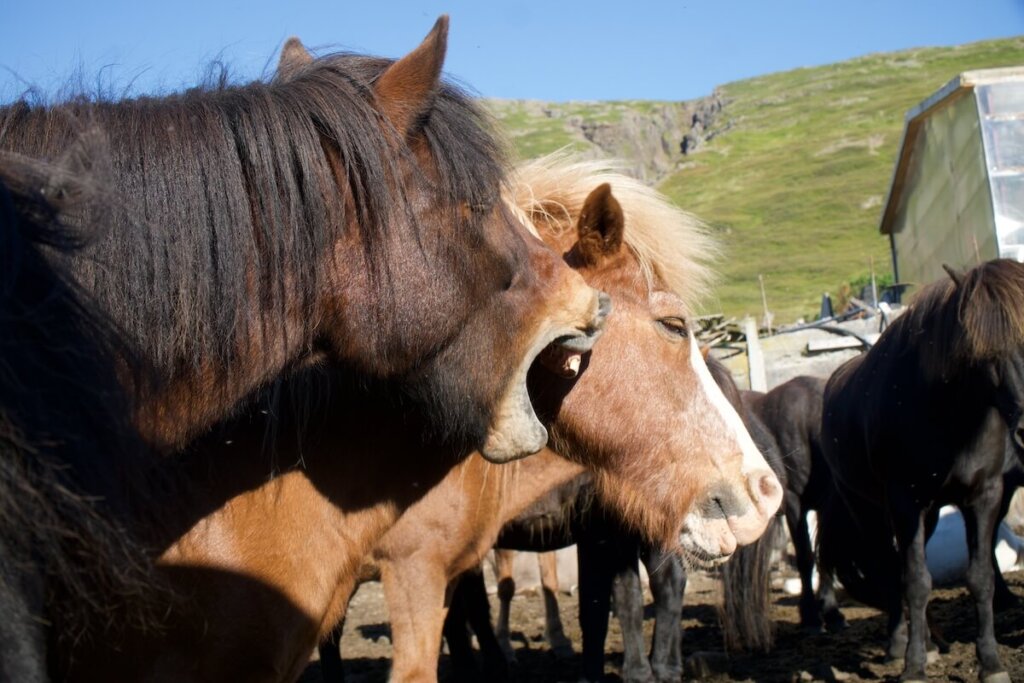
They’ve been specifically bred for the harsh climates and terrains that life on Iceland demands: their thick rockstar manes (how else are you going to handle Iceland winds? my thin and fine hair was basically one giant dread that needed to brushed out by the end of each day in Iceland), and their gentle, easygoing demeanor.
Bonus: they, like everything else in Iceland, are also extremely photogenic.
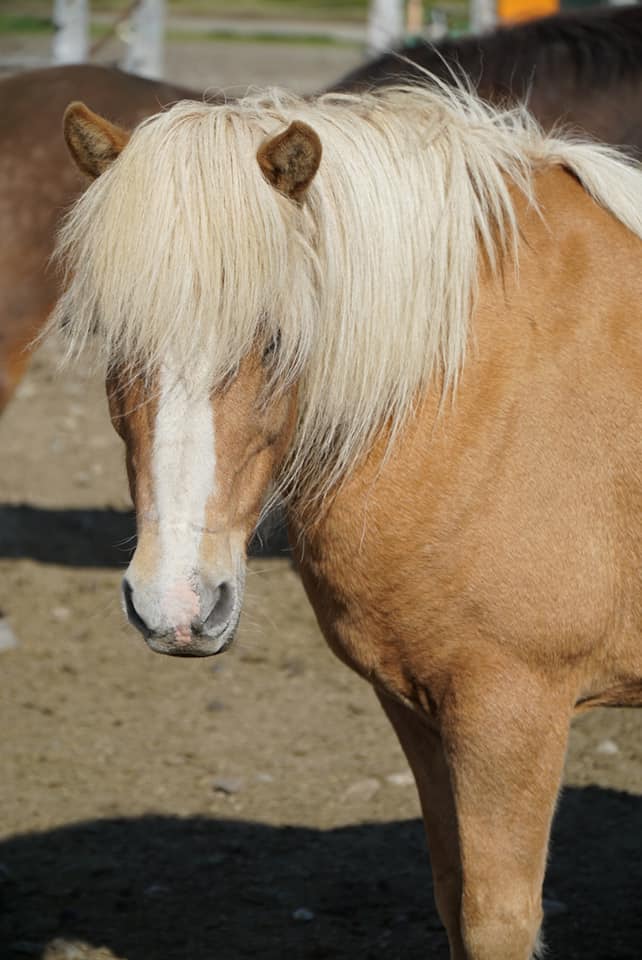
But like I mentioned before, the tölt is what makes them famous and beloved among equestrians and horse lovers. While most horses have four gaits (walk, trot, canter, gallop), Icelandic horses have a fifth gait, the tölt.
The unique part is the four-beat gait: something about the momentum it generates allows for speed without the jarring bounce of a typical trot, though I can’t quite speak to why. It’s not a gimmick, and riding this way, I understood why some people travel all the way to Iceland specifically to ride horses, as it genuinely changes the entire experience of the ride.
Types of Tours Offered
There are two main tour options, and the right one depends on your comfort level with horses. I took the more intermediate tour, but if you’ve never ridden horses before or you’ve only done so once or twice, you’ll want to take the beginner tour.
Level One: Sanda River Ride (Beginner-Friendly)
- Cost: 12,900 ISK / $105 USD at time of writing
- Duration: ~2 hours total (about 1.25 hours riding)
- Departure: Just after 10:00 AM
- Minimum age: 6 years
This is a relaxed, walking-pace ride through the Sandar Valley along the riiver. It’s ideal for beginners, families, groups with travelers with mixed horse experience, or anyone who wants a shorter, slower, scenic experience without trotting or tölting.
Level Two: Valley to Sea Ride (What I Did)
- Cost: 15,900 ISK / $130 USD at time of writing
- Duration: 2.5 hours total (~1.75 hours riding)
- Departure: Just after 1:00 AM
- Minimum age: 10 years
- Group size: 2–8 riders
This tour heads deeper into the valley, includes a short stop in the grassy plains, follows (and crosses) the river, and ends near the black sand beach where the river meets the sea in Dýrafjörður. In parts of the valley, you’ll pick up the pace and try trotting and the tölt.
Riders should be comfortable with a slightly faster pace and physically fit enough to keep up. Ideally, you’ve trotted and possibly cantered before the past, but I think you’re OK if you’ve only trotted. If you’re not sure if you’re experienced enough for the ride, just email and ask.
How to Booking & How to Get There
You must book in advance through their contact form. They prefer email only (their email is simbahollin [at] gmail [dot]com — no texts, WhatsApp, or calls — got to love Nordic boundaries) and reply in the evenings since they’re busy during the day.
Plan ahead, as you need a bit of notice in this part of Iceland. There is no pickup from Ísafjörður; you’re responsible for getting yourself there so you ought to have a car rental if you want to ride with Simba. Though to be honest, I don’t know how you’d be traveling around the Westfjords without a car, anyway.
Arrive at the coffeehouse at 1:00 PM sharp (or 10:00 AM for the morning ride), or earlier if you want to grab a coffee beforehand.
The address is: Simbahöllin Coffeehouse, Fjarðargötu 5, 470 Þingeyri, Iceland
If you have trouble finding the location or need to make any last minute changes, you can contact them at either (+354) 869 5654 or (+354) 899 6659.
Note that the Westfjords are very seasonal: as I write this post in February 2026, they are not accepting bookings for summer 2026 until after April 2026 (after Easter).
As with most things in the Westfjords, this isn’t a spontaneous, roll-up-and-hope-it-works deal. It requires a little planning and communication, but it’s absolutely worth the reward!

Allison Green is a former teacher who has been travel blogging since 2016, visiting 75+ countries in total. She has a Masters in Teaching and a B.A. in English and Creative Writing. As a former educator, she merges her writing and educational experience to encourage ethical, sustainable travel. She has been a speaker at the World Travel Writers Conference and TBEX. Her writing, photography, and podcasting work has appeared in National Geographic, CNN Arabic, CBC Canada, and Forbes, amongst others. When she’s not on the road, she lives in Bangkok, Thailand.