


15 Wonderful Things to Do in Naples in Winter [2026]
Italy has recently gotten slammed with overtourism… but the winter season is ideal for visiting Italian cities, particularly Southern cities like Naples which tend to be more popular summertime destinations.
Not only do you get mild winters, but you also get to skip the crowds. Just be aware that Naples in winter is rather rainy… so pack that umbrella (and a positive attitude about the rain — luckily Naples has no shortage of cafés, museums, and pizzerias to take shelter at!) and brave the weather.
| 📍Planning Naples in a hurry? Here are my quick picks for your trip! 🏨 Where to Stay in Naples 1. Decumani Hotel de Charme (luxury hotel in historic palace, great location) 2. Hart Boutique Hotel (minimalist boutique style, near the port) 3. Grand Hotel Europa (budget-friendly, near the train station) 🌋 Best Things to Do in Naples 1. Mt. Vesuvius + Pompeii Full Day Tour with Lunch 2. Pizza Making Workshop in the Birthplace of Pizza 3. Amalfi Coast Full Day Tour of Positano, Amalfi, and Sorrento 🚘 Renting a car? Compare rental prices at Discover Cars for the best deal. |

In this guide to visiting Naples in winter, you’ll find a bit of everything.
There’s interesting museums, impressive archaeological sites, all the best shopping spots, and even the most festive places to experience the Christmas atmosphere.
Things to Do in Naples in Winter
Check out the Presepe display on Via San Gregorio Armeno.
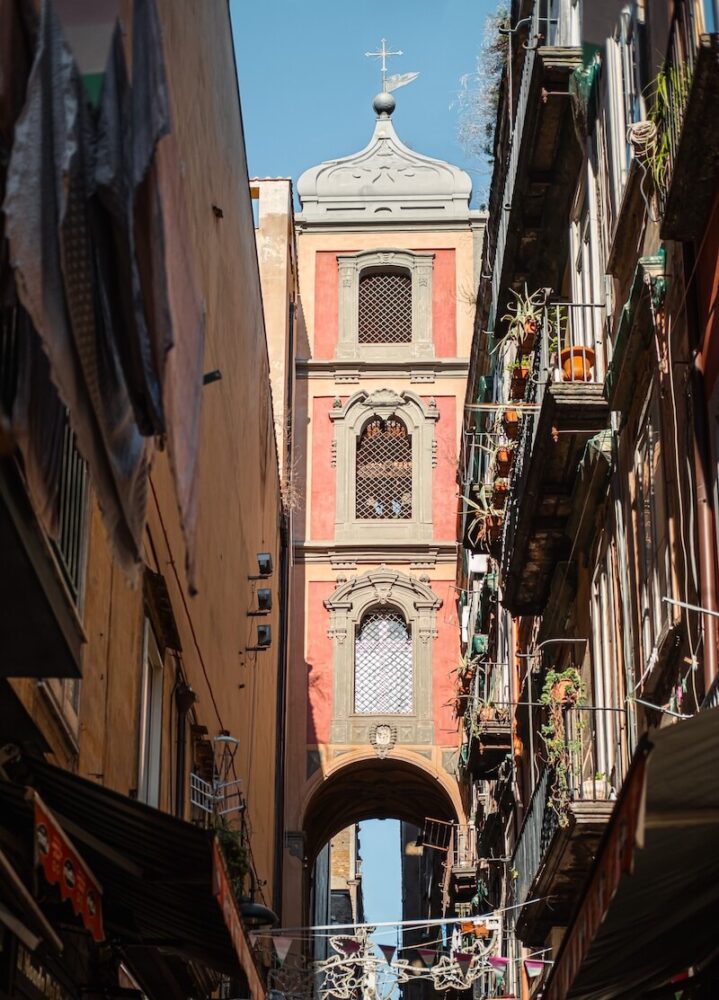
If there is just one thing you absolutely have to do in winter in Naples, it’s taking a beautiful stroll along Via San Gregorio Armeno to admire the Presepe displays. But wait, what’s that exactly?
Presepe is the Italian term for a typical Christian nativity scene. While you will find it around Italy, especially in the main piazzi in December, but it’s an especially cherished tradition in Naples. They take it to 11, so to speak.
If you want to see an example of how Naples brings it above and beyond, the street Via San Gregorio Armeno is my go-to place to admire these elaborate and beautiful displays.

And actually, this little street is kind of Christmas year-round. You’ll find Presepe figurines and decorations on this street no matter the time of year, but it’s especially festive from November through December.
Even if you miss the Christmas season as I did (my visit was in early March, and if the rain indicates, it was still very much in its winter vibe), it’s still worth a visit.
Hit the landmarks sans crowds.
From November to February (except, of course, for the Christmas holidays!) you can take your time to explore the city with much fewer crowds.
A few places that are normally mobbed during the rest of the year are pretty calm during the winter travel period.
Check out the impressive Piazza del Plebiscito and its palace on the other side of the piazza, wander down the ever-popular Via Toledo, go window shopping on Via Chiaia, and stroll along the Lungomare di Napoli for beautiful views of the sea and most especially, Mt. Vesuvius in the background.
Get festive at the Christmas Markets in Vomero.

Naples may not be the first, second, or even third city that comes to mind in Italy for Christmas markets… but the tradition has started to gain popularity especially in the Vomero neighborhood, one of my favorite areas of Naples!
Vomero is a lively hilltop district (seriously, you’ll want to take the funicular up the hill) and you’ll find a lot of the markets around the central square of Piazza Vanvitelli.
The area is best known for the medieval fortress, Castel Sant’Elmo (another must-visit in Naples in winter) which has some of the best views over the Gulf of Naples.
The Christmas markets in Vomero run from early December until January 6th, as most markets in Italy run past Christmas Day and end after January 6. That’s because January 6th is the Epiphany Day, a holiday celebrated with particular verve in Italy.
Not sure where to start in Vomero? Find stalls selling Christmas decorations, local food and drinks, and souvenirs around Piazza degli Artisti, Via Enrico Alvino, and Via Angelica Kauffmann.
Visit the hilltop Castel Sant’Elmo.
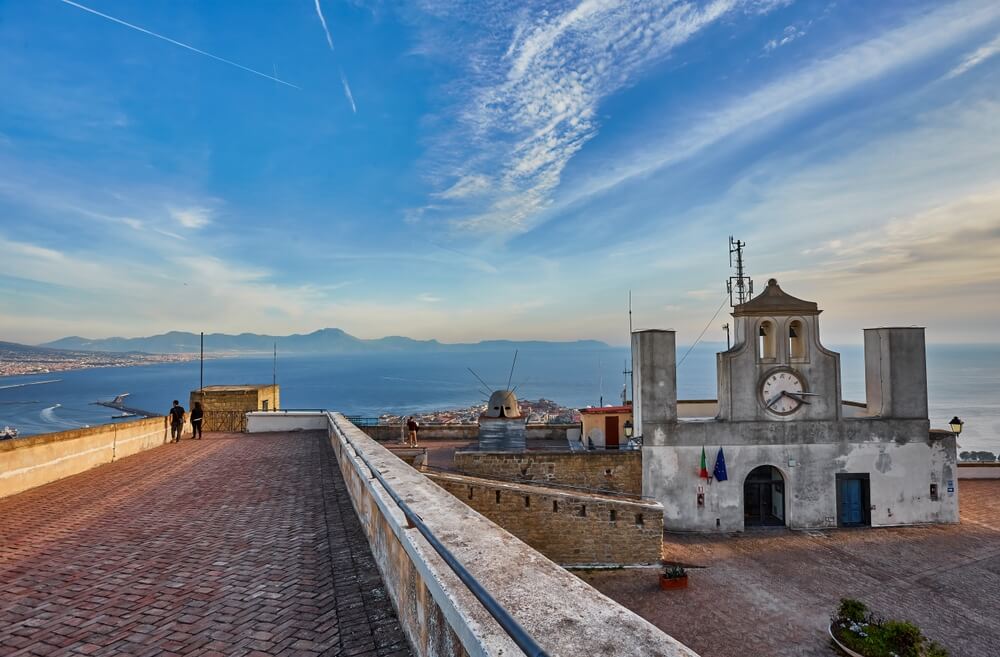
While in Vomero for any shopping whims or wanders, you should also pay a visit to the stunning Castel Sant’Elmo. At one of the highest points in Naples, this medieval fortress dates back to the 12th century, with repeated reinforcements and reiterations making the castle you see today.
While the castle itself is of course rather interesting, truly what the most special thing it offers is its views of the city, Gulf of Naples, and if you’re lucky, possibly even the vista of a snow-capped Mt. Vesuvius dominating the bay.
However, nearly the entire visit is outdoors, so this might not be the best place on a rainy day — check the weather before planning this part of your Naples winter outing!
If you’re around on a clear winter day, you should head to Castel Sant’Elmo just before sunset… it’s the best place in Naples to spot the sunset, in my opinion.
Discover Certosa e Museo di San Martino
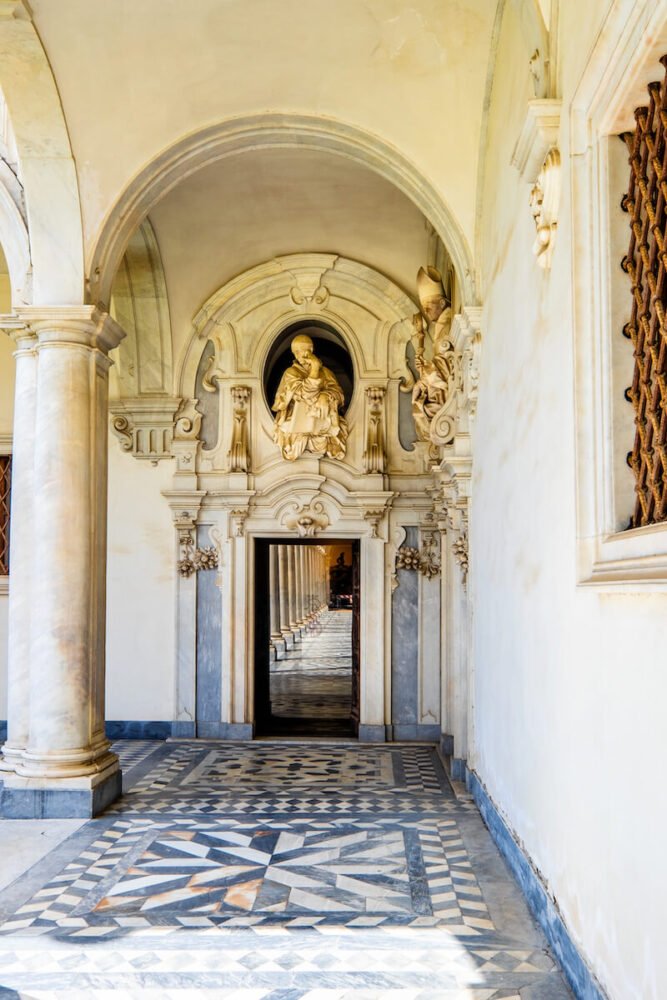
Just below Castel Sant’Elmo, Certosa di San Martino is a former monastery complex from the 14th century (but expanded many times over, later being turned into a museum) overlooking Naples from the Vomero hill.
Today, Certosa di San Martino houses the National Museum of San Martino, home to art and works from the Spanish and Bourbon eras, with a special focus on presepe displays, paintings, sculptures, and even larger structures like carriages and ships.
Special Tip: Don’t forget to check out the monumental courtyard with its beautiful cloisters.
Admire the Veiled Christ at Museo Cappella Sansevero

.jpg)
The Veiled Christ, Cristo Velato in Italian, is one of the main things to see in Naples, considered a world masterpiece in marblework due the detail of its lifelike folds in cloth that literally look like you could reach out and touch it and it would be soft.
What’s so impressive about this particular work is that its sculptor, Giuseppe Sanmartino sculpted it from a single marble block. But even if that weren’t the case, the detail in the rendering of the veil that covers the body and face of Christ is what makes it so unique and ethereal.
You can admire the stunning sculpture and many others in the Sansevero Chapel, a 16th-century family chapel that is now a museum amidst Naples’ most popular touristic attractions… even in winter, it helps to get your tickets online in advance.
You can also join a guided tour that includes entry to the Sansevero Chapel along with a tour of downtown Naples with stops at other landmarks like the Naples Cathedral, Santa Chiara Monumental Complex, and Chiesa Del Gesù Nuovo.
For a contextual guide to some of Naples best sites, book this Downtown Tour and Veiled Christ Entry before your visit so it doesn’t fill up.
Discover the underground side of Naples.
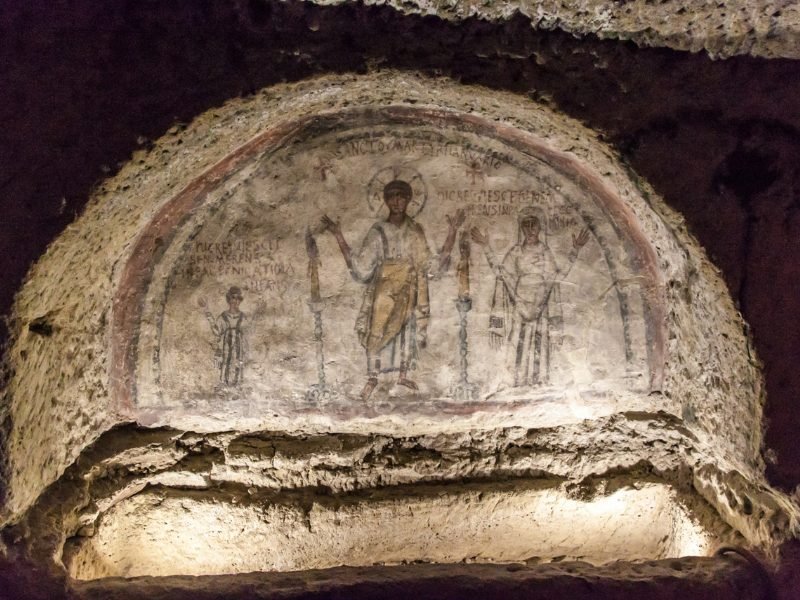
If you happen to be in Naples on a cold and rainy day, the best way to escape the bad weather is to join a tour of Naples Underground. This was one of my favorite things I did during my time in Naples.
A whole complex of archaeological discoveries lies beneath the city, unveiling what Naples looked like as far back as 2,400 years ago. This is not something you can do independently though; you need a guided tour to help you navigate its narrow galleries rife with unique history.
The most popular experience is this Naples Underground Guided Tour in the heart of the city, which is what I booked and loved. The sites we saw were fantastic and the organization of the tour was really great, which is a rare thing to get to say about Italy (I say with love, as someone who visits Italy very often).
But these aren’t the only undergorund areas in Naples! There are other underground tours, like this Bourbon Tunnel Guided Tour or the Catacombs of San Gennaro. I didn’t get a chance to do these other two tours during my winter trip to Naples, but if you’re itching for more underground Naples… or it’s just raining profusely and you need some alternative plans… these are affordable and unique options for what to do in Naples.
I highly recommend the Naples Underground tour I took! It was a favorite highlight of my time in Naples.
Visit the magnificent Castel Nuovo.

Unlike Castel Sant’Elmo, Castel Nuovo has several indoor areas you can explore, including the Civic Museum and the Palatine Chapel, making it an especially perfect place to visit if the weather is not cooperating with you.
Built late 13th century, the location is really special: overlooking the sea, but a bit farther towards the center of town than the older seaside fortress, Castel dell’Ovo (also worth a visit)
Inside Castel Nuovo, you can explore the imposing rooms and halls, visit the Palatine Chapel and the Chapel of the Souls in Purgatory, and check out beautiful works of art inside the Civic Museum.
It was only 6€ to visit when I went; however, Italy rarely updates their websites and it’s very possible that prices have increased since my last visit.
Admire Naples’ art museums.

If you’re a fan of art museums, you’ll fall in love with Naples. There’s a lot to choose from based on the kind of art you’re most interested in seeing.
For classical art lovers — think Caravaggio and Titian — then don’t skip the Museo di Capodimonte, located in a Bourbon-era palazzo.
For a more contemporary spin on art, then you can’t skip PAN, or also known as the Palazzo delle Arti di Napoli. While the art inside is contemporary, the building is anything but: a 17th century palazzo with stunning details kept in-tact.
And then, of course, there’s one of Naples’ best sites: its archaeological museum, which deserves its own section (below!).
Check out the Naples National Archaeological Museum.
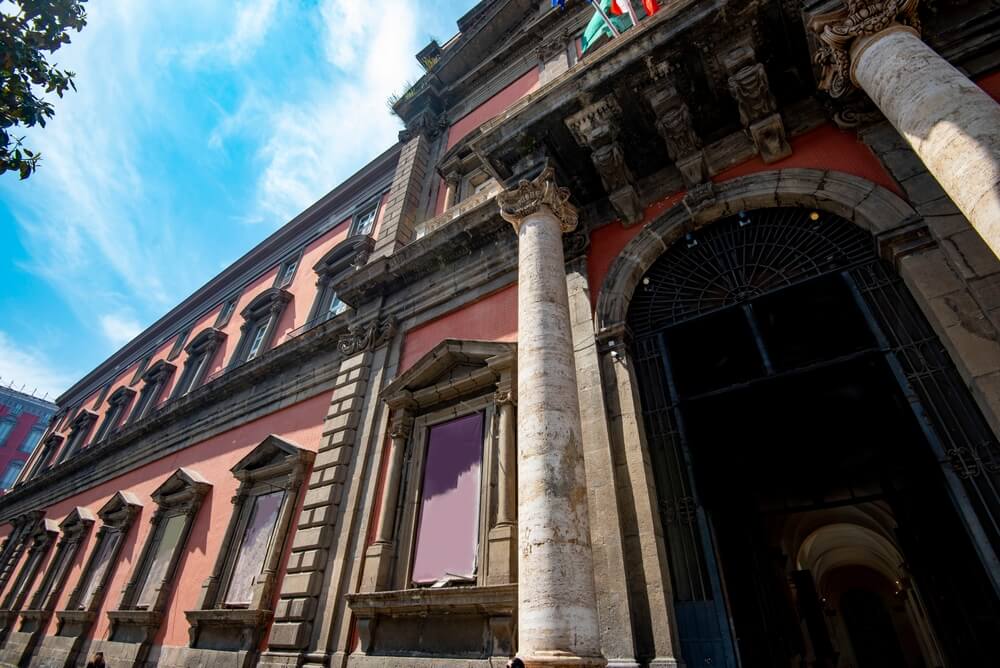
The Naples Archeological Museum (or MANN – Museo Archeologico Nazionale di Napoli) is one of the best museums you can visit in Naples… or possibly even in the world. I may be getting rather superlative here, but it’s not without merit or a lack of things to compare it to… I’ve been to many a museum in my day, and I’m rather picky at this point.
MANN is truly home to one of the richest archaeological collections in the world. You’ll see a really wide display of artifacts unearthed during the excavations of Pompeii and Herculaneum (both of which you can visit from Naples and make excellent day trips).
A lot of the original frescoes from Pompeii, as well as sculptures of Herculaneum’s Villa of Papyri, are now housed here in a more controlled setting that preserves the artworks better than being exposed to the open elements. Volcanic ash preserved them for centuries, but now that they’ve been excavated, the colors and details are a lot more fragile.
The museum is huge, so you should set aside a few hours for your visit. Aside from the permanent collection, you’ll often find temporary exhibitions, too, usually with a more modern bend to them.
The entry ticket with audioguide is absolutely worth it… frankly, you’ll need an audioguide to help you make the most of all there is to see.
Take a half-day trip to Pompeii or Herculaneum Archaeological Sites
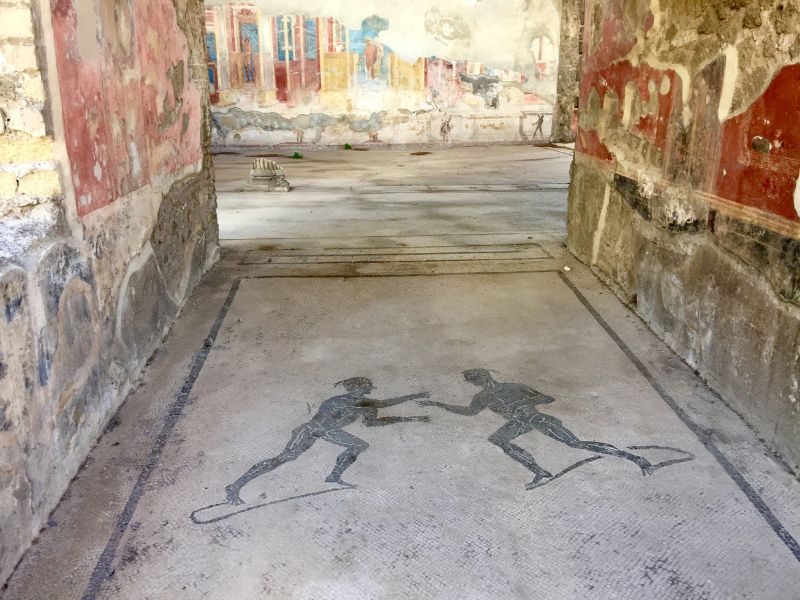
Visiting the archaeological sites near Naples in winter has two main advantages: avoiding the huge summer crowds, and enjoying a pleasant stroll without the unbearable heat of the Southern Italian scorcher of a summer.
I visited Pompeii in March, and it was the best timing, a pleasant sunny day with just under 20°C (68°F) and only a small crowd that immediately spread out around the huge site, leaving me to wander in peace.
Alternately, for an even more crowd-free experience, Herculaneum is much closer to Naples. It’s actually less than a 20-minute train ride from Naples Central Station.
The site also provides more covered areas and is more compact, so it’s easier to visit if you don’t have much time or if the weather is rainy and unpleasant. Meanwhile, Pompeii is about half an hour away by train and much larger, so it requires at least half a day to visit.
Not sure which to visit? Check out our guide on Pompei vs. Herculaneum if you need help choosing. Or, be crazy like me and do both in a day, which is possible albeit exhausting!
Have delicious pizza at one of the historical restaurants.

When in Naples, eating the local pizza is a non-negotiable! And honestly, you can skip the places made famous by Eat Pray Love, as you can enjoy phenomenal Neapolitan pizza all throughout the city.
There are some particularly famous ones. Gino e Toto Sorbillo, Antica Pizzeria Brandi, and L’Antica Pizzeria da Michele (the Eat Pray Love place that always has a line) are just three places worth checking out in Naples.
But these places are famous and will often have lines. I will admit, I ate at L’Antica Pizzeria da Michele a few times (takeaway pizza back to my nearby hotel room) and it was good, but not incredible.
Actually, the experience I preferred most was getting the chance to make my own pizza, schooled by local pizzaioli (pizza-makers) during this pizza-making class! I don’t mean to toot my own horn, but it was one of the more satisfying pizzas I ate during my time in Naples, partly because of my pride in having done it all myself.
Attend a show at Real Teatro di San Carlo

Many people have heard about Teatro alla Scala in Milan or Teatro La Fenice in Venice, but Real Teatro di San Carlo has the unique distinction of being the world’s oldest continually active opera theater.
Founded in 1737, San Carlo Theater features a lush interior in classic 18th-century style and an impressive royal box with the best seats in the theater! They have all sorts of cultural events (ballet, oepra, symphonies, etc.) but if you’re more interested in the architecture than the art forms, you can also just visit the theater itself on guided tours.
The tour lasts half an hour and allows you to admire the main stage hall, the royal box, and the foyer.
However, I would argue that the best way to see the theater is during a show. Check out the upcoming events; prices start as low as 10€!
Go shopping in Galleria Umberto I
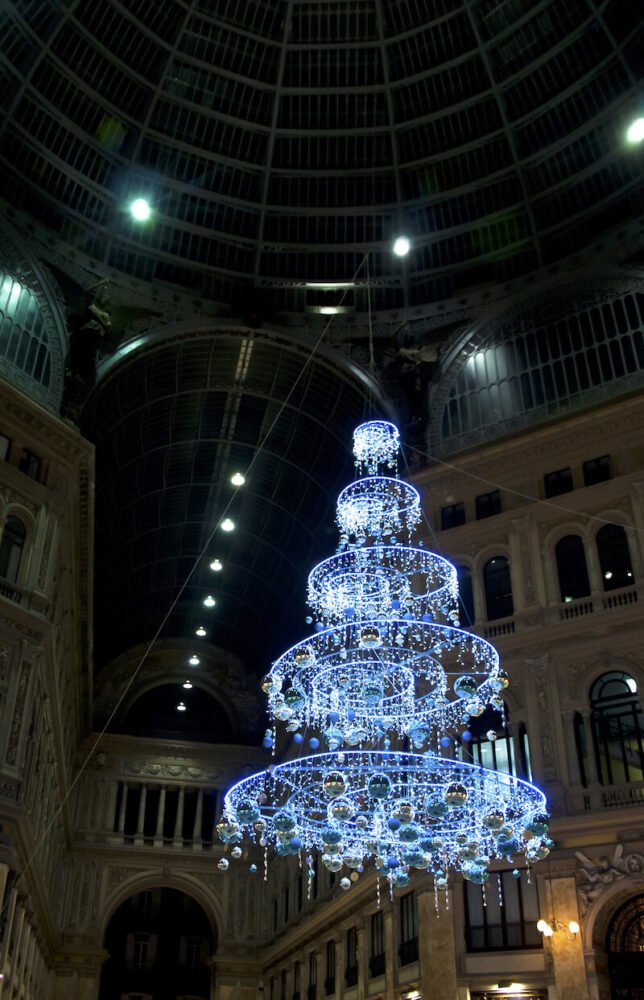
While Via Chiaia is one of the most popular areas to shop in Naples, it’s no fun if the weather isn’t playing nice as it’s all very exposed and open and you’ll be ducking in and out of shop after shop.
Luckily, on a rainy day, you can simply head to Galleria Umberto I, a stunning covered gallery. I didn’t even do any shopping there, but I simply walked around to admire the architecture several times. It also has a perfect location between the popular pathway of Via Toledo and Castel Nuovo.
In designing it, it was meant to be an important and monumental building that held equal weight to its impressive neighbors, in particular, other nearby landmarks like the Royal Palace of Naples and Real Teatro di San Carlo.
For its beauty, convenience, and grandeur, Galleria Umberto I immediately became a significant place in Naples and continues to be to this day.
Go on a day trip to Reggia di Caserta.

Lastly, if you’re up for a short day trip, head to Caserta, just a 40-minute train ride from Naples, and visit the magnificent Reggia di Caserta.
Once a 18th-century royal palace, it was actually the largest built in Europe at the time! For that reason, it eventually became part of UNESCO’s list of sites in 1997.

The stunning Palace of Versailles is supposedly its blueprint, and while Reggia di Caserta has a character all its own, it’s just about as majestic as its inspiration.
The palace has lovely gardens with fountains and statues if you want to explore the outer areas; meanwhile, the inside has ornately decorated rooms, extraordinary staircases, and stunning art pieces everywhere you look.
Check out this 3-hour Royal Palace of Caserta Tour for all the historical context on this spectacular site.

Allison Green is a former teacher who has been travel blogging since 2016, visiting 75+ countries in total. She has a Masters in Teaching and a B.A. in English and Creative Writing. As a former educator, she merges her writing and educational experience to encourage ethical, sustainable travel. She has been a speaker at the World Travel Writers Conference and TBEX. Her writing, photography, and podcasting work has appeared in National Geographic, CNN Arabic, CBC Canada, and Forbes, amongst others. When she’s not on the road, she lives in Bangkok, Thailand.